
Plot Summary
Nightmares and Figments Return
Jerry Dresden, a lonely, porn-addicted museum worker in Chicago, is tormented by recurring nightmares of a terrified girl in a silverware factory and haunted by figments—hallucinations he's struggled with since childhood trauma and the death of his sister, Emma. His fragile mental state is compounded by guilt, isolation, and a sense of being stuck in a rerun of his own life. The boundaries between reality and delusion blur as Jerry's hallucinations begin to appear in the waking world, especially the mysterious girl with a mutilated ear, signaling the return of his psychotic depression and the unraveling of his already tenuous grip on reality.
Museum Mayhem and Accusations
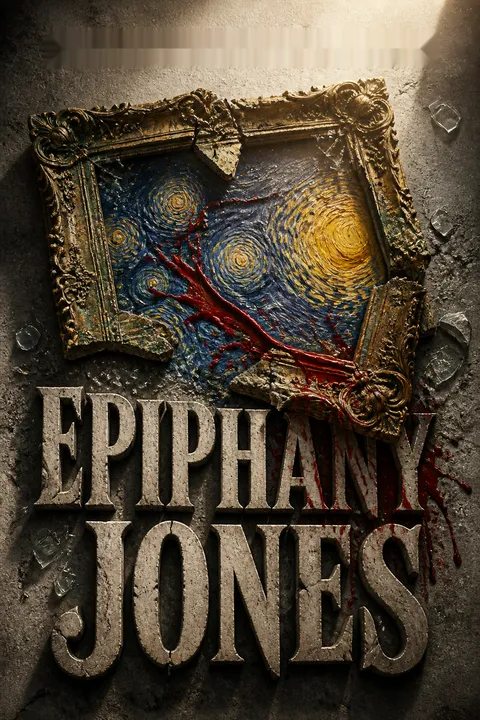
Jerry's mundane job at the Art Institute is shattered when a priceless Van Gogh painting is stolen and his colleague Roland is found brutally attacked. Jerry, the last to see the painting, becomes the prime suspect. The police interrogate him, and his history of mental illness and unreliable memory make his situation even more precarious. As the evidence mounts against him, Jerry's paranoia and self-doubt intensify, and he begins to question his own actions and sanity. The world closes in, and Jerry is forced to confront the possibility that he may have done something terrible without even knowing it.
The Girl with the Mutilated Ear
The mysterious girl from Jerry's dreams—pale, raven-haired, with a mutilated ear—begins to appear in his waking life, first as a figment, then as a flesh-and-blood presence. She seems to know everything about Jerry, including his secrets and the stolen painting. Her name is Epiphany Jones, and she claims to need his help. Jerry's attempts to dismiss her as a hallucination are shattered when others interact with her, and she physically wounds him, proving her reality. Epiphany's arrival marks the beginning of a dangerous, surreal journey that will force Jerry to confront his past, his guilt, and the darkness at the heart of his world.
Past Trauma, Present Guilt
Jerry's backstory unfolds: the death of his beloved sister Emma from leukemia, his father's fatal car accident, and his mother's emotional withdrawal. These traumas left Jerry emotionally stunted, addicted to fantasy, and prone to hallucinations. His relationships are marked by loss and self-sabotage, and his sense of self is fractured by guilt over Emma's death and his inability to save her. The past bleeds into the present as Jerry's unresolved grief and shame make him vulnerable to manipulation and desperate for redemption.
The Van Gogh Heist
Epiphany reveals she orchestrated the Van Gogh theft and framed Jerry to force his cooperation. She needs him for a mysterious mission, and the only leverage she has is the videotape that could exonerate him—or damn him forever. Jerry is swept into her plan, blackmailed and desperate, as the police close in and his life unravels. The boundaries between victim and perpetrator blur, and Jerry is forced to choose between self-preservation and complicity in Epiphany's dangerous quest.
Epiphany's Demands
Epiphany's demands are simple but absolute: Jerry must help her, or she will destroy the evidence that could save him. She is relentless, unpredictable, and driven by a mission she claims is ordained by God. Jerry, trapped and terrified, follows her through a series of increasingly bizarre and perilous encounters. Their dynamic is fraught with mistrust, violence, and a strange, growing dependency. As they flee Chicago, Jerry's sense of agency slips away, replaced by a grim determination to survive and, perhaps, to understand the enigmatic woman who has upended his life.
Blackmail and Road Trip
Jerry and Epiphany embark on a cross-country odyssey, pursued by police and shadowy enemies. Epiphany's motives remain opaque, but her knowledge of Jerry's past and her willingness to use violence keep him in line. Along the way, Jerry's mental state deteriorates, and he develops a twisted form of Stockholm syndrome, oscillating between hatred and fascination for his captor. Their journey is punctuated by moments of dark humor, surreal encounters, and flashes of vulnerability that hint at the trauma driving both of them.
Mexico's Shadows
The road leads to Mexico, where Epiphany's true quest begins to emerge: she is searching for her lost daughter, a victim of international sex trafficking. Jerry is drawn deeper into a world of exploitation, violence, and corruption, where the powerful prey on the powerless and justice is a cruel joke. The horrors of the orphanage, the complicity of authorities, and the suffering of the girls force Jerry to confront the reality of evil—and his own capacity for action or inaction. The line between rescuer and bystander grows thin.
The Videotape Bargain
The videotape—evidence of the Van Gogh theft and Roland's murder—becomes the currency of survival. Epiphany uses it to control Jerry, promising exoneration if he helps her. But the tape's contents are ambiguous, and its power lies as much in what it represents as in what it shows. Jerry's attempts to outmaneuver Epiphany are thwarted by her cunning and his own weaknesses. The tape is mailed to Mexico, setting the stage for a new round of blackmail, bargaining, and desperate gambits.
Stockholm Syndrome
As Jerry and Epiphany hide out in squalor, their relationship mutates into something both toxic and intimate. Jerry's dependence on Epiphany deepens, and he finds himself both repulsed by and drawn to her. Their shared trauma creates a bond that is as much about survival as it is about understanding. Jerry's fantasies and compulsions resurface, and he is forced to confront the ways in which his own desires and delusions have shaped his life. The lines between captor and captive, victim and accomplice, blur beyond recognition.
The Truth About Hanna
Epiphany's true identity is revealed: she is Hanna, a survivor of child trafficking, sold into sexual slavery as a child and brutalized for years. Her quest is to find and rescue her daughter, who was taken from her at birth and raised as a commodity for the world's elite. Jerry learns that his own father was complicit in these crimes, and that the rot at the heart of Hollywood and power is deeper than he ever imagined. The revelation shatters Jerry's sense of self and forces him to confront the legacy of guilt, complicity, and the possibility of redemption.
The Clone and the Orphanage
Jerry's journey through Mexico brings him face to face with the realities of trafficking: the orphanage, the brothels, the commodification of innocence. He is forced to confront his own sexual fantasies and the ways in which they are shaped by a culture of exploitation. A harrowing encounter with a child prostitute—who resembles a celebrity he once fantasized about—forces Jerry to reckon with the consequences of desire, denial, and the normalization of abuse. The orphanage burns, and the cycle of violence continues.
The Secret in Spain
Epiphany's search leads to Spain, where her daughter is rumored to be held in a traffickers' "storehouse." Jerry, now emotionally invested, helps her navigate a world of madams, corrupt officials, and hidden horrors. The journey is marked by betrayals, revelations, and moments of grace. Jerry's own trauma is mirrored in the suffering of the girls, and he begins to see himself not just as a victim, but as someone with the power—and the responsibility—to act. The quest for Epiphany's daughter becomes a crucible for both of them.
Love and Loss in Porto
In Portugal, Jerry finds unexpected solace and love with Bela, a kind, quirky local woman who helps him rediscover hope and connection. Their relationship is a brief, luminous respite from the darkness, and Jerry begins to imagine a future free from guilt and fear. But happiness is fleeting: Epiphany's enemies catch up, and Bela is murdered as punishment for Jerry's refusal to help. The loss shatters Jerry, plunging him into despair and reigniting his thirst for vengeance.
The Pumpkin Pact
Jerry's grief over Bela's death is overwhelming, and he contemplates suicide. A chance encounter with a child and a newspaper headline about the Cannes Film Festival rekindles his sense of purpose. He realizes that Epiphany's daughter—and perhaps his own redemption—can still be saved. Armed with Paulo's revolver and a new resolve, Jerry sets out for France, determined to confront the monsters at the heart of the world's darkness and to make amends for his failures.
Epiphany's Return
In Cannes, Jerry and Epiphany are reunited, their fates now inextricably linked. The city is a carnival of excess, hypocrisy, and hidden depravity, and the world's elite gather for a party that is both a celebration and a cover for unspeakable crimes. Jerry and Epiphany must navigate a labyrinth of power, secrecy, and violence to reach the heart of the conspiracy and rescue Hanna's daughter. Their alliance is uneasy, forged in necessity and haunted by betrayal.
Cannes: The Awakening
The climactic party at Matthew Mann's villa is a grotesque spectacle of wealth, celebrity, and predation. Jerry and Epiphany infiltrate the gathering, seeking the secret room where the trafficked girls are held. The event is an "awakening"—a ritualized violation of innocence, orchestrated by the powerful for their own pleasure. Jerry is forced to confront the complicity of his own family, the limits of justice, and the cost of action. The lines between savior and sinner, victim and perpetrator, are obliterated.
The Party of Monsters
As the party descends into chaos, Jerry and Epiphany confront their enemies: Nico, the trafficker who murdered Bela; Matthew Mann, the architect of the conspiracy; and the machinery of power that enables their crimes. Violence erupts, secrets are exposed, and the veneer of civilization is stripped away. Jerry's quest for vengeance collides with Epiphany's quest for her daughter, and both are forced to choose between justice and survival, sacrifice and self-preservation.
The Secret Passage
In a hidden passage behind the villa's walls, Jerry discovers the trafficked girls, including Epiphany's daughter—who is also Jerry's half-sister. The truth of his father's complicity and the interconnectedness of all their suffering is laid bare. Jerry must choose: save the girl and risk everything, or walk away and preserve himself. The moment is a crucible of character, and Jerry's decision is both an act of redemption and a reckoning with the past.
Justice and Sacrifice
The final confrontation is brutal and cathartic. Epiphany is mortally wounded, but not before she is reunited with her daughter. Jerry, battered and broken, finds a measure of peace in the act of saving his sister and honoring the memory of those he has lost. The machinery of evil is disrupted, but not destroyed; justice is partial, and the scars remain. Yet in the aftermath, there is a glimmer of hope—a sense that, even in a world of suffering, acts of courage and compassion can make a difference.
Analysis
Epiphany Jones is a harrowing, darkly comic exploration of trauma, complicity, and the search for redemption in a world poisoned by power and exploitation. Michael Grothaus uses the conventions of noir, psychological thriller, and social satire to expose the rot beneath the surface of celebrity culture and to interrogate the ways in which personal and collective guilt shape our lives. The novel's unreliable narration and hallucinatory style mirror the fragmentation of trauma, while its relentless pacing and sharp dialogue keep the reader off balance. At its core, the book is a meditation on the possibility of grace: the idea that, even in a world of suffering and evil, acts of courage, empathy, and sacrifice can make a difference. Jerry's journey—from self-loathing and passivity to agency and self-forgiveness—is both deeply personal and broadly resonant, offering a glimmer of hope in the face of overwhelming darkness. The novel's critique of Hollywood, celebrity, and the commodification of innocence is both timely and timeless, challenging readers to confront the ways in which we are all complicit in systems of exploitation—and to imagine the possibility of change.
Review Summary
Epiphany Jones by Michael Grothaus receives overwhelmingly positive reviews (3.83/5 rating). Readers praise the debut novel's bold, original approach to dark themes including sex trafficking, mental illness, and Hollywood's underbelly. The protagonist Jerry Dresden, a porn-addicted man with psychotic hallucinations, is paired with the enigmatic Epiphany Jones on a violent quest for redemption. Reviewers commend Grothaus's skillful balance of graphic, disturbing content with dark humor and emotional depth. Most find the characters compelling despite being difficult to like initially. Some readers struggled with explicit content and found it uncomfortable, though many appreciated the unflinching examination of serious social issues.
People Also Read




Characters
Jerry Dresden
Jerry is a deeply damaged man, shaped by childhood trauma, the death of his sister, and the emotional absence of his parents. His life is marked by addiction, isolation, and a desperate longing for connection. Prone to hallucinations and self-sabotage, Jerry is both unreliable and painfully self-aware. His journey is one of reluctant transformation: from passive victim to active participant, from self-loathing to a fragile sense of purpose. His relationships—with Epiphany, Bela, and his own memories—are fraught with ambivalence, but ultimately, Jerry's capacity for empathy and sacrifice redeems him, if only partially.
Epiphany Jones / Hanna
Epiphany is a force of nature: unpredictable, driven, and haunted by her past as a trafficked child. Her belief that she hears the voice of God is both a symptom of trauma and a source of strength, giving her the conviction to pursue her daughter against impossible odds. Epiphany is both victim and avenger, capable of tenderness and brutality. Her relationship with Jerry is complex—by turns manipulative, dependent, and genuinely caring. She is a study in resilience and the costs of survival, and her ultimate sacrifice is both tragic and redemptive.
Bela
Bela is Jerry's brief, shining chance at happiness—a kind, quirky Portuguese woman who offers him acceptance, intimacy, and the possibility of a future free from guilt. Her presence banishes Jerry's figments and gives him a reason to believe in himself. Bela's murder is a devastating blow, plunging Jerry into despair and fueling his quest for justice. She represents the life Jerry might have had, and her loss is the emotional fulcrum of the novel's second half.
Nico
Nico is the novel's most overtly villainous figure: a trafficker, torturer, and murderer who operates with impunity and delights in cruelty. He is both a product and a perpetuator of the system that exploits the vulnerable. Nico's pursuit of Jerry and Epiphany is relentless, and his violence is both physical and psychological. His death is both a moment of catharsis and a reminder of the limits of vengeance.
Matthew Mann
Matthew is the hidden hand behind the trafficking ring—a powerful Hollywood producer whose public philanthropy masks private depravity. He is charming, intelligent, and utterly amoral, using his wealth and influence to satisfy his desires and protect his secrets. Matthew's complicity implicates not just himself, but the entire machinery of power and celebrity. His downfall is both satisfying and incomplete, a reminder that evil is systemic as well as personal.
Roland / Rolin
Roland is a minor but pivotal figure: a photographer who participates in the exploitation of girls and is ultimately murdered by Epiphany. His relationship with Jerry's family is fraught with secrets and betrayals, and his actions are motivated by cowardice, desire, and a desperate need for approval. Roland's fate is a cautionary tale about the dangers of complicity and the costs of silence.
Jerry's Mother (Margaret)
Margaret is a scholar of Joan of Arc, a woman who retreats into academia and myth to escape the pain of her family's disintegration. Her relationship with Jerry is marked by love, disappointment, and mutual incomprehension. She is both a victim and a survivor, struggling to find meaning in loss and to forgive herself and her son.
Jerry's Father (Jonathan)
Jonathan is a study in contradictions: a loving father and a participant in unspeakable crimes. His grief over Emma's death and his own moral weakness lead him into Matthew's orbit, where he becomes both a perpetrator and a victim. Jonathan's legacy haunts Jerry, shaping his sense of self and his quest for redemption.
Phineas Quimby
Phineas is the consummate Hollywood operator: charming, manipulative, and always looking out for his own interests. He is both a facilitator of Matthew's crimes and a victim of the system's demands. Phineas's relationship with Jerry is marked by nostalgia, guilt, and a desperate need for validation. His death is both a punishment and a release.
Hanna's Daughter (Yana)
Yana is the object of Epiphany's quest—a girl raised in captivity, trained to be a commodity, and rescued at the last moment. She is both a symbol of innocence and a reminder of the costs of survival. Her relationship with Jerry, as his half-sister, offers a glimmer of hope for healing and connection in a broken world.
Plot Devices
Unreliable Narration and Hallucinations
The novel's structure is built around Jerry's unreliable perspective, shaped by hallucinations, memory gaps, and psychological distress. This device creates a sense of disorientation and suspense, forcing the reader to question what is real and what is imagined. The recurring figments—Emma, Rachel, Ana Lucia—serve as both symptoms of Jerry's trauma and as narrative foreshadowing, hinting at deeper truths and unresolved guilt. The use of dreams, flashbacks, and shifting timelines mirrors the fragmentation of Jerry's psyche and the nonlinear nature of healing.
Blackmail, Leverage, and the Videotape
The videotape is the central MacGuffin—a piece of evidence that can exonerate or condemn, depending on who controls it. Its ambiguous contents and constant movement drive the plot, creating a web of blackmail, bargaining, and betrayal. The tape's power lies not just in what it shows, but in what it represents: the possibility of truth, justice, and redemption. The shifting alliances between Jerry, Epiphany, and their enemies are mediated by the tape, which becomes a symbol of agency in a world where power is otherwise monopolized by the corrupt.
Trauma, Guilt, and Redemption
The novel's emotional core is the interplay of trauma, guilt, and the longing for redemption. Jerry's journey is shaped by his unresolved grief over Emma's death, his father's complicity, and his own failures. Epiphany's quest is driven by the trauma of her own exploitation and the desperate hope of saving her daughter. The narrative structure mirrors the process of recovery: cyclical, nonlinear, marked by setbacks and breakthroughs. The ultimate resolution is not a clean victory, but a hard-won acceptance of responsibility and the possibility of grace.
Social Satire and Hollywood Critique
The novel uses satire and dark humor to skewer the hypocrisy, vanity, and moral bankruptcy of Hollywood and celebrity culture. The Cannes Film Festival, the parties, and the machinery of fame are depicted as both absurd and sinister, a world where innocence is commodified and evil is normalized. The juxtaposition of high art and low exploitation, of public virtue and private vice, underscores the novel's critique of power and complicity.
Foreshadowing and Symbolism
The novel is rich in foreshadowing and symbolic imagery: the silverware factory, the mutilated ear, the pumpkin, the recurring dreams. These motifs serve as both clues and emotional anchors, linking past and present, trauma and healing. The use of Joan of Arc as a recurring reference point highlights themes of martyrdom, faith, and the costs of conviction. The final act of sacrifice—Jerry shielding his sister from harm—echoes the novel's opening promise of redemption through suffering.
Download PDF
Download EPUB
.epub digital book format is ideal for reading ebooks on phones, tablets, and e-readers.








































