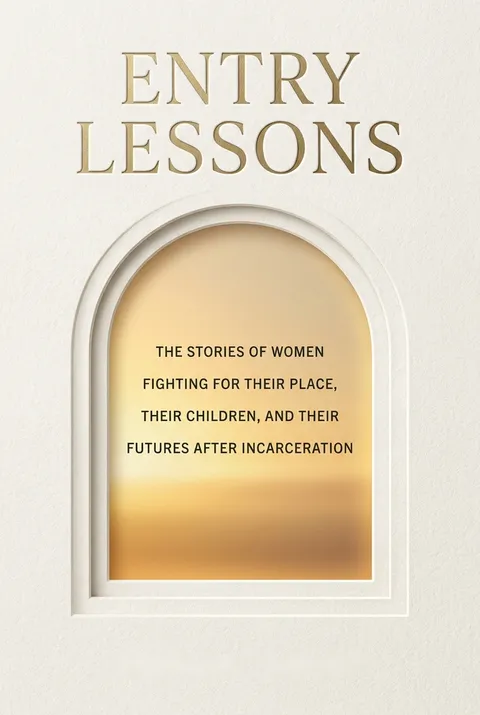

Key Takeaways
1. Trauma and Abandonment Pave the Path to Incarceration
The personal and environmental violence so many incarcerated women encounter from childhood on deeply affects both their emotional and social development, shaping the trajectory of their lives.
Early life trauma. Many women entering the criminal justice system have endured profound and ongoing trauma from childhood, often starting with sexual abuse by family members. This early exposure to violence and violation profoundly shapes their emotional and social development, leading to a desperate search for safety and belonging. Denise Marshall, for instance, experienced sexual abuse by her uncle and sister, and later by her mother's boyfriend, leading her to seek protection in gangs after her mother abandoned her.
Maternal abandonment's impact. A recurring theme is the "mother wound," where women describe feelings of abandonment and a deep longing for maternal love and protection that was often absent. This void can lead to a cycle of seeking care from abusive male partners, who promise protection but often inflict further harm. Rosa Lucero's story is a stark example, as her mother not only abandoned her but actively trafficked her for sex, leaving Rosa with deep-seated trust issues, especially with women.
Seeking protection in gangs. For many, gangs become a surrogate family, offering a sense of belonging and perceived protection from the chaos and violence of their homes. This often comes at a high cost, as gang involvement frequently leads to further trauma, substance abuse, and criminal activity. Ivy Navarrete, after her parents' addiction and her mother's death, found her only constant in gang life, eventually leading her into an abusive relationship with Pedro Martinez, the alleged shooter in the central narrative.
2. The Juvenile Justice System Fails Vulnerable Girls
Girls were criminalized because of stress and conflict within their homes, including conflict that was due to family violence.
"Baby prison" experiences. The juvenile justice system, often mirroring its adult counterpart, was primarily designed for boys and failed to address the specific needs of girls. Girls like Rosa and Denise were sent to "halls and camps" that were more punitive than rehabilitative, with little to no trauma-informed care. Rosa even found "paradise" in camp due to the stability it offered compared to her trafficked home life, highlighting the severe dysfunction they escaped.
"Upcriming" and zero tolerance. A significant factor in girls' increased arrests was "upcriming," where new domestic violence laws led police to arrest daughters for conflicts at home, often to avoid detaining parents. Zero-tolerance policies in schools also disproportionately affected girls, who tended to act out at home rather than in public. This meant girls were criminalized for behaviors rooted in trauma and family conflict, rather than receiving the support they desperately needed.
Crossover youth's plight. Many girls were "crossover youth," moving between the child welfare and juvenile justice systems, experiencing overlapping risk factors like abuse, neglect, and mental health issues. Clara Vasquez's journey exemplifies this, as her mother handed her to foster care, leading to homelessness and gang involvement, and later, repeated cycles through the system. These girls often exited both systems without resolving their traumas, hindering their ability to succeed in adulthood.
3. Money Bail and Child Welfare Systems Perpetuate Cycles of Harm
The child welfare and criminal justice systems almost seem to conspire to sever a mother’s ties to her children rapidly and permanently.
Bail as a poverty trap. The cash bail system disproportionately impacts Black people, people of color, and the poor, especially women. Many women, like Janeth, are held in jail pretrial for extended periods simply because they cannot afford bail, even for nonviolent offenses. This "incarceration without conviction" punishes poverty and initiates a cascade of negative consequences for mothers and their children.
Child welfare's punitive nature. For incarcerated mothers, the child welfare system, despite its stated goal of "family reunification," often acts punitively. Children of incarcerated mothers are five times more likely to enter foster care than those with incarcerated fathers. Laws like the Adoption and Safe Families Act (ASFA) impose strict deadlines for reunification, making it nearly impossible for mothers struggling with incarceration, poverty, and trauma to regain custody before parental rights are terminated.
Double trauma for mothers. Many formerly incarcerated women, like Melody Dawson, have painful memories of being in foster care themselves as children. They desperately try to prevent their own children from experiencing the same fate, but the system's obstacles often make this impossible. This creates a devastating "double trauma," where mothers relive their childhood fears through their children's experiences, further entrenching cycles of pain and separation.
4. Self-Medication Becomes a Survival Strategy for Traumatized Women
I never took drugs to have fun. I just took drugs to face life.
"Hood therapy" for pain. For many women, substance abuse is not about recreation but survival—a form of "hood therapy" to dull the intense pain of their traumas. From early adolescence, drugs become a default coping mechanism for the overwhelming emotional and physical abuse they've endured. Ivy Navarrete, for example, used cocaine from age thirteen to cope with her parents' addiction, her mother's death, and abusive relationships.
Addiction's cyclical nature. Drug use often leads to criminal activity and incarceration, creating a vicious cycle of "drugs, jail, rinse, repeat." Women like Denise Marshall found themselves in and out of jail for drug possession, with incarceration sometimes offering a temporary respite or basic treatment. However, without addressing the underlying trauma, relapse remains a constant threat, often leading back to the criminal justice system.
Treatment gaps and "zero tolerance." Traditional drug rehabilitation programs often fail to address the deep-seated trauma that fuels addiction, focusing instead on dependence and consequences. Many programs, like the Alcoholism Center for Women (ACW) where Denise sought help, enforce "zero tolerance" policies for relapse, leading to immediate expulsion and further destabilization for women who lose housing and support. This approach criminalizes trauma rather than healing it, perpetuating the cycle.
5. Halfway Houses Often Extend the Trauma of Incarceration
In some ways, the halfway houses were worse than being locked up. In prison, you had programs, you had education, and you got a job—you could make money.
"Half-assed" solutions. Halfway houses, often the default reentry option, are frequently described as "half-assed" or "halfway prisons" by women who experience them. They impose rigid rules, curfews, and surveillance that mirror institutional settings, offering little genuine support for healing or transition. Adela Juarez, despite being a strong and capable woman, found her halfway house experience worse than federal prison, citing punitive rules and lack of meaningful assistance.
Economic exploitation. Many halfway houses are partially or fully funded by state or federal agencies, yet they often require residents to surrender a significant portion (20-30%) of their meager earnings. This practice, combined with a lack of job referrals and strict curfews that limit work opportunities, traps women in a cycle of debt and economic instability. Lydia Sherman described her halfway house as a "slave house," where funds were mismanaged and residents were treated inhumanely.
Lack of gender-specific support. The majority of halfway houses are co-ed and lack gender-specific, trauma-informed programming. This means women, many of whom have experienced extensive physical and sexual abuse, are often placed in environments that can be re-traumatizing or unsafe. The absence of tailored support exacerbates their mental health issues and increases their vulnerability to relapse and recidivism, highlighting a critical gap in the reentry system.
6. Effective Reentry Programs Prioritize Healing, Housing, and Community
What women needed, when they exited incarceration, were relationships with other women who understood what they’d been through because they have been through it themselves.
Holistic, trauma-informed care. Successful reentry programs, like Susan Burton's A New Way of Life (ANWOL) and Hour Children, prioritize healing from trauma through comprehensive, gender-specific, and trauma-informed services. They understand that recovery is nonlinear and requires ongoing support, offering mental health and substance use treatment without arbitrary time limits or punitive "zero tolerance" policies for relapse. This approach fosters genuine personal growth and empowerment.
Stable housing as a foundation. Housing is consistently identified as a primary need for formerly incarcerated women, especially those with children. Programs like ANWOL and Hour Children provide transitional and permanent housing, allowing women to live in safe, drug-free environments and focus on reunification with their children. This stability is crucial for preventing homelessness and reducing recidivism, as evidenced by ANWOL's 96% success rate.
Community and sisterhood. Beyond services, these programs cultivate a vital sense of community and belonging among women who share similar experiences. The Homegirl Café, for instance, became a sanctuary where women supported each other, shared resources, and healed together. This "sisterhood alliance" provides a network of understanding and mutual aid, replacing the destructive communities of the past with positive, empowering relationships.
7. Love and Relationships Present Complex Challenges in Reentry
I want to find someone to love me. I do. But who’s got the time?
The enduring search for love. Despite the overwhelming practical demands of reentry—housing, jobs, children, probation—many women still long for intimate relationships and someone to "take care of them." This desire, often rooted in early abandonment and trauma, can conflict with their commitment to recovery and lead them back to unhealthy patterns. Carmen, for example, risked her freedom and stability by attempting to smuggle drugs for her incarcerated husband, driven by a deep need for his love and validation.
Men's abandonment vs. women's loyalty. A stark gender difference emerges in post-incarceration relationships: men often find it easier to maintain or form new relationships, with women waiting for them. Conversely, formerly incarcerated women are frequently abandoned by male partners and face significant stigma, making it harder to find new, healthy connections. Nita Jannsson's observation, "We wanna believe men are gonna wait for us, and we’re havin’ a fantasy," encapsulates this painful reality.
Breaking cycles of abuse. Many women, like Adela Juarez, are determined to break free from past patterns of abusive relationships, recognizing that these connections often led them deeper into crime and trauma. Adela's journey to Interval House, a survivor-led domestic violence shelter, allowed her to finally understand and heal from the emotional and physical abuse she had endured, leading her to help other women avoid similar fates. This commitment to self-preservation often means a deliberate choice to avoid romantic entanglements, at least initially.
8. Incarceration Can Spark New Identities and Sexual Discoveries
I hated every minute in prison, but I also finally learned about myself.
"Gay for the stay" and beyond. Prison environments, while harsh, can paradoxically become spaces for self-discovery, particularly regarding sexuality. Many women engage in same-sex relationships, sometimes out of pragmatism or loneliness ("gay for the stay"), but for others, it leads to a profound realization of their true sexual identity. Adela Juarez observed women forming deep, often jealous, romantic bonds, and some, like Angela Washington, discovered they were lesbian, transforming their lives post-release.
Pseudo-families and caretaking. Women in prison often form "pseudo-families" that mirror traditional family structures, providing crucial emotional support, caretaking, and attachments. These interdependent relationships, where older women mentor and protect younger ones, can be more stable and nurturing than their biological families. This contrasts with male prison hierarchies, which are typically based on power and intimidation, highlighting a gendered difference in coping mechanisms within incarceration.
Navigating new identities post-release. For women who discover or embrace their LGBTQIA identity in prison, reentry presents unique challenges in navigating societal norms and family acceptance. Angela Washington's "coming out at forty-three" to her sons, one of whom struggled with her new relationship, illustrates the complex emotional work involved. Despite initial difficulties, these women often find deep fulfillment in their authentic relationships, demonstrating the transformative potential of self-discovery, even in the most restrictive environments.
9. Children are Both a Stressor and a Powerful Motivator for Change
I knew when I got out I had to have some sort of symbol of hope—some sign that things were going to change, that my life would be better. So, when I got pregnant I knew, I was a redemption mama and this would be my redemption baby.
"Redemption babies" and new beginnings. For many women, having a child after incarceration, or reuniting with existing children, symbolizes a profound new beginning and a powerful motivation for change. Denise Marshall's daughter, Elizabeth, became her "symbol of hope," driving her commitment to graduate school and a new life. Rosa Lucero similarly viewed her fourth child, Isabel, as her "redemption baby," a sign that she would successfully reunite with her other children.
Rebuilding fractured relationships. The biggest obstacle for formerly incarcerated mothers is often rebuilding relationships with children scarred by separation, trauma, and the mother's past actions. Children may harbor anger and blame, even while longing for their mother's return. Adela Juarez faced immense challenges reuniting with her son and daughter, who felt betrayed by her incarceration, requiring intense effort and counseling to repair their bonds.
Hour Children's transformative model. Programs like Hour Children in New York offer a groundbreaking approach to supporting mother-child bonds during and after incarceration. They provide consistent prison visits, residential nurseries for infants, and transitional housing where mothers and children can live together. By focusing on family reunification, career development, and comprehensive support, Hour Children achieves significantly lower recidivism rates, demonstrating the power of keeping families connected.
10. Systemic Reform and Women-Led Advocacy Offer Hope
We need to demand a better life and I think the best way to do that is through organizing.
The need for systemic change. The book concludes with a powerful call for systemic reform, emphasizing that individual resilience is not enough to overcome the deeply entrenched obstacles faced by formerly incarcerated women. The indiscriminate use of cash bail, the lack of community-based alternatives to incarceration, and the absence of gender-specific, trauma-informed programming all contribute to cycles of recidivism and family fragmentation.
Women-led advocacy. The movement for change is increasingly led by formerly incarcerated Black women and women of color, who bring invaluable lived experience to policy discussions. Susan Burton's SAFE Housing Network, for example, aims to create a national model for reentry homes, empowering women as experts and advocates for civil rights and social justice. This grassroots organizing challenges policymakers to move faster and implement real, impactful reforms.
Promising reforms and ongoing work. While challenges remain, there are glimmers of hope:
- Bail reform efforts: Though California's measure failed, Illinois is eliminating cash bail, and Washington D.C.'s success proves alternatives work.
- Diversion programs: Specialized courts like STAR Court and Women's Reentry Court (WRC) offer treatment and services instead of incarceration for certain offenses.
- Legislative changes: California's SB 1437 offers hope for reduced sentences for those not directly involved in murder, as seen in Ivy and Janeth's appeal.
- Youth offender parole: New laws allow "conduct credits" to advance parole dates for those incarcerated under 26, offering hope to women like Janeth.
These efforts, combined with the expansion of holistic reentry programs, represent a pathway forward into the light, ensuring that women, their children, and their communities receive the support needed to heal and thrive.
People Also Read










Download PDF
Download EPUB
.epub digital book format is ideal for reading ebooks on phones, tablets, and e-readers.








































