
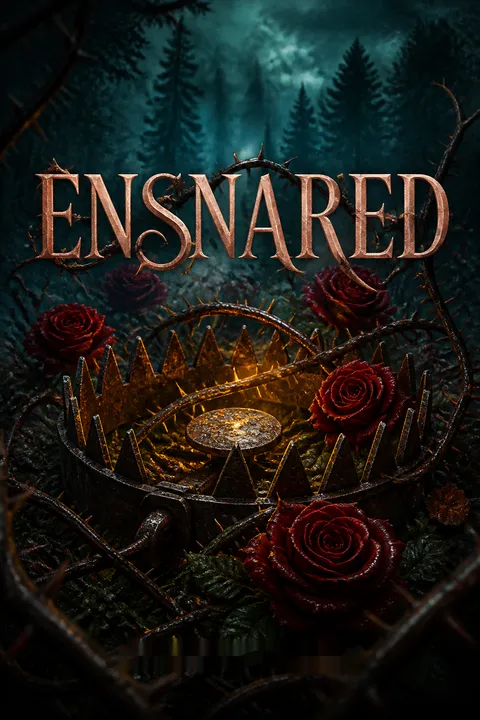


Plot Summary
Hunted From the Cave
Eden,1 a librarian who has survived four years alone in a forest cave since nuclear strikes called Day Death gutted the country, makes one fatal mistake: starved for human contact, she creeps toward distant voices. Sam's7 pack of roughly twenty armed marauders spots her, ransacks her garden, and gives chase. Barefoot, grazed by a bullet, sleepless, she flees for days.
Bleeding and spent, she stumbles to a river only to find three more heavily armed strangers waiting: tattooed Lucky,4 easygoing Beau,3 and scowling Dominic.2 Trapped between hunters and unknowns, she braces for the worst. Instead Beau3 crouches like she's a spooked animal and offers to tend her wounds, while Dominic2 argues they should abandon her before her pursuers arrive.
The opening weaponizes loneliness itself: Eden's near-fatal error is wanting company, which frames the entire novel's central ache. Post-apocalyptic scarcity has inverted ordinary instincts, making other humans the apex predator and solitude the only safety. Quinn establishes Eden as competent yet starved, a survivor whose deepest vulnerability is emotional rather than physical. The river encounter stages the romance's core tension immediately: three men embodying tenderness, charm, and cold pragmatism, mapping the spectrum of how she will be treated. The bullet wound and bare feet ground abstract dread in flesh, while the men's casual lethality signals that rescue and threat here wear the same face.
The Cliffside Slaughter
Gunfire ends the debate over abandoning her. Rather than leave her, Beau3 carries Eden1 up a near-vertical climbing route to a concealed ledge while Lucky4 melts into the treetops with his rifle.
From cover, the men methodically cut down roughly ten of her pursuers while she huddles with hands clamped over ringing ears, fingers on her own knife in case she must end things herself. When the shooting stops, she descends into a clearing strewn with corpses branded with coiled-snake tattoos. The brutal efficiency stuns her.
These are clearly former soldiers, unbothered amid the carnage, and Dominic2 insists she is deadweight they cannot afford. Yet they spent bullets and risk to keep a stranger breathing, an act that complicates her every assumption about armed men.
Violence becomes the men's love language before any romance is spoken. The contrast between their unflinching competence and Eden's trembling horror measures the gap between her world and theirs, a gap the book will spend its length closing. Her readiness to kill herself rather than be captured reveals the stakes women face in this collapsed order, justifying both her caution and her eventual gratitude. The snake brand introduces the antagonist faction as a recurring signature. Crucially, mercy and slaughter coexist: the same hands that dismember can also carry her gently, forcing Eden, and the reader, to hold moral contradiction rather than resolve it.
Belong to All Five
Beau3 and Lucky4 want to bring her home; Dominic2 resists. They reveal the catch: their cliffside lodge, Bristlebrook, shelters five men, and after jealousy wrecked their last attempt at sharing a woman, the rule is absolute. Any woman who stays belongs to all of them equally, or not at all.
Eden,1 a near-virgin widow long convinced she's frigid, is both terrified and tempted by promises of hot water, real food, and an end to suffocating loneliness. When Beau3 kisses her against the riverbank, her body wakes after years of numbness, shocking her. She agrees to try, telling herself she can walk away anytime. They stitch her arm, share precious cheese, and carry her toward a home she cannot yet picture.
The why-choose premise is framed not as fantasy indulgence but as hard-won social engineering: equal belonging is the men's solution to the destructive jealousy that destroyed them before. For Eden, the bargain crystallizes her lifelong pattern of trading her body and autonomy for belonging, the same dynamic her marriage exploited. Her surprise at her own arousal signals the book's deeper project: reclaiming desire from shame. The riverside kiss functions as proof-of-concept, evidence that pleasure she never believed possible is. The escape clause she clings to ('I can leave anytime') is the psychological tether that makes consent feel survivable, even as the reader senses how quickly it will fray.
Welcome to Bristlebrook
Eden1 wakes in luxury: a drone-hidden lodge built into the cliff, with silk sheets and scalding showers. She meets the remaining men. Jasper,5 the elegant psychologist who owns Bristlebrook and runs its surveillance, unsettles her with quiet authority and leaves her beloved novels annotated in his hand. Jaykob,6 a scarred, grease-stained mechanic, kisses her roughly to test her, and she slaps him.
Over drinks the men reveal their kink-club history and her place in the arrangement. To demonstrate the dynamic, Beau3 and Jasper5 bring her to a shattering climax in front of everyone, while Dominic2 pointedly reads and refuses to look. Dominic2 then sets the terms: one week to settle, then a roster of two days on, one off.
The lodge itself is character and theme, an impossible sanctuary whose abundance indicts a starving world and stokes Eden's class resentment. Each man arrives as a distinct erotic and emotional archetype: Jasper the controlled intellect, Jaykob the brute who expects rejection. The public scene transforms private shame into spectacle, the book's recurring strategy for liberating Eden through witnessed pleasure. Dominic's deliberate refusal to watch is the chapter's most telling beat, an absence that screams of guarded feeling rather than indifference. The roster's bureaucratic coldness sits uneasily against intimacy, foreshadowing Eden's coming rebellion against being scheduled like a chore.
The History of the Exile
Lucky4 tours Eden1 through the hidden cavern farm of goats, pigs, and chickens, and her envy boils into anger that five trained soldiers hoard plenty while families starved. Stripped of his usual brightness, Lucky4 tells the truth.
They once gathered around twenty civilians but lost several, including a child, to marauders, then caught a faction led by Sam7 plotting a coup. Rather than execute them, they exiled Sam's7 people fifty miles out and wired the surrounding woods with motion cameras.
The remaining families eventually left, distrusting the men's willingness to protect them. He hints darkly at a woman named Heather8 and a man named Thomas whose betrayal shattered the group. Eden1 begins to see scarred survivors, not the villains she feared.
This is the novel's moral excavation, dismantling Eden's righteous judgment by revealing the impossible calculus of survival ethics. The men's refusal to execute prisoners, choosing exile over murder, defines their code while planting the antagonist's origin as their own mercy turned against them. Lucky's uncharacteristic gravity exposes the cost his cheerfulness conceals, deepening him beyond comic relief. The dead child anchors the stakes in grief rather than abstraction. By seeding Heather and Thomas as unhealed wounds, Quinn builds the relational backstory that will explain Dominic's coldness and Beau's resentment, making the men's dysfunction legible long before it detonates.
The Card She Drew
On roster night the men draw cards and Jaykob6 flips the ace, claiming the first night. He stalks off, certain the prim librarian1 will reject the surly mechanic,6 but Eden1 chases him down and kisses him, refusing to play it safe with only the gentle ones. Their night is rough, furious, and revelatory; the buttoned-up widow discovers she craves exactly this intensity.
By morning the men notice her bruises and assume Jaykob6 brutalized her. Dominic2 pins him to the wall at knifepoint. Eden1 flings herself between them, insisting every mark was wanted, that no one bothered teaching her a safeword because no one believed she'd enjoy it. The clash lays bare how badly the men have misjudged both Jaykob6 and her.
Eden's choice to pursue the man everyone expects her to fear marks her first real act of erotic self-determination, choosing intensity over the safe path. The morning's violent misreading dramatizes the gap between BDSM's careful ethics and its appearance to outsiders, while exposing the men's protective instincts curdling into assumption. That no one explained a safeword reveals the arrangement's reckless foundation and Jaykob's chronic positioning as presumed villain. Eden defending him reverses their dynamic: the supposed victim becomes his advocate, recognizing his shame because it mirrors her own. The scene reframes roughness as care when consensual, and prejudice as the truer cruelty.
A Larger Threat Gathers
Dominic2 drags Beau3 on a recon mission that becomes a reckoning. Trekking the woods, they finally air the wound festering between them: Heather,8 the fierce cop Dominic2 loved, favored him and Thomas while wounding Beau,3 then abandoned them all by running off with Thomas, detonating fifteen years of friendship and their old dream of sharing a woman together.
Their argument breaks when hunters ambush them. After the fight, a dying marauder branded with the snake tattoo gasps that more are coming, more than they can stop. Dominic2 and Beau3 realize Sam's7 exiled survivors have regrouped into a far larger force closing on Bristlebrook, and that Eden's1 flight may have drawn them straight toward the lodge.
The dual-thread chapter braids intimacy and warfare, letting the men's emotional rupture and the external threat escalate in tandem. Heather functions as the ghost structuring the whole novel: her favoritism explains Dominic's terror of attachment and Beau's grievance, framing Eden as either repetition or repair. The confession scene shows masculine vulnerability negotiated through soldiering, the only register these men trust. The dying warning converts a contained skirmish into existential dread, weaponizing the men's earlier mercy. By suggesting Eden may be the vector of doom, Quinn loads her with guilt that will later drive her recklessness, tightening cause toward the climax.
Twister and Hidden Aches
Back home, Lucky4 devotes a day to coaxing Eden1 into joy, rigging a game of Twister whose forfeits dissolve into mutual seduction and laughter she hasn't felt in years. Beneath his sunshine runs a private grief. In the kitchen afterward, Jasper5 corners Lucky4 and makes a startlingly vulnerable request: do not sleep with Eden.1
Lucky,4 who has secretly submitted to the sadistic psychologist5 for years and loves him hopelessly, is gutted that Jasper5 asks this while refusing to promise the same restraint. Their thwarted longing breaks into the open just as the men confirm through the cameras that a large hunter encampment sits days to the south, with a smaller party already slipping closer from the north.
The chapter's tonal split, frolic above and heartbreak below, mirrors Lucky's whole architecture: performance masking starvation. His day with Eden proposes intimacy without dominance, an experiment that quietly fails him, revealing that pleasure alone cannot fill a submissive's specific hunger. Jasper's plea, asymmetrical and selfish, exposes the psychologist's control cracking under desire he has policed for years. The Lucky-Jasper subplot deepens the why-choose structure into genuine polyamorous complexity, where the men's bonds matter as much as their bonds with Eden. Meanwhile the bifurcated hunter movement, south and north, plants the tactical puzzle whose solution becomes the climax.
Chess With the Sadist
Jasper5 invites Eden1 to play chess, and the match becomes mutual confession. He reveals he is a sadist and dominant whose marriage to Soomin10 collapsed because she could never crave the pain he needed to give. He draws out her history in return: a trailer-park girlhood, a controlling husband named Henry9 who shamed her into believing she was frigid, then disgraced himself in the Army before dying in the strikes.
Seduced by Jasper's5 tenderness and her bottomless wish to belong, Eden1 sinks to her knees and whispers that she wants everything, all of them. Jasper,5 terrified of repeating old ruin, gently refuses. He can be a friend and nothing more. She leaves humiliated, certain she misread him completely.
The chess metaphor structures a battle of disclosure where each player surrenders a defended secret. Jasper and Eden are revealed as mirror wounds: both shaped by partners who made them feel insufficient, both fluent in self-erasure. Her kneeling, instinctive and unbidden, dramatizes how naturally submission lives in her body, while his refusal weaponizes care against itself, the sadist's cruelest act being restraint. The rejection devastates precisely because it arrives wrapped in kindness, echoing Henry's polished cruelty. Quinn complicates the harem wish-fulfillment by insisting not every connection completes, that wanting everything risks the humiliation of wanting more than someone can give.
Breaking Into the Truth
Stung by relentless secrecy, Eden1 cracks the hidden door to the surveillance room and is caught eavesdropping. Dominic2 hauls her in to discipline her, only to discover she believes a safeword would simply get her evicted, that obedience is the rent she pays to stay. The men are horrified by how warped her understanding has become. Eden1 seizes the moment to renegotiate everything.
She chooses the word Bristlebrook as her safeword and demands to be treated as an equal rather than a pampered pet, told the truth and allowed to contribute. Dominic,2 who avoids soft submissives precisely because they won't speak up, agrees. Going forward they will tell her everything and bring her along, provided she follows orders. They shake on it.
This is Eden's structural turning point from object to agent. Her catastrophic misreading of the safeword, as eviction notice rather than protection, lays bare how thoroughly past coercion taught her that limits cost love. Naming her safeword after the lodge transforms a word into a thesis: safety and voice are now the same thing. The negotiation reframes the entire arrangement from transaction to partnership, and Dominic's agreement reveals that his domination requires, rather than suppresses, her assertion. The handshake is a contract between equals, the precise inverse of the original deal, marking how far she has traveled from the grateful stray of the riverbank.
She Follows Them Anyway
Distrusting Dominic's2 fresh promise of honesty, Eden1 secretly tracks him and Beau3 into the woods, proving her forest skills while overhearing yet more of the Heather8 wound. She nearly dies for it. Startled, Beau3 fires and barely misses her, an error that shakes him to the bone. Furious, the men finally surrender the full truth: the dead cameras were never maintenance.
Hunters tied to Sam7 are converging, and the broken cameras reek of a deliberate lure. Gutted that she may have brought ruin to Bristlebrook, Eden1 offers to leave so the men will be spared. Dominic2 refuses, insisting they have it handled, and orders her to keep pace and stay silent while they move to intercept the northern party.
Eden's disobedience tests her new equality and finds its limits, dramatizing the painful truth that trust is built through rupture, not declaration. The near-shooting inverts the opening rescue: now the men are the danger to her body, and Beau's anguish reveals how love raises the stakes of every reflex. Her instinct to sacrifice herself, to leave so they survive, shows guilt curdling into martyrdom, a self-erasure she's supposedly outgrowing. Dominic's refusal to let her go affirms the bond even as he reasserts command. The chapter steers the romance plot and the war plot into convergence, with Eden now embedded in the violence she once only fled.
The Kill in the Canyon
At the hunters' camp Eden1 realizes the broken cameras spell a trap and bolts toward the gunfire instead of hiding. Climbing a tree, she finds a sniper picking off Dom2 and Beau3 and shoves him from his branch. They both fall; her knife sinks into his back, his neck breaks, and his blood drenches her. Shattered and vomiting, she is certain she is a murderer.
By a stream, Dom2 and Beau3 use a raw, controlled scene, stripping and chasing and finally cradling her, to pull the grief out so she can weep cleanly, then reframe it: she defended herself and saved Dominic's2 life. In the moss afterward, Eden1 breaks their bargain and asks instead for a real relationship, freely chosen.
The kill forces Eden across the threshold the men crossed long ago, collapsing the moral distance between rescuer and rescued. Quinn's boldest move is therapeutic kink: the streamside scene literalizes processing trauma through controlled pain and surrender, dramatizing the book's thesis that consensual intensity can heal rather than harm. The reframing, that she defended rather than murdered, mirrors how she earlier absolved the men, finally applying her own mercy to herself. Her decision to dissolve the deal in favor of chosen relationship completes her arc from transactional survival to deserving love. Blood and water, guilt and absolution, braid into a baptism of self-acceptance.
The Name That Means Disaster
Wrapped between Dom2 and Beau,3 glowing and unguarded, Eden1 mentions the leader who nearly caught her: Sam.7 The name detonates. Sam7 is the very man they exiled years ago, and the marauders they just killed were never the real objective. The northern fight was bait to pull Bristlebrook's defenders away. The trap was always meant for the lodge, now guarded only by Jasper,5 Lucky,4 and Jaykob.6
The three race home through the night. Back at the lodge, Lucky4 forces a final confrontation with Jasper,5 who at last surrenders, confesses the ethics-bound history of resisting his former patient, and they come together. Then Jasper5 notices the camera feed is repeating a looping bird. They have been blind for hours.
The single-word reveal is the novel's keystone irony: the men's old mercy, exiling Sam rather than killing him, returns as the architecture of their destruction. Eden's innocent disclosure makes her unwitting intelligence the turning point, vindicating her demand to be told everything. The Jasper-Lucky consummation lands amid catastrophe, the long-deferred bond claimed only when the world burns, suggesting crisis dissolves the defenses peace could not. Jasper's confession reframes his cruelty as misplaced honor. The looped footage is a chilling technological betrayal, transforming the lodge's greatest security into the instrument of ambush, and converting the reader's dread into certainty just before impact.
Bristlebrook Ablaze
The attack is already underway. Jaykob's6 barn becomes an inferno; Lucky4 and Jasper5 are pinned behind a truck, Jaykob6 trapped by flames. Lucky4 charges into open ground, hurls a grenade that scatters the closing pack, and takes two bullets to the chest before he drops. Dominic,2 sniping from the lodge, lacks the firepower to break the siege until Eden,1 defying orders to hide, drags the stolen bazooka and an arsenal from Lucky's secret stash up to him.
Beau,3 separated and convinced he will die, radios a farewell and creates a diversion, then survives against the odds. Dominic2 fires the rocket into the burning barn, and the blast obliterates the attackers. The defenders haul the gravely wounded Lucky4 inside as the clearing burns.
The climax pays off every planted element: Lucky's magpie weapon stash, Eden's earlier bazooka theft, the men's combat fluency, and the lodge as fortress and target. Lucky's grenade charge and Beau's radioed goodbye stage masculine self-sacrifice as the love language established in the opening slaughter, now turned toward protecting family rather than a stranger. Crucially, Eden delivers victory, her defiance and resourcefulness, not the men's strength, breaking the siege, completing her transformation from rescued burden to savior. The barn's explosion is apocalypse in miniature, fire consuming the sanctuary, dramatizing that even paradise must be defended in blood. Survival here is collective, contingent, and costly.
Saved, Then Stolen
In the candlelit med bay, Beau3 works to seal Lucky's4 collapsed lung while Jasper,5 soot-streaked and weeping, refuses to leave his side. Lucky4 wakes, and Jasper5 kisses him openly at last, the long-buried bond finally claimed before the others. The siege is broken, the hunters scattered, the family battered but breathing.
Then comes the question that turns relief to ice: where is Eden?1 She went back for more weapons over eighteen hours ago and never returned. The narrative rewinds to that errand. Alone in the darkening woods, the hairs on her neck prickling, Eden1 senses she is not alone, turns, and walks straight into the arms of Sam,7 who tells her it is time she came along.
The resolution withholds resolution, granting emotional closure (Jasper and Lucky claimed, the family intact) only to rip away the woman who made them whole. The reverse chronology is a structural cruelty: the reader celebrates survival while Eden is already gone, the joy retroactively hollowed. Sam's capture closes the revenge loop opened by the exile, making Eden the trophy of a grudge she never earned. Her recurring vulnerability, eyesight, smallness, the woods that once sheltered her now turning hostile, underscores that competence cannot fully armor against a world built to prey on women. The cliffhanger converts the entire victory into a new beginning of dread.
Analysis
Ensnared dresses a why-choose romance in post-apocalyptic survivalism, but its real subject is the rehabilitation of a woman taught that limits cost love. Eden's1 marriage and grandmother trained her to equate worth with compliance, so the novel's erotic project, witnessed pleasure, negotiated submission, a safeword named for sanctuary, is fundamentally about consent as self-reclamation rather than titillation alone. Quinn's boldest formal gambit is treating kink as therapy: the streamside aftercare scene literalizes processing trauma through controlled surrender, arguing that intensity freely chosen can heal what coercion broke. The book insists on the distinction between roughness and abuse, prejudice and protection, repeatedly punishing characters, and readers, who assume the worst of Jaykob6 or of Eden's1 desires. The ensemble structure lets Quinn anatomize masculine wounding too: Dominic's2 control as grief management, Beau's3 resentment as betrayed loyalty, Lucky's4 comedy as concealment, Jasper's5 restraint as misapplied honor, Jaykob's6 aggression as preemptive self-defense. Their bonds with each other carry as much weight as their bonds with Eden,1 making the harem genuinely polyamorous rather than merely a woman with options. The recurring irony, mercy returning as catastrophe, gives the survival plot moral heft: exiling Sam7 rather than executing him is both the men's virtue and the seed of their near-destruction, complicating any clean ethics of survival. Class resentment threads throughout, as Eden's1 trailer-park shame collides with Jasper's5 wealth and the lodge's obscene abundance amid a starving world. The novel's emotional climax is not the battle but Eden's1 transformation from rescued burden into the savior who breaks the siege, only for the cliffhanger to strip her away, insisting that competence cannot fully armor a woman against a world rebuilt to prey on her. It is romance as reconstruction after apocalypse, personal and civilizational at once.
Review Summary
Ensnared receives mostly positive reviews, praised for its engaging post-apocalyptic romance plot, well-developed characters, and steamy scenes. Readers appreciate the unique personalities of the five male leads and the female protagonist's growth. The book is described as addictive, with a good balance of action, tension, and spice. Some criticize the YA-style writing and lack of world-building. The cliffhanger ending leaves readers eager for the sequel. Overall, it's a popular choice for fans of reverse harem and dystopian romance genres.
People Also Read




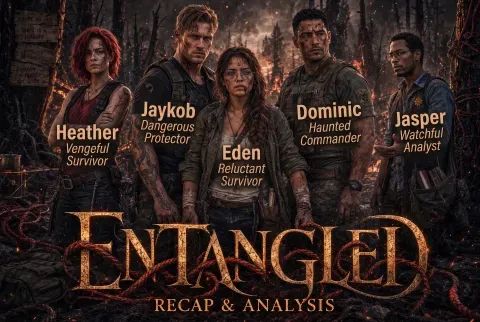
Characters
Eden
Lonely librarian survivorA 27-year-old former librarian with a masters in information science, widowed and self-taught in herbology, who endured four years alone in a forest cave after nuclear war shattered the country. Raised in a trailer park by a strict grandmother and later married to a controlling man9 who convinced her she was frigid and worthless, she carries a deep hunger for belonging tangled with fierce, hard-won independence. Intelligent, reflexively polite, and quietly stubborn, she masks resilience beneath nervous manners. Her arc traces the reclamation of desire, voice, and self-worth as she learns to demand equality rather than merely accept safety. She is both the prize five men circle and a survivor who repeatedly proves more capable and braver than anyone, including herself, expects.
Dominic
Hard-edged group captainThe group's commanding former Ranger, forged by a legendary, punishing father into a man who equates absolute control with safety. Dominant, blunt, and quick to fury, he buries fear of loss beneath orders and discipline. Still scarred by a woman named Heather8, he resists attachment, especially to Eden1, whom he dismisses partly to protect his fractured bond with his oldest friend3. He prefers submissives who speak up because he distrusts his own ability to read signals. Beneath the armor lives a fiercely protective, surprisingly tender man who carries every death and failure as personal guilt.
Beau
Charming Southern doctorThe group's physician and Dominic's2 friend of over fifteen years, raised devout and Southern, all warm drawl and disarming charm. He soothes where Dominic2 intimidates, gentling frightened people and tending wounds with equal ease. Yet he nurses resentment over how Heather8 and Dominic's2 choices broke their long partnership and their old dream of sharing a family. Instantly drawn to Eden1, he hopes she can mend what shattered. His easy kindness conceals a darker dominant streak and a soldier's lethal precision.
Lucky
Playful acrobat soldierBorn Lucien, a former circus acrobat turned Ranger, all dimples, braids, and ceaseless banter. A bisexual switch with masochistic leanings, he hides loneliness and a hopeless love for the lodge's psychologist5 beneath relentless performance. People-loving, reckless, and warm, he is the group's sunshine and its secret bruise, craving the control and tender cruelty he is too afraid to ask for. His cheer is armor over genuine grief, and he proves far tougher and braver than his clowning suggests.
Jasper
Elegant sadist psychologistThe lodge's Korean-American owner and the team's former military psychologist, refined, exacting, and quietly tormented. A self-aware sadist and dominant whose marriage to Soomin10 failed over mismatched needs, he polices himself with rigid ethics, particularly regarding a former patient he desires4. Cultured and uncannily perceptive, he reads everyone effortlessly while concealing his own loneliness behind cold composure, annotated novels, and chamomile calm. His restraint is both his honor and his cruelty, and his discipline masks a man starving for the connection he denies himself.
Jaykob
Gruff scarred mechanicA heavily tattooed, grease-stained mechanic from a poor background, combative and abrasive, with a chip on his shoulder about the privileged men around him. Rough in bed and rougher in temper, he expects rejection and pushes everyone away before they can leave him first. Beneath the snarl lie grief over a lost brother and a starved, carefully hidden need to belong. He is more perceptive and more loyal than his sneer admits.
Sam
Vengeful marauder leaderThe antagonist, leader of a pack branded with coiled-snake tattoos. Once exiled from Bristlebrook after a failed coup, he returns hungry for revenge and the lodge's resources, and his pursuit of Eden1 launches the entire story.
Heather
Dominic's absent exThe fierce former cop Dominic2 loved, now gone. Brave and sharp-tongued, she favored Dominic2 and Thomas while cutting the other men down, and her departure with Thomas fractured the group's trust and friendships, haunting them still.
Henry
Eden's late husbandEden's1 deceased husband, a wealthy man's son who lifted her from poverty only to control and belittle her, convincing her she was frigid before disgracing himself in the Army and dying in the strikes.
Soomin
Jasper's ex-wifeJasper's5 former wife, whom he loved deeply but could not match in kink; their divorce predated the war and left him convinced he could carve away his own nature to keep love.
Plot Devices
The Equal-Share Deal
Binding premise of belongingThe men's ironclad rule that any woman who stays at Bristlebrook belongs to all of them equally, born from past jealousy that destroyed their previous attempt. It frames the central why-choose structure not as fantasy but as deliberate social engineering. For Eden1, the deal externalizes her lifelong pattern of trading body and autonomy for safety and belonging, the same bargain her marriage exploited. The arrangement's coldness, the roster, the obedience, the secrecy, becomes the friction that drives her growth, until she rejects transaction entirely and demands a freely chosen relationship among equals. The deal's making, straining, and unmaking traces the novel's whole emotional arc from survival to love.
Survival Tip Epigraphs
Framing chapter mottosEach chapter opens with a numbered survival tip, wry, dark, or tender, that distills Eden's1 hard-earned worldview and often ironically counterpoints the scene to follow. The device establishes her voice as a pragmatic loner who has reduced existence to rules, and the tips' evolution from purely tactical to emotional mirrors her thawing. They function as a running internal monologue, lending humor and pathos while quietly tracking her shift from someone who survives alone to someone learning to risk connection. The tips also seed the book's tonal blend of danger, kink, and comedy.
The Hidden Camera Network
Security turned ambushThirty-seven motion cameras wired through the woods are Bristlebrook's early-warning system, the technological backbone of the men's safety. Their malfunction, three feeds going dark, generates the recon mission and rising paranoia. The device pays off devastatingly when the surveillance meant to protect the lodge is revealed to have been compromised and looped, blinding the defenders and enabling the very ambush it should have prevented. The cameras embody the novel's theme that the survivors' greatest strengths, mercy, abundance, technology, can each be inverted into vulnerability by an enemy who knows them intimately.
The Safeword Bristlebrook
Symbol of reclaimed voiceWhen Eden1 is found to believe a safeword would simply get her evicted, the men insist she choose one, and she selects the lodge's name. The word fuses safety and autonomy into a single utterance, transforming a kink mechanic into the novel's thesis. Naming her safeword after the first place she ever felt safe reframes her entire journey: she is no longer a guest paying rent with obedience but a partner with the power to stop anything without penalty. The device marks her structural pivot from object to agent and recurs as a touchstone of her hard-won self-worth.
Lucky's Weapon Stash
Hoarded arsenal payoffLucky's4 magpie habit of squirreling away weapons, including a bazooka Dominic2 forbade keeping in the house, is introduced comically when Eden1 is dared to steal it. The running joke about his secret hidey-hole and Dominic's2 safety lectures plants a classic Chekhov's gun. In the climax the stash becomes salvation: Eden1, remembering it, hauls the bazooka and an arsenal to the besieged Dominic2, supplying the firepower that breaks the attack. The device rewards setup with payoff and, crucially, routes the decisive turn of the battle through Eden's1 resourcefulness rather than the men's combat skill.
FAQ
Basic Details
What is Ensnared about?
- Survival in a Broken World: Ensnared is set in a brutal post-apocalyptic America, years after a devastating war known as Day Death. Society has collapsed, replaced by lawless groups of survivors, where a woman alone is particularly vulnerable.
- A Desperate Bargain for Safety: The story follows Eden, a resourceful woman who has survived in isolation, as she is discovered and pursued by predatory men. Injured and cornered, she is rescued by a group of five ex-military men living in a hidden, fortified lodge called Bristlebrook.
- More Than Just Shelter: The men offer Eden protection and a home, but the price is her participation in a polyamorous, BDSM-inflected relationship with all five of them. The narrative explores the complex dynamics, power negotiations, and emotional journeys that unfold as Eden navigates this dangerous new arrangement while external threats loom.
Why should I read Ensnared?
- Unique Blend of Genres: Ensnared offers a compelling mix of post-apocalyptic survival, dark romance, and psychological exploration, delving into how trauma shapes desire and relationships in extreme circumstances.
- Deep Character Dive: The novel provides in-depth psychological profiles of its characters, particularly Eden and the five men, exploring their complex motivations, past wounds, and the ways they use BDSM dynamics to cope and connect.
- Themes of Found Family & Agency: Beyond the romance, the story powerfully examines the formation of a found family in a world devoid of traditional structures, highlighting Eden's journey from victim to empowered individual asserting her agency within the group.
What is the background of Ensnared?
- The Aftermath of Day Death: The world was decimated by a sudden, multi-wave attack involving intercontinental ballistic missiles and heat-seeking drones, leading to the collapse of government, infrastructure, and society. The narrative is set years later, after the initial chaos has subsided but lawlessness persists.
- Military and Kink Culture: The five men are former Army Rangers who were on leave and involved in a private kink club when the attacks occurred. Their military training provides their survival skills and tactical mindset, while their background in BDSM informs the power dynamics and sexual negotiations within their group.
- Bristlebrook's Isolation: The lodge, Bristlebrook, is a self-sufficient, hidden sanctuary built into a cliff face, designed to be invisible to aerial surveillance and difficult to find from the ground. This isolation is key to the group's survival but also contributes to their emotional insularity and the intensity of their internal dynamics.
What are the most memorable quotes in Ensnared?
- "Survival tip #51: Carrots aren't worth your life.": This opening line immediately establishes Eden's pragmatic, solitary survival mindset and the harsh realities of her world, contrasting the mundane (carrots) with the ultimate stakes (life).
- "Family is who you choose to make it, Eden.": Jasper's quiet observation to Eden hints at the core theme of found family and offers a moment of unexpected connection, suggesting that belonging is built through choice and vulnerability, not just blood ties.
- "You're ours to suck and fuck and play with however we want.": Dom's brutal command during a scene encapsulates the initial power dynamic and transactional nature of the men's offer, highlighting the objectification Eden faces while also setting the stage for her eventual defiance and renegotiation of terms.
What writing style, narrative choices, and literary techniques does Rebecca Quinn use?
- Alternating Perspectives & Internal Monologue: The narrative primarily uses Eden's first-person perspective, offering deep insight into her fears, desires, and evolving understanding. Occasional shifts to the men's perspectives reveal their hidden thoughts, motivations, and the complex group dynamics, often highlighting the contrast between their internal states and external actions.
- Survival Tips as Framing Device: Each chapter opens with one of Eden's numbered "Survival tips," which serve as ironic or thematic commentary on the events that follow, grounding the extraordinary circumstances in Eden's practical, often cynical, worldview.
- Sensory Detail and Emotional Intensity: Quinn employs vivid sensory descriptions, particularly focusing on touch, taste, and physical sensations during intimate or violent scenes, to convey the raw emotional intensity and psychological impact of the characters' experiences. The pacing shifts between high-stakes action/suspense and introspective, character-driven moments.
Hidden Details & Subtle Connections
What are some minor details that add significant meaning?
- Eden's Glasses and Knife: Eden's black-rimmed glasses symbolize her intellectual nature and vulnerability in a physical world, while her small knife represents her limited means of self-defense and fierce determination to survive independently. Losing her glasses during moments of panic or intimacy highlights her disorientation and reliance on others.
- The Hunters' Snake Tattoo: The recurring coiled snake tattoo on the hunters' hands marks them as belonging to a specific, organized group (Sam's) and symbolizes their predatory nature and the pervasive danger in the post-apocalyptic world, linking the initial threat to the later attack on Bristlebrook.
- Jasper's Kintsugi Teapot: Jasper's prized Kintsugi teapot, mended with gold, symbolizes his philosophy that beauty and strength can be found in brokenness and repair. This subtly reflects his own internal struggles with his past and sadism, and foreshadows his belief that the group's fractured members can be stronger together.
What are some subtle foreshadowing and callbacks?
- Eden's Survival Tips: Many tips subtly foreshadow events or reveal character traits. For example, "Survival tip #12: Laugh lines can be deceptive" hints at Beau's hidden complexity beneath his gentle exterior, while "Survival tip #1: Kill or be killed" directly foreshadows Eden's later act of taking a life.
- The River Encounter as Microcosm: The initial scene at the river, where Eden is caught between her original pursuers and the men of Bristlebrook, foreshadows the larger conflict and her position within the group – constantly navigating different threats and power dynamics, ultimately choosing one form of danger/safety over another.
- Recurring Mentions of Heather: The men's frequent, often tense, references to Heather and her departure foreshadow the deep trust issues and unresolved trauma that Eden's presence will force them to confront, revealing that their past relationships significantly shape their present interactions and fears.
What are some unexpected character connections?
- Jaykob's Hidden Softness and Past: Despite his rough exterior and initial aggression towards Eden, subtle details like the photo of his family in his workshop, his quiet acceptance of Eden's help, and his protectiveness of her reveal a deeper vulnerability and longing for connection, contrasting sharply with the "brute" persona he projects.
- Lucky's Melancholy Underneath Playfulness: Lucky's constant humor and energy mask a profound loneliness and sadness, hinted at in his quiet moments and revealed more fully in his conversation with Eden about his past and family. This unexpected depth contrasts with his "circus boy" facade and connects him emotionally to Eden's own isolation.
- Jasper's Vulnerability and Need for Control: Jasper's elegant, controlled demeanor and sadism are unexpectedly paired with moments of deep vulnerability, such as his confession about his failed marriage and his struggle with his desires. His need for control in BDSM scenes seems linked to his fear of losing control emotionally or causing harm, creating a complex internal conflict.
Who are the most significant supporting characters?
- Heather: Though never appearing directly, Heather is a pivotal offstage character whose past relationship with the men, particularly Dom and Beau, created deep rifts and trust issues within the group. Her perceived betrayal and departure serve as a constant point of reference and a source of tension that Eden's arrival exacerbates.
- Sam: The leader of the initial group of hunters pursuing Eden, Sam represents the immediate, brutal threat of the outside world. His reappearance and leadership of the attacking force at the end reveal the organized nature of the enemy and confirm that the danger is far from over, directly driving the plot's climax.
- Jasper's Parents: Mentioned primarily by Jasper, his parents represent a lost world of culture, family, and stability. Their home, Bristlebrook, becomes the physical manifestation of the sanctuary the men seek, and their values (like the importance of family and Kintsugi) subtly influence Jasper's perspective and actions.
Psychological, Emotional, & Relational Analysis
What are some unspoken motivations of the characters?
- Dom's Need for Order and Protection: Beyond leading, Dom is driven by a deep-seated need to maintain control and protect his chosen family, stemming from the chaos of the apocalypse and the perceived failures and betrayals of the past. His dominance is a shield against vulnerability and a way to ensure survival.
- Jasper's Search for Acceptance and Redemption: Jasper's sadism is intertwined with a profound fear of being a "villain" and causing unwanted pain. His motivation is not just pleasure, but finding someone who willingly accepts his darkness, allowing him to feel accepted and perhaps redeemed for past perceived failures (like his marriage).
- Lucky's Craving for Unconditional Acceptance: Lucky's constant performance and humor are a defense mechanism. His unspoken motivation is a deep craving for acceptance and belonging, particularly from Jasper, and a fear that his true self, including his masochistic needs, is not enough or is a burden.
What psychological complexities do the characters exhibit?
- Trauma Responses and Coping Mechanisms: All characters exhibit complex trauma responses from the apocalypse and their experiences. Eden's initial freezing and dissociation contrast with her later fight-or-flight responses. The men use their BDSM dynamics, military discipline, and emotional walls as coping mechanisms for PTSD, grief, and the moral compromises of survival.
- The Interplay of Dominance and Submission: The BDSM dynamics are deeply psychological. Dom's need to dominate is linked to control and responsibility. Beau's gentle dominance is tied to care and healing. Jasper's sadism explores themes of willing surrender and the psychological edge of pain. Eden's journey through submission reveals her capacity for trust, vulnerability, and ultimately, empowerment.
- Identity and Self-Worth in a Broken World: Characters grapple with their identities outside of their pre-apocalypse roles (Ranger, psychologist, librarian). Jaykob's struggle with feeling like an outsider, Lucky's fear of not being taken seriously, and Eden's fight against being reduced to a commodity all highlight the psychological challenge of maintaining self-worth when societal structures are gone.
What are the major emotional turning points?
- Eden's First Orgasm with Beau/Jasper: This moment marks Eden's first experience of intense sexual pleasure, shattering her previous negative experiences and opening her to the possibility of desire and connection beyond mere transaction.
- Eden Killing the Sniper: This act is a profound emotional turning point for Eden, forcing her to confront her capacity for violence and the brutal reality of survival. Her subsequent breakdown and the men's response are crucial for her healing and integration into the group.
- The Renegotiation of the Deal: Eden's decision to break the original transactional bargain and demand honesty and equality is a major turning point for the entire group. It shifts the foundation of their relationships from necessity to choice, opening the door for genuine emotional bonds and found family.
How do relationship dynamics evolve?
- From Transactional to Relational: The initial arrangement is based on a clear exchange: safety for sex. Over the course of the story, this evolves as emotional bonds form, trust is built (and sometimes broken), and characters begin to care for each other beyond the terms of the deal.
- Shifting Power Dynamics: While dominance and submission are present, the power dynamics are fluid. Eden gains agency by asserting her needs and boundaries. The men's internal conflicts and relationships with each other (e.g., Dom/Beau's partnership, Lucky's longing for Jasper, Jaykob's outsider status) constantly influence the group dynamic and their interactions with Eden.
- Healing Through Shared Vulnerability: The characters' willingness to reveal their past wounds and vulnerabilities, often facilitated through intimate or BDSM scenes, allows for deeper connection and healing. The cathartic scene with Dom and Beau after Eden kills the sniper is a prime example of shared trauma processing strengthening bonds.
Interpretation & Debate
Which parts of the story remain ambiguous or open-ended?
- The Fate of the Outside World: While the narrative confirms the collapse of the US government and infrastructure, the state of other nations and the ultimate cause/perpetrators of Day Death remain largely unknown, leaving the possibility of future external threats or changes in the global landscape open.
- The Full Extent of the Men's Past Trauma: While glimpses are provided (e.g., Beau's struggle with killing, Jaykob's loss of his brother, Jasper's ethical conflicts), the full psychological impact of their military experiences and the apocalypse on each man is hinted at but not fully explored, leaving room for future development.
- The Future of the Group's Dynamics: The renegotiation of the deal and the immediate aftermath of the attack leave the future of the group's polyamorous relationships and internal power balance uncertain. How they will navigate jealousy, loss (Lucky's injury), and external threats under the new terms is open-ended.
What are some debatable, controversial scenes or moments in Ensnared?
- The Initial Bargain: The core premise of the men offering safety in exchange for sexual participation can be debated regarding consent, given Eden's desperate circumstances. While the text emphasizes her choice and the men's rule against non-consensual participation, her limited options raise questions about the nature of that choice.
- Jaykob's First Encounter with Eden: Jaykob's aggressive approach and immediate physical contact without explicit verbal consent, despite the group's stated rules, is a controversial moment. While later framed as a "test" and Eden acknowledges her own response, the scene pushes boundaries and can be interpreted differently by readers.
- The Cathartic Scene with Dom and Beau: The scene where Dom and Beau help Eden process the trauma of killing through a BDSM-infused encounter is debatable. While presented as healing within the narrative, using sexual dynamics to process violence and grief can be seen as controversial or potentially re-traumatizing depending on interpretation.
Ensnared Ending Explained: How It Ends & What It Means
- The Attack on Bristlebrook: The story culminates in a large-scale attack on Bristlebrook by Sam's group, revealed to be a trap designed to draw out and divide the men. The barn is destroyed, and a chaotic battle ensues, resulting in casualties among the attackers and severe injury to Lucky.
- Eden's Bravery and Disappearance: Against orders, Eden retrieves weapons from Lucky's hidden stash, providing crucial firepower that allows Dom to decimate the attacking force. However, in the chaos, she goes missing, and the men realize she may have been captured by the surviving hunters, including Sam.
- Meaning and Cliffhanger: The ending signifies that the external threat is far from over and directly links it back to Eden's initial pursuers. It shatters the fragile peace and found family the group had begun to build, leaving them wounded, fractured, and facing the immediate crisis of finding Eden. It underscores that survival is ongoing and costly, setting up the central conflict for the next book in the series.
Brutes of Bristlebrook Series
About the Author

Download PDF
Download EPUB
.epub digital book format is ideal for reading ebooks on phones, tablets, and e-readers.








































