

Plot Summary
Chained Toward Cyanide City
Eden1 stumbles through the woods, wrists raw and bleeding, dragged on a rope by Sam,10 a brutish silver-bearded Sinner. She chants the names of the men she loves like a wound, certain Lucky,6 Jaykob,4 and the rest died when Bristlebrook fell. Numbness gives way to a stubborn refusal to die.
When three armed strangers pass, Sam10 hides her, but a younger, gentle-faced Sinner named Mateo9 finds them and slices her bleeding bonds, overruling Sam's10 cruelty on orders from someone called Alastair.8 Eden1 files away every detail, deciding her only weapon is her own mind. She resolves to outwit her dull, dangerous captor and survive, whatever it costs her body or soul.
The opening weaponizes grief: Quinn lets the reader believe Eden's found family is dead, anchoring the entire book in the terror of loss before any reunion can offer relief. Eden's interior carousel of names dramatizes trauma's looping rumination, while her decision to outthink rather than overpower Sam establishes her defining trait, intelligence as survival. The chapter also seeds the central moral world: a lawless place where kindness from strangers like Mateo is a calculated gamble. Eden's mantra, that survival is in her nature, frames softness and ferocity as coexisting rather than opposed, the paradox the whole novel will interrogate.
The Camp by the Cliff
Sam10 hauls Eden1 into a divided Sinner camp where a blond man named Logan15 rages that the assault on Bristlebrook got half their men killed. He spills the detail that destroys her: the lodge was blown up with its defenders inside, leaving no survivors. Eden1 crumples, certain now that all five of her men are ash.
A burned, whispering leader named Alastair8 calms the brewing mutiny and forbids Sam10 from abusing her. Beaten into the dirt beside her, a defiant redheaded captive named Madison7 grips Eden's1 hand, anchoring her through the worst of her grief. Eden1 surrenders to despair and a stranger's boot, no longer caring what the Sinners do to her.
This is the false bottom of Eden's grief, the moment despair becomes total. Logan's claim functions as dramatic misinformation, and the reader's eventual knowledge that it is wrong creates wrenching irony. The camp's split, Sam's loyalists versus Alastair's men, introduces the political fault line that will detonate later. Madison's hand in the mud is the book's first image of female solidarity forged through shared suffering, a bond Quinn will later complicate. Alastair's restraint, protecting the women not from kindness but from strategic interest, establishes him as the cold intelligence Sam lacks, the true threat hiding behind the obvious one.
The Trackers Behind Her
Far behind, Jasper,5 Dominic,2 and Jaykob4 push through sleepless days on Eden's1 trail, alive and frantic. Dominic,2 the Ranger captain, drowns in guilt for letting her be taken; Jaykob4 lashes out at everyone; Jasper,5 the retired psychologist, drives his soft body past its limits, ashamed of his lost fitness.
Back at the lodge, the medic Beau3 nurses Lucky,6 who survived three gunshots and a punctured lung, both men sick with helpless dread. Bristlebrook was never destroyed. Logan's15 claim was simply wrong. The men are coming, even if Dominic's2 plan amounts only to rescue or vengeance. The reader now carries the unbearable gap between Eden's1 certainty and the truth.
Quinn pivots to the men's perspectives to resolve the reader's suspense while preserving Eden's, an asymmetry that generates tenderness and dread. Each man's failure mode is psychologically specific: Dominic's guilt-as-control, Jaykob's grief-as-aggression, Jasper's shame at physical decline masking deeper self-recrimination. The Lucien subplot at Bristlebrook keeps the wounded body present, reminding us survival is fragile and ongoing. This section reframes the rescue not as heroic certainty but as desperate, exhausted love, men running themselves to ruin not because they will succeed but because they cannot bear not to try. Devotion here is endurance, not triumph.
A Cook with Hemlock
Eden's1 despair hardens into hate. She offers to cook and tend the wounded, earning freedom from her ropes and the Sinners' growing inattention. Hidden in her pocket is water hemlock, the deadly plant Beau3 once nearly cooked into their dinner. While treating the burned Alastair,8 she reads his scheming intelligence and his obsession with Madison,7 whose lover Tommy he executed.
Madison,7 sharp-tongued and reckless, becomes the friend who drags Eden1 back from numbness, trading stories of the dead in the dark. Eden1 tallies sixteen Sinners and calculates how many she must kill to avenge her men. Madison's7 larger, older rage recognizes the new demon waking inside gentle Eden.1
Grief metabolizes into agency. Eden's herbalist competence, once domestic, becomes lethal, dramatizing the book's thesis that intelligence and patience defeat brute force. The hemlock, a Chekhov's plant seeded earlier, gives the powerless a weapon. Her bond with Madison deepens into something quasi-sisterly, two women feeding their grief into shared resolve. Crucially, Eden notices Alastair's triangulated desire for Madison and his patience, planting the reader's awareness of his ambition. The chapter's psychology is about how victimhood can birth predation: Eden frames her coming murders as righteous arithmetic, a moral self-justification that will later haunt her when mercy and killing blur.
Sam's Gospel of Sinners
After another wounded man dies, the camp nearly erupts into a gunfight until Sam10 climbs a fallen tree and rallies his men. He preaches that the apocalypse was a correction, that the strong inherit the ruins, and that women will kneel and thank the Sinners for protection.
The men roar approval, and Eden1 grasps the horror: Sam10 needs no cleverness, only armed brutes and a promise of dominion. She learns the Sinners hold a fortified hospital base, the Den, packed with captive women and children. Stopping Sam10 suddenly matters beyond her own escape, and she watches Alastair8 quietly observe the herd, a patient follower waiting for his moment to seize it.
Sam's sermon crystallizes the antagonist ideology: an apocalypse that rewards the wicked and reframes cruelty as natural law. Quinn uses the scene to expand stakes from personal to systemic, the Den's captives transforming Eden's revenge into a moral cause. The mob psychology is sharply observed: charisma plus weapons plus permission to take equals power, no intelligence required. Alastair's stillness amid the frenzy reads as the predator behind the predator, foreshadowing his theory of two kinds of followers. The section interrogates how civilization's collapse licenses men's worst impulses, and how the vulnerable become currency in a new feudal order.
The Swordsman in the Woods
The trackers lose Eden's1 trail in the rain and stumble onto a camp belonging to Bentley,11 a booming, sword-carrying leader from a Cyanide settlement called Red Zone. After a tense standoff, Bentley11 reveals the Sinners collect women and that Eden1 is likely held at a nearby camp.
He bargains: he will guide them and join the rescue if they retrieve asthma inhalers from the Sinners. Dominic,2 desperate and out of leads, agrees to the deal. The detour confirms the Sinners' true scale, a base of hundreds at the hospital. Armed with a destination at last, the men press toward the cliffside camp, vowing that every Sinner who touched Eden1 is already a dead man.
Bentley injects absurdist levity into a grim narrative, his longsword and medieval society a comic foil that nonetheless conceals real lethality and loyalty. The inhaler bargain humanizes the wider world: even rival survivors are bound by need, and medicine becomes a moral and tactical currency. Structurally, this is the rescue plot's turn from despair to direction, replacing a lost trail with a transactional alliance. The scene quietly establishes the resource scarcity, asthma drugs, hostages, weapons, that will govern every later negotiation, and introduces Red Zone as the ally whose fate becomes entangled with Bristlebrook's in the climactic raid.
Breakfast for the Damned
With the Sinners about to march her to the Den, Eden1 tips the hemlock into the morning stew and serves it bowl by bowl, sparing only Madison7 and Akira,12 a captive she cannot bring herself to poison. She warns Alastair8 away from his portion in a fraught, half-confessional exchange.
Men begin retching and convulsing across the camp as Akira's12 screams rise over her dying lover Logan.15 Amid the chaos and gunfire, Eden1 and the injured Madison7 flee into the trees. Hunted and cornered, certain they will die together, the two women arm themselves with a branch and a rock, choosing to fall side by side rather than abandon each other and run alone.
Eden's poisoning is the book's grimmest act of agency and its moral hinge. She becomes the thing she once feared, a killer, yet Quinn complicates triumph with Akira's grief over Logan, refusing easy catharsis. The sparing of Akira reveals Eden's persistent tenderness even mid-massacre, the limit of her demon. Most significant is her choice not to abandon Madison, a direct repudiation of her survival instinct to run. This reversal, standing rather than fleeing, marks the emotional thesis of her arc. The scene insists that loyalty, choosing to die with a friend over living alone, is the truer measure of a self worth keeping.
The Cavalry in the Trees
As Sinners close in, arrows and stones rain from the canopy. A teenage scout named Kasey13 leads a band of fierce women, Madison's7 people, who turn the hunt into a rout. Then Eden1 sees them: Dominic,2 Jaykob,4 and Jasper,5 alive, fighting through the trees. Jaykob4 nearly takes a wire garrote to the throat saving her, and she kisses him, drunk on disbelief.
Bentley11 hauls Mateo9 off her at swordpoint. The crushing grief that hollowed Eden1 for days shatters into joy when she learns her men never died, that Lucky6 and Beau3 wait whole at Bristlebrook. The reunion is delirious, tearful, and almost more than her battered heart can survive holding.
The emotional payoff of the book's opening deception lands here: resurrection without death, joy purchased by days of mourning. Quinn stages it as sensory overwhelm, Eden's body and heart unable to process abundance after deprivation. The arrival of armed women and the child Kasey reframes the world as larger and more hopeful than the lone-survivor logic Eden carried. Jaykob's near-death even in rescue keeps stakes lethal, denying clean relief. The kiss signals that Eden's earlier sexual arrangement has become genuine attachment. This is the structural midpoint pivot, transforming a survival-and-rescue story into a relationship-and-rebuilding one, where the threat becomes communal rather than personal.
Madison Was Heather
Dominic2 freezes when he recognizes the redhead commanding the warriors. Madison7 is Heather, his former lover, who once walked out of Bristlebrook with their civilians and the man Tommy. Worse, Heather7 admits she gave the Sinners the camera locations and looped the feeds, blinding the lodge before the attack.
Eden,1 gutted by the deception of the woman she bared her soul to, snatches a gun and pulls the trigger, but the safety is on. Heather7 confesses she did it to protect dozens of vulnerable women, choosing the Rangers' odds over her own people's slaughter. Eden's1 fury collides with reluctant understanding, and a friendship built in mud cracks straight down its middle.
The reveal recontextualizes every intimacy: Madison the comforter and Heather the betrayer are the same person, forcing Eden to hold love and rage simultaneously. Quinn refuses villainy, framing Heather's betrayal as an agonized utilitarian calculus, sacrificing the few she did not know for the many she protected. This mirrors the moral logic Eden herself will soon adopt, making Heather a structural double rather than a foe. The misfired gun, comic and humiliating, punctures Eden's fantasy of clean vengeance. The chapter introduces the romantic complication of Dominic's history while planting the book's deepest question: can intention redeem betrayal, or does consequence always exact its price?
Prisoners at Bristlebrook
Fearing the Sinners will hunt the exposed cave network, the group relocates Heather's7 ninety-two civilians to Bristlebrook, the safest defensible home. Alastair8 and Mateo9 are dragged along as bound prisoners. Each night Heather7 works Alastair8 over with knives and burns, demanding screams he refuses to give, feeding the rage her dead lover Tommy left behind.
Eden,1 sickened, argues that the SEALs are worth more as allies than corpses, that they oppose Sam's10 vision and might free the captives at the Den. Dominic,2 buckling under the weight of feeding and defending so many strangers, wavers but will not release them. Mateo's9 panicked cries for Alastair8 haunt the lodge through the dark.
Relocation transforms the lodge into a precarious commune, dramatizing leadership as logistics: food, shelter, trust, all scarce. Heather's torture of Alastair externalizes unprocessed grief, vengeance as a crutch she cannot relinquish, while Eden's revulsion stakes out an ethical position about not letting brutality remake them. Dominic's paralysis embodies his core wound, the conviction that he alone must shoulder responsibility, now crushing him. The chapter sets the moral chessboard for Eden's coming transgression by establishing the captives at the Den as innocents only Alastair claims he can free, and by showing that mercy and strategy are genuinely, dangerously entangled.
The Knife in the Dark
Convinced by Alastair's8 tally of one hundred twenty-four captive women and children, Eden1 creeps to the bound SEALs and saws through their ropes. She extracts his oath never to harm her men or return to Bristlebrook, accepting his condition that Cyanide remains his alone.
Believing freedom is the only hope for the Den's prisoners, she sends Alastair8 and Mateo9 into the night, then conceals what she did from Dominic,2 who trusts her without question. Guilt corrodes her as the group later discovers the prisoners escaped. Heather7 rages, Dominic2 blames their own carelessness, and no one suspects gentle, dutiful Eden.1 Her secret becomes a slow poison, a betrayal dressed up as mercy.
This is Eden's tragic flaw in action: compassion exceeding wisdom. Manipulated by Alastair's precise emotional leverage, she repeats Heather's calculus, sacrificing trust for a greater good she cannot guarantee. Quinn structures it as dramatic irony, the reader knows what the lodge does not, generating sustained dread. The detail that no one suspects Eden underscores how her performed goodness shields her, even as it isolates her in guilt. The chapter deepens the book's interrogation of intention versus consequence, and quietly arms the climax: a freed Alastair plus a hidden lie equals the betrayal that will eventually detonate Eden's relationships and the entire raid.
Loving More Than One
Reunited with Beau3 and Lucky,6 Eden1 untangles the lodge's knotted hearts. She learns Lucky6 has loved Jasper5 for years, that their stolen scenes and Lucky's6 flirtations with her were partly bait to make Jasper5 jealous. Believing she could never compete, Eden1 selflessly hands Lucky6 over, urging the guilt-ridden Jasper5 to stop punishing them both and finally claim the man he loves.
Meanwhile Jaykob,4 wounded that Eden1 wants the others too, storms off, refusing to share her. Beau3 moves into Eden's1 room and falls hard, while Dominic,2 exhausted and convinced he is hopeless with hearts, keeps his distance. Eden1 resolves to fight for all of them rather than let anyone make her choose.
The romance plot foregrounds the why-choose ethic: love multiplied rather than divided. Eden's instinct to give Lucky away reflects her abandonment wound, a belief she is never the one chosen, which she must unlearn. Jasper's self-denial, framing his sadism as inherently harmful, is the chapter's psychological core, an ethics of restraint masking shame. Jaykob's possessiveness and Dominic's avoidance offer contrasting masculine fears of inadequacy. Quinn uses polyamory not as fantasy convenience but as a crucible for communication and self-worth, insisting that wanting everything is legitimate, and that the real work is believing oneself worthy of being wanted in return.
The Bond-Fire
On the apocalypse's anniversary, Lucky6 throws a bonfire to bond the wary civilians, candles hung on the scorched apple tree for the dead. Undone by Eden's1 earlier truths, Jasper5 confesses his love and claims Lucky6 at last, and the three tangle in the woods while Beau3 coaxes Eden1 through Jasper's5 careful cruelty.
Later Eden1 hunts a reluctant Jaykob4 through the trees, refusing to flee from him, and their confrontation cracks open his guarded past: a sick mother, a brother he raised, a father who called him worthless. He cannot promise to share her but asks for three days to think. That night Eden1 claims not just her men, but the braver self she is becoming.
The bond-fire fuses mourning and celebration, communal ritual healing private wounds, with Jasper's speech reframing survival as choosing to be better than one's worst choices, the book's moral refrain. His surrender to Lucky resolves years of denial, while Eden's role as catalyst affirms her growth from self-erasure toward generative love. The Jaykob confrontation is the emotional summit: by refusing to run and instead offering vulnerability, Eden teaches him that love need not be deprivation. His three-day request honors boundaries the narrative champions. The chapter dramatizes intimacy as negotiated trust, where consent, aftercare, and confession are forms of repair after catastrophe.
Blood on the Mirror
Akira,12 who blames Eden1 for Logan's15 death, trashes Eden's1 room with pig's blood, scrawls KILLER across the mirror, steals Beau's3 rifle, and vanishes toward the Den carrying knowledge of Bristlebrook's defenses, cameras, and numbers. With their edge gone and starvation looming, Dominic2 finally abandons planning for a siege he cannot win.
Reminded that he and his men are Rangers, built for offensive raids, he flips the strategy entirely: they will strike Cyanide first. The decision deepens his fracture with Beau,3 who has issued an ultimatum about Eden's1 heart and his own role, but it gives the lodge a real chance. Bentley's11 Red Zone agrees to join the assault in exchange for medicine.
Akira's defection is grief turned saboteur, the dark mirror of Eden's own poisoning, showing how loss makes weapons of the wounded. The bloody KILLER both accuses Eden and names the book's anxiety about who its heroine has become. Dominic's strategic epiphany, that hoarding defense was the wrong frame, marks his leadership maturation: playing to strength rather than absorbing every burden. The Beau-Dominic rupture exposes their codependency, a friendship that propped up dysfunction. Quinn converts a domestic betrayal into a plot accelerant, transforming the reactive lodge into an aggressor and setting the irreversible course toward the Cyanide raid and its reckonings.
Three Teams into Cyanide
The allied force splits in the dead city. Lucky6 and Jasper5 run a decoy meant to blow buildings and lure the Sinners out, Beau3 and Bentley11 take the rooftops, and Dominic2 leads Eden1 and Heather7 through abandoned rail tunnels toward the hospital. Lucky's6 reckless prank with the explosives detonates early, scattering his team and leaving them captured.
Beau3 and Bentley11 are seized on the rooftops. In the tunnels, Dominic's2 group is ambushed by waiting Sinners, but Eden,1 instead of running, shoots a man off Heather7 and saves her life. The careful plan unravels because someone fed the Sinners every move, and the survivors are herded up into the Den's courtyard at gunpoint.
The raid stages competence undone by treachery, military precision collapsing because information itself was compromised. Lucky's prank, comic until catastrophic, embodies the book's tonal whiplash between levity and violence and the cost of carelessness. The crucial beat is Eden's choice in the tunnels: she stays and kills to protect Heather, completing the arc begun when she refused to flee in the woods. Her transformation from prey to protector is now embodied, not just intended. The simultaneous capture of all three teams generates the trap-sprung dread of a heist gone wrong, while the unseen informant primes the reader to suspect betrayal from within the ranks.
The Lord of Cyanide
In the courtyard, Alastair8 reveals his coup: using the young traitor Aaron's14 intel, he lured Bristlebrook's force to slaughter Sam's10 loyalists, whom he now hangs over the walls, Sam10 included. He executes Aaron,14 then forces Eden1 to grovel and exposes that she freed him twice, shattering Dominic's2 trust and Heather's.7
He refuses to free the Den's captives, declares himself overlord of Bristlebrook and Red Zone, and demands a yearly tithe. To guarantee loyalty he seizes two hostages, Bentley11 and Heather,7 who accepts hungrily, vowing vengeance and swearing she will never forgive Eden.1 The group leaves Cyanide alive but broken, Eden's1 mercy curdled into the betrayal that cost her nearly everything.
The climax detonates every seed: the freed prisoner, the hidden lie, the second informant, Heather's rage. Alastair emerges as the true master strategist, his two-kinds-of-followers theory realized as he turns Sam's empire into his own through patience and manipulation. Eden's groveling, a humiliation Heather and Dominic could never perform, ironically becomes the survival skill that keeps them alive, vindicating softness even in disgrace. Yet vindication is also indictment: her compassionate gamble enabled a tyrant and devastated those who trusted her. Quinn ends on fracture rather than resolution, refusing romantic comfort, insisting that consequence outweighs intention and leaving the family she fought to build shattered.
Analysis
This dark middle volume of a why-choose romance structures itself to mirror trauma's recursive logic. It opens with Eden1 certain her family is dead, forcing readers to share her grief before granting the relief of their survival, a bait-and-switch that primes the central theme: the terror of loving people you might lose. Quinn braids erotic spectacle with genuine psychological inquiry, using the dominant-submissive framework as a laboratory for consent, communication, and the difference between pain and harm. Jasper's5 arc, a sadist who fears his own desires, and Jaykob's,4 a man who equates love with deprivation, are essentially case studies in how childhood wounds calcify into adult self-sabotage. The novel's most interesting move is moral. Eden's1 defining act, freeing Alastair,8 is framed not as villainy but as compassion that curdles into catastrophe, complicating the genre's clean heroics. Her secret betrayal of Dominic,2 set against Heather's7 earlier betrayal of the lodge, argues that survival in a lawless world constantly forces good people into impossible choices, and that intention does not absolve consequence. The recurring survival tips chart Eden's1 evolution from a creature of flight to one willing to stand and bleed for others, reframing softness as resilience rather than weakness. Leadership forms the other spine. Dominic's2 collapse under responsibility and his realization that he is a general, not a king, dramatizes the cost of hoarding control, while Heather7 models a more communal authority. The climax weaponizes everything the book has built, turning rescue into ambush and mercy into ruin, ending on fracture rather than resolution. Ultimately it is a story about the labor of building family after the world ends, insisting that to truly thrive, not merely survive, you must risk the very people capable of destroying you, and choose, again and again, to be better than your worst choices.
Review Summary
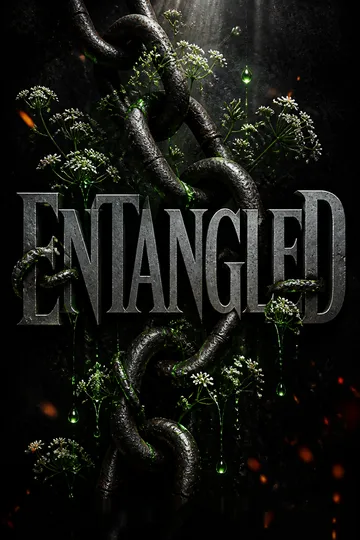
Entangled received mostly positive reviews, with readers praising its character development, emotional depth, and steamy scenes. Many found it an improvement over the first book, enjoying the expanded world-building and complex relationships. Criticisms included its length, pacing issues in the first half, and frustrations with the main character's decision-making. The cliffhanger ending left readers eager for the next installment. Overall, fans of reverse harem and dystopian romance found it a compelling, spicy read that delves into themes of trauma, healing, and unconventional relationships.
People Also Read






Characters
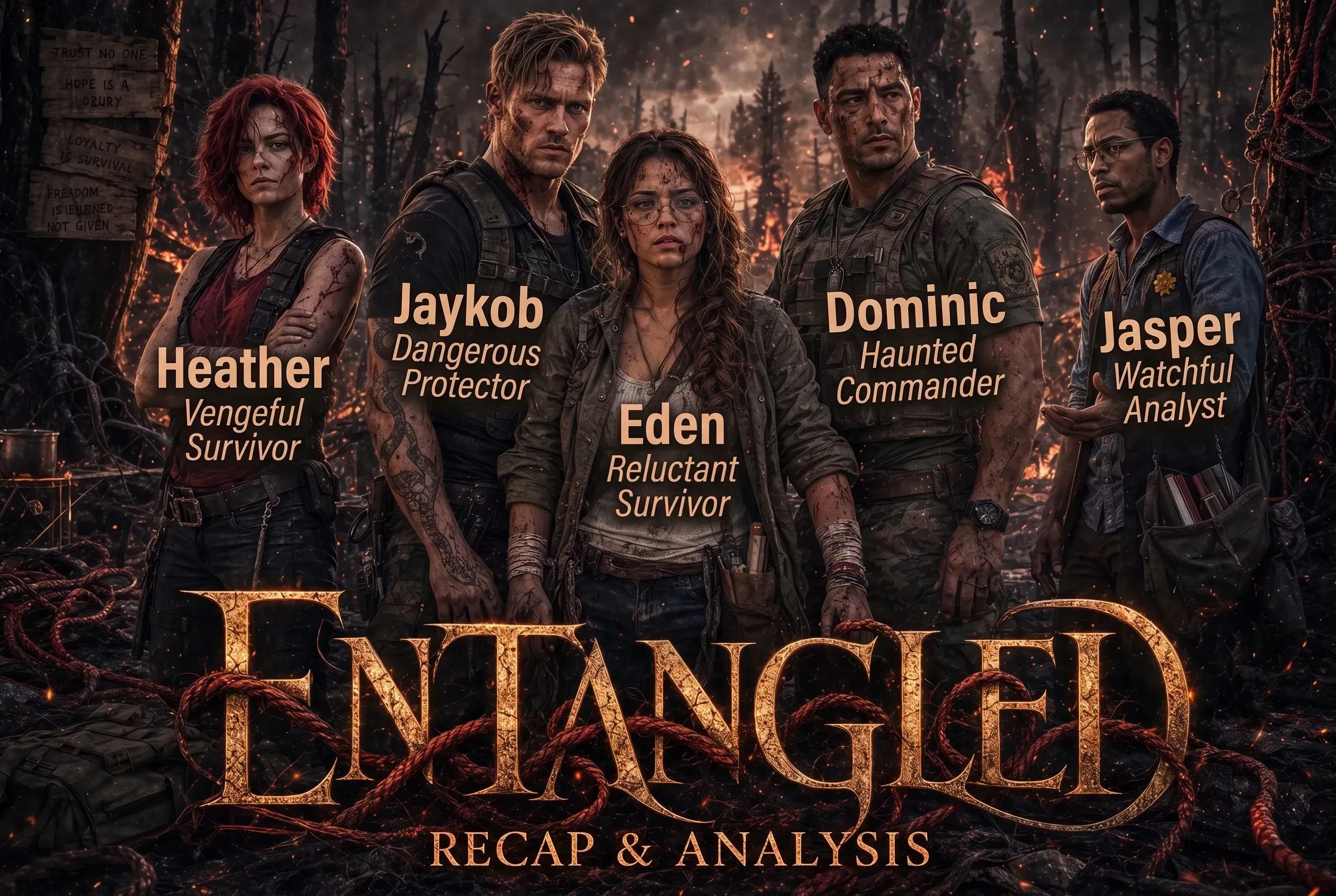
Eden
Bookish survivor turned fighterA former librarian who endured four years alone in the woods before finding refuge with five soldiers. Quiet, courteous, and bookish, she conceals a ferocious survival instinct beneath impeccable manners. Eden reads people like texts, her sharpest weapon, and her deepest fear is being unworthy of love, abandoned again by everyone she dares to count on. Across the story she wrestles with a new capacity for violence and the guilt it breeds, learning that softness can be resilience rather than weakness. Her hunger to belong, to have a true family rather than mere survival, drives nearly every choice she makes, including the reckless, self-sacrificing ones that endanger the people she loves most.
Dominic
Burdened Ranger captainThe Ranger captain who leads Bristlebrook, raised on military bases by distant, dutiful parents. He carries leadership like a chain around his neck, shouldering blame for every loss and convinced he must control everything to keep people alive. Fluent in orders but clumsy with feelings, he relies on his best friend Beau3 to translate his heart. A guarded dominant after old wounds, Dominic gradually learns that sharing the burden, and the leadership itself, might save more than his rigid control ever could. His slow thaw toward Eden1 reveals a man relearning how to want something for himself.
Beau
Charming Southern medicThe group's warm, charming medic and Dominic's2 lifelong best friend, a Southern dominant who loves roleplay, dirty talk, and caring for others. Quick to fall and quick to soothe, he is the emotional glue of the lodge, yet his instinct to smooth everything over masks a tendency to overstep boundaries and avoid examining his own flaws. Devoted to Eden1, he grows protective and possessive, which forces a painful reckoning with Dominic2 over how much of himself he has spent propping up his friend rather than building something whole of his own.
Jaykob
Gruff primal mechanicThe lodge's gruff, tattooed mechanic, all sharp edges and primal aggression, shaped by poverty, a mentally ill mother, and a younger brother he raised. He fixes machines and protects fiercely but cannot easily voice feelings, defaulting to fists and snarls. A primal dominant who turns Eden's1 fear into desire, Jaykob believes deep down that he is worth nothing and that love is something inevitably taken away. His terror of sharing what is finally his collides with a fierce, hidden tenderness, and his arc circles whether he can believe he deserves to be chosen.
Jasper
Elegant sadist psychologistA retired psychologist, elegant, cultured, and razor-sharp, who happens to be a sadist tormented by his own desires. He hides behind clinical distance and immaculate silk, terrified that his cravings would harm those he loves. For years he has pushed away Lucky6, the masochist who adores him, convinced restraint is the only ethical path. Jasper's arc orbits the question of whether his darkness can coexist with protective love, and whether his flaws, like his beloved kintsugi pottery, might become something beautiful rather than shameful. He becomes Eden's1 careful guide through grief and trauma.
Lucky
Sunny masochist soldierThe sunniest of the men, a golden-haired former soldier and masochist whose relentless cheer masks deep loneliness. Playful, flirtatious, and brave to the point of recklessness, he loves with his whole heart, craving both Jasper's5 darkness and Eden's1 warmth. Lucky refuses to accept that he must choose only one person to love, and his stubborn tenacity, his absolute refusal to give up, becomes the emotional engine that drags the guarded men toward honesty. His humor is armor, but his devotion is sincere and bottomless.
Heather
Fierce community leaderA fierce, fiery former officer and survivor who leads a community of rescued women and children. Bold, reckless, and loyal to the point of self-destruction, she meets every challenge head-on, the opposite of Eden's1 quiet cunning. Grief and guilt over those she has lost fuel a consuming rage that she struggles to leash. Bound to Eden1 by blood, mud, and shared captivity, she is both mirror and foil, a warrior who secretly wishes she had the patience she admires in her unlikely friend. Her history with the men complicates every room she enters.
Alastair
Calculating burned SEALA burned, soft-spoken former Navy SEAL among the Sinners, his torso tattooed with predators and poisons. Patient, calculating, and chillingly intelligent, he watches the herd and waits, a man who claims a different vision for the ruined world yet ultimately serves only his own ambition. His seafoam eyes miss nothing, and his whispered authority commands more genuine fear than Sam's10 bluster ever could. He fixates on Heather7 and proves a master of leverage, reading and manipulating every person around him.
Mateo
Devoted angel-faced SinnerAn angel-faced, accented Sinner marked with a coiled snake tattoo, lethally trained and fiercely devoted to Alastair8. He shows unexpected kindness, sparing captive women the worst cruelty, yet his loyalty to Alastair8 overrides any mercy he might offer. His desperate love for the wounded Alastair8 exposes a tenderness sharply at odds with his deadly competence and easy charm.
Sam
Brutish Sinner presidentThe brutish, silver-bearded self-proclaimed president of the Sinners, a cowardly bully who built his following on fear and the promise of dominion over the weak. Not clever but ruthless and well-armed, he embodies the apocalypse's reward of the wicked, preaching an empire of stolen women and kneeling subjects.
Bentley
Sword-wielding Red Zone leaderA booming, larger-than-life leader of the Cyanide settlement Red Zone, who wields a longsword and runs a medieval reenactment society turned survival commune. Beneath the theatrics and the gleeful talk of snake pits and battering rams lies a shrewd, battle-hardened protector, devoted above all to a class of orphaned teenagers and to his asthmatic nephew16.
Akira
Grieving captive defectorA captive woman who survives by attaching herself to Sinner men, including the blond Logan15. Quietly resourceful and deeply grieving, she shows Eden1 small unexpected kindnesses in the camp, yet nurses a bitter, simmering hatred over a death she cannot forgive.
Kasey
Stubborn teenage shadowA fourteen-year-old orphan and self-appointed shadow who idolizes Jaykob4, trailing him with a rock sling and reckless courage. Sharp-tongued and hungry for family, she becomes the unlikely little sister who softens Jaykob's4 edges and tests his patience in equal measure.
Aaron
Insecure self-styled leaderA belligerent, insecure young civilian in his twenties who appointed himself leader in Heather's7 absence and bristles constantly at being overlooked. His wounded pride and resentment make him a persistent source of friction within the camp.
Logan
Volatile blond SinnerA blond Sinner with a vicious streak and Akira's12 sometime lover, who rages openly at Sam10 for the men lost attacking Bristlebrook and nearly executes Eden1 in the camp's opening standoff.
Soren
Asthmatic teenage nephewBentley's11 pale, asthmatic teenage nephew, ethereally sad and bookish, kept indoors by the city's ruined air. His fragile lungs are the reason Bentley11 so desperately craves the inhalers.
Plot Devices
Water Hemlock
Powerless woman's lethal weaponIntroduced when the medic Beau3 nearly cooked the deadly plant into a meal, the water hemlock survives in Eden's1 pocket through her capture. It becomes the single tool that lets a small, untrained woman strike back at a camp of armed killers. Eden1 disguises her plan as helpfulness, offering to cook and gather herbs, then slips the poison into the communal soup. The device embodies the book's argument that intelligence and patience outmatch brute force, and that survival sometimes means becoming the thing you fear. It also seeds Eden's1 lasting guilt, the bodies she leaves behind haunting her long after freedom, fueling her later anguish over the line between mercy and killing.
The Surveillance Cameras
Shield, weakness, and betrayal engineBristlebrook's network of motion cameras and remote feeds, monitored from Jasper's5 hidden room, is both shield and fatal vulnerability. The lodge's safety depends on seeing threats before they arrive, which is why looping those feeds, sabotage that blinds the defenders, proves so devastating. The cameras drive the story's central betrayal, explain how the Sinners reached the lodge, and later become a tactical chess piece as the group debates relocating them. The device dramatizes how trust and information are the real currencies of this ruined world, and how a single compromised signal can topple an entire stronghold from within.
Survival Tips
Epigraph philosophy and ironic voiceEach chapter opens with a numbered survival tip, wry, brutal, and often darkly comic, that frames the events to follow. These epigraphs function as Eden's1 hard-won philosophy and as ironic counterpoint, sometimes literally crossed out and rewritten as her worldview shifts from self-preservation toward protecting others. They compress the book's thematic spine into bite-sized maxims, tracking the heroine's evolution from a woman who runs and hides to one willing to stand and bleed for the people she loves. The device gives a sprawling, multi-perspective narrative a unifying voice and a steady pulse of gallows humor amid violence and heartbreak.
Safewords and Dynamics
Language of trust and consentAs a why-choose dark romance, the book runs on an explicit framework of dominant and submissive roles, safewords, and traffic-light check-ins. These are not mere titillation but a language of trust, care, and communication that mirrors the larger plot. Eden's1 failure to use her safeword, and the men's horror at missing her distress, dramatizes consent as the ethical core of intimacy. Jasper's5 restraint, Beau's3 aftercare, and Jaykob's4 guilt all hinge on whether one can cause pain without causing harm, making kink the arena where these damaged characters practice love, repair, and self-knowledge.
The Yellow Flower
Emblem of denied loveLucky's6 non-regulation daffodil pin, and the wild yellow flowers Jasper5 begins tucking into Lucky's6 hair, recur as the tender emblem of their long-denied love. The pin keeps catching Jasper's5 eye during the desperate search for Eden1, a glinting reminder of the man he is afraid to claim. Later the flowers mark Jasper's5 surrender to his feelings, woven through Lucky's6 braids at the bonfire. The device threads a quiet, hopeful romance through a violent story, symbolizing persistence and the idea that fragile, bright things can survive even an apocalypse if someone refuses to let them wilt.
FAQ
Synopsis & Basic Details
What is Entangled about?
- Survival in Apocalypse: Entangled plunges readers into a brutal post-apocalyptic world where Eden, a resourceful survivor, is violently captured by the Sinners, a ruthless group led by Sam. The narrative follows her harrowing captivity and her found family's desperate pursuit.
- Love and Loyalty Tested: The story explores the complex, polyamorous relationships between Eden and her five "brutes" (Dominic, Beau, Jasper, Lucky, and Jaykob), as their bonds are strained by trauma, jealousy, and the constant threat of violence.
- Moral Compromises: As Eden navigates shifting alliances and makes morally ambiguous choices to survive and escape, the novel delves into the psychological toll of a world without rules, where survival often demands monstrous acts.
Why should I read Entangled?
- Deep Psychological Exploration: The novel offers a raw, unflinching look at trauma, grief, and healing, particularly through Eden's internal struggles and the brutes' individual coping mechanisms, providing rich material for Entangled analysis.
- Complex Relationship Dynamics: Beyond typical romance, Entangled delves into nuanced power dynamics and consent, and the challenges of polyamory in a high-stakes environment, offering a unique take on love and connection.
- Intense, Unpredictable Plot: With constant threats, shifting loyalties, and morally gray characters, the story keeps readers on edge, culminating in a high-stakes raid on the Sinners' Den that leaves many questions open for debate.
What is the background of Entangled?
- Post-Apocalyptic Setting: The world of Entangled is set five years after "Day Death," a catastrophic event involving ICBM strikes that decimated cities and dissolved societal order, leaving survivors to carve out new existences in a lawless landscape.
- Societal Breakdown & Factions: The narrative highlights the stark contrast between Bristlebrook, a relatively stable and communal sanctuary, and groups like the Sinners, who embody a brutal, patriarchal vision of a "new world" built on violence and subjugation.
- Resource Scarcity & Constant Threat: The scarcity of food, medicine, and safe havens drives much of the conflict, forcing characters into desperate measures and highlighting the ever-present danger from rival factions and the environment itself.
What are the most memorable quotes in Entangled?
- "Loneliness won't kill you. Violent men with guns? They might.": This opening line from Eden encapsulates her pragmatic, survival-driven mindset and foreshadows the constant physical threats she faces, contrasting with her later emotional vulnerability.
- "You have to be the worst version of yourself to survive. Kill the weak. Strike from the shadows. Run from a fight. Leave your friends behind.": This internal monologue from Eden (Chapter 20) starkly reveals the brutal lessons she believes she's learned, highlighting the survival as moral testing ground theme and her deep self-loathing.
- "I've never had anything for myself before, Eden. I can't share you.": Jaykob's raw confession in Chapter 48, after their intimate encounter, lays bare his deep-seated possessiveness and fear of loss, revealing a core conflict in his character and the polyamorous dynamic.
What writing style, narrative choices, and literary techniques does Rebecca Quinn use?
- Multiple POV and Deep Characterization: Quinn employs a shifting third-person limited point of view, frequently changing perspectives between Eden and her brutes (and occasionally other characters), offering deep character motivations and emotional insights into their individual struggles and collective dynamics.
- Visceral & Sensory Language: The prose is rich with sensory details, particularly focusing on physical sensations, pain, and emotional states, immersing the reader in the characters' experiences and the harsh realities of their world. This is evident in descriptions of Eden's injuries or the "reek of sour, anxious sweat."
- Internal Monologue & Psychoanalysis: Extensive use of internal monologue, often framed as self-reflection or even therapy sessions (especially with Jasper), allows for profound psychological complexities and exploration of trauma, guilt, and desire, making the characters feel incredibly real.
Hidden Details & Subtle Connections
What are some minor details that add significant meaning?
- Jasper's Daffodil Pin: Lucky's non-regulation daffodil pin, initially a seemingly trivial detail, becomes a powerful symbol of hope, resilience, and Lucky's enduring spirit, which Jasper clings to during his darkest moments, revealing the depth of their unspoken bond.
- Eden's Glasses and Vision: Eden's "terrible vision" (Chapter 46) is a recurring motif, subtly symbolizing her initial emotional blindness and naivete regarding relationships and the true nature of people, which she gradually overcomes as she gains clarity and self-awareness.
- The "Danger Pack" Prank: Lucky's elaborate prank on Julian with the "danger pack" (Chapter 59) is more than just comic relief; it subtly foreshadows the real danger Lucky himself faces when his own pack of explosives ignites, highlighting his reckless nature and the unpredictable consequences of his actions.
What are some subtle foreshadowing and callbacks?
- Alastair's "Different Vision": Alastair's early statement about having a "different vision for the new world" than Sam (Chapter 10) subtly foreshadows his eventual coup and takeover of the Sinners, indicating his strategic cunning long before his true intentions are revealed.
- Repeated "Mine" Motif: The recurring use of "mine" by Jaykob, particularly in intimate moments with Eden, foreshadows his ultimate refusal to share her, emphasizing his possessive nature and setting up the conflict of his ultimatum at the end of the book.
- The "Bond-Fire" Ritual: The bond-fire, intended to strengthen community, ironically becomes a catalyst for multiple emotional explosions and betrayals (Eden's confession, Lucky/Jasper's dynamic, Aaron's treachery), subtly hinting that true unity requires confronting hidden truths, not just celebrating.
What are some unexpected character connections?
- Eden and Heather's Shared Trauma: Beyond their initial antagonism, Eden and Heather develop a deep, albeit complicated, kinship rooted in their shared experience of captivity and the moral compromises they made to survive, creating a mirrored relationship that challenges Eden's self-perception.
- Jasper and Lucky's Sadomasochistic Dynamic: The revelation of Jasper's sadism and Lucky's masochism, hinted at through their interactions and explicitly discussed in therapy sessions, unveils a profound, long-standing character connection that underpins their emotional struggles and desires.
- Jaykob's Brotherly Bond with Kasey: Jaykob's gruff but fiercely protective relationship with Kasey, a young civilian, unexpectedly reveals his softer, nurturing side, mirroring his past role in protecting his own brother, Ryan, and influencing his decision to stay at Bristlebrook.
Who are the most significant supporting characters?
- Heather (Madison): More than just a rival or ally, Heather serves as a foil and mirror for Eden, embodying a different response to trauma (vengeance vs. guilt) and forcing Eden to confront her own capacity for both cruelty and compassion. Her past with Dom adds layers to his character.
- Alastair: As the cunning, ruthless new leader of the Sinners, Alastair is a pivotal antagonist whose strategic mind and cold pragmatism pose a far greater threat than Sam's brute force, directly influencing the plot's climax and setting up future conflicts.
- Bentley: The eccentric leader of Red Zone, Bentley provides crucial intelligence, unexpected humor, and a moral compass through his dedication to protecting the children under his care, highlighting the diverse forms of leadership and community in the post-apocalyptic world.
Psychological, Emotional, & Relational Analysis
What are some unspoken motivations of the characters?
- Jasper's Self-Sacrifice: Jasper's consistent refusal to fully embrace his relationship with Lucky, despite his deep feelings, is motivated by a profound, unspoken fear of harming Lucky due to his sadism and his past ethical boundaries as a psychologist, as revealed in his internal monologues and conversations with Dom.
- Dominic's Fear of Failure: Dom's stoic demeanor and relentless drive to protect are rooted in an unspoken, deep-seated fear of failing those under his command, stemming from past losses (his family, the first civilian group), which makes him hesitant to delegate or trust others with critical decisions.
- Eden's Need for Validation: Beneath her fierce independence, Eden harbors an unspoken motivation for external validation and acceptance, evident in her desperate desire for her brutes' love and her struggle with self-worth, which makes her vulnerable to manipulation and self-blame.
What psychological complexities do the characters exhibit?
- Post-Traumatic Stress Disorder (PTSD): Explicitly addressed through Jasper's workbook and Lucky's diagnosis, PTSD is a pervasive psychological complexity, manifesting in Eden's nightmares, hypervigilance, and emotional dysregulation, and in the brutes' varied trauma responses (Jaykob's anger, Lucky's humor, Dom's control).
- Codependency in Relationships: The long-standing dynamic between Dominic and Beau exhibits elements of codependency, where their strengths compensate for each other's weaknesses, but also prevent individual growth and healthy communication, leading to their eventual "break."
- Internalized Shame and Self-Worth: Characters like Jaykob and Eden grapple with deep-seated internalized shame stemming from their pasts, influencing their self-perception and their ability to accept love or believe they are "enough," creating significant barriers to intimacy.
What are the major emotional turning points?
- Eden's Breakdown in the Sinners' Camp: The moment Eden learns her brutes are presumed dead (Chapter 2) is a critical emotional turning point, shattering her numbness and unleashing a torrent of grief and rage that fuels her subsequent actions, including the poisoning.
- Jasper's Confession to Lucky: Jasper's long-awaited confession of love to Lucky (Chapter 30) is a pivotal emotional climax, breaking years of unspoken longing and ethical restraint, and setting the stage for their potential relationship, while simultaneously impacting Eden.
- Dominic's Acceptance of Shared Leadership: Dom's realization under the apple tree that he is "just general to the queen" (Chapter 38) marks a significant emotional shift, as he begins to shed his sole burden of responsibility and embrace shared leadership, crucial for Bristlebrook's survival.
How do relationship dynamics evolve?
- Polyamory Under Pressure: The initial "deal" for sex evolves into a complex polyamorous dynamic, where Eden's feelings for all five men deepen, challenging traditional notions of exclusivity and forcing the characters to confront jealousy, communication, and individual needs.
- Dominant/Submissive Exploration: The exploration of D/s dynamics extends beyond the bedroom, influencing character interactions, communication styles (e.g., Jasper's "Sir" voice, Beau's "Doctor Bennett" persona), and personal growth, particularly as characters learn to negotiate consent and boundaries in all aspects of their lives.
- Fractured Friendships and New Alliances: Old friendships, like Dom and Beau's, are severely tested and temporarily fractured by miscommunication and perceived betrayals, while new, unexpected alliances (Eden and Heather, Jaykob and Kasey) form, highlighting the fluidity of relationships in a crisis.
Interpretation & Debate
Which parts of the story remain ambiguous or open-ended?
- Alastair's True Intentions: While Alastair consolidates power and promises safety for the captive women, his ultimate intentions remain ambiguous. Readers are left to debate whether he genuinely seeks a "better world" or is simply a more cunning, less overtly brutal tyrant than Sam, leaving the fate of the women uncertain.
- The Future of Bristlebrook's Community: The novel ends with Bristlebrook under Alastair's "rule" and facing severe resource scarcity. It's ambiguous whether the community can truly thrive under these conditions, or if their newfound unity will be enough to resist future demands and maintain their autonomy.
- The Long-Term Viability of the Polyamorous Relationships: While Eden expresses love for all her brutes and some relationships begin to solidify, the long-term viability of their complex polyamorous dynamic remains open-ended, particularly given Jaykob's possessiveness and the lingering emotional baggage between the others.
What are some debatable, controversial scenes or moments in Entangled?
- Eden's Poisoning of the Sinners: Eden's decision to poison the Sinners' camp (Chapter 11) is highly debatable. While it secures her escape and avenges her perceived losses, it forces her to commit a mass killing, raising questions about the morality of survival and whether the ends justify the means.
- Heather's Torture of Alastair and Mateo: Heather's brutal interrogation and torture of Alastair and Mateo (Chapter 23) is a controversial scene. While driven by understandable grief and vengeance for Tommy's death, it depicts extreme violence and raises questions about the cycle of brutality and whether the heroes become as monstrous as their enemies.
- Beau's "Doctor's Orders" Scene: Beau's roleplay as "Doctor Bennett" (Chapter 31-32), where he uses medical authority to sexually dominate Eden, is a highly debated scene. It pushes boundaries of consent and power dynamics, prompting discussion on whether Eden's "green" responses truly indicate full, uncoerced consent given her recent trauma and Beau's position as her caretaker.
Entangled Ending Explained: How It Ends & What It Means
- Alastair's Calculated Coup: The raid on Cyanide City culminates not in a rescue, but in Alastair's calculated takeover of the Sinners. He executes Sam and other disloyal men, consolidating his power and establishing a new, more insidious regime where Bristlebrook and Red Zone become his vassals, paying tribute for their "safety."
- Betrayal and Fractured Trust: Eden's secret decision to free Alastair and Mateo is exposed, shattering the trust of Dom, Heather, and the others. This betrayal, coupled with Aaron's treachery, leaves the Bristlebrook group deeply fractured and vulnerable, highlighting the devastating consequences of hidden actions and misjudged alliances.
- Uncertain Future and Personal Reckoning: The novel ends with Heather and Bentley taken as collateral, the captive women still enslaved, and Bristlebrook facing a precarious future under Alastair's control. Eden is left to grapple with her guilt and the fallout of her choices, while the brutes must confront their own emotional baggage and the daunting task of rebuilding trust and fighting for a truly free future in Book 3.
Brutes of Bristlebrook Series


About the Author


Download PDF
Download EPUB
.epub digital book format is ideal for reading ebooks on phones, tablets, and e-readers.








































