
Key Takeaways
1. Cotton's Ancient Global Roots and Europe's Marginality
As early as a thousand years ago, the production of cotton textiles in Asia, Africa, and the Americas was the world’s largest manufacturing industry; sophisticated trade networks, mostly local but a few regional, connected growers, spinners, weavers, and consumers.
Millennia of production. For thousands of years, cotton was cultivated and processed across Asia, Africa, and the Americas, long before Europe's significant involvement. Indigenous peoples in regions like the Indus Valley, Peru, and Sudan independently discovered cotton's utility, spinning its fibers into durable, comfortable, and easily dyed cloth. This widespread adoption made cotton textiles the world's largest manufacturing industry.
Decentralized networks. Production was largely small-scale and household-focused, with families balancing food crops and fiber needs. Local and regional trade networks flourished, with cotton cloth often serving as a medium of exchange or tribute. Technological advancements, like the spinning wheel and treadle loom, originated in Asia, enhancing efficiency but maintaining a decentralized, labor-intensive model.
Europe's early absence. During this vibrant, multipolar era of cotton, Europe remained largely disconnected. Europeans primarily wore linen and wool, viewing cotton as an exotic, mythical "vegetable lamb." Early European attempts at cotton manufacturing in Italy and Germany were modest and dependent on external raw materials and technologies, ultimately failing to compete with established Asian producers.
2. Europe's Violent Entry: The Rise of War Capitalism
European capitalists and rulers altered global networks through multiple means. The muscle of armed trade enabled the creation of a complex, Eurocentric maritime trade web; the forging of a military-fiscal state allowed for the projection of power into the far-flung corners of the world...
A new global order. From the late 15th century, European powers, through imperial expansion and armed trade, violently inserted themselves into existing global cotton networks. Columbus's arrival in the Americas and da Gama's sea route to India initiated a radical reorganization, linking Asia's textile production, Africa's enslaved labor, and America's raw materials into a novel, three-continent trading system.
Coercion and expropriation. This system, termed "war capitalism," relied on:
- Military subjugation of competitors.
- Expropriation of land and resources in the Americas.
- Massive deportation and enslavement of Africans.
- Private capitalists asserting sovereignty with state backing.
This created a "social tabula rasa" in colonized territories, providing raw materials and markets for Europe.
Cotton's central role. Indian cotton textiles became crucial for trading enslaved Africans, who were then forced to cultivate plantation crops in the Americas. This unprecedented integration, driven by violence and state-backed private enterprise, laid the groundwork for Europe's economic ascent. It centralized power in a single, European-dominated node, transforming disparate cotton worlds into a hierarchical empire.
3. Industrial Revolution's Debt to Slavery and Imperialism
Slavery, colonial domination, militarized trade, and land expropriations provided the fertile soil from which a new kind of capitalism would sprout.
War capitalism's legacy. The British Industrial Revolution, sparked by innovations like the spinning jenny and water frame in the late 18th century, was not a standalone phenomenon. It was deeply indebted to the "wages of war capitalism"—the capital, markets, and raw materials secured through centuries of imperial expansion, slavery, and violent expropriation. Early industrialists like Samuel Greg, owner of Quarry Bank Mill, directly benefited from slave plantations in the Caribbean.
Technological breakthroughs. British inventors, often self-taught, developed machines that dramatically increased spinning productivity, making British yarn cheaper than Indian. This technological leap, however, was driven by the need to overcome high labor costs in Britain and compete with superior Indian textiles. Key inventions included:
- John Kay's flying shuttle (1733)
- James Hargreaves's spinning jenny (1760s)
- Richard Arkwright's water frame (1769)
- Samuel Crompton's mule (1779)
Global market dominance. These innovations, combined with protective tariffs against Indian imports, allowed British manufacturers to capture vast export markets, particularly in Africa and the Americas. By 1800, cotton textiles constituted a significant portion of British exports, fueling further industrial growth and state revenue. This era saw the emergence of the factory system, organizing labor around machines, a profound shift from traditional production methods.
4. American South: Slavery's Cotton Kingdom Fuels Global Industry
Slavery, in other words, was as essential to the new empire of cotton as proper climate and good soil.
Unlikely rise. The American South, initially a marginal cotton producer, rapidly became the world's dominant supplier of raw cotton after 1793. This transformation was driven by:
- Eli Whitney's cotton gin, dramatically increasing ginning productivity.
- Vast, fertile lands acquired through aggressive federal expansion and expropriation of Native American territories.
- An elastic supply of enslaved labor, transferred from older tobacco-growing regions or imported from Africa.
Planters' power. Southern planters, wielding immense political influence, ensured state support for slavery's expansion and enforcement. They developed "second slavery," a brutal, intensified system of labor exploitation that maximized cotton output. This system, unlike peasant agriculture elsewhere, allowed for rapid, large-scale reallocation of land and labor, meeting the insatiable demand of British factories.
Global dependence. By 1802, the United States was Britain's primary cotton source, and by 1860, it supplied over 75% of British, French, and German cotton. European capital, often secured by mortgages on enslaved people, flowed into the South, further entrenching slavery as the engine of global industrialization. This dependence, however, created a "treacherous foundation," as the inherent instability of slavery and sectional tensions in the US threatened the entire global cotton complex.
5. States Drive Industrial Capitalism's Global Spread
What the British example also shows is the importance of the state’s capacity to forge conditions conducive to industrialization.
Beyond Britain. Mechanized cotton manufacturing spread rapidly from Britain to continental Europe, the United States, and beyond, but not uniformly. Success hinged on a state's capacity to create a supportive framework for industrialization, including:
- Protecting nascent domestic industries from British competition.
- Mobilizing capital and labor.
- Building essential infrastructure.
Protectionism and war. Early industrialization in places like France, Germany, and the US was often spurred by wartime blockades (e.g., Napoleonic Wars, War of 1812) that shielded domestic producers from British imports. Post-war, these states implemented protective tariffs, allowing their cotton industries to mature. Mexico, for instance, used high tariffs to foster its domestic textile sector, demonstrating the critical role of state intervention.
Market creation and infrastructure. States actively created markets by removing internal duties (e.g., German Zollverein) and investing in transportation networks (canals, railroads). They also facilitated technology transfer, often through industrial espionage and by attracting skilled British artisans. This state-backed approach, combining protectionism, infrastructure, and market shaping, was crucial for industrial capitalism to take root outside Britain.
6. American Civil War: Global Cotton's Reckoning and Reconstruction
The Civil War in the United States was an acid test for the entire industrial order: Could it adapt to the even temporary loss of its providential partner—the expansive, slave-powered antebellum United States—before social chaos and economic collapse brought their empire to ruins?
Global crisis. The American Civil War (1861-1865) triggered the world's first truly global raw materials crisis, the "cotton famine." The Union blockade and Confederate export bans halted the flow of American cotton, which supplied over 75% of European mills. This caused widespread unemployment and social unrest in manufacturing centers like Lancashire and Normandy.
Scramble for new sources. European manufacturers and statesmen frantically sought alternative cotton supplies. India, Egypt, and Brazil, previously marginal, saw massive increases in production, driven by soaring prices and concerted efforts by colonial administrations. This involved:
- Infrastructure investments (railroads, canals).
- Legal reforms (contract law, property rights).
- Coercive measures to compel peasant production.
Slavery's demise, new coercions. The war's outcome, emancipation, forced a global re-evaluation of labor. While many feared freedpeople would abandon cash crops for subsistence, the crisis spurred the development of new, state-backed labor regimes like sharecropping in the American South and intensified colonial exploitation in Africa and Asia. This period marked a shift from direct chattel slavery to more indirect, but still coercive, forms of labor mobilization.
7. Post-Slavery: New Labor Regimes and State-Backed Transformation
The reconstruction of the empire of cotton, at its core, required the diligent effort of cotton industrialists, merchants, landowners, and state bureaucrats to undermine such preferences, drawing, in the process, on the powers of newly consolidating nation-states, and sanctioning legal—and often illegal—coercion to make rural farmers into the cultivators and eventually consumers of commodities.
New labor regimes. After 1865, the global cotton empire underwent a massive reconstruction of labor, replacing slavery with new forms of coercion. In the American South, freedpeople's aspirations for land ownership were largely thwarted, leading to the widespread adoption of sharecropping. This system, while offering some autonomy, trapped farmers in debt, forcing them to prioritize cotton cultivation.
State-backed transformation. Imperial states and capitalists actively reshaped rural economies worldwide. In India and Egypt, colonial administrations implemented:
- New property rights, concentrating land ownership.
- Cash-based taxation, compelling farmers to grow market crops.
- Infrastructure development (railroads, irrigation) to facilitate cotton export.
These measures, often backed by legal and physical coercion, undermined subsistence farming and integrated peasants into the global market.
Marginalization and resistance. This "great transformation" led to widespread deindustrialization in traditional handicraft centers, turning former spinners and weavers into agricultural laborers or consumers of imported textiles. Cotton growers, now deeply indebted and vulnerable to global price fluctuations, often faced poverty and famine. Their resistance, ranging from riots to political movements, highlighted the coercive nature of this new global economic order.
8. New Imperialism Fuels Cotton Expansion in Africa and Asia
Cotton and colonial expansion went hand in hand, not only for Russia and Japan, which desperately tried to catch up in the grand game of securing raw materials for domestic industries, but also for expansionist stalwarts like Great Britain, France, and the United States, as well as marginal imperial powers such as Portugal, Germany, Belgium, and Italy.
Global cotton rush. The late 19th and early 20th centuries saw a "cotton rush" as industrializing nations intensified efforts to secure raw cotton from colonial territories. Rising cotton prices, fears of US market dominance, and the desire for "raw material independence" spurred this new wave of imperialism. States and manufacturers collaborated to expand cotton agriculture in Africa, Asia, and the Americas.
State-led development. Imperial powers, learning from the US post-slavery model, used state power to transform colonial countrysides. Examples include:
- Russia in Central Asia: Captured territories, built railroads, distributed American seeds, and used coercive measures to force cotton specialization.
- Japan in Korea: Encouraged American cotton strains, built gins, and provided loans to farmers under colonial rule.
- Germany in Togo: Sent American experts, established model farms, and used taxes and forced labor to boost cotton exports.
Coercion and resistance. This expansion often involved displacing indigenous populations or coercing them into cash-crop production. While direct slavery was rare, new forms of state-sanctioned violence and economic pressure were common. Despite these efforts, local cultivators often resisted monoculture, preferring subsistence farming, highlighting the limits of imperial control and the enduring power of local economies.
9. Global South Reclaims Manufacturing Dominance
The history of the empire of cotton, in fact, proved them wrong.
North Atlantic decline. By the mid-20th century, Europe's dominance in cotton manufacturing waned significantly. Rising labor costs, strong unions, and protective labor legislation in North Atlantic nations made their industries less competitive. This decline was particularly sharp in Britain and New England, where mills closed and jobs disappeared, marking the end of a century and a half of global industrial leadership.
Southern resurgence. Simultaneously, the global South experienced a dramatic resurgence in cotton manufacturing. Nations like Japan, India, China, and Brazil rapidly industrialized, leveraging:
- Abundant, low-wage labor, often from displaced rural populations.
- State support through tariffs, infrastructure, and strategic investments.
- Access to modern textile technology.
This shift reversed a century-long trend, with Asia once again becoming the epicenter of global cotton production.
Nationalism and industrialization. Southern capitalists, often allied with nationalist movements, successfully pressured their governments to prioritize domestic industrialization. In India and Egypt, this meant challenging colonial policies that favored British imports. In Brazil and Japan, it involved strategic state intervention and the creation of protected markets. This era saw the rise of powerful national cotton industries, fundamentally reshaping the global division of labor.
10. Capitalism's Enduring Coercion and Relentless Adaptation
Globalization is nothing new in the empire of cotton, but the ability of capitalists to utilize a number of states and thus remain free of the demands of all of them, is new.
Persistent patterns. The empire of cotton continues to connect growers, manufacturers, and consumers across vast distances, but its structure has evolved. While Europe's direct dominance ended, the underlying mechanisms of coercion and adaptation persist. Today, China and India lead global cotton growing and manufacturing, with production increasingly concentrated in the Global South.
New forms of control. The modern cotton industry is dominated by massive retailers and branded apparel companies (e.g., Walmart, Gap). These entities leverage global supply chains to source from the cheapest producers, often pitting nations and workers against each other. This new form of merchant power, unlike its 19th-century predecessor, is less tied to specific nation-states, allowing greater fluidity and less accountability.
State's evolving role. While states still play a role (e.g., US cotton subsidies, Uzbek forced labor), their influence over global capital has diminished. The "emancipation of capitalists from the state" means they can easily shift production, eroding worker protections and driving a "race to the bottom." This constant reshuffling, driven by the search for cheaper labor and greater markets, highlights capitalism's adaptive nature and its enduring reliance on exploitable frontiers and coercive practices.
Review Summary
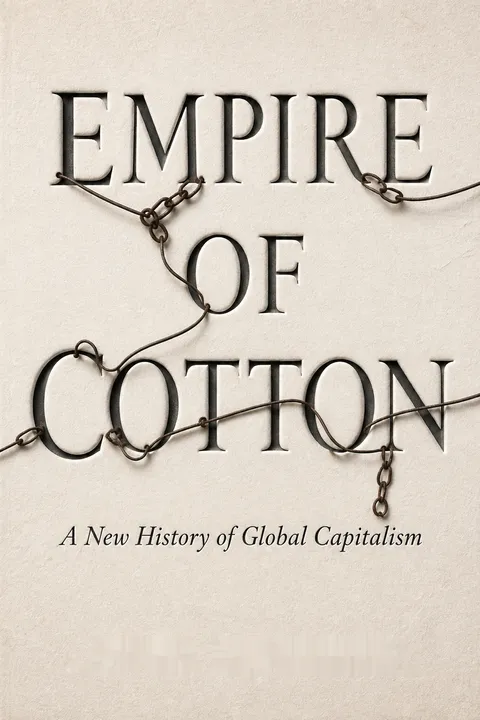
Empire of Cotton receives praise for its comprehensive global history of capitalism through cotton's lens, documenting slavery, colonialism, and industrialization across centuries. Readers appreciate Beckert's extensive research (140 pages of footnotes) and how cotton drove the Industrial Revolution, connected global economies, and shaped modern capitalism. However, critics note significant flaws: repetitive writing, poor editing, excessive detail, overly long sentences, and ideological bias. Some find the prose convoluted and tedious, while others criticize the lack of economic analysis and overemphasis on "war capitalism." Despite mixed opinions on readability, most acknowledge the book's scholarly importance in understanding capitalism's violent origins.
People Also Read








Download PDF
Download EPUB
.epub digital book format is ideal for reading ebooks on phones, tablets, and e-readers.








































