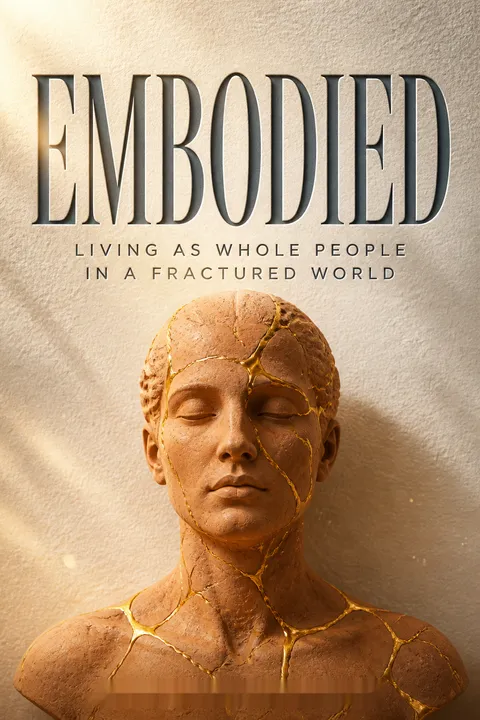

Key Takeaways
1. Embrace Your Embodied Existence: You Are Your Body
Human embodiment—life in a physical, material body—is the proper state of human existence.
Challenging distortions. Many people struggle with their bodies, either obsessing over physical appearance to find value or dismissing their physicality as irrelevant. This disconnect often stems from a distorted body image, leading to negative thoughts, feelings, and behaviors, or from Gnosticism/neo-Gnosticism, which devalues the material body in favor of the spiritual. Both extremes are detrimental to living a whole life.
Divine design. Scripture consistently affirms that embodiment is the intended and proper state of human existence. From creation, God designed human beings as embodied image bearers, intricately knitting each person together in the womb (Psalm 139:13-16). This means our physical nature is not a mistake or a hindrance, but a fundamental aspect of who we are, intended for flourishing and fulfilling God's purposes.
Beyond mere instrument. Viewing the body as merely an instrument to be used or stewarded misses a profound truth: "I am my body." While we can manage our bodies, we cannot fully separate ourselves from them without ceasing to exist. This perspective encourages gratitude for our physical selves and rejects the notion that our bodies are inherently evil or secondary to our souls, calling us to live as integrated, embodied people.
2. God's Design: Gendered and Unique Individuals
An essential given of human existence is maleness or femaleness.
Gendered by design. God created humanity as fundamentally male and female, a binary design evident throughout creation. This gendered reality is deeply embedded in our very cells, with XX chromosomes for women and XY for men, influencing not just reproductive capabilities but also how we experience and perceive the world. This means we are gendered "all the way down," making maleness or femaleness an essential aspect of our embodied identity.
Common capacities, unique expressions. While men and women share common human capacities like reasoning, emotion, and courage, these are expressed in ways that reflect their distinct femaleness or maleness. This isn't about rigid stereotypes or gender essentialism that assigns exclusive traits, but about acknowledging that our gender naturally inflects how we embody universal human qualities. This perspective highlights our need for each other, as complementary genders offer diverse viewpoints and contributions to society.
Particularity in creation. Beyond gender, each person is a uniquely particular individual, designed by God with specific:
- Ethnicity/race: Shared origins, language, customs.
- Family/kinship: Background, birth order, marital status, children.
- Temporality: Specific time, age, and historical context.
- Spatiality: Geographical location and environment.
- Context: Socioeconomic, political, educational, cultural, and religious factors.
- Story: A unique narrative of life experiences and becoming.
These particularities, divinely determined, are not meant to divide or privilege, but to underscore the intricate, intentional creation of each human being.
3. Sociality and Sanctified Sexuality: Designed for Relationship
God’s design for his image bearers is that, as social people, we express our sociality in the case of marriage through sexual activity.
Innate desire for connection. Sociality is the universal human condition of desiring, expressing, and receiving relationships. We are wired for connection, seeking to bond with others in community, friendship, and love. This innate drive, a divine design, allows us to overcome isolation and loneliness, fostering unconditional love, mutual care, and shared burdens.
Siblings in Christ. In the church, sociality finds its highest expression in "siblingship," where men and women relate as brothers and sisters in Christ. These non-romantic, non-marital relationships offer immense benefits:
- Opportunities to express Christlike love.
- Mutual prayer, acceptance, forgiveness, and service.
- Gaining complementary gender perspectives.
- Edification through diverse spiritual gifts.
While potential pitfalls like lust or inappropriate closeness exist, wisdom, clear boundaries, and accountability allow these enriching friendships to flourish, preventing the church from hypersexualizing or fearing cross-gender interactions.
Sexuality within marriage. Sexual activity is a specific, intimate expression of sociality, divinely designed for a monogamous, covenantal marriage between a husband and wife. Its purposes are multifaceted:
- "One flesh" unity: A profound physical and spiritual bond.
- Procreation: Bringing new life into existence.
- Pleasure and fulfillment: For the couple's mutual enjoyment.
- Comfort: Through physical closeness and intimacy.
Sexual activity outside of marriage, including lust, pornography, and homosexual acts, is a distortion of God's design, leading to brokenness. Sanctified sexuality, however, embraces purity, self-control, and mutual respect, fostering flourishing within the marital bond and rejecting the pervasive sexual brokenness of the world.
4. The Incarnate Son: Our Embodied Model for Wholeness
The incarnation is about God the Son becoming embodied.
God in human flesh. The incarnation is the profound mystery of God the Son taking on a human nature, becoming fully embodied as Jesus Christ. This wasn't a mere appearance or a partial humanity, but a complete union with a created, gendered, particular, social, and sexual body, just like ours. Jesus's embodiment affirms the goodness and importance of our own physical existence, demonstrating that our bodies are not inherently evil or insignificant.
A perfect human. Jesus's embodiment mirrored ours in every essential way:
- Created body: Miraculously formed in Mary, not an already existing person.
- Gendered body: Male, fitting his eternal relation as Son and his role as the second Adam.
- Particular body: Jewish ethnicity, specific family (Mary, Joseph, siblings), lived in a specific time (first-century), place (Nazareth, Galilee), and socioeconomic context (carpenter).
- Social body: Deep relationships with disciples, women supporters, and crowds.
- Sexual body: Lived a pure, celibate life, channeling desires appropriately, demonstrating the advantages of singleness for his mission.
His experiences, from conception to ascension, were fully human, making him relatable and a perfect model for our own embodied lives.
Purpose of embodiment. The Son's embodiment was not an end in itself, but a means to our salvation. He had to become "flesh and blood" to destroy the power of death and free us from sin (Hebrews 2:14-18). As the "once-and-for-all embodied sacrifice for sin" (Hebrews 10:10), Jesus's physical death on the cross paid the penalty for our sins, redeeming our whole being—body and soul. This truth is foundational to Christian faith, rejecting any heresy that denies or distorts his full humanity and ensuring that our bodies, too, are part of God's redemptive plan.
5. Holistic Sanctification: Cultivating a Disciplined Body
Maturing as Christ’s followers is not only about spiritual and moral/ethical progress but physical development as well.
Beyond spiritual disciplines. Sanctification, the ongoing transformation into Christlikeness, is often narrowly focused on spiritual and moral growth. However, true holistic sanctification encompasses our entire being, including our physical bodies. The apostle Paul's prayer for the Thessalonians—"May your whole spirit, soul, and body be kept sound and blameless" (1 Thess. 5:23)—underscores that our physical development is an integral part of our journey toward holiness.
Combating bodily sins. Embodied sanctification actively fights against "deadly sins" that manifest in our physical lives:
- Lust: Objectifying others for sexual gratification, addressed in Chapter 5.
- Gluttony: Immoderate consumption of food, an unchecked appetite for more than God provides, leading to self-indulgence and spiritual apathy (Proverbs 23:20-21, Philippians 3:19).
- Sloth: Psychological indifference and physical weariness toward God-given work, resulting in idleness and a failure to build society or provide for oneself and others (Proverbs 6:9-11, 2 Thessalonians 3:10-12).
Overcoming these requires self-control, gratitude for God's provision, and a purposeful orientation toward flourishing for His kingdom.
Pursuing physical wellness. Holistic sanctification also involves actively cultivating physical wellness through:
- Proper sleep: Essential for physical and mental health, reducing risks of disease and promoting overall well-being (Psalm 127:2).
- Regular rest: A creation ordinance, a purposeful suspension of ordinary work for refreshment and relaxation, combating workaholism and fostering dependence on God.
- Regular exercise: Aimed at fitness (cardiorespiratory health, muscle strength, disease reduction), not idolatry of appearance (1 Timothy 4:8).
- Good nutrition: Providing essential nutrients for energy, health, and growth, avoiding gluttony and unhealthy eating patterns.
These disciplines, while having "some value" in this life, are purposeful, preparing us to be fit for God's service and to live as whole people in a fractured world.
6. Worship and Adornment: Expressing Devotion Through Your Body
God’s design for his people gathered to worship him is that we express bodily what is transpiring in our heart and mind.
Whole-body devotion. Worship is not merely an intellectual or emotional exercise; it is a whole-body devotion to God. Scripture commands and illustrates a wide array of physical expressions in worship, demonstrating that our bodies are integral to how we honor and adore our Creator. This includes:
- Bowing (Neh. 8:5-6)
- Raising hands (Ps. 28:1-2)
- Kneeling (Ezra 9:5-6)
- Prostration (Rev. 4:9-11)
- Clapping (Ps. 47:1-2)
- Shouting (Ps. 66:1-4)
- Dancing (Ps. 30:10-12)
- Singing with instruments (Ps. 150:1-6)
These actions, when flowing from a sincere heart, communicate praise, thanksgiving, confession, repentance, joy, obedience, faith, lament, and love.
Clothing as communication. Our clothing choices are also an embodied expression, communicating something important about us. After the Fall, clothed embodiment became the proper state of human existence, covering the shame of nakedness (Genesis 3:7, 21). Beyond mere covering, clothes convey:
- Gender: Reflecting God's design for male and female (Deut. 22:5).
- Modesty: Avoiding sensuality or ostentation (1 Tim. 2:9-10, 1 Pet. 3:3-4).
- Propriety: Dressing sensibly and appropriately for context.
- Identity: Expressing personal style, status, or community affiliation.
Thoughtful clothing choices acknowledge our sin, make us presentable, and affirm our gendered nature, all while glorifying God.
Liturgy and formation. The structure and order of our worship services—our liturgy—also shape our embodied devotion. Whether formal or informal, liturgy forms us into lovers of God by embedding gospel truths through repeated practices. A gospel-centered liturgy, encompassing elements like calls to worship, confession, Scripture reading, sermon, ordinances, and benediction, helps Christians physically rehearse and internalize the story of redemption. This intentional formation helps us live as whole people, expressing our love for God with our entire being in a fractured world.
7. Suffering, Death, and Resurrection: Our Embodied Hope
Human existence plays itself out from conception through eternity.
The reality of suffering. Suffering is an inescapable part of embodied existence in a fallen world. It can stem from factors beyond our control (genetics, natural disasters), be self-inflicted (poor choices, addiction), or be caused by others (abuse, injustice). For Christians, an additional dimension is suffering persecution for Christ's sake (Mark 10:28-30, John 15:18-21). While suffering is mysterious, God's grace is always sufficient to sustain His people (2 Cor. 12:7-10), sometimes even leading to miraculous rescue or physical healing (Acts 12:6-11, James 5:13-16).
Facing death with hope. Death is an enemy intruder, the cessation of our body's proper functioning, and a temporary separation of body and soul. It is the penalty for sin, not a natural part of creation (Romans 6:23, 1 Corinthians 15:21-22). While we mourn its tragedy, Christians are called to face death not with fear, but with hope and faith in Christ (Hebrews 2:14-15, Philippians 1:20-21). Our comfort in life and death is belonging to Jesus, who has conquered death.
The promise of resurrection. The intermediate state of disembodiment after death is abnormal; Paul describes it as "naked" and "unclothed" (2 Cor. 5:1-4). Our ultimate hope lies in the bodily resurrection at Christ's return, where we will be re-embodied with a glorified, imperishable, powerful, and spiritual body (1 Cor. 15:35-57). This future body will be perfectly suited for eternal life in the new heaven and new earth, a physical reality where God dwells with His people, wiping away every tear (Revelation 21:1-4). This eternal, embodied existence confirms that embodiment is indeed the proper state of human existence, now and forever.
Review Summary
Reviews for Embodied: Living as Whole People in a Fractured World are generally positive, averaging 4.06 out of 5. Many readers praise Allison's accessible, scripturally grounded exploration of embodiment theology, appreciating its relevance to contemporary issues like gender, sexuality, and body image. The book is frequently recommended for pastors and laypeople alike. Common criticisms include a lack of depth on complex topics, overly broad coverage, and occasional straw-manning of opposing views. Some readers wished for a more devotional, nuanced approach, while others found its pastoral, practical framework refreshing and timely.
People Also Read










Download PDF
Download EPUB
.epub digital book format is ideal for reading ebooks on phones, tablets, and e-readers.








































