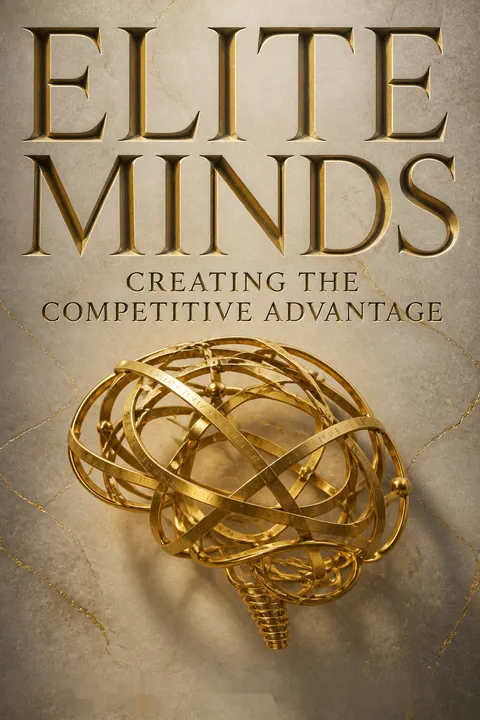

Key Takeaways
1. Mind Over Matter: Your Beliefs Dictate Your Reality
What you believe about yourself and your world is the primary determinant of what you do and, ultimately, how well you do it.
The mind's control. Performance is 100 percent mental because the mind controls the body. Your brain acts as the software, dictating what your body (hardware) is capable of doing. This isn't just opinion; scientific studies on the brain-mind complex confirm that thought-energy can activate or inhibit physical functionality at a cellular level.
Unconscious power. The mind operates on conscious thoughts and unconscious beliefs. While we are aware of our thoughts and feelings, most people have little understanding of their unconscious beliefs—the truths they hold about themselves and the world. These deeply ingrained beliefs, often formed without conscious awareness, are powerful determinants of behavior and performance, influencing us 90 to 95 percent of the time.
Beliefs shape outcomes. The placebo and nocebo effects powerfully illustrate this. A placebo, a sugar pill with no medical benefit, can cure ailments if the patient (and sometimes the doctor) believes it will work. Conversely, the nocebo effect shows that negative beliefs can cause harm. This demonstrates that your mind can make you sick or heal you, and that your expectation, rooted in belief, profoundly dictates your performance and well-being.
2. Pursue Your Best, Not Just "Better"
The secret here is that you cannot pursue both better and best.
"Better" is a trap. Our culture's obsession with "better" often hinders true growth. Constantly striving for "better" implies that our current state is "not good enough," leading to self-criticism rather than encouragement. This judgment is counterproductive to developing skills and achieving peak performance.
Embrace your best. Instead of chasing the subjective and critical "better," focus on consistently doing your absolute best. When people perform at their peak, they often describe it as effortless, without resistance or struggle. This "best" state is often found when we are fully engaged, not thinking about ourselves, but dedicated to a task greater than personal improvement.
The flow state. Optimal performance, or "flow," is achieved through a four-stage process: struggle, release, flow, and recovery. Struggle, involving challenging oneself beyond current abilities, is crucial as it triggers stress hormones. This is followed by release, where stress dissipates, paving the way for flow—a state characterized by altered brain waves (theta/gamma) and neurochemicals (dopamine, endorphins, anandamide) that enhance focus, reduce pain, and eliminate fear.
3. Set Big, Risky Goals Driven by Intention
If you are setting a goal without understanding the reason for it, then maybe you should reevaluate the goal in general.
Intention over goals. While specific goals are often touted as essential, true success stems from intention—the "why" behind your actions. You can achieve great things with clear intention even without a precisely defined goal, but a goal without intention often falls short. Intention provides the underlying purpose and drive.
Go big or go home. Most people set goals they are 100 percent confident they can achieve, which limits their potential. To truly grow, goals should be ambitious, carrying a significant risk of failure. The author suggests aiming for goals with only a 60 percent chance of success, as this level of risk captures full attention and ignites adrenaline.
Eliminate Plan B. A "backup plan" or Plan B is not a safety net; it's a self-sabotaging mechanism. Having an alternative plan signals a lack of total commitment to Plan A, hindering the full dedication required for extraordinary achievement. True commitment means fully investing in one path, accepting that failure is part of the journey, not a reason to switch course.
4. Embrace Failure as the Path to Success
There is no success without failure. Success is what you do after you fail.
Failure is essential. The common belief that success means avoiding mistakes is fundamentally flawed. Failure is an indispensable part of the learning and growth process. Denying individuals the experience of failure, or shielding them from its consequences, ultimately impedes their progress and ability to learn resilience.
Learning from mistakes. Successful individuals don't avoid failure; they respond effectively to it. Unlike amateur golfers who become angry and hit consecutive bad shots, professionals use a poor shot to refocus and become more intentional for the next. The key is to learn from each setback, ensuring the same mistake isn't repeated.
The Jordan example. Michael Jordan's legendary work ethic was forged in the crucible of failure when he was cut from his high school varsity basketball team. This humiliation fueled his determination, proving that what seems like a setback can be the catalyst for unparalleled greatness. Success isn't about never falling, but about getting up 101 times after falling 100.
5. Master Your Focus and Effort for Optimal Performance
Focus is actually a visual concept. It has to do with what you are or should be looking at.
True focus is visual. The term "focus" is often misunderstood. It's not just about concentration; it's fundamentally a visual concept, referring to what you are actively looking at, both externally and in your "mind's eye." Trained observers, like a golf pro spotting a subtle wrist break, see details that others miss because they know what to look for.
External and internal targets. In performance, focus shifts from internal mechanics to external targets. For a golfer, this means visualizing the ball's trajectory towards a distant target, then identifying a precise spot on the turf for the ball to land. This external, specific focus allows the mind to quiet, enabling natural ability to emerge.
The myth of 110%. There is no such thing as 110 percent effort; even 100 percent is rare and often counterproductive. Optimal performance often occurs at 80-90 percent effort, where the body is engaged, but the mind remains calm and focused. Excessive effort can lead to exhaustion and decreased performance, highlighting the "Law of Least Effort" where less conscious exertion can yield better results.
6. Winning is About Becoming Your Best Self, Not Beating Others
The desire to win is the same as the desire to do your best, and only those who are trying to win are trying to do their best.
Two drives to win. People are driven to win for two main reasons: to validate their self-worth (unhealthy) or to experience their "best self" (healthy). The latter group seeks to push their limits and discover their full potential, understanding that winning is a path to self-discovery, not just triumph over an opponent.
The true value of winning. Winning is crucial because it brings out your best. It compels you to push your limits and discover capabilities you didn't know you possessed. Competing against worthy opponents, even with the risk of losing, is more stimulating and leads to greater personal growth than easy victories.
"A winner" vs. "the winner." Society's focus on being "the winner" (only one) stems from insecurity. Shifting to the mindset of being "a winner" (multiple winners possible) fosters a healthier competitive spirit. The 2010 Stanford 10,000-meter race, where four men broke national records in a single event, exemplifies how multiple individuals can achieve personal victories simultaneously, demonstrating that competition can be a synergistic process where everyone can win.
7. Cultivate a Team Mindset: No One Succeeds Alone
No one has ever accomplished anything on his own.
The illusion of individual success. The concept of the "self-made man" is a myth. Every individual's success is built upon the support, guidance, and opportunities provided by others—family, teachers, mentors, and teammates. Acknowledging this interdependence is the first step toward embracing a true team mindset.
Building a cohesive team. Effective team building involves several critical components:
- Recruit the right people: Individuals with talent, maturity, and a desire to be part of something bigger.
- Develop strong friendships: Through vulnerability and sharing life stories, fostering trust.
- Create a shared belief system: Unifying everyone around common rules, mission, and priorities.
- Fight without hurting: Learning to manage conflict constructively, with truthfulness as the primary intention.
- Cultivate strong leaders: Empowering leaders from within the team, not just relying on formal authority.
- Clearly define the team goal: Sacrificing individual agendas for a single, unified objective where everyone wins or loses together.
Beyond individual accolades. Many organizations undermine teamwork by rewarding individual achievements over collective success. This creates internal competition rather than collaboration. True team success requires aligning incentives with the shared goal, fostering an environment where the "name on the front of the jersey" (the team) is valued more than the "name on the back" (the individual).
8. Expect Success: Luck is an Internal Belief
Whatever you believe is true, is.
Luck is a mindset. "Luck" is not an external, ethereal force; it's an internal belief system—a prediction of how you expect to perform or how events will unfold. Those who perceive themselves as "lucky" believe breaks will go their way, while the "unlucky" expect the opposite. This belief profoundly transforms the present moment.
Optimism vs. pessimism. Optimistic individuals attribute positive outcomes to internal factors (their effort, skill) and negative outcomes to external factors (bad breaks, strong opponents). Pessimists do the reverse, blaming themselves for failures and externalizing successes. Shifting from pessimism requires learning to control one's attitudes and beliefs about oneself.
The power of expectation. Your expectation of how you will perform is a powerful determinant of your actual performance. If you don't expect to win, you've already disqualified yourself. The story of Justin Gatlin, an Olympic champion sprinter, illustrates this: despite being the fastest, he lost a race by a fraction of a second because he looked left at the competition instead of leaning into the tape, revealing a subconscious lack of expectation to win.
9. Value Time and Commitment Above All Else
The primary lesson from the monks is one of commitment. When you commit to doing something, do it!
Time is the ultimate currency. Successful individuals value their time more than money or material possessions, utilizing it with greater efficiency. Great coaches, for instance, maximize practice time by ensuring every drill directly prepares for competition, explaining the "why" behind each activity to foster full engagement.
Productive practice. Malcolm Gladwell's "10,000-hour rule" for greatness is amplified by productive practice. It's not just about the quantity of hours, but the quality and intensity of those hours. The more competition-like repetitions an athlete gets, the faster they improve. This means focusing on deliberate, purposeful practice that simulates real-world challenges.
Monk-like commitment. The Buddhist marathon monks of Mount Hiei exemplify extreme commitment. They undertake 1,000 marathons over seven years, not for external rewards, but for personal transformation and enlightenment. Their unwavering commitment, even carrying suicide knives to ensure completion, demonstrates that true greatness comes from an absolute, no-excuses dedication to a chosen path, pushing beyond perceived human limits.
10. Conquer Fear to Unlock the Impossible
Fear is your real opponent, not some East African who never owned a pair of shoes until he got a scholarship (your scholarship, I might add) here in the good ole USA.
Fear is the true enemy. Excuses are merely manifestations of fear, which is the primary obstacle to motivation, passion, and setting ambitious goals. Fear is an internal creation, not an external force. Conquering this internal monster is the most critical step toward reaching your full potential and living a life of purpose.
"Go for it." To overcome fear, one must embrace a "Die Trying" mindset—a willingness to risk everything, fail spectacularly, and be left with nothing. The advice "be careful" is detrimental to greatness, as it stifles creativity, risk-taking, and ultimately, performance. True growth lies in venturing into uncharted territory, accepting the possibility of getting lost.
The impossible becomes possible. St. Francis of Assisi's wisdom encapsulates this journey: "First do what is necessary... Then do the possible... And then you will find yourself doing the impossible." By consistently mastering the basics and then challenging yourself to achieve what's within reach, you transform your own capabilities, making the seemingly impossible a reality. The Special Forces' "tread water" test highlights this: the only way to fail is to quit; as long as you keep trying, you're succeeding.
Review Summary
Elite Minds receives strong praise (4.22/5) for its insights on cultivating high-performance mindsets. Readers appreciate Beecham's exploration of how unconscious beliefs drive success, the importance of expecting to win versus merely hoping, and embracing struggle over comfort. The book's three-part structure covers understanding the mind, overcoming fear, and achieving goals. Many plan to reread it. Common criticisms include perceived contradictions (particularly around winning versus doing your best), reliance on anecdotal evidence over research, and content feeling more suited to athletes and executives than general readers. Several note it's applicable beyond sports.
People Also Read







Download PDF
Download EPUB
.epub digital book format is ideal for reading ebooks on phones, tablets, and e-readers.








































