
Key Takeaways
1. Thucydides's Trap: A Perilous Historical Pattern
"It was the rise of Athens and the fear that this instilled in Sparta that made war inevitable."
Structural stress. The core idea, Thucydides's Trap, describes the severe structural stress that arises when a rising power threatens to displace a ruling power. This dynamic, first identified by the ancient Greek historian Thucydides, suggests that violent clashes are the rule, not the exception, under such conditions. Even ordinary events can escalate with unforeseeable severity.
Historical record. Reviewing the past five hundred years, the Thucydides's Trap Project at Harvard found sixteen cases where a major rising power challenged a dominant state. A sobering twelve of these rivalries ended in war, a ratio that offers little comfort for the twenty-first century's most important geopolitical contest between the United States and China. This pattern highlights that intentions aside, the shifting balance of power creates a dangerous collision course.
Not inevitable. Despite the historical odds, war is not inevitable. Thucydides himself used "inevitable" as hyperbole, an exaggeration for emphasis. The point is not fatalism but a call to recognize the tectonic structural stress that Beijing and Washington must master. Avoiding war requires difficult and painful adjustments in attitudes and actions from both the challenger and the challenged.
2. China's Unprecedented Rise Reshapes Global Power
"The size of China’s displacement of the world balance is such that the world must find a new balance. It is not possible to pretend that this is just another big player. This is the biggest player in the history of the world."
Economic colossus. China's transformation from an agrarian backwater to a global economic powerhouse is unprecedented in speed and scale. In 1980, China's GDP was less than 7% of the US; by 2015, it was 61%, and by purchasing power parity (PPP), it had already surpassed the US. This rapid growth means:
- China's economy doubles every seven years.
- It accounts for 40% of all global economic growth since the 2008 recession.
- It is the world's largest manufacturer and consumer of most products (e.g., autos, cell phones, energy).
Military might. China's economic development is translating into formidable political and military power. While spending an average of 2% of its GDP on defense (compared to the US's 4%), three decades of double-digit growth have expanded its military capabilities eightfold. Its defense budget now ranks second globally, twice that of Russia.
Geoeconomic mastery. China is the world's leading practitioner of geoeconomics, using economic instruments to achieve geopolitical goals. It is the largest trading partner for over 130 countries, including all major Asian economies. This leverage allows China to:
- Coerce compliance through trade and investment (e.g., rare metals to Japan, salmon from Norway).
- Establish new international institutions like the Asian Infrastructure Investment Bank (AIIB).
- Fund massive infrastructure projects like the "One Belt, One Road" initiative, integrating Eurasia.
3. Xi's "China Dream" Drives National Ambition
"The greatest Chinese dream is the great rejuvenation of the Chinese nation."
Reclaiming past glory. President Xi Jinping's "China Dream" is a primal ambition to "Make China Great Again," combining prosperity and power. This vision is driven by an indomitable determination to reclaim the predominance in Asia that China enjoyed before Western intrusion and to command global respect. It reflects a civilizational creed that sees China as the "Middle Kingdom," the center of the universe.
Party legitimacy and control. Xi's first imperative is to relegitimize a strong Communist Party (CCP) as the vanguard and guardian of the Chinese state. Learning from the Soviet Union's collapse, Xi has launched an unprecedented anti-corruption campaign, disciplining over 900,000 Party members and purging powerful rivals. He has also demanded ideological conformity and cemented the Party's centrality in governance, proclaiming "It's the Party, stupid."
Military strength for national pride. Xi believes a military "able to fight and win wars" is essential to realizing the China Dream and overcoming the "century of humiliation." China is reorganizing and rebuilding its armed forces, mirroring US reforms, to ensure unquestioned loyalty to the Party and to develop capabilities to counter US technological dominance. This includes:
- Integrating intelligence, surveillance, and reconnaissance.
- Replacing military regions with joint operations commands.
- Strengthening naval, air, and missile forces, particularly "carrier-killer" missiles.
4. Historical Precedents Reveal Paths to War
"It is a common mistake in going to war to begin at the wrong end, to act first, and wait for disaster."
Lessons from past conflicts. History offers numerous examples of how rising and ruling powers have stumbled into war, often through miscalculation or underestimating an adversary's resolve. The book highlights several cases:
- Athens vs. Sparta: Fear of Athens's rise led Sparta to war, despite both sides initially seeking peace.
- Britain vs. Germany (WWI): Germany's naval buildup, intended to gain respect, instead provoked Britain's fear, leading to a costly arms race and ultimately war.
- Japan vs. US (WWII): US economic sanctions, intended to contain Japan's aggression, were perceived as a mortal threat, leading to Japan's preemptive attack on Pearl Harbor.
Rising power syndrome. These historical cases vividly illustrate the "rising power syndrome," characterized by an enhanced sense of self, interests, and entitlement to recognition and respect. Japan's indignation at being denied its "rightful destiny" and Germany's desire for a "place in the sun" fueled their aggressive actions.
Ruling power syndrome. Conversely, the "ruling power syndrome" involves an enlarged sense of fear and insecurity as the established power faces intimations of decline. Britain's anxiety over Germany's growing fleet and its potential to upset the European balance of power led it to take actions that, while defensive, were seen as provocative by Germany. This dynamic often leads to misperceptions and exaggerated dangers.
5. Cultural Differences Exacerbate US-China Rivalry
"Contemplate the great contrast between the two national characters, a contrast of which you have little perception, having never yet considered what sort of antagonists you will encounter in the Athenians, and how widely, how absolutely different they are from yourselves."
Clash of civilizations. Fundamental cultural differences between China and the United States, as articulated by Samuel Huntington, make their relationship harder to manage. Both nations possess extreme superiority complexes: America as "number one" and China as the "Middle Kingdom." This clash of self-perceptions creates inherent friction.
Divergent core values. The two civilizations prioritize vastly different values:
- America: Freedom, individualism, democracy, rule of law, distrust of government.
- China: Order, hierarchy, subordination of individual interests, consensus, supremacy of the state.
These differences lead to contrasting views on governance, human rights, and international norms, with China viewing Western universalism as naive or even inimical.
Strategic culture clash. Chinese strategic thinking is unabashedly realpolitik, unencumbered by international law or religious norms, allowing for ruthless flexibility. It emphasizes:
- Holistic worldview: Everything is connected, patiently observing and cultivating "shi" (potential energy).
- Psychological warfare: Defeating the enemy without fighting, eroding morale.
- Incremental gains: Victory through gradual accumulation of advantage, like the game of Weiqi (Go).
This contrasts with America's tendency towards short-term problem-solving and decisive military clashes, making misunderstandings and miscalculations more likely.
6. Accidental Escalation: A Major Risk to War
"Consider the vast influence of accident in war before you are engaged in it. It is a common mistake in going to war to begin at the wrong end, to act first, and wait for disaster."
Sparks and background conditions. Wars often begin not by deliberate intent but from unexpected incidents or accidents, especially when underlying "background conditions" are tense. In the US-China context, these conditions include:
- Geography: US naval presence near China's borders.
- History: China's "century of humiliation" and smoldering anger.
- Military lessons: US casualty aversion vs. China's willingness to absorb losses.
These factors mean that seemingly minor sparks can ignite large-scale conflicts.
Accelerants and the fog of war. Once a spark ignites, "accelerants" can quickly turn a local incident into a wider war. Clausewitz's "fog of war" highlights the profound uncertainty that can lead to aggressive actions based on incomplete information. Modern technologies exacerbate this:
- Anti-satellite weapons: Can blind an adversary's command-and-control, creating a "use-it-or-lose-it" dynamic.
- Cyberweapons: Can silently shut down critical infrastructure, but their origins can be disguised, leading to misattribution and disproportionate retaliation.
- Escalation ladders: Nations rarely proceed incrementally; background conditions and accelerants can cause them to skip rungs, leading to rapid, uncontrolled escalation.
Plausible paths to war. The book outlines several scenarios where war could erupt:
- Accidental collision at sea: A US destroyer collides with a Chinese vessel in the South China Sea, leading to a chain of retaliatory strikes.
- Taiwan independence: Taiwan's move towards sovereignty, backed by a US policy shift, provokes a Chinese blockade and military response.
- North Korean collapse: Competing US-South Korean and Chinese interventions to secure nuclear sites or stabilize the peninsula lead to direct clashes.
- Economic conflict: A trade war escalates into cyberattacks on financial systems, leading to conventional military strikes.
7. Nuclear Weapons Introduce a Unique Constraint
"A nuclear war cannot be won and must therefore never be fought."
MAD makes war madness. The existence of nuclear weapons fundamentally alters great power competition. The US and Soviet Union developed "mutual assured destruction" (MAD), a condition where neither side could launch a first strike without guaranteeing its own annihilation by the other's retaliation. This "crystal ball effect" forces leaders to confront the specter of national suicide.
Inseparable Siamese twins. Nuclear weapons have made nuclear superpowers "inseparable Siamese twins," where the death of one means the death of both. This brute fact means that hot war between nuclear-armed states is no longer a justifiable option. Both the US and China, possessing robust nuclear arsenals, must integrate this reality into their foreign policies, compelling compromise and restraint.
The nuclear paradox. Despite the madness of nuclear war, leaders of nuclear superpowers must paradoxically be prepared to risk a war they cannot win. If one side is unwilling to risk nuclear escalation, the other can achieve its objectives by forcing the more responsible power to yield. This "game of chicken" dynamic means that a credible willingness to risk destruction is necessary to deter an adversary from pushing too far.
8. Economic Interdependence and Alliances are Double-Edged Swords
"Thick economic interdependence raises the cost—and thus lowers the likelihood—of war."
MAED: Mutual Assured Economic Destruction. The deep economic interdependence between the US and China creates an analogue to MAD, termed MAED. The US is China's largest market, and China is America's largest creditor. A war would devastate both economies, disrupting global supply chains and causing economic and social impacts far outweighing any potential gains. This creates powerful lobbies for peace within both societies.
Alliances: Fatal attraction. While alliances can help balance power and maintain regional stability, they also carry significant risks. The Thucydides's Trap Case File shows how alliances can draw powers into conflicts they might otherwise avoid, as seen in the "doomsday machine" of entangling alliances that led to World War I.
- Conditional defense: Many alliances are conditional (e.g., US commitment to Taiwan is contingent on China being the aggressor).
- "Blank check" risks: Unconditional support (like Germany's to Austria-Hungary in 1914) can embolden reckless risk-taking by allies.
Washington must carefully review its commitments to Asian allies to avoid inadvertent escalation.
9. Domestic Strength is Key to International Influence
"Domestic performance is decisive. What nations do inside their borders matters at least as much as what they do abroad."
Substructure of power. A nation's international impact is fundamentally built upon its domestic strength. Three factors are crucial:
- Economic performance: Creates the underlying resources for national power.
- Competence in governance: Allows for effective mobilization of resources for national purposes.
- National élan or spirit: Sustains both economic growth and effective governance.
Nations with stronger economies, more competent governments, and unified national support ultimately have greater influence.
Lessons from the Cold War. The Soviet Union's failure, despite its initial dramatic ascendancy, was ultimately due to its inability to sustain economic growth and its core commitments to command-and-control economics and totalitarian politics. Free markets and free societies proved more capable of delivering the benefits citizens desired, hollowing out the Soviet regime over decades.
Current domestic challenges. Both the US and China face significant domestic challenges that could undermine their international standing.
- US: Dysfunctional political system, partisan gridlock, declining public trust, legalized corruption, and an electorate susceptible to sensationalism.
- China: The CCP's struggle to maintain legitimacy amidst materialism, absence of rule of law, excessive central control, and cultural habits that limit creativity.
Addressing these internal issues is paramount; a focus on domestic strength would reveal that "sharing the twenty-first century in Asia" is not their most serious challenge.
10. Escaping the Trap Requires Radical Adjustments and Statecraft
"Above all, while defending our own vital interests, nuclear powers must avert confrontations that force an adversary to choose between a humiliating retreat and nuclear war."
Beyond "engage but hedge." The current US "engage but hedge" strategy towards China is fundamentally contradictory and insufficient for the Thucydidean challenge. It has allowed China's rise to continue largely unchecked while the Pentagon plans for conflict. A serious pause for reflection is needed, not just a "more robust" pivot.
Clarify vital interests. American leaders must distinguish vital national interests from merely vivid ones. Prioritizing everything means prioritizing nothing. For example, is maintaining US primacy in the Western Pacific truly vital, or would Americans "bear any burden" to defend every claim in the South China Sea? Clear definitions are essential for effective strategy.
Understand China's aims. US leaders must better understand China's core interests, moving beyond psychological projection. China's "Make China Great Again" ambition is rooted in a supremacist worldview, not just economic growth. Candor, not polite diplomacy, is needed. As Sun Tzu advised, "If you know the enemy and know yourself, you need not fear the result of a hundred battles."
Strategic options and statecraft. Escaping the trap requires deliberate, multi-year strategic thinking, akin to the Cold War's "wise men." Options include:
- Accommodation: Ad hoc (like Britain yielding to the US) or negotiated (like the Yalta agreement), adjusting to new power realities without war.
- Undermine: Covertly supporting separatist movements or using cyber capabilities to expose regime abuses, though this risks violent reaction.
- Negotiate a Long Peace: Agreeing to quarter-century hiatuses on competition, linking issues for mutual concessions (e.g., South China Sea for Taiwan arms sales).
- Redefine the Relationship: Focusing on "mega-threats" like nuclear anarchy, global terrorism, and climate change, where shared vital interests compel cooperation.
Review Summary
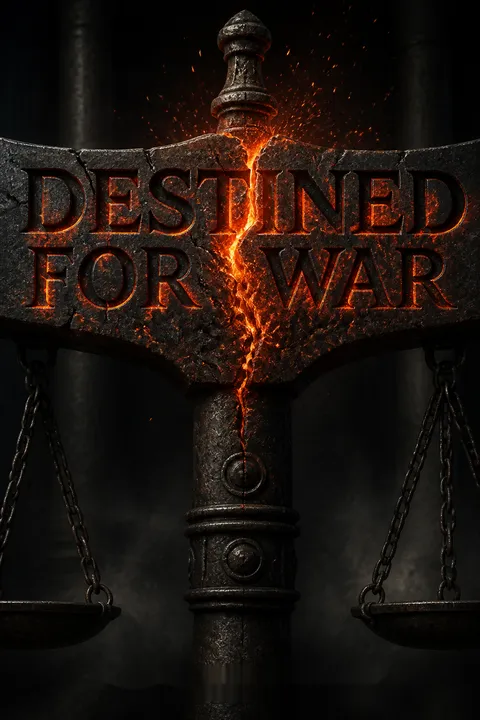
Reviews of Destined for War are largely positive, averaging 4.19/5. Readers praise Allison's accessible writing, compelling historical analysis, and thought-provoking framework of the "Thucydides Trap." Many appreciate the comparative historical case studies and the nuanced examination of U.S.-China cultural and political differences. Critics note the book's structural unevenness, overreliance on figures like Kissinger and Lee Kuan Yew, insufficient exploration of Asian history, and occasional oversimplification. Most agree it is an important, timely read despite its flaws, offering valuable perspective on one of geopolitics' most consequential rivalries.
People Also Read




Download PDF
Download EPUB
.epub digital book format is ideal for reading ebooks on phones, tablets, and e-readers.








































