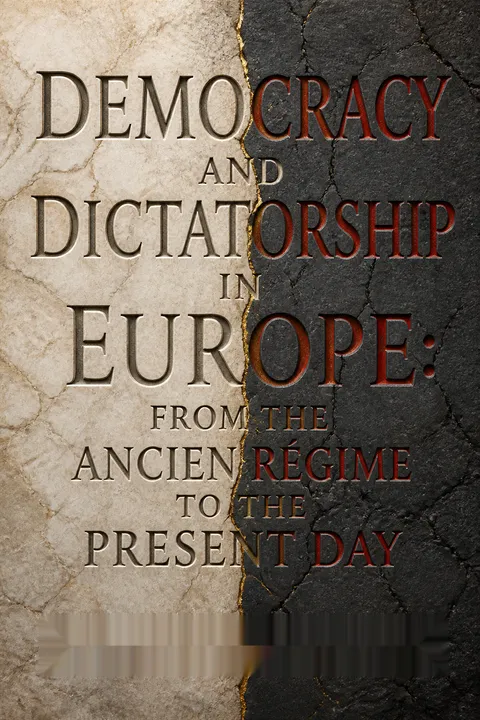

Key Takeaways
1. Liberal Democracy: A Long, Tortuous Journey, Not a Sprint.
Consolidated liberal democracy most often comes at the end of a long and difficult process that involves missteps and even failures along the way.
Unrealistic expectations. Many contemporary observers hold unrealistic expectations for new democracies, assuming a swift, linear transition from dictatorship to stable liberal democracy. European history, however, reveals a far more complex and often violent path, marked by repeated failures and reversals. This long-term perspective is crucial for understanding the inherent difficulties of democratic development.
France's turbulent path. France, the birthplace of modern democracy, exemplifies this arduous journey. From the initial euphoria of the 1789 Revolution, it plunged into totalitarian terror, then populist military dictatorship, followed by multiple monarchical restorations, republics, and empires, each marked by instability and violence. It took until the Fifth Republic in the mid-20th century for France to achieve lasting political stability and consolidated liberal democracy, a process spanning over 150 years.
Britain's "gradual" evolution. Even Britain, often cited as a model of gradual democratic evolution, had a turbulent backstory. Its path included civil wars, military dictatorship, and regicide in the 17th century before the Glorious Revolution established parliamentary dominance. Full liberal democracy was only achieved centuries later, demonstrating that even seemingly peaceful transitions are built on earlier periods of profound upheaval and take generations to solidify.
2. The Enduring Shadow of the Ancien Régime.
The tradition of all dead generations weighs like a nightmare on the brains of the living.
Deep-rooted legacies. Dictatorships are not merely political systems; they are deeply embedded in social and economic structures. Europe's monarchical Ancien Régimes, for instance, were built on a system of privilege that intertwined economic, social, and political power, making fundamental reform incredibly difficult. This intricate web of inherited rights and inequalities, rather than universal citizenship, defined society.
Obstacles to reform. The Ancien Régime's inherent illiberalism and inequality meant that attempts at political reform often triggered broader social and economic upheaval. In France, the monarchy's inability to address fiscal crises without dismantling the system of privilege led to revolution. Even after the political infrastructure of the old order was destroyed, its social and economic legacies—like a resentful elite, a reactionary Church, and deeply divided societies—persisted for centuries, hindering the development of liberal democracy.
Totalitarian echoes. Interestingly, 20th-century totalitarian regimes, like fascism and communism, mirrored their absolutist predecessors in intertwining economic, social, and political power. They also relied on privileged classes, albeit defined by party loyalty or race, to maintain control. Eradicating these deep-seated legacies proved to be an extremely long and difficult process, often requiring major structural shocks.
3. State and Nation-Building: The Unseen Foundations of Democracy.
Without strong states and national identities, liberal democracy is difficult if not impossible to achieve.
Prerequisites for stability. Liberal democracy requires a strong, legitimate state capable of enforcing the rule of law, protecting rights, and implementing policies. It also demands a consensus on national identity—who "the people" are—to foster shared citizenship and trust. Historically, consolidated liberal democracies in Europe emerged only in countries that had achieved these foundational elements.
Varied sequencing. The timing and nature of state and nation-building profoundly impacted democratic trajectories.
- Britain: Early state and nation-building (pre-19th century) allowed for gradual democratic reforms, as a strong national identity facilitated compromises.
- France: Faced greater challenges, with regional particularism and entrenched privileges requiring revolution to advance state and nation-building. The Third Republic eventually unified the diverse citizenry through non-coercive means like education and shared military service.
- Italy & Germany: Unified late (19th century) under the dominance of powerful, conservative states (Piedmont, Prussia), leading to weak national identities and states burdened by internal divisions and anti-liberal legacies.
East-Central Europe's burden. Countries in East-Central Europe faced the most severe challenge, having to build states, nations, and democracies simultaneously after gaining independence post-WWI. This "simultaneity" contributed to their rapid collapse into dictatorship, as communal conflicts and weak state capacity proved overwhelming. The violent ethnic cleansing of WWII and its aftermath, though horrific, ironically created more homogenous populations, fulfilling a brutal form of nation-building.
4. Liberalism and Democracy: Often Allies, Sometimes Adversaries.
Liberalism and democracy are not the same thing, nor did they develop at the same time.
Distinct concepts. The book emphasizes that liberalism (rule of law, individual rights, minority protections) and democracy (rule by the people, popular sovereignty) are distinct. While often intertwined in modern consolidated democracies, their historical development in Europe shows periods of tension and even opposition.
Middle-class ambivalence. The middle classes, often seen as drivers of democracy, frequently prioritized liberalism over full democracy. They sought political power and protection of property rights but feared universal suffrage would empower the working class, leading to expropriation. This ambivalence often led them to ally with conservative forces or accept authoritarian compromises, as seen in 1848.
Working-class radicalization. The middle class's reluctance to embrace full democracy often radicalized the working class. Feeling excluded and betrayed, workers turned to socialist or communist movements that questioned the legitimacy of "bourgeois" democracy. This class-based polarization, evident in countries like Germany and Italy, hindered the formation of broad pro-democratic coalitions and contributed to political instability.
5. War and Catastrophe: Unlocking Europe's Political Evolution.
It often takes major structural shocks or changes like war or economic development to overcome the anti-democratic and illiberal legacies of the old order, a crucial prerequisite for the emergence of liberal democracy.
Violent catalysts. European history demonstrates that profound, often violent, structural shocks were frequently necessary to dismantle the deeply entrenched legacies of old orders.
- French Revolution: Obliterated the Ancien Régime's political and legal infrastructure.
- World War I: Delivered a fatal blow to Europe's monarchical dictatorships and continental empires.
- World War II: Eradicated remaining social and economic vestiges of the old order, like powerful landed elites and rigid class hierarchies, particularly in Germany and East-Central Europe.
Beyond political change. These catastrophic events went beyond mere political transitions. They reshaped class structures, homogenized populations through ethnic cleansing (especially in East-Central Europe), and discredited extremist ideologies. The sheer scale of destruction and suffering forced societies to reconsider old ways and opened pathways for new political arrangements, even if the immediate aftermath was often chaotic.
The German example. In Germany, the Nazi regime itself, despite its horrors, inadvertently contributed to the destruction of the old order by sidelining traditional conservative elites and dismantling status hierarchies. The war then completed this process, with the Junkers and Prussia effectively eliminated, paving the way for a more egalitarian and democratic society in West Germany.
6. The Perilous Path of Early Democratization: Lessons from 1848.
1848 was the turning point at which modern history failed to turn.
A wave of hope, a tide of failure. The 1848 democratic wave swept across Europe, toppling monarchical dictatorships and sparking demands for self-determination. However, despite initial optimism, this wave quickly receded, replaced by a dictatorial undertow. This dramatic failure offers crucial insights into the fragility of early democratic attempts.
Divisions within the opposition. The primary reason for the 1848 failures was the deep divisions within the opposition coalitions.
- Class conflict: Liberals and the middle class sought limited political reforms, fearing that full democratization would empower the working class and lead to radical socioeconomic changes. When workers pressed for more, the middle class often sided with conservatives.
- Nationalist disputes: In multi-ethnic empires like the Habsburgs and the German Confederation, nationalist movements, initially united against the old order, quickly turned against each other once the old order retreated, fragmenting the opposition.
Authoritarian resurgence. These internal divisions provided an opening for the forces of the old order to regroup. By exploiting the fragmented opposition and co-opting moderate elements, conservatives were able to re-install new forms of dictatorship. While 1848 failed to consolidate democracy, it did weaken the old order and force its defenders to recognize the inevitability of change, setting the stage for future struggles.
7. Authoritarianism's Adaptability: From Absolutism to Populist Rule.
Dictatorships are not just a type of political regime: they are generally embedded in and rest upon particular social and economic foundations.
Evolving forms of control. Dictatorships in Europe were not static. From the Ancien Régime's absolutist monarchies, which relied on privilege and limited infrastructural power, to the 19th-century "hybrid" regimes, and finally to 20th-century totalitarian and populist dictatorships, authoritarianism adapted to changing social and economic realities. These regimes often used a mix of coercion and co-optation to maintain power.
Populist strategies. Figures like Napoleon Bonaparte and his nephew Louis-Napoleon pioneered populist dictatorships, appealing directly to "the people" for legitimacy while circumventing democratic institutions. They promised order and national glory, often exploiting widespread dissatisfaction with existing political systems. This approach allowed them to garner broad, cross-class support, a stark contrast to the elite-based rule of earlier absolutist monarchs.
Totalitarian ambition. Fascist and National Socialist regimes represented a new, truly modern form of dictatorship. Unlike traditional authoritarians who sought to preserve the old order, these regimes were revolutionary, aiming for total control over society and the economy to forge a "new man" and a "new nation." They mastered mass mobilization and propaganda, offering radical alternatives to liberal capitalism and democracy, and demonstrating authoritarianism's capacity for profound societal transformation.
8. Post-1945: The Golden Age of Western European Democratic Consolidation.
It was only after the most destructive war in history that Western Europe was finally able to achieve consolidated liberal democracy.
Year Zero's clean slate. The utter devastation of World War II created a "Year Zero" in Europe, profoundly discrediting the revolutionary right (fascism, National Socialism) and weakening traditional conservatism. This eliminated democracy's most formidable prewar adversaries and cleared away many remaining social and economic legacies of the old order, such as powerful landed elites and rigid class systems.
A new consensus. The horrors of the interwar period and WWII forged a new consensus on the desirability of liberal democracy and a fresh understanding of what it would take to make it work. This involved a tripartite foundation:
- International order: US-led security (NATO, Truman Doctrine) and economic (Bretton Woods, Marshall Plan) arrangements.
- Regional integration: European cooperation (ECSC, EEC) to ensure peace and prosperity.
- Domestic social democracy: States actively managed economies and built welfare states to mitigate capitalism's "malign effects" and promote social cohesion.
Prosperity and stability. This social democratic order generated unprecedented economic growth and greater equality, fostering social stability and a willingness to compromise. It dulled the appeal of political extremism, bringing parties and voters back to the political center. This unique combination of factors finally allowed liberal democracy to consolidate in Western Europe, ending a struggle that began in 1789.
9. East-Central Europe: Revolution Imposed, Democracy Delayed.
This war is not as in the past; whoever occupies a territory also imposes upon it his own social system.
External imposition. Unlike Western Europe, East-Central Europe's post-1945 trajectory was shaped by external imposition. The Soviet Union, militarily dominant after WWII, installed communist dictatorships, transforming the region's political, social, and economic orders. This "revolution from without" was uniquely ambitious, aiming for total control and rapid industrialization.
Legacies of weakness. East-Central European countries entered the postwar era with weak states, divided societies, and limited democratic experience, having been brutalized by war and ethnic cleansing. This made them highly susceptible to Soviet influence. Communism, initially, offered a plausible path to modernity and social justice, appealing to a population eager to shed the remnants of their backward old orders.
Erosion of legitimacy. By the 1950s, the gap between communism's utopian promises and its harsh reality led to widespread dissatisfaction and uprisings (e.g., East Germany 1953, Hungary 1956). The crushing of the Prague Spring in 1968 further destroyed faith in communism's reformability, eroding its "systemic legitimacy." Regimes increasingly relied on "performance legitimacy" (promises of prosperity) and repression, but economic stagnation in the 1980s made even this unsustainable, setting the stage for the 1989 collapse.
10. Spain's Late Bloom: Learning from a Century of Instability.
Spain is characterized by its anarchic spirit, negative critique, lack of solidarity among men, extremism, and mutual hostility.
A history of turmoil. Spain's path to democracy was exceptionally long and violent, marked by a weak state, deep regional and social divisions, and frequent military interventions since the early modern period. The Second Republic (1931-1936) collapsed into a brutal civil war, leading to Franco's decades-long conservative military dictatorship. This history fostered a perception, even by Franco himself, that Spain was intrinsically unsuited for liberal democracy.
Franco's unintended legacy. Ironically, Franco's regime, while repressive, inadvertently laid some groundwork for future democracy. Its economic "miracle" transformed Spain from an agrarian, backward society into an urbanized, industrialized, middle-income nation. This process weakened traditional anti-democratic forces like landed elites and the Church, and created a larger, more educated middle and working class that increasingly desired democracy and European integration.
A learned transition. Spain's transition to democracy in the 1970s was remarkably successful due to a crucial "learning process." Both regime insiders and the democratic opposition, haunted by the memory of the civil war, prioritized compromise and moderation. Key actors like King Juan Carlos I and Prime Minister Adolfo Suárez initiated a controlled liberalization, while the opposition agreed to play by the rules. This commitment, coupled with a favorable international environment (Western Europe's support), allowed for a peaceful transition and rapid consolidation.
11. The Fading Pillars: Why Modern Democracies Face Renewed Threats.
The decline of the domestic, regional, and international pillars of the postwar order had the predictable, if not predicted result of bringing back many of the problems that undermined liberal democracy before the Second World War.
Erosion of the postwar order. The stability of post-1945 liberal democracy in Western Europe rested on three pillars: a US-led international order, European integration, and social democratic domestic economies. Since the 1970s, these pillars have decayed, leading to a resurgence of problems that previously undermined democracy.
International and regional decay. The US has shown declining willingness to shoulder hegemonic burdens, and the rise of neoliberalism weakened the international economic order. European integration, while economically advanced, developed a "political deficit" by neglecting corresponding democratic institutions. This technocratic nature, coupled with economic crises, eroded the EU's performance legitimacy, fueling nationalism and populism.
Domestic challenges. The shift from social democratic to neoliberal domestic policies contributed to slow, inequitable growth, increased economic insecurity, and weakened social cohesion. This, combined with a narrative that government is the "problem," has undermined public trust in liberal democracy's ability to address citizens' needs. As a result, populist parties and anti-democratic critiques are gaining traction, echoing the pre-WWII era when citizens felt "left behind" by mainstream politics.
People Also Read





Download PDF
Download EPUB
.epub digital book format is ideal for reading ebooks on phones, tablets, and e-readers.








































