
Plot Summary
Art Student's Vanishing Night
Morag Merrilea, an English art student working as a secretary in the remote Scottish village of Cnothan, is disliked by locals and colleagues alike. One night, she sketches faces in the Highlander pub, drinks heavily, and loses her sketchbook. After collapsing outside, she wakes in hospital with no memory of the evening. Fearing she was drugged, Morag contacts her only friend, Celia, and eventually reports the incident to Sergeant Hamish Macbeth. Her claim of being drugged and possibly assaulted is met with skepticism, but Hamish, despite his reservations, agrees to help her recover her memory through hypnosis. Before the appointment, Morag disappears, leaving only a postcard saying she's gone to London. Her absence is soon overshadowed by the discovery of her decomposing body, hidden in a bale at the factory where she worked.
The Reluctant Highland Detective
Hamish, a tall, red-haired, quietly persistent village policeman, is drawn into Morag's disappearance and death. He faces indifference and hostility from both the insular villagers and his own superiors, especially the blustering Detective Chief Inspector Blair. Hamish's investigation is hampered by the villagers' code of silence and the factory's tight-lipped staff. Despite being sidelined by Blair and warned off by his superiors, Hamish's curiosity and sense of justice keep him probing. He interviews Morag's colleagues, the pub's patrons, and her only friend, Freda, but finds little cooperation. The case is further complicated by the arrival of the press and the discovery that Morag was three months pregnant, raising the stakes and deepening the mystery.
Secrets in the Factory Shadows
The Shopmark Fashions factory, where Morag worked, is a microcosm of secrets and resentments. Hamish learns that Morag was unpopular, considered snobbish, and had few friends. Her brief relationship with Geordie Fleming, the factory accountant, ended badly, and her closest confidante, Freda Crichton, is devastated by her death. Freda reveals that she and Morag were lovers, but Morag's pregnancy suggests a hidden affair or assault. The factory's personnel manager, Pete Eskdale, and the boss, Harry Gilchrist, both deny involvement, but their evasiveness raises suspicions. The staff's fear of unemployment and the village's economic dependence on the factory create a wall of silence, making Hamish's investigation even more challenging.
A Village of Silence
The village of Cnothan is haunted by its own history—a drowned church, a lost village, and a pervasive sense of doom. Locals believe in a curse, and their reluctance to talk is both cultural and self-protective. Hamish and his lazy but loyal constable, Dick Fraser, encounter blank stares and closed doors at every turn. Even when another body—Fergus McQueen, a young man who witnessed a stranger in the pub—is found murdered, the villagers remain mute. The sense of isolation and suspicion is palpable, and Hamish feels increasingly frustrated and alone, battling not just a murderer but the collective will of a community determined to protect itself at all costs.
The Pregnant Victim's Puzzle
The revelation that Morag was pregnant adds a new layer to the case. Hamish and his colleagues speculate about the father's identity, suspecting someone at the factory. DNA tests are ordered, but the staff, citing human rights, resist. Freda, heartbroken and angry, insists Morag could not have been involved with a man, suggesting rape or blackmail. The investigation uncovers Morag's ambition and her tendency to manipulate those around her, including possibly blackmailing the father of her child. The lack of forensic evidence and the disappearance of Morag's sketchbooks further complicate the search for the truth.
Lovers, Friends, and Foes
Hamish's own romantic history—failed engagements, lingering feelings for Priscilla Halburton-Smythe, and a brief, disappointing liaison with the beautiful but shallow Hannah Fleming—mirrors the emotional confusion of the case. Hannah, Geordie's glamorous sister, becomes involved in the investigation, both as a potential victim and as a self-styled amateur sleuth. Her vanity and recklessness put her in danger, and her actions inadvertently lead to further violence. The tangled relationships among the factory staff, the villagers, and the police create a web of jealousy, betrayal, and unspoken desires that both hinder and drive the investigation forward.
The Palfours Return
The return of Olivia and Charles Palfour, notorious for their involvement in a previous murder case, adds another layer of intrigue. Hamish suspects them of being connected to Morag's death, especially when Hannah is attacked and nearly killed after visiting them. The Palfours' presence stirs up old fears and resentments in the village, and their eventual arrest for a separate murder only serves to distract from the central mystery. Their cold, calculating behavior and the community's reaction to them highlight the themes of guilt, reputation, and the corrosive effects of suspicion.
Sketches, Lies, and Blackmail
The recovery of Morag's sketchbook, found by a local child at the dump, provides new leads. The sketches depict several factory staff and villagers, including Pete Eskdale and Stolly Maguire, the barman. However, the timing of the drawings complicates matters—they were made before the night Morag was drugged, casting doubt on their relevance. The possibility that Morag was blackmailing someone, perhaps over her pregnancy, becomes a central theory. The investigation into her London past reveals a one-night stand with Giles Armitage, who is confirmed as the father of her child but has a solid alibi for the time of her murder.
The False Confession
After a violent storm, Geordie Fleming is killed when a tree crashes through his house. A typed confession is found on his computer, claiming responsibility for the murders of Morag, Fergus, and his own sister, Hannah. Hamish is immediately suspicious—Geordie was meek and unlikely to be a killer. Further investigation reveals that the confession was likely planted by the real murderer, who took advantage of Geordie's death to divert suspicion. This false trail exposes the dangers of surface appearances and the ease with which guilt can be manufactured in a community desperate for closure.
The Camford Sisters' Secret
The focus shifts to Brenda Gilchrist, Harry's wealthy wife, and her sister Heather Camford. Brenda's prolonged absence, supposedly traveling abroad, raises suspicions. Hamish discovers that Heather has been impersonating Brenda, aided by Harry and the odd-job man, Sean Carmichael. The motive is financial—Brenda inherited the bulk of the family fortune, and Heather, resentful and greedy, conspires with Harry to seize control. The discovery of Brenda's body, bricked up in the basement, confirms the worst. The sisters' rivalry and Harry's desperation to save his factory drive the murderous plot, revealing the dark side of ambition and familial jealousy.
Storms and Sudden Death
As the investigation closes in, Sean Carmichael flees, leaving behind a stash of cash, and later commits suicide in custody—possibly murdered to ensure his silence. The factory is set on fire by masked arsonists, destroying evidence and livelihoods. Heather, now on the run, returns to Cnothan to steal the staff's wages from the factory safe but is caught in the act. In a final confrontation, she is badly burned but survives, only to escape from hospital twice, leaving a trail of violence. The community's complicity, the police's blunders, and the escalating chaos underscore the destructive power of secrets and the lengths people will go to protect themselves.
The Money in the Safe
The revelation that the factory's wages were kept in cash, rather than paid through the bank, points to financial irregularities and possible tax evasion. Gilchrist's manipulation of the accounts, aided by a compliant Polish accountant, allowed him to siphon off funds and pay bribes. The staff's silence is partly motivated by fear of losing their jobs and partly by their own involvement in the factory's shady dealings. The burning of the factory, orchestrated by locals to destroy evidence, is a collective act of desperation that implicates the entire community in the cover-up.
Heather's Deadly Masquerade
Heather, driven by greed and resentment, becomes increasingly unhinged. Her impersonation of Brenda, her role in multiple murders, and her violent attempts to escape justice culminate in a dramatic showdown at the seer Angus Macdonald's cottage. After stabbing Angus and attacking a policewoman, Heather is finally killed in a struggle, her body consumed by fire. Her death brings a grim sense of closure, but also leaves lingering questions about the nature of evil, the fragility of identity, and the consequences of unchecked ambition.
Factory in Flames
The burning of the factory marks the end of an era for Cnothan. The loss of jobs, the exposure of corruption, and the deaths of key figures leave the village reeling. The staff's complicity in the arson, their refusal to cooperate with the police, and the community's collective guilt highlight the corrosive effects of secrecy and self-preservation. The survivors, including Freda, who finds success elsewhere, must come to terms with the cost of silence and the price of survival in a world where respectability is everything.
The Final Hunt
With the main perpetrators dead or in custody, Hamish and his colleagues are left to pick up the pieces. The investigation's many twists and false leads have exposed the weaknesses of the police, the dangers of gossip, and the limits of justice. The community's need for respectability, the destructive power of jealousy, and the persistence of old wounds remain unresolved. Hamish, weary but undaunted, reflects on the nature of evil and the importance of forgiveness, even as he faces personal disappointment and the ongoing challenges of life in the Highlands.
Love, Loss, and Lochdubh
The novel ends with Hamish's engagement to Elspeth Grant falling apart after a tabloid scandal, and his old flame Priscilla re-entering his life. The cycle of jealousy, misunderstanding, and longing continues, echoing the themes of the main plot. Hamish's relationship with his loyal but exasperating constable Dick, his pets, and the villagers provides moments of warmth and humor amid the darkness. The story closes with Hamish alone but hopeful, waiting for a new beginning, as the village of Lochdubh settles back into its uneasy peace.
Analysis
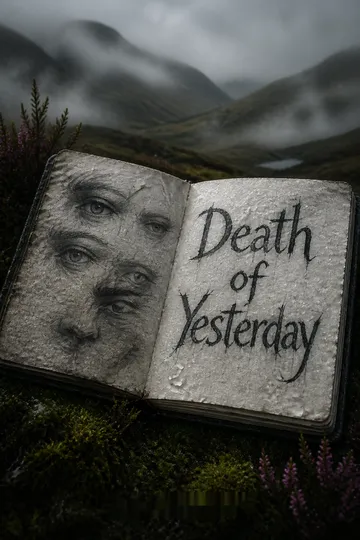
A darkly comic meditation on respectability, secrecy, and the cost of survival"Death of Yesterday" is more than a conventional village mystery; it is a nuanced exploration of the ways communities protect themselves, the dangers of conformity, and the corrosive effects of jealousy and ambition. Through the lens of Hamish Macbeth's investigation, M.C. Beaton examines the fragility of reputation, the ease with which innocence can be sacrificed, and the lengths to which people will go to preserve their own interests. The novel's humor, warmth, and vivid sense of place are balanced by a deep skepticism about human nature and the possibility of justice. The recurring motifs of masquerade, false confession, and collective silence serve as both plot mechanisms and social commentary, inviting readers to question the stories we tell ourselves and the truths we choose to ignore. In the end, the novel suggests that survival in a small community often depends on complicity, and that the pursuit of respectability can be as deadly as any crime.
Review Summary
Reviews for Death of Yesterday are mixed, averaging 3.73/5. Long-time fans note a decline in quality compared to earlier entries, citing too many murders, convoluted plots, and an increasingly unlikable Hamish. Common criticisms include cartoonish characters, implausible storylines, and a loss of the series' cozy charm. Positive reviews praise the familiar Scottish Highland setting, entertaining secondary characters like Dick Fraser, and the comfort of revisiting Lochdubh. Many readers continue the series out of habit and affection for earlier books, despite acknowledging its shortcomings.
Characters
Hamish Macbeth
Hamish Macbeth is the heart of the novel—a tall, red-haired, quietly stubborn village constable whose gentle manner belies a sharp mind and deep sense of justice. He is both an insider and outsider in his community, respected for his integrity but often undermined by his superiors. Hamish's relationships are complex: he is haunted by failed romances, especially with Priscilla and Elspeth, and struggles with loneliness and longing. His investigative style is unorthodox, relying on intuition, persistence, and a deep understanding of human nature. Hamish's empathy for the vulnerable and his skepticism of authority drive the narrative, making him both a detective and a moral center.
Morag Merrilea
Morag is an English art student whose intelligence and ambition set her apart from the insular villagers of Cnothan. Unpopular and often condescending, she seeks validation through her art and her relationships, particularly with Freda. Morag's pregnancy and possible blackmail of her child's father make her both a victim and a catalyst for the unfolding tragedy. Her disappearance and murder expose the village's secrets and the dangers of standing out in a community that values conformity and silence.
Freda Crichton
Freda is Morag's closest friend and lover, a talented designer at the factory. Her grief and anger at Morag's death drive much of the emotional tension in the novel. Freda's sexuality makes her an outsider, and her vulnerability is exploited by both the police and the community. Despite her pain, Freda ultimately finds success and a measure of peace, symbolizing resilience in the face of loss and betrayal.
Harry Gilchrist
Gilchrist is the boss of Shopmark Fashions, a man whose respectability masks deep insecurity and moral weakness. His marriage to Brenda is strained by financial pressures and his own ambition. Gilchrist's willingness to conspire with Heather, manipulate his staff, and ultimately commit murder reveals the dark side of ambition and the corrosive effects of greed. His suicide is both an admission of guilt and a final act of self-preservation.
Heather Camford
Heather is Brenda's sister, driven by resentment over her inheritance and her failed engagement to Gilchrist. Her impersonation of Brenda, her role in multiple murders, and her violent attempts to escape justice make her the novel's primary antagonist. Heather's psychological unraveling, fueled by greed and a sense of entitlement, is both tragic and terrifying, culminating in her fiery death.
Brenda Gilchrist
Brenda is the unseen center of the novel's conspiracy—a wealthy heiress whose prolonged absence and eventual murder set the plot in motion. Her relationships with her husband and sister are defined by money, control, and rivalry. Brenda's fate is a grim reminder of the dangers of trust and the destructive power of family secrets.
Pete Eskdale
Pete is the factory's personnel manager, a lottery winner whose charm masks a self-serving nature. He is suspected of involvement in Morag's death and the factory's financial irregularities. Pete's relationships with the staff are transactional, and his evasiveness makes him a perpetual suspect. His survival amid the chaos is a testament to his adaptability and moral ambiguity.
Geordie Fleming
Geordie is the factory's accountant, a gentle, unassuming man whose brief relationship with Morag ends badly. His death, staged as a suicide and accompanied by a false confession, highlights the dangers of being in the wrong place at the wrong time. Geordie's fate is a commentary on the ease with which innocence can be sacrificed for the sake of appearances.
Hannah Fleming
Hannah is Geordie's glamorous sister, whose vanity and desire for attention put her in harm's way. Her brief romance with Hamish, her amateur sleuthing, and her eventual murder make her both a victim and a cautionary figure. Hannah's obsession with fame and her inability to see the dangers around her underscore the novel's themes of self-delusion and the perils of superficiality.
Dick Fraser
Dick is Hamish's constable, a plump, quiz-obsessed man who prefers comfort to action. Despite his apparent laziness, Dick is loyal, resourceful, and occasionally insightful, providing comic relief and practical support. His relationship with Hamish is both domestic and professional, highlighting the importance of companionship and the challenges of working in a small, insular community.
Plot Devices
Village as Character and Obstacle
The village of Cnothan is more than a setting—it is an active force in the narrative. Its history of loss, suspicion, and self-protection creates an atmosphere of secrecy and resistance. The villagers' silence, motivated by fear of unemployment and a desire to protect their own, is both a plot obstacle and a commentary on the dangers of conformity. The village's collective complicity in the factory's crimes and the arson that destroys it highlight the destructive power of groupthink and the difficulty of achieving justice in a closed community.
False Leads and Red Herrings
The novel employs numerous false leads—Morag's supposed rape, the Palfours' return, Geordie's confession, and the focus on Pete Eskdale—to keep both the characters and the reader guessing. These red herrings are not merely plot devices but reflections of the characters' own biases and the community's need for scapegoats. The shifting suspicions and the eventual revelation of the true culprits underscore the dangers of surface judgments and the complexity of truth.
Identity, Masquerade, and Impersonation
The central conspiracy hinges on Heather's impersonation of Brenda, facilitated by physical resemblance and the community's willingness to accept appearances. This motif of masquerade extends to other characters—Morag's manipulation of her own image, Hannah's use of beauty as a mask, and the factory's façade of respectability. The theme of identity is both literal and metaphorical, exploring the ways people hide, deceive, and reinvent themselves to survive.
The Sketchbook as Symbol and Clue
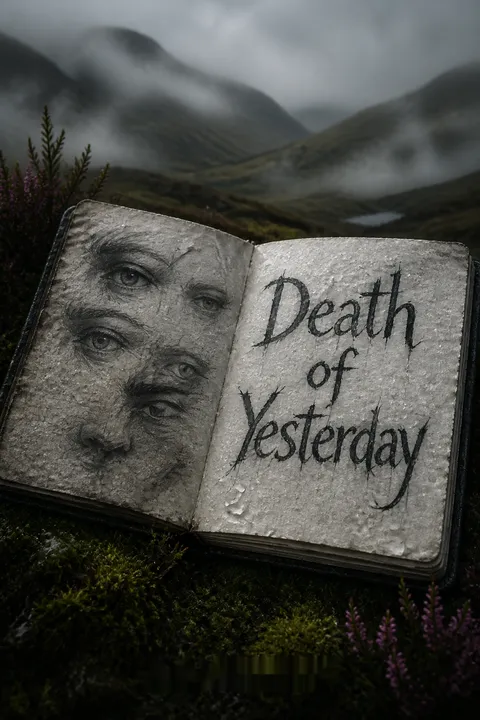
Morag's sketchbook is a key plot device, symbolizing her outsider status and her attempt to capture and control the world around her. Its disappearance, recovery, and ambiguous contents provide both clues and confusion, reflecting the novel's preoccupation with perception, memory, and the unreliability of evidence. The sketchbook's role in the investigation highlights the limits of knowledge and the dangers of seeing only what one wants to see.
Narrative Structure and Foreshadowing
The novel's structure—alternating between Hamish's investigation, the villagers' perspectives, and the inner lives of suspects—creates a tapestry of voices and motives. Foreshadowing is used to build suspense, with early hints about the factory's finances, the Camford sisters' rivalry, and the villagers' fear of exposure. The gradual revelation of secrets, the escalation of violence, and the final unmasking of the killers are carefully paced to maintain tension and emotional engagement.
Hamish Macbeth Series
About the Author
Other books by M.C. Beaton
Download PDF
Download EPUB
.epub digital book format is ideal for reading ebooks on phones, tablets, and e-readers.








































