
Plot Summary
Seaside Holiday Anticipation
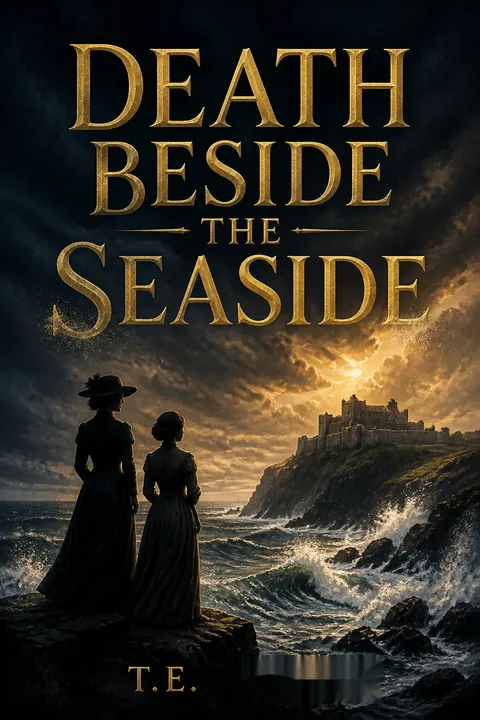
Lady Hardcastle and her maid, Florence Armstrong, finally prepare for a seaside holiday in Weston-super-Mare after years of postponement. The anticipation is tinged with playful banter and the promise of simple pleasures—fish and chips, donkey rides, and the bracing English air. Their relationship is warm, witty, and deeply companionable, setting the tone for the adventure ahead. The journey itself is a small marvel, thanks to their new, innovative motor car, and the mood is one of lighthearted escape from their usual routines. Yet, beneath the surface, there's a sense that adventure—and perhaps trouble—has a way of finding them, no matter how ordinary the setting.
Hotel Guests and First Impressions
The Steep Holm View Hotel is a microcosm of Edwardian society and international intrigue. Lady Hardcastle and Flo are quickly drawn into the lives of their fellow guests: a nervous English scientist, a brusque Austrian, a Japanese diplomat, a French engineer, a Russian count, and an American aunt with her shy niece. The hotel's staff are almost supernaturally efficient, and the atmosphere is both welcoming and faintly mysterious. Early interactions are colored by subtle observations and the sense that not all is as it seems. The stage is set for a collision of personalities, secrets, and, inevitably, danger.
A Disappearance and a Ransacked Room
The holiday's tranquility is shattered when Dr. Goddard, the English scientist, disappears overnight. His room is found ransacked, the lock broken, and a heavy strongbox missing. The search is methodical, suggesting a professional rather than a common thief. The hotel manager, desperate to avoid scandal, enlists Lady Hardcastle and Flo's help to investigate discreetly. The emotional tone shifts from lighthearted to tense, as the women's old investigative instincts are awakened. The missing strongbox, rumored to contain government secrets, becomes the focal point of suspicion and fear.
The Case Begins
Lady Hardcastle and Flo begin their inquiry, interviewing staff and guests. Each person's account adds a layer of complexity: the American niece heard someone tampering with Dr. Goddard's door; a Russian guest is seen acting suspiciously; the night staff recall a fisherman lurking near the hotel. The strongbox's contents are the subject of wild speculation—radio plans, weapons, or something else entirely. The women's partnership is tested as they balance their desire for a peaceful holiday with the thrill of the chase. The emotional arc is one of mounting curiosity and camaraderie in adversity.
Interviews and Early Suspicions
The investigation reveals that nearly every guest has a plausible motive and opportunity. The Russian, Kusnetsov, is linked to espionage; the American aunt, Adelia, is more than she appears; the French and Japanese guests have their own secrets. The staff, too, are not above suspicion. Lady Hardcastle and Flo's interviews are laced with humor and psychological insight, but the stakes are rising. The strongbox's theft appears to be the work of a spy, not a burglar, and the possibility of international consequences looms. The emotional tone is one of suspicion, tension, and the thrill of deduction.
The Strongbox and International Intrigue
The strongbox's disappearance triggers a cascade of events. It passes from hand to hand—stolen by the Russian, then by another guest. Each nation's representative believes it contains secrets vital to their own government. The hotel becomes a nest of spies, each watching the others, alliances shifting with every new clue. Lady Hardcastle and Flo realize they are in the midst of a high-stakes intelligence operation, with their own government quietly pulling strings in the background. The emotional arc is one of excitement, danger, and the realization that they are outmatched but undeterred.
Murder in the Hotel
The tension breaks with the discovery of murder: first the Russian, then the Austrian, both killed in their rooms. The methods are brutal and efficient—garrotting, stabbing, shooting—each suggesting a different killer. The hotel's veneer of civility is shattered, and fear spreads among the remaining guests. Lady Hardcastle and Flo must navigate not only the investigation but also the threat to their own safety. The emotional tone is grim, urgent, and laced with the fear that the killer may strike again.
The Web Tightens
As the body count rises, it becomes clear that more than one person is responsible. The strongbox is still missing, and the remaining guests are either potential victims or suspects. Lady Hardcastle and Flo piece together the movements and motives of each player, uncovering a web of deceit, betrayal, and desperation. The involvement of their own government becomes explicit, with Special Branch agents arriving to "clean up." The emotional arc is one of frustration, determination, and the growing sense that the truth is more complex than they imagined.
The Fisherman's Secret
Attention turns to the enigmatic fisherman seen near the hotel and on the promenade. As a violent storm descends, the hotel is thrown into chaos: food is stolen, a guest is drugged, and the American niece, Eleanora, is kidnapped. The fisherman is revealed to be a German agent, using the tides to come and go by boat. Lady Hardcastle and Flo, now armed and resolute, set out to track him to his lair, risking their lives to save Eleanora and Dr. Goddard. The emotional tone is one of suspense, courage, and the resolve to see justice done.
Storm, Kidnapping, and Pursuit
Braving the storm, Lady Hardcastle and Flo follow clues to the abandoned fort at Brean Down, believing it to be the kidnapper's hideout. The journey is perilous, the landscape bleak and windswept. Inside the fort, they confront the German agent—revealed to be Jakob Gerber, twin brother of the infamous assassin Ehrlichmann. A tense standoff ensues, with the lives of Eleanora and Dr. Goddard hanging in the balance. The emotional arc is one of fear, adrenaline, and the triumph of quick thinking and teamwork.
The Fort at Brean Down
In the fort, the truth comes out: the strongbox is empty, the supposed secrets a ruse to flush out foreign spies. Gerber, driven by revenge and madness, is defeated through a combination of guile and martial skill. Lady Hardcastle and Flo rescue the captives and leave Gerber for the authorities. The emotional tone is cathartic, with relief mingled with sorrow for the lives lost and the toll of violence. The women's bond is stronger than ever, forged in the crucible of danger.
The Truth in the Strongbox
Back at the hotel, the aftermath unfolds. The strongbox was always a decoy, part of a British intelligence operation to identify and neutralize foreign agents. Lady Hardcastle's brother, Harry, reveals the extent of the ruse and the role the women played—both as investigators and as bait. The American guests vanish, the remaining spies are rounded up, and the authorities quietly close the case. The emotional arc is one of bittersweet victory, with the satisfaction of a mystery solved tempered by the knowledge of manipulation and loss.
The Final Confrontation
Gerber, wounded but alive, returns for one last act of vengeance, only to be shot by Adelia Wilson in a crowded hotel. The women slip away, leaving the authorities to deal with the aftermath. The cycle of espionage and violence is complete, but the cost is high. Lady Hardcastle and Flo reflect on the nature of justice, the burden of secrets, and the enduring shadow of the spy game. The emotional tone is somber, reflective, and tinged with relief.
Aftermath and Revelations
With the case closed, the women return to their village, seeking solace in the rhythms of rural life. The events at the seaside are recounted with humor and perspective, the trauma softened by time and friendship. Lady Hardcastle is offered a return to government service but declines, choosing peace over peril. The emotional arc is one of healing, gratitude, and the reaffirmation of chosen family and home.
Home Again, Village Life
The village fête provides a welcome distraction, with its simple pleasures and communal spirit. Lady Hardcastle and Flo are celebrated for their contributions, their recent adventures receding into memory. The contrast between the quiet joys of home and the dangers of espionage is stark, and both women embrace the former. The emotional tone is warm, nostalgic, and contented.
The Spy Game's Enduring Shadow
In the final reckoning, Lady Hardcastle and Flo acknowledge the enduring presence of the spy game in their lives. The world is changing, the shadows lengthening, but they choose to face the future together, armed with wit, courage, and the strength of their bond. The emotional arc is one of acceptance, resilience, and hope.
Analysis
Death Beside the Seaside is a masterful blend of classic whodunit, espionage thriller, and social comedy, set against the deceptively tranquil backdrop of an Edwardian seaside holiday. At its heart, the novel is a meditation on the nature of secrets—personal, political, and existential. Through the lens of Lady Hardcastle and Flo's partnership, the story explores themes of loyalty, identity, and the cost of living in the shadows. The closed-circle setting amplifies both the suspense and the satire, as the hotel becomes a microcosm of a world on the brink of change. The use of the strongbox as a MacGuffin is particularly effective, exposing the emptiness at the heart of the spy game and the futility of chasing power for its own sake. The novel's emotional arc moves from anticipation and camaraderie, through fear and loss, to resolution and acceptance. Ultimately, Death Beside the Seaside is both a loving homage to the golden age of detective fiction and a sharp, modern commentary on the enduring allure—and danger—of secrets. Its lesson is clear: in a world of shifting alliances and hidden motives, the only true refuge is found in friendship, courage, and the quiet joys of home.
Characters
Lady Emily Hardcastle
Lady Hardcastle is a widow, former spy, and natural leader, whose sharp intellect and irreverent humor mask a deep sense of responsibility and empathy. Her relationship with Florence Armstrong is both professional and profoundly personal—a partnership of equals forged through shared danger and mutual respect. Lady Hardcastle's psychological complexity lies in her simultaneous longing for peace and her attraction to adventure. She is haunted by past losses, particularly her husband's murder, and driven by a need to protect those she loves. Over the course of the story, she moves from seeking a simple holiday to embracing her role as investigator and protector, ultimately reaffirming her commitment to a quieter life.
Florence Armstrong
Flo is Lady Hardcastle's maid, confidante, and right hand—a woman of working-class origins with a circus background and formidable martial skills. Her psychological depth comes from her blend of humility and competence; she is both servant and equal, often the voice of reason and caution. Flo's relationship with Lady Hardcastle is marked by affection, banter, and unspoken understanding. She is adaptable, brave, and deeply moral, often acting as the emotional anchor in moments of crisis. Her development is subtle, as she balances her longing for peace with the thrill of adventure and the satisfaction of a mystery solved.
Dr. Percival Goddard
Dr. Goddard is the catalyst for the story's central mystery—a government scientist whose disappearance sets the plot in motion. He is awkward and self-effacing, yet possesses hidden depths of courage and resourcefulness. Goddard's role as both victim and agent is ambiguous; he is both the hunted and, in some ways, the bait in a larger intelligence operation. His psychological arc is one of transformation, from passive pawn to active participant, and his relationship with Lady Hardcastle and Flo is one of growing trust and mutual respect.
Adelia Wilson
Adelia is an American intelligence agent masquerading as a tourist aunt. She is blunt, pragmatic, and deeply committed to her niece, Eleanora. Adelia's psychological complexity lies in her dual roles—loving guardian and ruthless operative. She is both ally and rival to Lady Hardcastle, their relationship marked by mutual recognition and occasional conflict. Adelia's development is driven by her willingness to risk everything for Eleanora, culminating in her decisive action during the final confrontation.
Eleanora Wilson
Eleanora is Adelia's niece, a young woman on the cusp of adulthood, caught between the expectations of her family and her own desires. She is shy but observant, longing for adventure but unprepared for its dangers. Eleanora's psychological journey is one of awakening—she moves from passive bystander to active participant, her ordeal forging a new sense of agency and resilience. Her relationship with Lady Hardcastle and Flo is one of admiration and gratitude, and she emerges from the ordeal changed but hopeful.
Sergei Kusnetsov
The Russian guest is a classic spy—reserved, methodical, and ultimately a victim of the deadly game he plays. Kusnetsov's psychological profile is shaped by paranoia and ambition; he is both hunter and hunted, his fate sealed by his inability to trust or outmaneuver his rivals. His death is both a plot turning point and a commentary on the expendability of agents in the great game of espionage.
Ernst Schneider
The Austrian guest is a foil for the other characters—rude, ostentatious, and ultimately vulnerable. Schneider's psychological makeup is defined by pride and insecurity; he is desperate to prove himself, yet fatally underestimates his opponents. His murder is a moment of reckoning, exposing the brutality beneath the veneer of civility.
Jean Martin
The French engineer is a man of few words, his motivations opaque. Martin is both a suspect and a victim, his actions driven by loyalty to his country and a personal code of honor. His psychological arc is one of increasing isolation, as the web of suspicion tightens and his options dwindle. His death is both inevitable and poignant, a casualty of forces beyond his control.
Takahashi Kaito
The Japanese guest is a study in restraint and precision, his true intentions hidden behind a mask of politeness. Takahashi's psychological complexity lies in his ability to navigate multiple identities—diplomat, spy, and, ultimately, assassin. His fate is a testament to the dangers of divided loyalties and the ruthlessness of the spy game.
Jakob Gerber (alias Günther Ehrlichmann)
The story's primary antagonist, Gerber is a German agent driven by revenge and a fractured sense of identity. His psychological profile is shaped by trauma—years in a Chinese prison, the loss of his twin, and the collapse of his former life. Gerber is both a mastermind and a madman, his actions unpredictable and his violence shocking. His final confrontation with Lady Hardcastle and Flo is both a personal reckoning and a symbolic end to an era of shadowy intrigue.
Plot Devices
Closed Circle Mystery
The hotel setting creates a classic "closed circle" mystery, where a limited number of guests and staff are both suspects and potential victims. This device heightens tension, focuses suspicion, and allows for intricate interplay between characters. The narrative structure is episodic, with each chapter revealing new information and shifting the reader's perspective on guilt and innocence.
Red Herrings and Misdirection
The plot is rich with red herrings—each guest has a plausible motive, and the true nature of the strongbox is obscured by conflicting stories. The use of multiple nationalities and secret agendas keeps both characters and readers guessing. Foreshadowing is subtle, with early clues (the fisherman, the storm, the missing food) gaining significance as the story unfolds.
Espionage as Social Satire
The story uses the conventions of the spy genre to satirize Edwardian society—its manners, hierarchies, and hypocrisies. The interplay between servants and masters, the absurdity of international intrigue in a seaside hotel, and the ultimate emptiness of the strongbox all serve as commentary on the futility and farce of the "great game."
Dual Protagonists and Narrative Voice
The alternating focus on Lady Hardcastle and Flo allows for a rich exploration of class, gender, and agency. Their banter and mutual respect provide both comic relief and emotional depth. The narrative voice is witty, self-aware, and often breaks the fourth wall, inviting the reader to share in the joke while never losing sight of the story's stakes.
The MacGuffin
The strongbox is the classic MacGuffin—an object of desire whose true nature is less important than the actions it provokes. Its emptiness is both a plot twist and a thematic statement: the real secrets are the ones people bring with them, and the pursuit of power is ultimately hollow.
Lady Hardcastle Mysteries Series





Download PDF
Download EPUB
.epub digital book format is ideal for reading ebooks on phones, tablets, and e-readers.








































