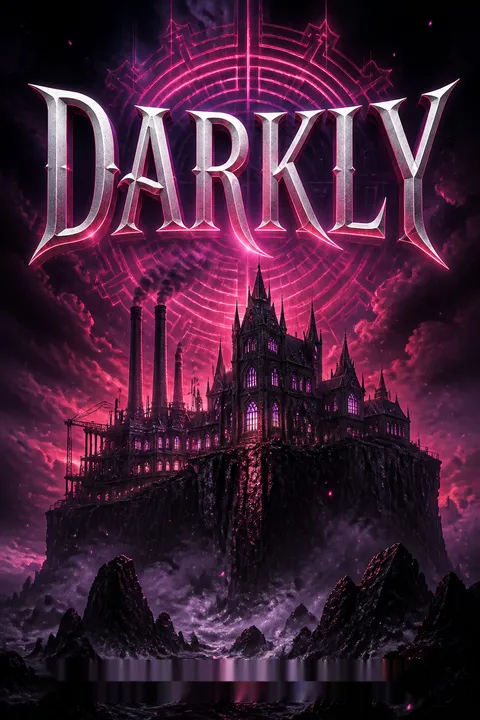

Plot Summary
The Invitation Arrives
On a bleak school bus ride, Dia Gannon, a quirky, outcast teen in Missouri, stumbles upon the Louisiana Veda Foundation's call for applicants to a prestigious, enigmatic summer internship. The application asks, "What would you kill for?"—a question that unsettles Dia, who is obsessed with the legendary, controversial game designer Louisiana Veda. Despite her self-doubt and the overwhelming odds, Dia is drawn to the challenge, sensing something off about the foundation's motives. The invitation is both a beacon of hope and a harbinger of danger, setting Dia on a path that will force her to confront her own desires, fears, and the shadows of her idol's legacy.
Prologue Antiques and Family Ties
Dia's life revolves around Prologue Antiques, the family shop she helps run with her eccentric mother Gigi and elderly friends Basil and Agatha. The shop is a haven of old treasures and memories, but also a symbol of stagnation and financial stress. Dia's relationship with her mother is loving but fraught—Gigi is impulsive and unreliable, leaving Dia to shoulder adult responsibilities. The shop's cast of characters, including the poltergeist-like cats, ground Dia in a world that feels both comforting and suffocating. Her longing for escape is palpable, and the Louisiana Veda internship becomes her imagined ticket out.
The Legend of Louisiana Veda
Louisiana Veda, the enigmatic creator of the Darkly games, is both idolized and vilified. Her life story—an orphan who became a visionary, only to be destroyed by scandal and suicide—haunts Dia. Veda's games are legendary for their complexity, darkness, and the cult-like devotion they inspire. The foundation's internship, however, seems suspiciously unlike Veda's style: too straightforward, lacking her signature layers of riddles and traps. Dia's knowledge of Veda's history, her games, and the controversies surrounding them sets the stage for a journey that will blur the lines between myth and reality.
The Application and the Intruder
As Dia crafts her application, pouring out her loneliness and longing, she is interrupted by a sense of being watched in the shop. The intrusion—real or imagined—underscores her isolation and the risks of reaching for something beyond her world. The episode foreshadows the dangers to come and the sense that unseen forces are already at play in her life, manipulating events as in a Darkly game.
Choke and the Kiss
Choke Newington, Dia's childhood friend and secret crush, reappears in her life, reopening old wounds. Their awkward, passionate kiss months earlier has left Dia humiliated and estranged. Choke's presence is a reminder of what Dia has lost and what she still yearns for—connection, recognition, and the possibility of love. Their encounter in the shop, filled with nostalgia and unspoken longing, sets up a parallel between Dia's emotional journey and the mysteries she will face.
The Unexpected Acceptance
Against all odds, Dia receives a black envelope: she has been selected as one of seven interns for the Louisiana Veda Foundation. The news is met with disbelief and anxiety by her family, who fear for her safety and the shop's future. Online, the announcement of the "Veda Seven" sparks wild speculation and conspiracy theories. The other chosen interns are as mysterious as the foundation itself, and Dia's sense of being an outsider only deepens. The acceptance is both a dream come true and the beginning of a dangerous game.
The Veda Seven Revealed
The seven interns—Dia, Poe, Franz, Cooper, Torin, Mouse, and Everleigh—are all "unvisibles," teens with little online presence and complicated family backgrounds. Each is chosen for reasons that seem arbitrary, yet all share a sense of being overlooked, unloved, or lost. As they gather for the journey, their differences and hidden wounds become apparent. The group's dynamic is tense, competitive, and fraught with suspicion, laying the groundwork for alliances and betrayals as the true nature of the internship emerges.
Legalities and Warnings
The foundation's legal documents are labyrinthine and ominous, including clauses about death and dismemberment. The interns are stripped of their devices and warned that communication will be tightly controlled. The legend of the Darkly factory—rumored to be a place of enslavement and madness—adds to the sense of foreboding. The legal machinery of Derringer Street Chambers, led by the cold Nile Raiden, is both a shield and a threat, binding the interns to secrecy and obedience.
The Flight to London
Dia's flight to London is marked by anxiety and awe. She encounters Poe Valois III, a dazzling, enigmatic fellow intern whose charisma and intelligence unsettle her. Poe's possession of an original Darkly game, handcuffed to his wrist, signals the high stakes and the wealth of secrets among the group. The journey is a passage from the familiar to the unknown, as Dia leaves behind her old life and steps into the mythic world of Darkly.
Arrival at Darkly Island
The interns are ferried to a remote, fog-shrouded island, home to the decaying Darkly factory. The journey is harrowing, and the group's nerves are frayed. The island is a labyrinth of strange buildings, overgrown paths, and hidden dangers. The arrival is marked by confusion, fear, and the realization that they are cut off from the world, at the mercy of the foundation's inscrutable agenda.
The Factory and the Game
Nile Raiden reveals the true purpose of the internship: to find George Grenfell, a boy who vanished after playing a stolen, unreleased Darkly game called Valkyrie. The interns are tasked with solving the mystery, with the promise of a fortune and ownership of a Darkly game as reward. The factory is a haunted monument to Louisiana Veda's genius and madness, filled with relics, secret passages, and the ghosts of past betrayals. The interns must navigate its dangers while unraveling the secrets of Valkyrie.
The Missing Boy
The interns' investigation leads them to George's privileged home and the elite Bromsbury School. They discover clues that tie George's disappearance to Valkyrie and to a network of secret players. The school is a microcosm of privilege, pressure, and hidden darkness. The group's efforts are hampered by mistrust, fear, and the sense that they are being watched and manipulated at every turn.
The Bromsbury School Mystery
In a tunnel beneath the school, the interns find flyers bearing their own faces and cryptic phone numbers—an invitation to play Valkyrie. The discovery is both a threat and a summons, drawing them deeper into the game's web. The sense of being chosen, hunted, and tested intensifies, as does the realization that the game is not just a puzzle but a matter of life and death.
The Tunnel of Flyers
Each intern receives a personalized call from "Louisiana," inviting them to play Valkyrie at a specific location. The first round is a harrowing, immersive ordeal, blending reality and nightmare. The game's structure is revealed to be a series of real-world simulations, each tailored to the player's fears and desires. The experience is traumatizing, bonding the group in shared terror but also sowing seeds of suspicion and rivalry.
The First Round of Valkyrie
The interns recount their experiences in the first round, piecing together the logic and symbolism of Valkyrie. The game is revealed to be a reflection of Louisiana Veda's own childhood traumas, with each setting and challenge drawn from her memories and fears. The group realizes that only those who can decode the game's hidden structure have a chance of surviving—and that someone among them may be working against the rest.
The Factory's Secret Corridors
Dia discovers hidden corridors within the factory, designed for surveillance and control. She overhears conversations that reveal alliances, betrayals, and the true nature of some interns' motives. The sense of paranoia deepens, as the group grapples with the possibility that one of them is sabotaging their efforts. The factory itself becomes a character—alive with secrets, traps, and the lingering presence of Louisiana Veda.
The Truth About Louisiana
The investigation uncovers the truth about Louisiana Veda's origins: her abandonment, her survival in a haunted library, and the creation of the Darkly games as both confession and escape. The revelation that Valkyrie is an autobiographical masterpiece, designed to test and transform its players, reframes the entire quest. The group must confront the darkness at the heart of Veda's legacy—and their own complicity in perpetuating it.
The Children of Darkly
The interns learn that Louisiana Veda had secret children, given away in hopes of sparing them her fate. The revelation that some of the interns may be her descendants—and that the foundation has been using them as pawns in a larger scheme—shatters their trust and sense of self. The lines between victim and perpetrator, player and game master, blur as the true stakes of the internship are revealed.
The Final Game
The last round of Valkyrie is a race against time, as Dia and the others fight to survive, expose the mastermind behind the game's release, and rescue George. The villain is revealed to be one of Louisiana's lost children, driven by resentment and a desire to destroy her mother's legacy. The climax is a desperate escape, a confrontation with mortality, and a reckoning with the past.
Escape and Revelation
In the aftermath, the interns are rewarded and silenced, bound by legal agreements never to speak of what happened. Dia returns home, changed by her ordeal, with a new understanding of herself, her family, and the meaning of legacy. The story ends with a sense of hope and possibility, as Dia chooses to embrace her own path, carrying forward the lessons of Louisiana Veda—both her brilliance and her flaws.
Analysis
Darkly is a meditation on trauma, legacy, and the power of storytellingMarisha Pessl weaves a narrative that is both a gripping mystery and a profound exploration of what it means to inherit pain, genius, and the burden of the past. The novel interrogates the myth of the solitary genius, exposing the costs of brilliance and the ways in which trauma is both transmitted and transformed. Through the structure of the Darkly games, Pessl dramatizes the process of confronting and surviving one's own darkness—turning wounds into art, and art into a means of connection. The story is also a critique of the systems—legal, familial, cultural—that seek to control, silence, and commodify creativity. Ultimately, Darkly is about the courage to claim one's own story, to break free from the games others play with our lives, and to find hope and meaning in the act of creation. The lesson is that survival is not about winning or escaping unscathed, but about embracing the messiness of life, forging bonds with others, and daring to imagine a future beyond the shadows of the past.
Review Summary
Darkly by Marisha Pessl receives mixed reviews with an overall rating of 3.69 out of 5. Readers praise the imaginative world-building, atmospheric gothic settings, and intricate puzzle-driven plot centered on mysterious board games. Many appreciate the dark, Burtonesque vibes and creative concept. However, common criticisms include underdeveloped characters, confusing game mechanics, unrealistic teenage dialogue, and rushed endings. Several reviewers note the book feels less sophisticated than Pessl's adult fiction, particularly Night Film. While some found it gripping and entertaining, others felt it needed better editing and deeper exploration of its promising concepts.
People Also Read


Characters
Dia Gannon
Dia is the protagonist, a seventeen-year-old girl who feels out of place in her small Missouri town and her own family. Her deep attachment to the past, embodied in her love for antiques and old movies, marks her as an outsider. Dia's psychological journey is one of self-discovery, as she moves from passive longing to active agency. Her relationship with her mother is fraught but loving, and her yearning for connection—whether with Choke, her friends, or the mythic Louisiana Veda—drives her into the heart of the mystery. Dia's arc is about learning to claim her own story, to see herself as more than a pawn in others' games.
Louisiana Veda
Louisiana is the absent center of the novel—a legendary game designer whose life and work are shrouded in mystery, scandal, and tragedy. Orphaned, abused, and fiercely independent, she channels her pain into the creation of the Darkly games, which become both her confession and her legacy. Louisiana's psychological complexity is revealed through the structure of Valkyrie, which mirrors her own childhood traumas. Her decision to give away her children, her battles with the men who sought to control her, and her ultimate suicide are acts of both self-destruction and defiance. She is both a victim and a perpetrator, a genius and a cautionary tale.
Poe Valois III
Poe is a fellow intern, a French prodigy with a tragic family history and a penchant for manipulation. His intelligence and charm mask deep insecurities and a willingness to cheat to get ahead. Poe's relationship with Dia is charged with attraction, rivalry, and mutual recognition—they are both outsiders, both searching for meaning. Poe's arc is one of reckoning with his own flaws and learning to trust others, even as he is drawn into the web of betrayal and secrecy that defines the internship.
Choke Newington
Choke is Dia's childhood friend and unrequited love, a symbol of the life she has left behind. His reappearance in Dia's life forces her to confront her own desires and the pain of growing up. Choke's role as both a protector and a potential betrayer complicates Dia's journey, highlighting the tension between past and future, safety and risk.
Gigi Gannon
Gigi is Dia's mother, a woman whose warmth and impulsiveness are both a comfort and a burden. Her inability to manage the shop or her own life leaves Dia feeling responsible and trapped. Gigi's relationship with Dia is marked by love, disappointment, and a shared longing for something more. She represents the messy, imperfect reality that Dia must learn to accept and forgive.
Basil and Agatha
Basil and Agatha are Dia's surrogate grandparents, anchors in the world of Prologue Antiques. Their wisdom, humor, and frailty ground Dia in a sense of continuity and tradition. Agatha's secret connection to Louisiana Veda—revealed late in the story—adds a layer of complexity, as she is both a protector and a participant in the legacy of secrets.
Nile Raiden
Raiden is the face of Derringer Street Chambers, the law firm that manages the Veda estate. He is both a gatekeeper and a threat, binding the interns to secrecy and orchestrating the events on the island. Raiden's own family history is entwined with Louisiana's, and his actions are driven by a mix of loyalty, ambition, and self-preservation. He embodies the dangers of power without empathy.
The Veda Seven (Poe, Franz, Cooper, Torin, Mouse, Everleigh)
The other interns are a diverse group, each carrying their own burdens—family trauma, loneliness, ambition, or loss. Their relationships are marked by suspicion, competition, and moments of genuine connection. As the game progresses, alliances shift and secrets are revealed, forcing each to confront their own darkness and the possibility of redemption.
Penelope Grenfell (Bella)
Penelope, revealed as one of Louisiana's secret children, is the mastermind behind the release of Valkyrie. Her actions are motivated by a desire to destroy her mother's legacy and to force her out of hiding. Penelope's arc is one of tragedy—a child abandoned, warped by resentment, and ultimately destroyed by her own need for recognition and revenge.
George Grenfell
George is the boy whose disappearance sets the plot in motion. His journey through Valkyrie mirrors Dia's own, and his fate is a reminder of the costs of the game—not just for the players, but for those who love them. George's story is one of survival, adaptation, and the search for belonging.
Plot Devices
The Game as Metaphor
The central plot device is the structure of the Darkly games, especially Valkyrie, which serves as both a literal challenge and a metaphor for psychological survival. The game's rules, settings, and puzzles are drawn from Louisiana Veda's own life, making the act of playing a journey through her memories and wounds. The game's immersive, real-world simulations blur the line between fiction and reality, forcing the characters to confront their deepest fears and desires. The structure of the novel itself mimics a Darkly game—layered, recursive, filled with clues, red herrings, and moments of revelation.
Unreliable Narration and Misdirection
The story is driven by secrets—personal, familial, and institutional. Characters lie to each other and to themselves, and the truth is always just out of reach. The use of hidden corridors, surveillance, and legal contracts as plot devices reinforces the sense of being watched, manipulated, and trapped. Foreshadowing is used extensively, with early hints (the intruder in the shop, the legal warnings, the missing books) paying off in later revelations.
Inheritance and Identity
The question of who inherits Louisiana Veda's legacy—her games, her genius, her trauma—is central to the plot. The revelation that the interns may be her descendants, and that the foundation is using them as pawns, raises questions about fate, agency, and the cost of genius. The motif of adoption, abandonment, and found family recurs throughout, as characters struggle to define themselves in relation to the past.
The Island and the Factory
Darkly Island and the factory are more than backdrops—they are living, haunted spaces that shape the characters' actions and emotions. The labyrinthine architecture, secret rooms, and decaying grandeur reflect the psychological complexity of the story. The island is both a prison and a place of transformation, echoing the themes of exile, escape, and the search for home.

Download PDF
Download EPUB
.epub digital book format is ideal for reading ebooks on phones, tablets, and e-readers.








































