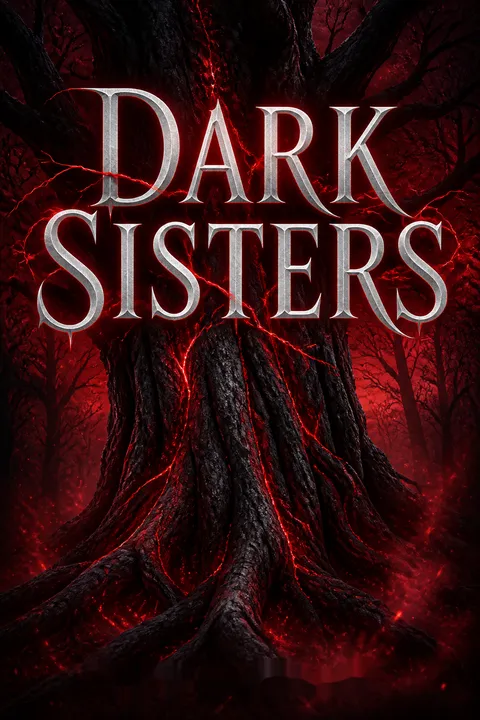

Plot Summary
Witch's Blood, Daughter's Curse
In 1750, Anne Bolton, a healer and suspected witch, faces persecution in her Puritan community. She passes her knowledge of nature's magic to her daughter, Florence, but Florence clings to the safety of religious conformity. As accusations of witchcraft mount, Anne sacrifices her daughter's happiness to save her life, severing Florence's engagement with a lie. Together, they flee into the forest, seeking sanctuary. Anne's connection to the land and her blood rituals at a mysterious black walnut tree become the foundation for a new, secretive community. But Florence's resentment festers, and her eventual curse—born of betrayal—will echo through generations, binding mother and daughter to the tree and to each other in death and legend.
Purity and Performance
In 2007, Camilla Burson, daughter of the charismatic leader of The Path, a wealthy Southern megachurch, is suffocated by expectations of purity and perfection. Her life is a performance: beauty, obedience, and the looming Purity Ball, where girls pledge chastity to their fathers. Camilla's friendships with Noah and Brianna offer brief respite, but the church's rituals and her father's sermons—laced with warnings about the Dark Sisters, local legends of monstrous women—keep her in line. Beneath the surface, Camilla's doubts and desires simmer, and the story of the Dark Sisters becomes a metaphor for the dangers of female rebellion and the cost of stepping outside prescribed roles.
The Tree's Dark Roots
Anne and Florence's new life in the woods is built on blood and ritual. Anne's magic, channeled through the black walnut tree, brings abundance and healing to their small community. But when Florence falls ill, Anne's desperate blood sacrifice at the tree saves her—at a price. Florence, feeling betrayed by her mother's manipulations, curses the tree so that all who betray will suffer. The curse manifests as a mysterious illness: women's mouths fill with sores, their teeth rot, and some are driven to impale themselves on the tree's branches. The tree's power, once a blessing, becomes a source of generational suffering.
Generations of Silence
In 1953, Mary Shephard, Camilla's grandmother, is a young wife and mother in Hawthorne Springs. Trapped by domesticity and longing for more, she finds forbidden love with Sharon, a woman from the city. Their affair is a secret, and when Mary's friend Vera discovers it, betrayal and guilt ripple through their lives. Mary's repression and the community's expectations lead to her own unraveling. As the mysterious illness returns, Mary's fate is sealed by the same forces that haunted Anne and Florence. The silence and shame around women's desires and betrayals perpetuate the curse, and the tree's legend grows.
The Sickness Spreads
The curse's symptoms—sores, blood, and madness—recur in Hawthorne Springs, always among women. In the present, Camilla and her friends debate the reality of the Dark Sisters and the mysterious sickness that afflicts only girls and women. The church uses the legend to enforce obedience, blaming sin and impurity for the illness. Camilla's mother, Ada, is haunted by her own memories of the Purity Ball and the Sisters, but refuses to speak the truth. The community's refusal to confront the real source of suffering—generational trauma, repression, and patriarchal control—ensures the sickness endures.
Secrets in the Woods
A party in the woods near the cursed tree becomes a turning point. Camilla, Brianna, and Noah's friendship is tested by fear, betrayal, and the resurfacing of the Dark Sisters legend. A cruel prank triggers real terror, and Brianna's anger exposes the racial and gendered hierarchies within the church. The girls' experiences of the curse and the legend are dismissed by the boys and the community, deepening their isolation. Camilla's sleepwalking leads her to a direct encounter with the Sisters, blurring the line between myth and reality and setting her on a path to uncover the truth.
Rituals and Rebellion
After the party, Brianna is sent to Retreat—a church-run reeducation center for wayward women. Camilla, fearing exposure, is soon sent there as well. The Retreat is a gilded prison, where women are drugged, surveilled, and forced into submission. Camilla and Brianna reconnect in secret, sharing their fears and the physical signs of the curse. Their friendship becomes an act of resistance, and Camilla's determination to escape and confront the source of the sickness grows. The rituals of purity and obedience are revealed as tools of control, masking the true violence at the heart of the community.
The Price of Obedience
Mary's story in the 1950s reaches its tragic end as the curse claims her. Betrayed by her friend, abandoned by her lover, and unable to escape the expectations of wifehood and motherhood, Mary succumbs to the illness and dies at the tree. Vera, wracked with guilt, is institutionalized for her own supposed transgressions. The pattern of women's suffering and silence is cemented, and the men of the community continue to profit from the tree's magic, ignorant or willfully blind to the cost. The price of obedience is paid in blood and loss, generation after generation.
Bloodlines and Betrayal
Camilla, back home, discovers her family's Bible contains a blood-stained family tree tracing the maternal line back to Anne and Florence. The church's prosperity is revealed to be built on the ritualized theft of women's blood and power, enacted during the Purity Ball. The men, including Camilla's father, drug and cut the girls, drinking their blood in a perverse communion to maintain their wealth and control. The curse is perpetuated by this betrayal, and the women's suffering is both the source and the price of the community's abundance.
The Purity Ball's Shadow
At the Purity Ball, Camilla is drugged and cut, her blood taken by her father and Grant. The ritual is disguised as a celebration of chastity, but is in fact a reenactment of the original theft of power from Anne, Florence, and their descendants. Camilla's mother, Ada, succumbs to the curse, coughing up hair and teeth, her body a testament to the generational violence. Camilla's memories and visions, triggered by the trauma, reveal the full horror of the ritual and the complicity of the church's men.
The Sisters Awaken
With the help of Brianna, Noah, and Vera, Camilla escapes from Retreat and returns to the tree. There, she confronts the Dark Sisters—Anne and Florence—who show her the truth of the curse, the blood rituals, and the theft of women's power. Camilla accepts her inheritance, both the light and the dark, and allows the Sisters to work through her. She calls the women of Hawthorne Springs to the tree, awakening their collective power and preparing for a reckoning.
The Truth in Blood
Camilla gathers the women and reveals the truth: their suffering, their illness, and their losses are the result of a curse born of betrayal and perpetuated by the men's rituals. The women must accept all parts of themselves—their desires, their anger, their darkness—to break the curse. The men, including Camilla's father, are brought to the tree, where the Sisters' vengeance is enacted. The cycle of silence and suffering is broken by collective action and the reclamation of power.
The Reckoning at the Tree
The tree becomes the site of retribution as the men are strangled and bled by the Sisters' magic, their blood returning to the earth and to the women it was stolen from. The women, once victims, become agents of justice, reclaiming their power and ending the cycle of violence. Camilla, now fully awakened to her inheritance, leads the community into a new era, where the truth is no longer hidden and the darkness is embraced alongside the light.
Inheritance of Power
With the curse broken and the men's reign ended, the women of Hawthorne Springs begin to heal. Camilla's mother recovers, Brianna is whole, and the community is transformed. The tree, once a symbol of suffering, becomes a source of strength and connection. Camilla, guided by the voices of Anne and Florence, embraces her role as a witch and a leader, determined to build a future where all parts of the self are accepted and celebrated. The story ends with the promise of a new legacy—one of power, truth, and the unbreakable bonds of sisterhood.
Analysis
Dark Sisters is a haunting, multi-generational exploration of the ways patriarchal systems weaponize purity, silence, and ritual to control and consume women's power. Through its interwoven timelines and the recurring motif of the cursed tree, the novel exposes how trauma, shame, and repression are passed down, manifesting as both literal and metaphorical illness. The legend of the Dark Sisters, initially a tool of fear, is reclaimed as a source of strength and justice when Camilla and her allies confront the truth of their inheritance. The novel's supernatural elements—blood magic, curses, and vengeful spirits—are inextricably linked to real-world abuses: the policing of women's bodies, the erasure of female desire, and the violence hidden behind rituals of purity. Ultimately, Dark Sisters argues that healing and liberation require the acceptance of all parts of the self, the breaking of silence, and the forging of solidarity among women. The reckoning at the tree is both a cathartic act of vengeance and a hopeful vision of a future where power is reclaimed, and the cycle of suffering is finally broken.
Review Summary
Dark Sisters by Kristi DeMeester follows three women across different centuries—Anne in 1750s, Mary in 1950s, and Camilla in 2007—connected by a curse and patriarchal oppression. The novel explores themes of witchcraft, religious persecution, feminine rage, and generational trauma through alternating timelines. Reviewers praised DeMeester's atmospheric writing, character development, and powerful feminist commentary, though some found the pacing uneven and the ending rushed. Most appreciated the exploration of purity culture and women's autonomy, with particular praise for Mary's 1950s timeline. Overall ratings averaged 4.05/5 stars, with readers recommending it for fans of witchy, feminist horror.
People Also Read
Characters
Camilla Burson
Camilla is the protagonist whose journey from obedient, image-conscious preacher's daughter to empowered inheritor of her family's dark legacy forms the novel's emotional core. Raised in the suffocating environment of The Path, she is torn between the desire to please her father and the need to assert her own identity. Her relationships—with her mother Ada, best friends Brianna and Noah, and the memory of her grandmother Mary—are fraught with longing, guilt, and the search for belonging. Camilla's psychological arc is one of awakening: she must confront the truth of the curse, the violence done to her and her ancestors, and the necessity of embracing both her light and darkness. Her acceptance of her witch heritage and her role in breaking the cycle of suffering is both a personal and communal act of healing.
Ada Burson
Ada, Camilla's mother, is a beautiful, fragile woman marked by the trauma of her own Purity Ball and the generational curse. She is both protector and prisoner, trying to shield Camilla from the truth while being destroyed by it herself. Ada's relationship with her husband is one of powerlessness and repression, and her inability to speak about her experiences perpetuates the cycle of suffering. Her psychological struggle is the tension between denial and the desperate need for honesty. Ada's eventual illness and partial recovery mirror the community's journey from silence to truth.
Anne Bolton
Anne is the 18th-century matriarch whose knowledge of natural magic and willingness to defy patriarchal authority set the story in motion. Her love for her daughter Florence is both her strength and her undoing; her attempts to protect Florence lead to betrayal and the creation of the curse. Anne's psycho-spiritual journey is one of sacrifice, guilt, and the longing for reconciliation. In death, she becomes one half of the Dark Sisters, bound to the tree and to the fate of her descendants, waiting for a daughter who will finally see and free her.
Florence Dudley
Florence is Anne's daughter, torn between her mother's magic and the safety of religious conformity. Her resentment over Anne's manipulations and her own lost happiness festers into a curse that dooms generations. Florence's psychological arc is one of anger, denial, and eventual regret. In death, she is bound to Anne as the other Dark Sister, her curse and her longing for forgiveness entwined. Florence embodies the destructive power of internalized shame and the possibility of redemption through acceptance.
Mary Shephard
Mary, Camilla's grandmother, is a 1950s housewife whose yearning for love and freedom leads her into a secret relationship with Sharon. Her inability to reconcile her desires with societal expectations results in betrayal, illness, and death. Mary's psychological struggle is the conflict between authenticity and survival, and her fate is a warning about the cost of silence and repression. Her story is a bridge between the past and present, showing how the curse adapts to new forms of control.
Vera Stephens
Vera is Mary's childhood friend, whose discovery of Mary's affair with Sharon leads to a chain of betrayals and suffering. Wracked with guilt, Vera becomes a silent guardian for Ada and Camilla, trying to atone for her past mistakes. Her psychological arc is one of shame, penance, and the search for forgiveness. Vera's role as confidante and eventual ally is crucial in helping Camilla uncover the truth and break the cycle.
Brianna
Brianna is Camilla's best friend, a Black girl in a predominantly white, insular community. Her outsider status gives her a unique perspective on the church's hypocrisies and the realities of the curse. Brianna's anger and honesty challenge Camilla to see beyond her own privilege and complicity. Her own brush with the illness and her recovery symbolize the possibility of healing through solidarity and truth-telling. Brianna's loyalty and courage are essential to Camilla's transformation.
Noah
Noah is Camilla's oldest friend, a boy who straddles the line between insider and outsider. His skepticism about the curse and the Sisters reflects the community's denial, but his loyalty to Camilla and Brianna makes him a crucial ally. Noah's psychological journey is one of growing awareness and the willingness to challenge the status quo. He represents the possibility of male allyship in the face of patriarchal violence.
Henry Burson (Pastor Burson)
Camilla's father is the embodiment of the community's toxic authority: charming, controlling, and ultimately monstrous. His public persona as a loving father and spiritual leader masks his complicity in the ritualized abuse of women and girls. Henry's psychological makeup is a blend of narcissism, religious zealotry, and the need for control. His downfall is both personal and symbolic—the end of a system built on the theft of women's power.
Grant Pemberton
Grant is the object of Camilla's adolescent desire, but beneath his charm lies a willingness to participate in the community's darkest rituals. He is both a product and perpetrator of the system, using his privilege and attractiveness to mask his violence. Grant's psychological arc is one of unmasking: as the truth of his actions is revealed, he becomes a symbol of the dangers of unchecked male entitlement.
Plot Devices
Generational Curses and Blood Magic
The novel's central device is the curse born of Anne and Florence's blood ritual at the tree. This curse, fueled by betrayal and the refusal to accept all parts of the self, manifests as a mysterious illness that afflicts only women. The curse is both literal and metaphorical: it represents the transmission of trauma, shame, and repression across generations. Blood—both as a symbol of lineage and as a substance stolen in ritual—is the conduit for power and pain. The curse can only be broken by collective acceptance and the reclamation of what was stolen.
Dual Timelines and Interwoven Narratives
The story unfolds across three main timelines—1750, 1953, and 2007—each illuminating a different stage of the curse and the community's evolution. The interludes and shifting perspectives create a sense of inevitability and recurrence, emphasizing how the same patterns of silence, betrayal, and violence repeat. The structure allows for foreshadowing and the gradual revelation of secrets, building suspense and emotional resonance.
The Dark Sisters as Symbol and Specter
The Dark Sisters are both literal ghosts—Anne and Florence bound to the tree—and a symbol of the dangers and power of female rebellion. They are invoked as cautionary tales, used to frighten girls into obedience, but their true story is one of love, betrayal, and the longing for justice. Their appearances foreshadow moments of crisis and transformation, and their eventual awakening is the catalyst for the novel's climax.
Ritual, Performance, and Surveillance
The Purity Ball, the Retreat, and the church's constant surveillance are devices that enforce obedience and mask violence. Rituals of purity and submission are revealed as performances designed to maintain patriarchal power. The use of drugs, hidden cameras, and public ceremonies creates an atmosphere of paranoia and repression, heightening the stakes for characters who seek to break free.
Revelation and Collective Action
The novel's resolution hinges on the revelation of the truth—about the curse, the rituals, and the theft of power—and the willingness of women to act together. The breaking of silence, the sharing of stories, and the acceptance of all parts of the self are necessary for healing. The final reckoning at the tree is both a supernatural and a communal act, restoring balance and opening the possibility of a new legacy.
Download PDF
Download EPUB
.epub digital book format is ideal for reading ebooks on phones, tablets, and e-readers.








































