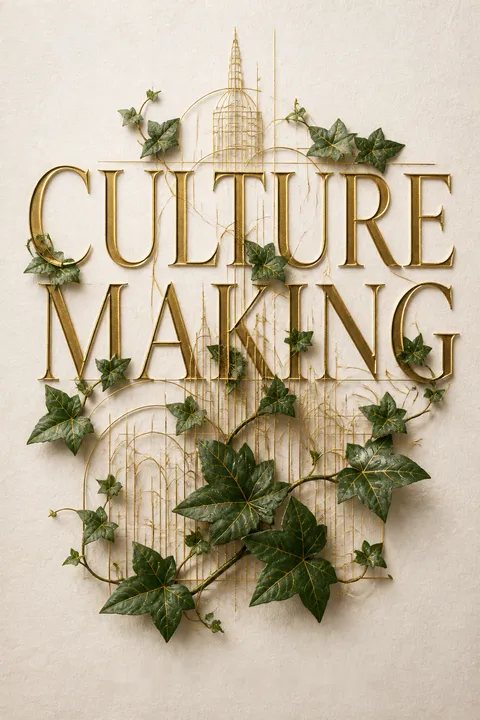

Key Takeaways
1. Culture is What We Make of the World: Tangible & Meaningful
Culture is what we make of the world.
Defining culture. Culture is not just "high art" or "pop trends"; it encompasses everything humans create from the raw materials of the world. It's the relentless human effort to take what's given and make something else, from omelets and chairs to languages and highways. This process is both about creating tangible goods and making sense of the world's mysteries.
Shaping possibilities. Every cultural artifact, whether a simple tool or a complex system, defines the "horizons of the possible and impossible." For example, the interstate highway system made cross-country travel faster but also made horse travel between cities virtually impossible. Culture is cumulative; what one generation creates becomes the world for the next, influencing their options and opportunities.
- Tangible goods: Omelets, chairs, paintings, highways, languages.
- Meaning-making: Interpreting the world's wonder and terror.
- Horizons: What becomes possible or impossible due to cultural creations.
Inescapable reality. Culture is not an optional layer of human existence; it's fundamental to who we are. From birth, we are primed for culture, learning language and relationships that shape our very being. It's the environment in which we live, work, and relate, making it an inescapable and essential aspect of human flourishing.
2. Culture is Always Changing, But Not Always Progressing
As far as linguists can tell, language is always changing—but it never “improves.”
Dynamic nature. Culture is in constant flux, with different aspects changing at varying rates. Fashion shifts rapidly, while governance and infrastructure evolve slowly. This constant change means that what is culturally relevant today may be obsolete tomorrow, and what was once central (like rivers for travel) can become peripheral (like highways today).
Beyond "progress." While technological advancements often show clear "progress" (e.g., lasers becoming more versatile), many cultural forms, like language or art, don't simply "improve." Is 21st-century English "better" than Anglo-Saxon? Is The Great Gatsby an "improvement" over Beowulf? A better measure for cultural change is "integrity"—how well a cultural arena adapts to its surroundings and needs, honoring its history while fulfilling its possibilities.
- Fast change: Fashion, pop trends.
- Slow change: Language, governance, fundamental social structures.
- Integrity: Adapting faithfully to context and needs, rather than just "newness."
Complexity and unpredictability. Large-scale cultural change is rarely sudden or simple. Even seemingly revolutionary events, like 9/11 or the resurrection of Jesus, have long histories and unfold over extended periods. Furthermore, cultural goods often have unintended consequences that far outweigh their creators' original intentions, making prediction and control incredibly difficult.
3. Beyond Condemning, Critiquing, Copying, or Consuming: The Need for New Postures
The only way to change culture is to create more of it.
Ineffective gestures. Christians have historically adopted various "gestures" towards culture: condemning (withdrawal from "worldly" activities), critiquing (analyzing cultural artifacts for their worldview), copying (imitating mainstream forms with Christian content), and consuming (passively engaging with culture). While each can be appropriate in specific instances, they often become ingrained "postures" that limit genuine cultural engagement.
- Condemning: Rejects culture, but creates a vacuum and hypocrisy.
- Critiquing: Analyzes culture, but can be passive and disembodied.
- Copying: Imitates culture, but often lags and creates insular subcultures.
- Consuming: Passively accepts culture, letting it set the terms.
The creative imperative. None of these postures, by themselves, effectively change culture. Condemnation alienates, critique rarely transforms, copying creates facsimiles, and consumption reinforces the status quo. To truly influence culture, we must create new cultural goods that are compelling enough to displace existing ones. This requires active participation, not just reaction.
Cultivation and creation. Genuine cultural change begins with "cultivation"—deeply understanding and preserving the best of what culture has handed down. This involves discipline, learning, and honoring tradition. From this foundation, "creation" emerges—bringing something genuinely new into being. These two postures, of the gardener and the artist, are the most biblically characteristic and offer the freedom to engage culture constructively.
4. God's Original Plan: Humanity as Creative Cultivators in a Garden-City
The LORD God took the man and put him in the garden of Eden to till it and keep it.
Divine image, cultural calling. Genesis reveals humanity made in God's image, primarily as creative cultivators. God, the ultimate Creator and Cultivator, places Adam in a garden—a place of nature plus culture—to "till and keep it." This isn't just passive maintenance; it's an invitation to active, imaginative work, as seen when God brings animals to Adam to be named, allowing human creativity to flourish.
- God's creativity: Brings being from nothing, is relational, creates order.
- Human reflection: Creative, relational, ordering, leading to celebration.
- Garden: Not wilderness (too wild) or theme park (too controlled), but a place for human cultivation.
Culture as divine gift. From the outset, culture is God's gift, not merely a human invention. God himself is the first gardener, providing the initial cultural environment. Even after the Fall, God's mercy is expressed culturally, replacing fig leaves with durable animal skins and marking Cain for protection. This shows culture is not just a site of human rebellion but also of divine grace.
Babel's rebellion. The story of Babel illustrates culture's dark side: a human attempt to build a city and a tower to "make a name for ourselves" and declare independence from God. This cultural hubris leads to judgment and the scattering of humanity into diverse linguistic groups. Yet, this scattering also sets the stage for God's grander plan to bless all nations through a chosen people.
5. The Gospel: A Culture-Shaping Force that Transforms the Impossible
The resurrection of Jesus is like a cultural earthquake, its epicenter located in Jerusalem in the early 30s, whose aftershocks are still being felt in the cultural practices of people all over the world, many of whom have never heard of, and many more of whom have never believed in, its origins.
Jesus, the ultimate culture maker. Jesus, Yeshua bar-Yosef, was deeply embedded in his Jewish culture, cultivating its traditions for 30 years. Yet, his ministry was profoundly creative, challenging and reshaping cultural norms around meals, Sabbath, and the temple. His mission, the "kingdom of God," was a comprehensive cultural restructuring, moving the horizons of possibility for human life.
The cross and resurrection. The cross represents culture at its worst—an instrument of brutal power and injustice, a dead end for human creativity. Yet, Jesus' willing submission to it, and his subsequent resurrection, transforms this symbol of death into a sign of ultimate triumph. The resurrection is the most culturally significant event in history, its aftershocks still shaping global practices like the shift from Sabbath to Sunday worship.
- Cross: Culture's dead end, human brokenness.
- Resurrection: God's vindication, cultural earthquake, new possibilities.
- Shift to Sunday: A profound, enduring cultural change rooted in the resurrection.
Pentecost and translatability. Pentecost reverses Babel's curse, making the gospel translatable into every language and culture. The early church, as documented in Acts, became a powerful cultural force, not by withdrawing, but by creatively addressing societal challenges like epidemics, the status of women, and infanticide. This demonstrated that Christian belief could prompt attractive and effective social relations, leading to widespread cultural transformation.
6. True Cultural Power Lies in Service and Stewardship, Partnering with the Powerless
Cultural power can be defined very simply as the ability to successfully propose a new cultural good.
The nature of power. Cultural power is the ability to successfully propose new cultural goods that reshape horizons. It's fluid, hard to measure, and no one ever feels they have "enough." The temptation of power is insidious, often leading to strategic alliances that compromise original goals, as seen in political movements that prioritize influence over integrity.
- Power's allure: Never enough, hard to measure, easily corrupts.
- Temptation: Prioritizing influence over original purpose.
- Example: Political alliances compromising moral goals.
God's paradoxical power. God's defining cultural interventions—the Exodus and the Resurrection—demonstrate his work through the powerless (enslaved Hebrews, crucified Jesus) and his engagement with the powerful (Pharaoh, Pilate, Nicodemus). He partners with both, not to pit them against each other, but to bring about a "just and lasting peace" that levels mountains and raises valleys. This is a cultural vision of partnership, not revolution or mere charity.
Disciplines of power. To wield cultural power as a gift, Christians must embrace disciplines:
- Service: Anonymously putting one's power at the disposal of the less powerful, seeking Christ in places of low visibility.
- Stewardship: Consciously investing cultural power in the dreams and plans of the seemingly powerless, recognizing their inherent creative capacities.
These disciplines transform power from a grasping ambition into a means of grace, unlocking collective creativity and fostering genuine cultural change.
7. All Culture Making is Local: The Power of Small, Loving Communities
All culture making is local.
Small beginnings. Every cultural good, no matter its eventual reach, originates with an "absolutely small group" of people. This "3, 12, 120" pattern—a core group of 3, a wider circle of 12 collaborators, and a broader network of 120 influencers—is evident in everything from book production to tech startups and even ancient biblical narratives.
- The "3": Core innovators, intimate collaborators.
- The "12": Key partners, trusted advisors.
- The "120": Influencers, early adopters, spreaders of the good.
Community over networking. While large-scale cultural goods may affect millions, their creation is rooted in personal relationships and deep commitment. Culture making is hard, requiring sustained attention and perseverance that only a loving community can provide. This means that even in a globalized world, cultural influence is fundamentally local, built on trust and shared purpose.
Accessible calling. The "3, 12, 120" pattern offers good news: everyone has a "3"—a small group of trusted individuals with whom they can risk creating something new. This democratizes culture making, shifting the focus from individual celebrity or vast resources to the power of intimate, committed communities. Our calling is found in these small circles, where love fuels dreams and punctures illusions, leading to unique cultural contributions.
8. Grace Fuels Culture Making: Divine Multiplication Amidst Discipline and the Cross
Where do you experience grace—divine multiplication that far exceeds your efforts?
Grace as multiplication. Genuine cultural creativity is marked by "grace"—a divine multiplication where efforts yield thirty, sixty, or a hundredfold beyond what could be expected. This unearned abundance, like the prodigal sower's harvest, is a sign of God's active presence. It's not about striving for success, but recognizing and responding to God's surprising fruitfulness in our work.
Discipline and dependence. Grace is not an excuse for laziness; it's a blessing on disciplined effort. Cultural creation requires painstaking cultivation, humility, and consistent practice. Spiritual disciplines (prayer, solitude) and vocational disciplines (practicing scales, writing daily) prepare our hearts to handle both success and failure, fostering dependence on God rather than self-justification.
- Grace: Unearned, unexpected abundance.
- Disciplines: Private, humbling, reveal limits, foster dependence.
- Vocation: A continual process of discerning where grace is at work.
Failure and the cross. Cultural work often involves failure, like a baseball player's batting average or a prophet's unheeded warnings. Grace doesn't exempt us from failure, but it sustains hope within it. The "cross" is etched into our callings; true cultural creativity often leads to places of pain and brokenness. Yet, even there, amidst suffering and apparent abandonment, grace germinates, bringing forth fruit and a profound sense of gratitude.
9. The New Jerusalem: Heaven Furnished with Redeemed Culture
People will bring into it the glory and the honor of the nations.
A city, not just a garden. Revelation's vision of the "new heaven and new earth" culminates not in a pristine garden, but in the "holy city, the new Jerusalem." This city, a divine cultural artifact, is furnished with the "glory and honor of the nations"—the best of human cultural achievements, purified and transformed. It signifies that culture itself, not just human souls, has an eternal destiny.
- New Jerusalem: God's ultimate cultural work, a gift from heaven.
- Furnished with culture: Gold, jewels, and the "glory and honor of the nations."
- Continuity: Names of Israel's tribes and apostles on gates/foundations.
Redeemed creativity. The city's adornments, like gold "clear as glass" or polished jewels, represent natural elements refined by master craftsmanship. This suggests that human cultural goods will undergo a radical transformation, becoming what they always could have been. Even "pagan" cultural achievements, once stripped of idolatry, will find their place, like "broken" ships of Tarshish repurposed for ministry.
- Transformation: Cultural goods purified, not destroyed.
- Inclusion: Best of every culture, even "secular" or "pagan" works.
- Example: Swords into plowshares, spears into pruning hooks.
Eternal activity. Eternity in the new Jerusalem won't be a static worship service, but the fulfillment of our original calling: cultivating and creating in full relationship with God. Our work will be praise, an endless, joyful improvisation on the "glory and honor of the nations." This vision challenges us to ask: are we creating and cultivating things that have a chance of furnishing the new Jerusalem?
Review Summary
Reviews of Culture Making are largely positive, averaging 4.03/5. Many readers praise Crouch's nuanced, biblically-rooted framework for how Christians should engage culture—not merely condemning, critiquing, copying, or consuming it, but actively creating and cultivating it. Readers appreciate his distinction between "gestures and postures," his humility about world-changing ambitions, and his practical grounding. Critics find the writing occasionally verbose, overly academic, or ambiguous, with some theological disagreements around Genesis and human creative agency. Overall, most consider it an inspiring, paradigm-shifting read for Christians thinking seriously about vocation and culture.
People Also Read

About the Author

Download PDF
Download EPUB
.epub digital book format is ideal for reading ebooks on phones, tablets, and e-readers.








































