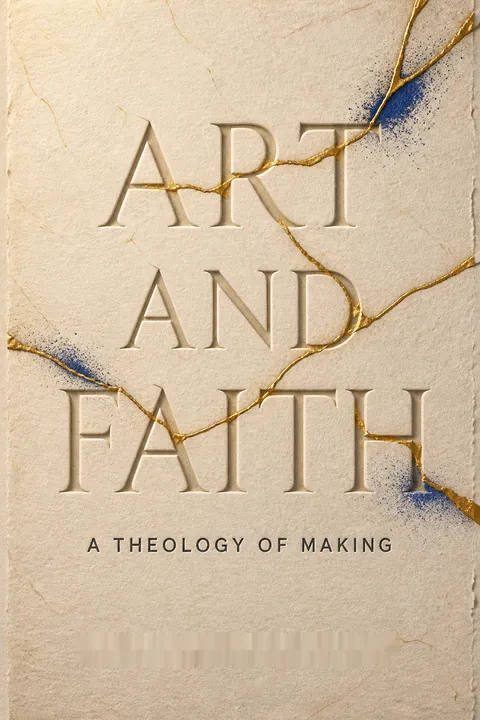

Key Takeaways
1. Theology of Making: God as the Ultimate Artist and Originator of Creativity
Perhaps in eternity’s gaze I have been seen and created to be an artist in imitation of God, the Creator Artist.
Divine identity. Our identity as human beings is rooted in God, the Creator Artist, who made us in His image with an inherent creative impulse. This "Theology of Making" posits that engaging in creative acts is a profound way to grasp human experience and the nature of our existence, connecting us directly to our Maker. The author's earliest memories and childhood artistic experiences felt sacred, later understood as the presence of the Holy Spirit.
Making as knowing. The act of making is not merely an aesthetic pursuit but a theological one, a discipline of awareness, prayer, and praise. The Bible, particularly the Genesis account, reveals God as fundamentally and exclusively THE Creator, who cannot be fully known through mere intellectual debate or propositional beliefs. Instead, God is experienced through the active process of making, which translates ideas into tangible realities.
Spirit-filled creation. The Bible affirms this by highlighting figures like Bezalel and Oholiab, the first individuals explicitly filled with the Holy Spirit, for their artistic and crafting skills in building the Ark of the Covenant. Their "pagan" training was sanctified for a higher purpose, demonstrating that God commissions all people to create for the New, and that the Holy Spirit empowers us to do so. This creative impulse is God's marker in us, making us unique in the animal kingdom.
2. God's Gratuitous Love: Creation from Abundance, Not Necessity
God is all-sufficient, self-sufficient, and does not need Creation either.
Love, not need. God created the universe not out of necessity or loneliness, but out of exuberant, superfluous love and abundance. This concept, known as the aseity of God, challenges the utilitarian mindset that often pervades modern thought, including within the church, which tends to justify existence and value in terms of "fixing the world" or being "useful to society."
Liberation from bondage. Understanding God's self-sufficiency liberates us from the bondage of believing our value is tied to our utility or ability to fulfill God's needs. Instead, God's extravagant love invites us, as broken vessels, to co-create into the New Creation through Jesus. This perspective shifts our focus from a pragmatic, industrial view of purpose to one rooted in gratuitous love.
Beyond efficiency. The universe exists because God loves to create, a purposefulness that transcends bottom-line efficiency. We are not merely survival machines but creatures of magnificence and imagination, made in God's image. Our creative acts, therefore, are not about fixing a broken system but about participating in God's ongoing, abundant, and enduring creative work.
3. Kintsugi: Brokenness Transformed into Enhanced Beauty and "New Newness"
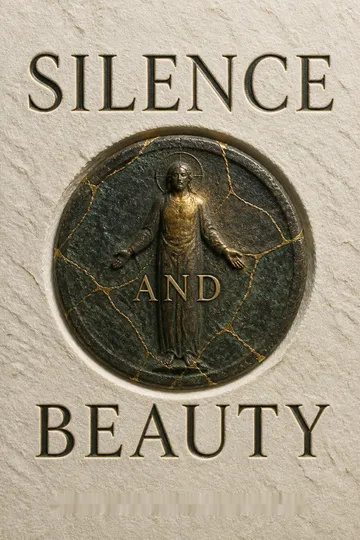
Kintsugi, the ancient Japanese art form of repairing broken tea ware by reassembling ceramic pieces, creates anew the valuable pottery, which now becomes more beautiful and more valuable than the original, unbroken vessel.
Mending to making. Kintsugi, the Japanese art of repairing broken pottery with gold lacquer, serves as a powerful metaphor for God's redemptive work. It doesn't hide flaws but highlights them, making the mended object more beautiful and valuable than its original state. This reflects the Christian gospel, where our brokenness, in light of Christ's wounds, becomes an essential component of the New Creation.
Resurrection vision. At the heart of our journey toward the New is God's resurrection vision, where destruction and suffering are not ends but portals to new life. Just as a dancer's body is broken for a miraculous leap, or minerals pulverized for art, our brokenness can lead to a transcendence that reveals a mark of greatness. The resurrected Christ still bears his wounds, signifying that our wounds, too, matter to God and are carried into the New.
Kainos, not neos. The biblical concept of "new creation" (kainos) signifies a "New Newness"—a categorical transformation beyond mere improvement (neos). It's like a caterpillar becoming a butterfly, but even more profound, a new concept of what a species is. Kintsugi embodies this by not just restoring but transfiguring, making the broken pieces more visually sophisticated and unique, mirroring God's promise to make all things new through our pain.
4. Beauty and Mercy: Essential, "Useless" Paths to the New Creation
Beauty and mercy are two paths into the sacred work of Making into the New Creation.
Beyond survival. Beauty and mercy are not essential for Darwinian survival, but they are crucial for a "gift economy" that undergirds the gospel and the thriving of art. From a utilitarian perspective, creating beauty or showing mercy might seem like a waste of time or resources. However, a theology toward New Creation audaciously argues that these are foundational for human participation in God's sacred work.
Jesus's abundance. Jesus's Sermon on the Mount, set amidst the abundant lilies and migrating birds of Galilee, invoked Creation and invited the New Creation, demonstrating God's gratuitous abundance. This contrasts with "plumbing theology," which focuses solely on "fixing" the problems of the Fall without addressing the deeper purpose of creation or the expansive vision of God's Kingdom.
The wine of the New. The "pipes" of God's plan flow with the Holy Spirit, Christ's redemptive blood, and the "wine of New Creation." This wine flows backward from the future into our present reality, allowing us to "sup on the feast to come" even now. Art, music, and poetry, even by non-believers, often invoke this future feast, feeding our souls through beauty in the hardest times and offering a foretaste of the New.
5. Imagination as Central to Faith: Seeing the Future with the Eyes of the Heart
It is impossible to have faith without imagination.
Beyond rationalism. Imagination is not merely an indulgence in fantasies but a necessary and central requirement for our faith journeys, a gift from the Creator to steward. While modern culture often prioritizes verifiable, rational knowledge, artists instinctively know that mystery and beauty are at the core of knowing, and that imagination allows us to "envisage possibilities of new existence or new meaning."
God's educational plan. God's invitation to Adam to name the animals in Eden was a commission to use his creativity, a "co-mission" to co-create. This act of naming was not just about identification but about "placemaking" and discovering Adam's own need for Eve. Even before the Fall, gold was hidden, implying that creative work and imagination were part of God's design for building the city of God.
Horses with wings. C.S. Lewis's metaphor of "horses with wings" illustrates that God's purpose is not to train us to jump higher (moralism) but to grow our wings (imagination) to reach a greater vista of Making. This "connatured" knowledge, gained through creative practice, is fundamental to understanding the Bible and experiencing God in deeper, fuller ways, moving beyond clogged self-absorption to see with the "eyes of our hearts."
6. Christ's Tears: The Pinhole of Gratuitous Compassion and Deep Lament
Why is this shortest line in the entire Bible, “Jesus wept,” the central, pivotal verse for the Theology of Making?
Gratuitous weeping. Jesus's tears at Lazarus's tomb (John 11:35) are a pivotal "pinhole" through which to view the entire gospel narrative. His weeping, despite knowing he would resurrect Lazarus, was a gratuitous act of compassion, demonstrating God's love beyond utilitarian purpose. These tears, shed onto the hardened ground of Bethany, evaporated but are still present, commingling with our own laments.
Wabi-sabi and wounds. This gratuitous act connects to the Japanese aesthetic of wabi-sabi, which finds beauty in what is passing, worn, and broken. Just as a well-loved, worn wallet carries the owner's identity, Christ's post-resurrection body still bears his wounds, signifying that our sufferings and wounds are precious to God and are carried into the New Creation. This aesthetic bridges the Old and New, valuing the pathos of human touch.
Mary's extravagant anointing. Mary's response to Jesus's tears and Lazarus's resurrection was an extravagant act of anointing Jesus with costly nard, an act Jesus called "beautiful" and commanded to be remembered wherever the gospel is preached. This "wasteful" devotion, deemed inappropriate by others, was the only earthly possession Jesus carried to the cross, filling the air with its aroma and revealing the object of true adoration.
7. Lazarus Culture: Living in Resurrected Confidence and Active Co-Creation
Lazarus culture begins by understanding that we can “die in Christ” every moment of our lives but “practice resurrection” (as Wendell Berry puts it in “Manifesto: The Mad Farmer Liberation Front”) by being filled with the Holy Spirit, the giver of joy and hope even in the face of the darkest despair.
Beyond death's grip. Lazarus's temporary resurrection provides a framework for "Lazarus culture"—a way of living with relaxed confidence and faithfulness, knowing that we have spiritually and historically experienced more than Lazarus did. Having been dead in sin and now alive in Christ, we can face threats with the attitude, "What more can they do to me?"
Holy Saturday's lesson. The art of waiting, particularly on Holy Saturday, teaches us to "wait without hope" in our own efforts, dying to ourselves and trusting solely in God's work. What Lazarus heard was the voice of Creation itself, the Son calling through the Father's ears, an impossibility that marks the beginning of this culture. This experience gives us a different perspective on life and death, fostering an unshakable hope beneath our rubble.
Wedding feast anticipation. Lazarus culture embodies the aroma of a cosmic wedding feast, where we, as the Bride of Christ, anticipate the Bridegroom's return with all our resources. This requires integrating analytical (Martha) and intuitive (Mary) gifts, preparing the cultural soil (Lazarus) to receive the seed of faith. It's a Kintsugi culture where wounds are healed but remain, made more beautiful in the New Creation, affirming that God renews and generates beyond our expectations.
8. The Gift Economy of Art: Beyond Utility to Enduring Value
It is the assumption of this book that a work of art is a gift, not a commodity.
Art as gift. Poet Lewis Hyde's concept of the "gift economy" is crucial for understanding art's true value. Art, as a gift, exists beyond mere commoditization; "where there is no gift, there is no art." This challenges the utilitarian view that art is impractical because it doesn't directly create wealth or serve society in a tangible way.
Christ, the ultimate gift. The gift of God, Christ, is the ultimate "bearer of new life," a pure gift that cannot be bought or sold but only passed on, often at great sacrifice. The Eucharist, where bread and wine (elements cultivated by human making) symbolize Christ's body and blood, is a fundamental paradigm for biblical faith and "Making toward the New." God mysteriously waits upon human making to reveal His resurrected presence.
Redefining work. Even in Eden, gold was hidden, implying that work, before the Fall, was a gratuitous act of love and co-creation, not merely about fixing. The biblical concept of work (avodah) connects blessings with work, seeing it as both labor and art. Art, by its very nature, points to this gift of work, redefining it as a central, loving contribution to God's abundant Creation.
9. Sanctifying Fire: Purification and the Eternal Significance of Our Works
It will be revealed with fire, and the fire will test the quality of each person’s work.
Cleansing darkness. The "fire" spoken of in scripture (1 Corinthians 3) is not solely for destruction but for sanctification and revelation. It tests the quality of our work, distinguishing between "gold, silver, costly stones" and "wood, hay or straw." This fire, like the trauma of 9/11 or Hiroshima, can be a "cleansing darkness" that purifies our lives and works, making us more compassionate and dependent on God.
Works that endure. Paul's message is a "fabulous promise": if we build on the foundation of Christ, our contributions, no matter how small or unseen, can be indestructible and last eternally. This challenges the notion that "everything else is going to burn up," asserting that God does not create to make things disappear but for an enduring future.
Fiery body of Christ. The church is called to be a "fiery body," like the burning bush, an enigma to the world, burning yet not consumed. This holy fire within us allows us to see Christ's presence even among ashes, recognizing that the fire of life is greater than the fire of destruction. Our works, words, and even our prayers, if built on Christ, become building blocks of eternity.
10. Practicing Resurrection: Daily Acts of Faith Breaking into the New
Without the breaking in of the miraculous, we will still assume that we are operating in the closed loop of the material universe.
Miraculous making. The physical resurrection of Jesus is the ultimate miracle, breaking the closed loop of the material universe and opening possibilities for deeper perceptions. Artists, by confronting the impossible in their creative process, are "practicing resurrection" daily. This practice is an act of resistance against the status quo, affirming the miraculous and the New that can enter our world.
Transfiguration of disciples. The transformation, or "transfiguration" (metamorphoo), of the "unlearned" Galilean disciples from fearful betrayers to bold leaders is historical evidence of Christ's resurrection power. This inspires us to believe that even in our weakness, we can find strength and courage under fire, allowing that audacious gift to be part of our art and lives.
New Creation moments. "Practicing resurrection" means recognizing and participating in "New Creation moments" that break into our broken lives. Like the spontaneous percussion concert in a Tokyo taxi, these acts of honoring and creating, without sermons or explanations, fill the cracks and fissures with a golden light, reminding us of God's abundance and the enduring nature of love, gratitude, and kindness carried into the new world.
Review Summary
Reviewers broadly praise Art and Faith as a thought-provoking, inspiring exploration of creativity and Christian faith. Many highlight Fujimura's use of Japanese art, particularly Kintsugi, as a powerful metaphor for redemption and brokenness. Readers appreciate his "Theology of Making" and its encouragement for creatives. Some note theological reservations, particularly around N.T. Wright's influence and notions of participation. A few found portions repetitive or disorganized. Overall, most consider it essential reading for Christian artists and non-artists alike, with many expressing intent to revisit it.
People Also Read
About the Author
Download PDF
Download EPUB
.epub digital book format is ideal for reading ebooks on phones, tablets, and e-readers.








































