


Plot Summary
Death’s Refused Gift
After a born attack kills Idris,3 Evie1 floats in a lightless well, seeing only a crescent of moonlight above. She chooses to climb, screaming with a voice that tastes like freedom. At the top, her thirteen-year-old self appears, and Evie1 wraps the child in an embrace, telling her she is no longer needed as a protector.
When Evie’s1 body awakens on the bloody forest floor, she finds Idris’s3 skull cracked, his heart still. Overriding Kylo’s2 warnings, she insists she will resurrect him. Her authority silences the room — she has become someone who refuses to let the gods dictate who lives.
This opening enacts a psychological rebirth. Evie’s climb from the pit literalizes her emergence from dissociative survival into integrated agency. Meeting her inner child is an act of self-compassion that dissolves the lifelong burden of being her own protector. Her immediate demand to resurrect Idris signals that she will no longer accept a world governed by cruelty, setting the stage for the book’s central thesis: trauma can be alchemized into world-altering power.
A Brother’s Stolen Breath
In Princeton’s12 hidden spell room, Evie1 invokes Hekate, offering her devotion and future service in exchange for Idris’s3 life. She pours born blood down his throat, chants with borrowed authority, and watches an unholy wind return his soul to his corpse.
Idris’s3 eyes fly open, but bloodlust drives him to lunge at Evie;1 Kylo2 tackles him and forces a blood onyx-laced drink into his mouth. While Idris3 recovers, Kylo2 tattoos his first clan markings. Evie1 collapses, drained, having performed a miracle that costs her a piece of her soul and chains her irrevocably to the revolution.
The resurrection ritual is a transgressive act that rewrites the rules of death. Evie’s deal with Hekate establishes her as a fate weaver, a role traditionally reserved for gods. The bloodlust aftermath underscores the cost of defying nature: Idris is not simply restored but transformed into something hungrier and more dangerous, mirroring Evie’s own metamorphosis from scared girl to maker.
The Whitfields’ Final Silence
Evie1 leads Kylo2 to the Whitfield mansion, where she unleashes shadows that decapitate a guard and bind the parents. She forces them to feel the weight of their son’s cruelty and their own complicity in Idris’s3 kidnapping and murder. When Roger snarls that she is no better than they are, she lets the darkness enter his ears and mouth, draining his life.
Cindy follows. Afterward, Evie1 and Kylo2 have violent, consuming sex on the basement rug, her body alight with the ecstasy of retribution. She realizes she does not regret the killing; she regrets only that she ever held herself back.
This scene confronts the moral complexity of vigilante justice. Evie’s ability to kill without remorse is not presented as corruption but as liberation from the shame that her abusers implanted. The conflation of sex and violence with Kylo reinforces their bond as a dark sacrament, each kill sealing their interdependence in a world where love and death are inseparable currencies of power.
Ink Under the New Moon
On the estate’s back lawn under a sliverless sky, Kylo2 needles sacred symbols into Evie’s1 flesh. She tells him about the night she was thirteen: after learning a vampire had abused seven-year-old Idris,3 she let her shadow magick consume the entire coven and visiting born, including her own parents.
She never apologized. As Kylo2 traces a serpent and key on her hip, The Star tarot card on her back, and a clan sigil on her forearm, he calls her a miracle. She screams into the darkness, and the declaration frees something tangled in her chest.
The tattooing functions as a ritual of embodied testimony. Evie’s skin becomes a map of survival, and confessing her worst act to Kylo dissolves the isolation that kept her frozen. The Star card appears after The Tower, promising that destruction precedes renewal. Kylo’s response—awe rather than horror—mirrors the unconditional witness every trauma survivor needs.
Conrad’s Iron Fist Descends
Lord Conrad’s6 forces flood the city, burning witch texts, occupying the university, and turning the streets into hunting grounds. Kylo2 gathers the clan and announces Evie1 as Princeton’s12 successor. She speaks publicly for the first time, revealing that she was born into a Servants of Lillian cult and that Hekate has renamed the Masked Order.
The demons in the streets grow bolder — Juliette’s5 hellhounds prowl, and a university building is reduced to ash. Kylo2 preaches strategic patience: the born will exhaust themselves, and the clans will rise when the moment is right.
The occupation dramatizes the oppressive weight the turned must endure. Kylo’s insistence on restraint tests the clan’s faith, mirroring the real psychology of revolutionary movements that must absorb casualties without retaliating prematurely. Evie’s speech transforms her private shame into a public rallying cry, completing her initiation as a leader whose weakness becomes a strength.
Aster’s Poisoned Invitation
A letter arrives at Mena’s11 house from Lord Aster,4 addressing Evie1 as his long-lost bride and requesting her presence for dinner. Kylo2 forbids it, but Evie1 argues this is their only window into the death witch’s5 identity.
After a brutal argument that ends with Kylo2 sexually dominating her before relenting, she wins his grudging consent — with a strict time limit, a hidden communication device, and extraction forces stationed nearby. She prepares to re-enter the world that once tried to sell her as a child bride, this time as a weapon aiming back.
This decision crystallizes the book’s central tension between protective love and personal agency. Kylo’s need to control Evie stems from his own trauma of losing loved ones to the born; her insistence on going despite his fear represents her refusal to be defined by past victimhood. Their negotiation is imperfect and messy, reflecting real intimacy under extreme pressure.
The Dinner of Open Veins
At the Nighswander Estate, Aster4 presents Evie1 with a book she stole as a child, proving he has been watching since she was seven. Juliette,5 his other bride, giggles and mimics Evie’s1 dress and speech with unsettling precision. When Evie1 breaks a glass in anger, Aster4 presses his tongue to her bleeding palm, tasting her.
The violation triggers a wave of nausea and rage. Juliette5 later reveals she murdered Princeton12 to protect Aster,4 and that she wants Evie1 to join their family. Conrad6 taunts Evie,1 claiming the turned cannot win a war. She returns home shaken, hiding the full extent of Aster’s4 trespass.
Aster’s “healing” lick is a masterful piece of grooming, disguised as care, designed to blur boundaries. Juliette’s mirroring behavior reveals a fragmented identity that has latched onto Evie as an ideal. The dinner party is a hollow feast, where the born’s civility is a thin lacquer over predation, and Evie must perform compliance while cataloguing weaknesses.
Vesper’s Unforgiving Flame
The Serpent Clan’s co-leaders, Clarke10 and Vesper,7 arrive. Vesper7 tells her story: she was a courtesan in King Earle’s court until Conrad6 seduced, isolated, and imprisoned her. He forced a pregnancy, beat her, and scarred her cheek.
She escaped by handing her newborn daughter to a merchant and later became turned. Now she leads thousands with a single purpose: to make Conrad6 suffer. Evie1 and Vesper7 bond over their shared history of born predation, and the alliance is sealed. Vesper7 sees her fate woven with Evie’s,1 a twin flame of vengeance.
Vesper’s narrative expands the scope of born cruelty into sexual violence and reproductive coercion, grounding the fantasy war in recognizably gendered horrors. Her survival and transformation into a warrior reframes victimhood as a crucible for power. Her friendship with Evie offers a maternal warmth that Evie’s own mother denied, healing a wound even Kylo cannot reach.
Juliette’s Thieving Blade
During a rooftop party, Juliette5 infiltrates the turned stronghold, bypassing wards none can explain. She finds Evie1 alone, pins her, and slices her neck with a poisoned knife, laughing as she collects the blood in a vial.
She calls her sister, insists their souls are one, and threatens that if Evie1 fails to keep her next appointment, she will hunt down Evie’s1 mortal friends. Kylo2 bursts in, but Juliette5 leaps onto a firebird and escapes. Evie1 is left with a paralyzed body and a gnawing terror: Juliette5 can now work any ritual that requires her blood.
This attack marks Juliette as a predator who desires not just Evie’s death but her essence. The stolen blood literalizes the theme of identity theft that culminates in the changeling plot. Juliette’s ability to cross magical defenses hints at a power that exceeds the clan’s current understanding, raising stakes exponentially.
A Hundred Rise from Death
In the spell room, Evie1 conducts her first mass turning, sacrificing over a hundred human initiates before resurrecting them with born blood and Hekate’s shadow. She chants, cries, and feels each life slip through her hands and return. Kylo2 tattoos the newborns with clan markings while they choke on bloodlust.
The ritual drains Evie1 utterly, but it also proves she has fully inherited Princeton’s12 role. The clan’s numbers swell, and with them, the possibility of actually winning the coming war. When she collapses afterward, Kylo2 carries her to bed and whispers that she was made for this.
This sequence is Evie’s coronation as a maker, a figure of divine motherhood twisted into military necessity. The ritual’s cost—a piece of her life force for each new vampire—emphasizes that leadership demands permanent sacrifice. The intimacy between massacre and creation echoes the book’s recurring theme: destruction is the womb of new worlds.
Gwendolyn’s Stolen Eyes
The high priestess Gwendolyn15 is found in the woods, carved open and eyeless, her death a ritual that fuels Juliette’s5 stolen power. Amy,14 a young witch, discovers the body. Evie1 is shattered, recognizing the kill as a message: if she does not return to Aster,4 everyone she loves will be harvested.
She tells Kylo2 she must go to the final meeting and end Juliette,5 even if it means walking into a trap. Kylo,2 broken by the thought of losing her, reluctantly agrees to support a plan that puts her directly in the monster’s path.
Gwendolyn’s death is the crucible that forces Evie’s hand. It illustrates how violence against secondary characters in fiction mirrors the collateral damage of real oppression, where friends and allies pay the ultimate price. Evie’s decision to go despite the near certainty of capture demonstrates a willingness to sacrifice safety for justice, completing her transformation into a revolutionary martyr.
Self-Stabbing and Shackles
At the tea party, Juliette5 plunges a knife into her own stomach and screams. Guards swarm; Evie1 kills three with shadows but is subdued by Aster’s4 magick. A Servant of Lillian forces Evie1 to kneel on scattered rice, a punishment from her childhood, scalding her skin.
Aster4 then beats her with a belt and chains her to his bed by a metal collar, calling her a disobedient slut who needs purifying. He alternates cruelty with tender hair-stroking, replicating the grooming rhythms that once trapped her mother. Evie1 dissociates, her mind retreating to the safety of her thirteen-year-old self.
Aster’s method is a calculated reenactment of Evie’s original abuse, designed to break her spirit by proving she has never truly escaped her past. The juxtaposition of violence and faux-comfort is the signature of coercive control, and Evie’s dissociation is a survival reflex. This section is the book’s darkest descent into the psychology of intimate terrorism.
The Ritual That Severed Us
Aster4 drags Evie1 to the dungeon where Juliette,5 dressed in white, chants over bones and a silver dagger. She slices into Evie’s1 chest, severing the blood bond with Kylo.2 Evie1 feels the connection snap like a tendon, leaving a raw emptiness.
Juliette5 then burns off her Hekate tattoos with a glowing blade, calling it purification. Evie1 nearly bleeds out, delirious, but Aster4 forces a healing potion between her lips. She is told she is clean now, belonging only to him. In her near-death haze, she clings to a single vow: she will survive and make them pay.
The destruction of the blood bond is a profound violation, erasing the physical proof of Evie’s chosen love. Juliette’s eagerness to “purify” Evie reveals how her own trauma has been weaponized into an ideology of control. The burning of the tattoos is an attempt to strip Evie’s identity back to the blank slate Aster desires.
A Cage of Ghosts
Locked in a dark closet for days, Evie1 is dragged out by Conrad,6 who uses pain magick to interrogate her. When she refuses to betray the clan, he unbuckles his belt and pins her down, intending to rape her. Aster4 bursts in, punching Conrad,6 and the two lords brawl.
In the chaos, Evie’s1 suppressed power surges, shattering the collar around her throat. She kills two guards, sprints to Conrad’s6 study, and steals documents detailing their coup plot. Summoning vines from the earth, she climbs out a window into the cold night air.
This sequence is Evie’s final refusal to be victimized. The near-rape becomes the catalyst for her escape, converting terror into kinetic violence. Her theft of the coup evidence transforms her suffering into strategic victory, asserting that even in powerlessness, she can claim agency. The vines, a symbol of her earth magick, represent the natural world rising to aid her rebellion.
The Mirror’s Awful Truth
Before escaping, Evie1 sees a vision in a mirror: Juliette,5 wearing Evie’s1 face and a lilac dress, kissing Kylo.2 She shrieks and shatters the glass. The truth unfolds: while Evie1 was captive, Juliette5 used the stolen blood to glamour as Evie1 and infiltrate the clan.
Kylo2 rescued the imposter, holding her, kissing her, believing she was his returned angel. Only Idris’s3 sharp observation — a frying pan to the skull — exposed the changeling. When Evie1 finally reunites with Kylo,2 the relief is tainted by the knowledge that their bond was defiled by a woman who coveted her life.
The changeling reveal is the novel’s most potent symbol of fractured identity. Juliette’s desire to become Evie literalizes her pathological envy and the borns’ broader impulse to consume and replace mortal culture. Kylo’s failure to detect the switch, despite his closeness to Evie, underscores how trauma can obscure perception and how love can be tricked.
Aster and Conrad’s Bloody Ends
Kylo’s2 forces storm the estate. In the garden, Aster4 catches Evie1 and sinks fangs into her neck, preparing to fly her to Prospyrus. Idris3 tackles him and stabs him dozens of times, screaming through tears for the childhood the born stole. Vesper7 beheads Conrad6 after a cold, triumphant speech.
Juliette,5 bound and crying, begs to die. Evie1 refuses to kill her, recognizing the girl she might have become. Harmony8 delivers the blade instead. Evie1 holds Juliette’s5 hand as she bleeds out, feeling not triumph but a strange, complicated grief.
Each kill is a personal exorcism. Idris’s brutality releases a decade of suppressed rage; Vesper’s execution is a reclaimed power. Evie’s refusal to kill Juliette is the novel’s most radical act—it breaks the cycle of mirroring by refusing to become the monster Aster tried to shape. Her mercy is not weakness but the ultimate assertion of identity.
Etherdale Unmasked and Free
With Serpent Clan reinforcements, the turned push born forces out of Etherdale. King Earle’s fleet descends, but Evie1 stands at the crossroads and channels Hekate, conjuring lightning that fries firebirds and soldiers alike. Idris3 discovers his celestial magick, a golden light that melts born where they stand.
The city celebrates as mortals and vampires pour into the streets. Kylo2 announces that Etherdale will be the revolution’s heart, and that every turned clan across Ravenia has risen to join them. The war is far from over, but the first decisive victory belongs to the children of shadow.
This battle scene fulfills the apocalyptic promises of The Tower tarot card. Evie’s storm and Idris’s golden light reframe their childhood horrors as divine gifts that liberate a city. The celebration among mortals and vampires is a glimpse of the integrated world the revolution seeks to build, where former prey become protectors.
Kylo Meets His Idol
Kylo2 sails to Valentin, heart pounding, to meet the legendary turned lord Rune, whose rebellion centuries ago forced King Earle to acknowledge a free mortal state. At Rune’s castle, Kylo2 recounts his clan’s story, Evie’s1 power, and the evidence of a born coup.
Rune, guarded at first, is moved by the parallels to his own war. He warns that Valentin faces its own civil strife, but he will help — supplies, coordination, and perhaps more. Kylo2 sails back toward Evie1 knowing that the revolution is no longer an isolated uprising but a realm-spanning storm.
This meeting transforms Kylo from a local warlord into a player on the continental stage. Rune’s approval is the external validation Kylo has craved since boyhood, and it signals that the revolution’s ideology has transcended borders. The scene also plants seeds for future conflict, reminding readers that liberation is never final.
Epilogue
In a garden fragrant with pink roses and lavender, Kylo2 has bound Evie’s1 wrists with pastel rope and scattered flower petals across her skin. He keeps proposing in the most absurd, inappropriate ways, a running joke between them, and each time she says yes with a laugh.
They discuss their plans: a cabin deep in winter woods where she can watch snow fall, and a night at the opera in Aristelle where Vesper7 already awaits. The war still burns beyond the mountains, but here, in the soft light, they are simply two people who refused to let the world break them.
This epilogue balances the novel’s darkness with earned domesticity. The recurring joke of Kylo’s proposals transforms the earlier power dynamics into playful intimacy, proving that their bond has matured into mutual security. The imagined future—travel, art, nature—is a deliberate rejection of the borns’ aesthetic of cold opulence. It insists that revolution’s goal is not just power but the freedom to love gently.
Analysis
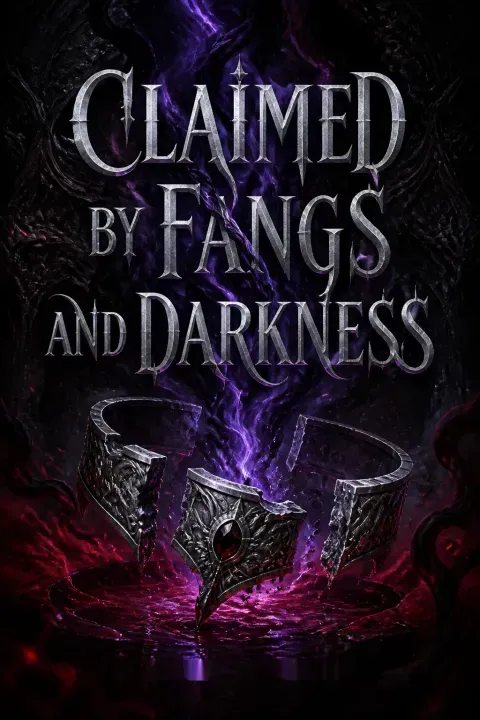
Claimed by Fangs and Darkness is fundamentally a study in mirroring, both literal and psychological. Evie1 and Juliette5 are presented as twinned figures shaped by the same cult trauma, yet one chose resistance and the other chose to become an extension of her abuser. The novel argues, through its treatment of Juliette,5 that explaining evil does not excuse it, but refusing to understand it can blind you to your own capacity for cruelty. Evie’s1 mercy at the end — her refusal to kill her shadow — is the most radical act in a book saturated with vengeance, because it breaks the cycle of mirroring that the born depend upon.
Love, in this world, is never soft. Kylo2 and Evie’s1 bond is built on shared wounds and expressed through dominance, bloodletting, and violent protectiveness. Yet the novel insists that this love is not a mere trauma response; it is a chosen devotion that structures meaning in a chaotic world. Kylo’s2 growth involves learning that protecting Evie1 means trusting her agency, even when it risks her life. Evie’s1 growth involves learning that love does not require surrendering power but can amplify it.
The revolutionary politics are grounded in a sharp critique of institutionalized oppression: the born’s rule is upheld not just by violence but by propaganda, pseudo-religion, and the cynical manipulation of mortal loyalists. The turned, by contrast, build community through education, art, and genuine care — an alternative social order already practiced underground before it is imposed above. The presence of Hekate as a subversive goddess, countering the state-sanctioned Lillian, suggests that spirituality itself is a contested resource. The war, then, is not just for territory but for the very meaning of the divine.
Ultimately, the book is a dark romantasy about the possibility of healing in a world designed to break you. Its heroes are not saints; they are killers who cry, lovers who bite, and revolutionaries who understand that building a better world requires becoming something the old world would call monstrous.
Review Summary
People Also Read
Characters
Evie Lockwood
Chaos witch and clan makerEvie is a half-witch, half-human woman in her early twenties, born into a Servants of Lillian cult in the rural region of Isolde. Her mother, a high priestess, groomed her from infancy to be a born lord’s bride. At thirteen, after learning a vampire had abused her younger brother Idris3, her repressed shadow magick erupted and killed her entire coven. She fled with Idris3 to Etherdale, where she hid her power and identity for a decade, working in a flower shop and living with her adoptive grandmother Mena11. At the start of the book, she has recently fallen in love with Kylo2, the turned vampire leader of the Hekate Clan, and is struggling to trust him after discovering he killed her ex-boyfriend. Evie is profoundly empathetic, artistically inclined, and spiritually attuned, but she also carries a ferocious darkness that she has only recently stopped fearing. Her arc involves integrating her trauma into power, learning to wield violence without shame, and claiming her role as a revolutionary leader. She is devoted to Hekate, reads tarot, and finds joy in gardens, pastel dresses, and smutty fantasy novels.
Kylo
Turned lord of EtherdaleKylo is the eighty-something-year-old turned vampire who leads the Hekate Clan (formerly the Masked Order). He was turned by Princeton12 after the born murdered his best friend Aisling in front of him, an event that shaped his obsessive drive to destroy the born power structure. He is tall, dark-haired, and covered in black tattoos that shimmer with iridescent blue and purple when his power stirs. He is equal parts scholar, strategist, and sadist: he reads philosophy, writes extensively, and finds genuine joy in torturing born prisoners. With Evie1, he is fiercely possessive and protective, a Dominant who worships her vulnerability as much as her growing ferocity. His betrayal—killing her mortal ex-boyfriend and hiding it—shattered her trust, and much of this book finds him earnestly working to rebuild it. He is defined by the tension between his duty to the clan and his all-consuming need to keep Evie1 safe, a need so intense it nearly drives him to bloodlust.
Idris Lockwood
Evie’s determined younger brotherIdris is Evie’s1 human brother, eighteen years old, who was turned into a vampire early in the book after being killed by the born. He is fiercely loyal to Evie1 and has trained in combat secretly for years, determined to protect her as she once protected him. After his turning, he wields shadow magick and discovers a rare celestial magick that blazes like golden starlight. He struggles with bloodlust and the weight of his new nature, but he matures quickly, finding purpose in the clan’s ranks. He is witty, occasionally a punk, and deeply traumatized by the abuse he suffered as a child, which he is only beginning to voice.
Lord Aster
Born lord and Evie’s betrothedAster is an ancient born lord who rules the region of Isolde and has been fixated on Evie1 since she was a child. He presents himself as a romantic savior, claiming he rescued his other bride Juliette5 from a cruel cult and wants to build a better world under gentle born guidance. In reality, he is a narcissistic manipulator who collects powerful witches as trophies and weapons. He surrounds himself with literature, art, and grand rhetoric that mask his predation. His obsession with Evie1 is rooted in her unique bloodline—a half-witch blessed by three goddesses—and he believes she is destined to be his wife and magical asset. He employs psychological torture that mirrors her childhood abuse, alternating punishment with tender care to break her will.
Juliette
Death witch and jealous mirrorJuliette is Aster’s4 other child bride, a half-witch death witch who was raised in a Servants of Lillian cult and married to Aster4 as a teenager. She murdered Princeton12 in a ritual to steal his power and has been terrorizing Etherdale with demon beasts, plagues, and blood rain. She is profoundly unstable, swinging between childish glee, violent rage, and desperate grief. She has studied Evie1 obsessively, copying her dresses, her speech, and ultimately her very face. Psychologically, Juliette represents the version of Evie1 that never escaped: a woman whose entire identity has been shaped by a predatory man, who equates love with total submission and sees other women as threats to her fragile position.
Lord Conrad
Cold-born lord, usurperConrad is the born lord of Etherdale, a pale-eyed, ancient vampire with pain magick and a chillingly cynical worldview. He abused his mortal wife Vesper7 for years, forcibly impregnating her, beating her, and psychologically destroying her. He is more pragmatic and ambitious than Aster4, quietly orchestrating a coup against King Earle while using Aster’s4 resources. He views all mortals as lesser beings and takes particular satisfaction in breaking those with spirit. His conversations with Evie1 reveal a nihilistic philosophy: there is no justice, only power, and she is foolish to resist it. He is the book’s truest embodiment of institutional born evil.
Vesper
Serpent Clan co-leader, Conrad’s victimVesper is the co-leader of the Serpent Clan, a turned vampire with fire magick and a scar across her cheekbone. She was once a celebrated courtesan in King Earle’s court until Conrad6 pursued, isolated, imprisoned, and brutalized her. She escaped by giving her newborn daughter to a merchant bound for Valentin, then spent two more years in Conrad’s6 custody before fleeing for good. She became turned and dedicated her long life to building the Serpent Clan with her best friend Clarke10. She is sophisticated, witty, and magnetically charismatic. Her friendship with Evie1 offers a maternal warmth and a model of feminine rage channeled into leadership.
Harmony
Kylo’s second-in-commandHarmony is a turned vampire and one of Kylo’s2 most trusted advisors, with empathic magick that allows her to soothe tense situations. She is warm, maternal, and fiercely loyal. She often mediates between Kylo’s2 intensity and the clan’s emotional needs. She was close to Princeton12 and carries her grief with grace. Her empathy risks being exploited, as seen when a lover tried to use her for rank, but she remains open-hearted, believing that vulnerability is a strength in the revolution.
Blade
Kylo’s brawny strategistBlade is a massive, bearded turned vampire who serves as Kylo’s2 second-in-command alongside Harmony8. He is a sharp strategist beneath his intimidating exterior and has an irreverent sense of humor. He is fiercely loyal and serves as Kylo’s2 creative sounding board for war plans. He develops an obvious infatuation with Vesper7, which provides moments of levity amid the carnage.
Clarke
Serpent Clan co-leaderClarke is the co-leader of the Serpent Clan, a turned vampire with ash-blond hair and a stylish, confident presence. He is Vesper’s7 best friend and platonic partner, having found her in a dissociative state years ago and helped her heal. He is charming, strategic, and deeply protective of Vesper7. His clan handles the dangerous work of intercepting Valentin imports to supply the revolution.
Mena
Evie’s adoptive grandmotherMena is the human woman who took in Evie1 and Idris3 when they first arrived in Etherdale. She is flamboyant, witty, and defiant, refusing to leave her home even as the born occupy the city. She writes poetry, hosts soirees, and believes that joy itself is a revolutionary act. Her unconditional love provided the first safe home Evie1 ever knew.
Princeton
Deceased clan maker, spirit guidePrinceton was the Hekate Clan’s original chaos witch who turned Kylo2, Blade9, and Harmony8. He was murdered by Juliette5 before the book begins, his death a ritual to steal his power. He appears as a spirit guide to Evie1, offering cryptic wisdom and mischievous warmth. He was a healer, a pervert, and a beloved mentor whose loss still aches through the clan.
Phineas
Clan spymasterPhineas is the clan’s top spy, a turned vampire who moves through shadows and gathers intelligence. He is brusque, irritable, and rarely speaks unless he has something crucial to say, but his instincts are impeccable. It is Phineas who first suspects that Aster4 and Conrad6 are plotting against King Earle, planting the seed for Evie’s1 mission.
Amy
Young witch and tarot artistAmy is a teenage witch and devoted customer of Evie’s1 herbal goods. She creates her own tarot deck featuring Etherdale landmarks and Hekate imagery. She is earnest, hopeful, and represents the next generation of mortal witches who will inherit the revolution’s gains. She is traumatized when she discovers her mentor Gwendolyn’s15 murdered body.
Gwendolyn
Coven high priestess, murdered allyGwendolyn is the high priestess of a local coven that allies with the turned, helping produce violet bane poison. She is warm, wise, and immediately accepting of Evie1 despite Evie’s1 fear of coven rejection. Her ritual murder by Juliette5 is the event that forces Evie’s1 hand, proving that no ally is safe from the death witch’s hunger.
Plot Devices
Blood bond
Magical link between Evie and KyloKylo’s2 blood, consumed by Evie1 during their early encounters, creates a metaphysical tether that allows him to sense her heartbeat, location, and physical state. It serves as both a romantic symbol of their union and a practical tool for protection. During her captivity, Evie’s1 blood bond is targeted and ritually severed by Juliette5, which causes Kylo2 to believe she has died and triggers his desperate rampage. The bond’s destruction is a violation of their intimacy and a turning point in the war.
Hekate’s patronage
Goddess empowering the revolutionHekate, goddess of witches, crossroads, and shadows, adopts Evie1 as her daughter. In exchange for Evie’s1 devotion, she grants the power to turn humans into vampires en masse, to conjure storms, and to wield shadows with lethal precision. The clan is renamed in her honor, and her symbols—the serpent, the key, the crossroad—appear on Evie’s1 tattoos and throughout the narrative. Hekate represents a maternal, protective force that contrasts with the patriarchal cruelty of Lillian, the borns’ goddess. Her presence validates the revolution as cosmically sanctioned.
Changeling glamour
Identity theft using stolen bloodJuliette5 uses the vial of Evie’s1 blood to craft a glamour that lets her assume Evie’s1 exact appearance. She infiltrates the clan, deceiving Kylo2 and the others into believing she is Evie1, while the real Evie1 is held captive. The ruse is eventually exposed, but not before Juliette5 has kissed Kylo2 and gathered intelligence. The device literalizes Juliette’s5 obsessive desire to become Evie1 and serves as the story’s most chilling violation of identity.
Violet bane
Poison stronger than blood onyxEvie1 develops a new vampire poison called violet bane with the help of Gwendolyn’s15 coven and Hekate’s blessing. It is more potent and longer-lasting than the imported blood onyx, which has become scarce due to trade restrictions. The poison is mass-produced and used on weapons during the war, giving the turned a crucial tactical advantage. Its development cements Evie’s1 value as more than a maker—she is an innovator whose magick shifts the material conditions of the resistance.
Coup evidence
Documents proving treason against EarleWhile escaping Conrad’s6 study, Evie1 steals documents that detail plans to assassinate a councilman and install new leadership under Conrad’s6 control. These papers are later mailed to King Earle’s loyalists, sowing paranoia and chaos among the born nobility. The evidence forces dissenters into hiding and fragments the born power structure, creating openings for the revolution. It is a textbook example of intelligence as a weapon.
Download PDF
Download EPUB
.epub digital book format is ideal for reading ebooks on phones, tablets, and e-readers.








































