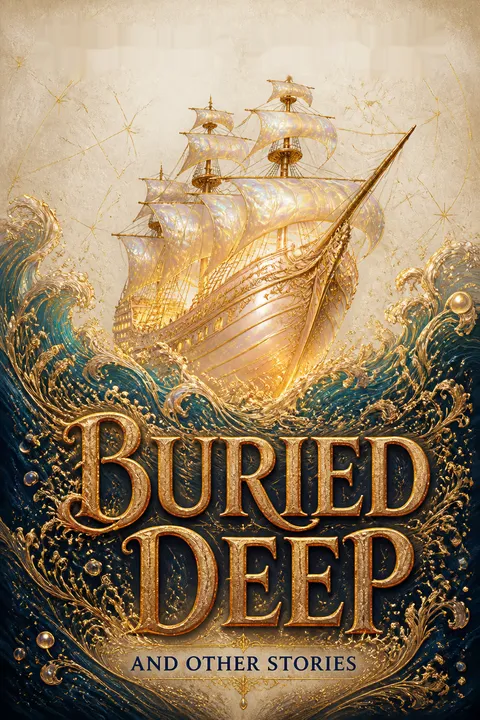

Summary Unavailable
This book is not suitable for a summary (it may be a textbook, workbook, cookbook, reference book, or collection). However, you can still explore the FAQs, about author, and other metadata below!
Plot Summary
The Unruly Heiress Departs
Lady Araminta, a rebellious and clever young woman, is sent away from her home by her exasperated family, who can no longer tolerate her disregard for social rules and her penchant for mischief. Instead of a debut in society, a hasty marriage is arranged for her in the colonies, and she is packed off with a formidable entourage and a chest of valuables. Araminta, however, is unrepentant, smuggling forbidden items—sword, pistols, and a grimoire—into her luggage. The journey is meant to be a punishment and a safeguard for her family's reputation, but for Araminta, it is a chance for adventure and escape from the stifling expectations of her world.
Crossing the Drowned Lands
The sea journey, initially dull and uneventful, becomes more intriguing as Araminta experiments with the magical Tiresian amulet, discovering its transformative powers. The ship, Bluegill, enters the eerie Drowned Lands, a place of ancient ruins and lurking dangers beneath the waves. The crew and passengers grow restless, and Araminta's curiosity and resourcefulness set her apart. The monotony is shattered when a pirate ship, the Amphidrake, appears on the horizon, and the threat of violence and capture looms over all.
Pirates and Parley
The Amphidrake, captained by the notorious Weedle, attacks the Bluegill. Amidst chaos, bloodshed, and the collapse of order, Araminta's quick thinking and magical disguise as a man allow her to fight alongside the crew. Realizing defeat is inevitable, she orchestrates a parley, bluffing the pirates with the promise of a cursed dower chest and the prospect of ransom. Her boldness and wit impress Weedle, who takes her—still disguised as a young nobleman—aboard his ship, setting the stage for a new chapter in her life.
The Amphidrake's Bargain
On the Amphidrake, Araminta faces the reality of her situation: her reputation is ruined, and her future uncertain. Weedle, a charismatic and tragic figure, is both captor and potential ally. Over a lavish dinner, the two strike a wary rapport, each recognizing the other's intelligence and ambition. Araminta, freed from the constraints of her old life, contemplates the possibilities of her new identity and the freedom it might bring, even as she plots her next move.
Captive Among Rogues
Araminta thrives among the pirates, learning the ways of the sea and earning the crew's respect. Her magical disguise allows her to move freely, and her relationship with Weedle grows more complex—part camaraderie, part rivalry, part attraction. Yet, the future is uncertain: Weedle's ambitions keep them at sea, and Araminta's thoughts turn to escape and true independence. The threat of discovery and the weight of her choices hang over her, even as she relishes the adventure.
Leviathan's Embrace
The Amphidrake's luck runs out when a monstrous leviathan attacks, dragging the ship toward destruction. In the chaos, Araminta's leadership and courage shine, but the ship is ultimately wrecked on a remote island. The survivors, including Weedle and Araminta, are stranded, forced to confront not only the dangers of the wild but also the consequences of their actions and the specter of the law closing in.
Shipwreck and Survival
The island is both a prison and a crucible. The pirates, haunted by the prospect of capture and execution, squabble and despair. Araminta, ever resourceful, explores the island and discovers the remnants of an ancient civilization—a labyrinthine path leading to a shrine guarded by living statues. The men's superstitions and fears are realized when one of them is killed by the guardians, and Araminta is left to face the mysteries of the shrine alone.
The Goddess's Shrine
At the heart of the shrine, Araminta confronts the goddess of the Drowned Ones. The encounter is not a simple plea for rescue, but a reckoning with her own desires and the truth of her heart. She rejects the roles others have tried to force upon her—bride, prisoner, paramour, even man—and claims her wish: to be captain of her own fate, free and unbound. The goddess, pleased with her honesty and sacrifice, offers her a path to freedom.
Bargain for Freedom
Following the goddess's instructions, Araminta casts a pearl into the sea. In a moment of awe and transformation, the wreck of the Amphidrake is raised from the depths, reborn as a ship of gleaming pearl and white wood, with a magical dock leading to shore. The goddess's blessing is not just escape, but empowerment: Araminta is given the means to seize her own destiny, on her own terms.
The Pearl Ship Rises
Araminta, now revealed in her true form, invites the survivors—pirates and Weedle alike—to join her as equals, not as captives or outlaws, but as a new crew under her command. The choice is theirs: to follow her into a future of freedom, or to remain and face the consequences of their past. Weedle, shaken and humbled, chooses to follow, and the others, seeing the promise of a new life, do the same.
Captain of Her Fate
With her hair unbound and her true name spoken, Araminta steps aboard her new ship, fully embracing her identity and her power. She is no longer a pawn in others' games, but the master of her own story. The journey ahead is uncertain, but it is hers to chart. The emotional arc comes full circle: from exile and constraint to self-realization and command.
Aftermath and Legend
The world, left behind, spins its own tales of Araminta's fate—rumors, tragedies, and convenient lies. But the truth is stranger and more wondrous: Araminta sails on, a legend in her own right, her story a beacon for those who would break free of the roles assigned to them. The emotional resonance lingers: the cost of freedom, the courage to claim it, and the power of rewriting one's own narrative.
Analysis
Naomi Novik's "Araminta, or, The Wreck of the Amphidrake" is a masterful reimagining of the adventure and coming-of-age tale, blending Regency sensibilities with mythic resonance and a sharp, modern eye for gender and power. At its heart, the story is about the struggle for agency in a world determined to confine and define women, and the courage required to break free of those constraints. Araminta's journey is both literal and symbolic: her transformation through magic, her navigation of male and pirate spaces, and her ultimate reckoning with the goddess all serve as metaphors for the process of self-creation and self-acceptance. The narrative is rich with irony, humor, and emotional depth, refusing to offer easy answers or tidy resolutions. Instead, it insists on the messiness and cost of freedom, the necessity of honesty, and the power of rewriting one's own story. In a modern context, the tale resonates as a feminist fable, a celebration of queer and nonconforming identities, and a reminder that the true adventure is not escape from the world, but the courage to claim one's place within it.
Last updated:
Report IssueReview Summary
Buried Deep and Other Stories is a varied collection of short stories by Naomi Novik, showcasing her versatility as a writer. The anthology includes tales from her existing universes like Scholomance and Temeraire, as well as standalone stories and retellings. While some readers found certain stories less engaging, many praised Novik's imaginative world-building, character development, and writing style. Highlights include a Pride and Prejudice retelling with dragons, Greek mythology retellings, and fairy tale-inspired stories. The collection offers a mix of genres and themes, appealing to both longtime fans and newcomers to Novik's work.
People Also Read





Characters
Lady Araminta
Araminta is the natural daughter of a noble house, marked from childhood by her refusal to conform to the narrow roles prescribed for women of her class. Her intelligence, wit, and resourcefulness set her apart, but also make her a target for censure and exile. Psychoanalytically, Araminta embodies the struggle for self-definition against the weight of tradition and expectation. Her journey is one of transformation—literal and metaphorical—as she navigates gender, power, and desire. Her relationships are complex: with her family, adversarial but not loveless; with Weedle, a dance of equals; with the pirates, a test of leadership and belonging. Ultimately, Araminta's arc is about claiming agency and forging a new identity, not as someone's daughter, bride, or captive, but as captain of her own fate.
Captain Weedle
Weedle is a pirate captain with a checkered past—a by-blow of the Navy, driven by pride and wounded ambition. He is both a romantic and a pragmatist, capable of violence and sentimentality in equal measure. His relationship with Araminta is fraught: he is at once her captor, rival, and would-be lover, but also her mirror in ambition and longing for freedom. Psychoanalytically, Weedle is haunted by rejection and the need to prove himself, both to the world and to himself. His development is shaped by his encounters with Araminta, who challenges his assumptions and ultimately offers him a chance at redemption and a new kind of loyalty.
Lord D— (Araminta's Father)
Lord D— is a man torn between duty and affection, tradition and personal weakness. His inability to discipline Araminta or secure his family's future leads to the crisis that sets the story in motion. He is both a victim and an agent of the system that constrains his daughter, and his guilt shapes his actions and inactions. His relationship with Araminta is marked by regret and a kind of helpless love, but he is ultimately unable to protect or understand her.
Lady D— (Araminta's Mother)
Lady D— is the architect of Araminta's exile, motivated by the need to preserve her family's reputation and secure advantageous marriages for her other daughters. She is not unloving, but her love is conditional and transactional, shaped by the harsh realities of her world. Her relationship with Araminta is adversarial, but not without a certain grim respect for her daughter's abilities.
Captain Rellowe
The captain of the Bluegill, Rellowe is a competent but conventional man, unprepared for the chaos that Araminta and the pirates bring into his world. His relationship with Araminta is one of uneasy alliance, and his development is shaped by his inability to control events or protect his charge.
Mrs. Penulki (Chaperone)
The professional chaperone assigned to Araminta, Mrs. Penulki is a symbol of the surveillance and control imposed on women. Her authority is undermined by Araminta's cunning and the chaos of the pirate attack, and she is left behind as the story moves beyond the world she represents.
Molloy (Eunuch Swordsman)
Molloy is Araminta's bodyguard, sworn to defend her virtue and life. His loyalty is both a comfort and a constraint, and his fate is tied to Araminta's choices. He represents the limits of protection in a world where true safety can only be claimed by the self.
The Goddess of the Drowned Ones
The goddess is both a judge and a liberator, offering Araminta a chance at self-realization but demanding honesty and sacrifice. She is not a wish-granter, but a force of reckoning, asking the true question and rewarding the true answer. Her role is to catalyze Araminta's final transformation.
The Pirates (Crew of the Amphidrake)
The pirates are a motley crew, shaped by hardship and the lure of fortune. Their relationship with Araminta shifts from suspicion to respect, and their development is a test of leadership and loyalty. They are both a threat and a community, offering Araminta a crucible in which to prove herself.
The Living Statues (Lion-Women)
The lion-women are the magical protectors of the goddess's shrine, embodying the dangers and rewards of transgression. They are both a test and a warning, enforcing the rules of the old world even as Araminta seeks to break free.
Plot Devices
Magical Transformation and Disguise
The Tiresian amulet, which allows Araminta to transform her body, is both a literal and symbolic device. It enables her to navigate male spaces and claim power denied to her as a woman, but also forces her to confront the limits and possibilities of identity. The device is used to explore themes of gender, performance, and self-creation, and its reversibility underscores the fluidity of roles and the arbitrariness of social constraints.
Parley and Bluff
Araminta's use of parley, bluff, and magical suggestion is a recurring device, allowing her to turn situations of powerlessness into opportunities for agency. The motif of negotiation—whether with pirates, captors, or gods—highlights the importance of wit, adaptability, and the refusal to accept imposed narratives.
The Labyrinth and the Shrine
The labyrinthine path to the goddess's shrine is both a physical and psychological journey, echoing mythic structures of descent and return. The shrine is a place of truth, where the protagonist must confront her own desires and limitations, and the goddess's question is a test of authenticity. The motif of the labyrinth underscores the idea that there are no shortcuts to self-realization; the only way out is through.
Magical Resurrection and Rebirth
The raising of the Amphidrake as a ship of pearl is a moment of magical rebirth, symbolizing Araminta's transformation from exile and captive to captain and creator. The device of magical resurrection is used not as a deus ex machina, but as the reward for honesty, sacrifice, and the courage to claim one's own story.
Narrative Irony and Legend
The aftermath of Araminta's adventure is marked by the world's inability to comprehend or accept her fate, spinning convenient legends and tragedies in place of the truth. This device highlights the power of narrative to shape reality, and the importance of seizing authorship of one's own life.
The Scholomance Series
About the Author
Naomi Novik is a fantasy author who began reading the genre at age six, starting with The Lord of the Rings. She studied English literature at Brown University and computer science at Columbia University. Novik initially worked in game design before transitioning to writing novels. Her interests in history, particularly the Napoleonic era, and admiration for authors like Patrick O'Brian and Jane Austen, influence her work. Novik's debut novel launched the Temeraire series, blending historical fiction with fantasy elements. She has since written other acclaimed works, including the Scholomance trilogy and standalone novels like Uprooted and Spinning Silver. Novik resides in New York City with her husband.
Other books by Naomi Novik







Download PDF
Download EPUB
.epub digital book format is ideal for reading ebooks on phones, tablets, and e-readers.








































