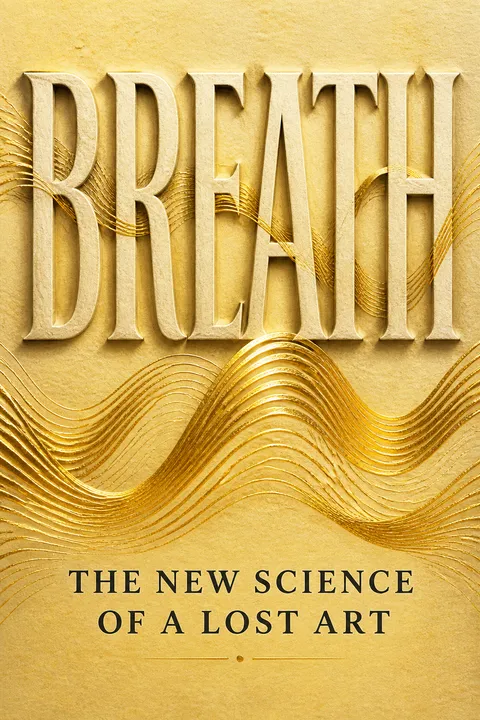

Key Takeaways
1. Mouthbreathing is a modern health disaster
Mouthbreathing, it turns out, changes the physical body and transforms airways, all for the worse.
A systemic breakdown. Inhaling through the mouth bypasses the body's natural filtration system, delivering cold, dry, and unfiltered air directly to the lungs. This habit lowers blood pressure regulation, spikes stress hormones, and causes the soft tissues in the back of the mouth to sag inward, narrowing the airway. Over time, this structural collapse makes breathing increasingly difficult, trapping the individual in a state of chronic respiratory distress.
The physical toll. Chronic mouthbreathing leads to a cascade of negative health outcomes, transforming our physical structure and sleep quality. The author's self-experimentation at Stanford demonstrated how rapidly mouthbreathing degrades health:
- A 1,300% increase in snoring within just a few days.
- Severe spikes in blood pressure, pushing the body into stage 1 hypertension.
- A dramatic plunge in heart rate variability, indicating chronic systemic stress.
- The rapid onset of obstructive sleep apnea and nocturnal choking.
A modern epidemic. Nearly half of the modern population suffers from habitual mouthbreathing, driven by processed diets, stress, and environmental pollution. By failing to use our noses, we are actively making ourselves sick, tired, and cognitively impaired. Reversing this habit is the first and most crucial step toward reclaiming our biological health.
2. Nasal breathing is the ultimate filter and biological regulator
Nasal breathing alone can boost nitric oxide sixfold, which is one of the reasons we can absorb about 18 percent more oxygen than by just breathing through the mouth.
The silent warrior. The nose is not merely an olfactory organ; it is a highly sophisticated climate-control system that heats, moistens, and filters air. As air spirals through the maze-like turbinates, it is pressurized and sterilized, allowing the lungs to extract oxygen far more efficiently. This process ensures that the air entering our lungs is perfectly conditioned for our cells.
Chemical and nervous balance. Nasal breathing triggers the release of nitric oxide, a powerhouse molecule that dilates blood vessels and increases overall circulation. Furthermore, the nasal cycle directly influences our autonomic nervous system:
- Right-nostril breathing acts as an accelerator, stimulating the sympathetic "fight or flight" system.
- Left-nostril breathing acts as a brake, activating the parasympathetic "rest and digest" system.
- Alternating airflow helps maintain a state of homeostasis and mental clarity.
Use it or lose it. When we neglect nasal breathing, the delicate tissues inside our nasal passages atrophy from lack of use, leading to chronic congestion. Forcing ourselves to breathe through the nose, even using simple tools like sleep tape, can rapidly reverse this atrophy and restore respiratory health. Keeping the nasal passages open is essential for long-term vitality.
3. The power of breathing lies in the complete exhale
The patients were suffering not because they couldn’t get fresh air into their lungs, but because they couldn’t get enough stale air out.
The forgotten phase. Most people focus entirely on the inhalation, gasping for air and holding it high in their chests. However, true respiratory efficiency is driven by the exhalation, which clears out stale, carbon-dioxide-rich air and makes room for a deep, nourishing intake. Without a complete exhale, we leave stagnant air in our lungs, reducing our overall breathing capacity.
The second heart. A complete exhale relies on the full movement of the diaphragm, the umbrella-shaped muscle beneath the lungs. Engaging the diaphragm acts as a powerful pump for the circulatory system:
- It lowers cardiovascular stress by assisting the heart in pumping blood.
- It increases lung capacity and prevents the chest from stiffening with age.
- It allows the body to perform physical tasks with significantly less exertion.
Restoring coordination. Pioneers like Carl Stough proved that even severely damaged lungs can be rehabilitated by training the diaphragm to lift higher and drop lower. By mastering the art of the full exhale, we can expand our living capacity and dramatically improve athletic endurance. It is the foundation of breathing coordination.
4. Slowing your breath to 5.5 seconds is the optimal respiratory rhythm
The perfect breath is this: Breathe in for about 5.5 seconds, then exhale for 5.5 seconds.
Resonant harmony. When we slow our breathing rate to approximately 5.5 breaths per minute, our heart, lungs, and circulation enter a state of coherence. In this state, the body operates at peak efficiency, maximizing blood flow to the brain while minimizing cardiovascular strain. It is a state of perfect biological resonance.
An ancient cross-cultural truth. This specific respiratory rhythm is not a modern invention; it is a universal pattern embedded in spiritual practices worldwide:
- The Catholic rosary cycle of the Ave Maria aligns perfectly with this pace.
- Buddhist chants and Hindu mantras naturally require 5.5-second inhalations and exhalations.
- Traditional hand and tongue poses in yoga naturally slow the breath to this exact frequency.
A simple daily medicine. Practicing this "coherent breathing" for just a few minutes a day can lower blood pressure, reduce anxiety, and balance the nervous system. It is a completely free, private, and highly effective tool for maintaining daily well-being. By simply slowing down, we can tap into a profound source of healing.
5. Breathing less is the secret to metabolic efficiency
The key to optimum breathing, and all the health, endurance, and longevity benefits that come with it, is to practice fewer inhales and exhales in a smaller volume.
The overbreathing epidemic. Just as modern humans suffer from chronic overeating, we also suffer from chronic overbreathing, inhaling far more air than our metabolic needs require. This habit actually starves our tissues of oxygen by depleting our bodies of carbon dioxide. We must learn to breathe less to live more.
The Bohr effect. According to biochemistry, carbon dioxide is not merely a waste product; it is the essential key that unlocks oxygen from hemoglobin:
- Higher carbon dioxide levels allow oxygen to disassociate and enter hungry cells.
- Overbreathing purges carbon dioxide, causing blood vessels to constrict and reducing oxygen delivery.
- Breathing less increases our tolerance to carbon dioxide, boosting overall endurance and VO2 max.
Training for efficiency. By consciously reducing our breathing volume, we train our bodies to do more with less. This "hypoventilation training" has been used by elite athletes and respiratory therapists alike to dramatically improve stamina and reverse chronic conditions like asthma. It is the ultimate respiratory equivalent of fasting.
6. Chewing hard foods physically reshapes our airways
It was the constant stress of chewing that was lacking from our diets—not vitamin A, B, C, or D.
The industrial mismatch. The rapid industrialization of our food supply has replaced hard, fibrous diets with soft, highly processed alternatives. Without the physical stress of chewing, our jawbones fail to develop fully, leading to smaller mouths and crowded teeth. This structural change has had devastating consequences for our ability to breathe.
The airway connection. A smaller, underdeveloped mouth leaves less room for the tongue and nasal cavities, directly causing airway obstruction:
- The roof of the mouth arches upward, shrinking the sinus cavity.
- The tongue is forced backward into the throat, triggering snoring and sleep apnea.
- Our ancestors, who chewed for hours daily, had perfectly straight teeth and wide, unobstructed airways.
Regrowing bone. Because the bones of the face remain plastic throughout our lives, we can stimulate new bone growth and expand our airways at any age. Engaging the chewing muscles through hard foods, tough gum, or specialized oral devices triggers stem cells to remodel the jaw. Chewing is the physical foundation of open airways.
7. Occasional conscious overbreathing resets the nervous system
Conscious heavy breathing teaches us to be the pilots of our autonomic nervous systems and our bodies, not the passengers.
A therapeutic shock. While chronic overbreathing is highly damaging, occasionally forcing the body into a state of intense, conscious hyperventilation can be profoundly healing. This deliberate stressor acts as a hard reset for a frayed autonomic nervous system. It is a controlled storm that clears the path for deep calm.
Hacking the autonomic system. Techniques like Tummo and Sudarshan Kriya deliberately trigger a massive sympathetic "fight or flight" response:
- They flood the body with adrenaline, cortisol, and norepinephrine.
- This hormonal surge stimulates the immune system to fight off pathogens and reduce inflammation.
- The subsequent deep relaxation activates a powerful parasympathetic recovery state.
Accessing the pharmacy. By learning to navigate these extreme physiological states, we gain conscious control over functions once thought to be entirely automatic. This practice has helped thousands of people manage autoimmune diseases, depression, and chronic pain. It is a powerful reminder of the mind-body connection.
8. Controlled breathholding conditions our brain's alarm system
What anxious patients could be experiencing is a completely natural reaction—they’re reacting to an emergency in their bodies.
The suffocation alarm. The urge to breathe is not triggered by a lack of oxygen, but by a buildup of carbon dioxide monitored by chemoreceptors in the brain stem. In anxious individuals, these chemoreceptors are hypersensitive, misinterpreting normal fluctuations as a life-threatening emergency. This triggers a state of constant, low-grade panic.
The physical root of anxiety. This hypersensitivity creates a vicious cycle where fear triggers overbreathing, and overbreathing further sensitizes the brain to panic:
- Anxious patients often suffer from low carbon dioxide levels due to chronic shallow breathing.
- Controlled breathholding and carbon dioxide exposure act as a form of physical exposure therapy.
- This training desensitizes the brain's alarm system, teaching it to tolerate carbon dioxide without panic.
Rewiring the brain. Conditioning our chemoreceptors through conscious breathholding can effectively cure panic attacks before they start. It shifts the treatment of anxiety from a purely psychological approach to a mechanical, respiratory one. By holding our breath, we learn to master our fears.
9. Proper oral posture prevents cranial and respiratory decline
A bunch of village idiots, that’s what we’ve become.
The posture of survival. Our modern, sedentary lifestyles and small mouths have led to a widespread collapse in physical posture. To keep our obstructed airways open, we unconsciously slope our shoulders, crane our necks forward, and tilt our heads back. This posture is a desperate attempt to keep from suffocating.
Cranial dystrophy. This "CPR posture" places immense strain on our skeletal and nervous systems, leading to chronic pain and structural degeneration:
- It kinks the neck, adding pressure to the brain stem and triggering headaches.
- It stretches the facial skin downward, flattening our features and narrowing the throat.
- Maintaining correct oral posture—lips together, teeth touching, tongue on the roof of the mouth—is essential.
Reclaiming our form. By consciously practicing proper oral and spinal posture, we can prevent our airways from collapsing. This simple, free habit supports the natural forward growth of the face and ensures easy, unobstructed breathing. It is the final piece of the respiratory puzzle.
Review Summary
Download PDF
Download EPUB
.epub digital book format is ideal for reading ebooks on phones, tablets, and e-readers.








































