
Plot Summary
Shadows on the Shack Steps
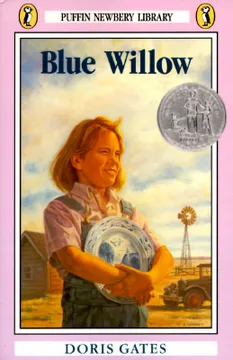
Ten-year-old Janey Larkin sits on the steps of a weathered shack in California's San Joaquin Valley, feeling the weight of heat and isolation. Her family, itinerant workers driven from Texas by drought, has just arrived, and Janey's shadow is as small as her sense of belonging. The shack is temporary, like every place before, and Janey's only constant is a battered blue willow plate—a family heirloom and symbol of home. Across the road, the Romeros, a Mexican family, live in a slightly better shack. Janey's mother, practical and weary, warns her to keep to herself, but Janey's heart aches for connection. The landscape is vast and unforgiving, mirroring Janey's uncertainty about the future and her yearning for stability.
A Blue Plate's Promise
Janey's most treasured possession is the blue willow plate, a relic from her great-great-grandmother, passed down through her late mother. The plate's intricate pattern tells a story of love and escape, and for Janey, it is a talisman—a promise of beauty, continuity, and the possibility of a real home. She shares its story with Lupe Romero, the neighbor girl, who is both puzzled and intrigued. The plate becomes a bridge between the girls, even as Janey clings to it as a substitute for siblings, toys, and the security she's never known. The plate's presence reassures Janey that, despite her family's wandering, something precious endures, and perhaps, one day, she will find a place where it can be displayed with pride.
Friendship Across the Road
Despite initial hesitation, Janey and Lupe become friends, united by curiosity and the shared experience of poverty. Lupe's family is lively and welcoming, a contrast to Janey's cautious, reserved household. The girls navigate the awkwardness of new friendship, teasing and testing each other's boundaries. Janey envies Lupe's siblings, while Lupe is fascinated by Janey's imagination and the mystique of the willow plate. Their friendship offers Janey a sense of belonging she's never felt before, and for the first time, someone hopes she'll stay. This simple wish fills Janey with warmth and hope, hinting at the transformative power of human connection.
Dreams of Belonging
Janey's longing to belong intensifies as she observes the routines of settled families and dreams of attending a "regular" school. Her daily life is shaped by uncertainty—her father's search for work, her mother's persistent worry, and the ever-present threat of moving on. The Bible, her only textbook, offers stories of endurance and faith, but Janey's true comfort comes from imagining a future where she can put down roots. The blue willow plate, with its story of lovers escaping to a new life, becomes a metaphor for Janey's own hopes. She wishes not just to stay "as long as we can," but "as long as we want to."
County Fair Wonders
Lupe invites Janey to the Fresno County Fair, a rare adventure that fills Janey with excitement and anxiety. The fair is a feast for the senses—animals, rides, and, most thrillingly, a booth filled with new children's books. Janey is captivated, choosing to spend her precious nickel on gum to share rather than a ride. The day is a revelation: she experiences generosity, the joy of friendship, and the bittersweet realization that happiness can be fleeting. The fair becomes a symbol of the abundance and possibility that exist beyond her family's hardships, and Janey's world expands with every new sight and sound.
Rent and Restlessness
The Larkins' fragile sense of security is shattered when Bounce Reyburn, the landowner's foreman, demands rent for the shack. Janey's father insists on a receipt, sensing Bounce's dishonesty. Though they pay, the encounter leaves Janey uneasy. Soon after, work dries up, and the family faces the prospect of moving again. Janey's hopes rise and fall with each new development, her dreams of permanence threatened by forces beyond her control. The episode underscores the precariousness of life for migrant families and the constant tension between hope and disappointment.
Riverbank Revelations
A rare day off leads the Larkins to the river, where Janey's imagination transforms the landscape into the world of her willow plate. Fishing, picnicking, and exploring, Janey feels a sense of peace and belonging she's never known. She discovers a ranch that mirrors the plate's scene and meets Mr. Anderson, the true landowner, and his foreman, Bounce. A misunderstanding leads to Janey being accused of theft, but Mr. Anderson's kindness leaves a lasting impression. The day cements Janey's conviction that this place could be home, and the willow plate's story feels closer to reality than ever.
Schoolhouse and Stories
Janey attends the camp school, dreading its impermanence and the reminder that she doesn't belong. But Miss Peterson, the new teacher, is warm, imaginative, and accepting. She recognizes Janey's intelligence and curiosity, and the two form a special bond. The arrival of a traveling library brings books—old and worn, but full of adventure. Janey's world opens further, and she begins to see her own life as a kind of story, full of challenges and unexpected joys. Miss Peterson's presence reassures Janey that kindness and understanding can be found even in the most transient of places.
Contest and Consequence
The annual county cotton-picking contest offers the Larkins a chance at financial relief. Janey's father competes, with Manuel Romero as his helper. The day is tense and exhilarating, culminating in Mr. Larkin winning second place and a much-needed cash prize. The family celebrates with new tires for the car and a blue coat for Janey. For a moment, the future seems bright, and Janey allows herself to dream of a life where good fortune is more than a fleeting visitor. Yet, beneath the joy, the reality of their situation remains—security is always conditional, and happiness is hard-won.
Wild Wings, Harsh Words
As autumn deepens, Janey finds solace in the arrival of wild ducks at a nearby slough. Their dependable return each year gives her a sense of continuity. But her peace is shattered when she encounters Bounce Reyburn, who threatens the ducks and, by extension, Janey's fragile sense of safety. The confrontation is a stark reminder of the powerlessness that comes with poverty and the cruelty that can exist alongside beauty. Soon after, a thick fog descends, and Janey's mother falls gravely ill, plunging the family into crisis.
Illness and Sacrifice
Mrs. Larkin's illness worsens, and Janey is consumed by fear of losing her. With no money for a doctor, Janey makes a desperate decision: she offers the willow plate as payment for medical care. The act is both a sacrifice and a testament to Janey's love and courage. Dr. Peirce, gruff but kind, treats her mother without accepting the plate, but the episode marks a turning point. Janey learns the true meaning of bravery—not in grand gestures, but in the willingness to give up what you love for someone you love more.
The Plate's Price
When Bounce returns to collect rent, the Larkins have nothing left to give. In a moment of desperation, Janey offers the willow plate as payment. Bounce, sensing its value to the family, accepts. The loss is devastating—Janey feels as if she's lost a part of herself. Yet, in her grief, she discovers a deeper connection with her stepmother, who reveals her own attachment to the plate and the memories it holds. The sacrifice binds them together, even as it underscores the cost of survival.
Truths Uncovered
A visit to the Anderson ranch brings the truth to light: Bounce has been collecting rent without Mr. Anderson's knowledge, pocketing the money and the willow plate. Janey's honesty and courage prompt Mr. Anderson to investigate, leading to Bounce's dismissal and the restoration of the plate. The episode is a vindication for the Larkins, who are finally seen and valued. Mr. Anderson offers Mr. Larkin steady work, a house, and the promise of stability. For Janey, it is the fulfillment of her deepest wish—a place to belong.
A Home Promised
With Bounce gone and Mr. Anderson's offer in hand, the Larkins move into a tank-house on the ranch. The willow plate is returned, and for the first time, Janey feels secure. The family settles into their new life, and Janey attends the district school with Lupe. The transformation is profound—Janey grows healthier, her mother recovers, and her father regains his confidence. The promise of "as long as we want to" replaces the old refrain of "as long as we can." The blue willow plate, once a symbol of longing, now represents fulfillment.
Building New Beginnings
Mr. Anderson commissions an adobe house for the Larkins, built from the very earth of the ranch. Manuel Romero and his crew construct it under the shade of a willow tree, echoing the scene on Janey's plate. The process is communal and celebratory, involving friends old and new. As the walls rise, so does Janey's sense of belonging. The house is more than shelter—it is a testament to endurance, friendship, and the possibility of transformation. For Janey, it is proof that dreams, however fragile, can take root and flourish.
May Day and Miracles
Spring arrives, bringing with it the annual May Day festival. Janey and Lupe dance around the May Pole, their friendship stronger than ever. The new house is finished, furnished, and ready to be a home. The willow plate is placed in a place of honor, its journey mirroring Janey's own. The festival is a celebration of resilience, community, and the small miracles that make life beautiful. Janey dances for everyone who helped her along the way, even for Bounce, recognizing that hardship and kindness are intertwined.
As Long As We Want
On the threshold of her new home, Janey is finally able to answer the question that has haunted her: "How long will you stay?" With joy and certainty, she replies, "As long as we want to." The journey from rootlessness to belonging is complete. The blue willow plate, once a fragile hope, now rests securely in a home built on trust, love, and perseverance. Janey's story is one of transformation—not just of circumstance, but of spirit. She has learned that home is not just a place, but the people and memories we carry with us, and the courage to claim happiness when it comes.
Analysis
Doris Gates' Blue Willow is a quietly revolutionary work, offering a child's-eye view of the Great Depression's migrant experience with empathy, nuance, and hope. At its core, the novel is about the universal longing for home—a place not just of shelter, but of belonging, memory, and love. Through Janey's journey, Gates explores the psychological toll of poverty and displacement, the resilience required to endure uncertainty, and the transformative power of friendship and community. The blue willow plate, both fragile and enduring, becomes a metaphor for the dreams that sustain us and the sacrifices we make for those we love. The novel's modern relevance lies in its portrayal of marginalized voices, its critique of injustice, and its affirmation that dignity and happiness are not the exclusive property of the privileged. Blue Willow teaches that home is built not just of walls, but of trust, kindness, and the courage to claim a place in the world—"as long as we want to."
Review Summary
People Also Read



Characters
Janey Larkin
Janey is the heart of the story—a ten-year-old girl shaped by loss, poverty, and constant movement. Her longing for stability and belonging is embodied in her attachment to the blue willow plate, a symbol of her family's lost past and her hope for the future. Janey is imaginative, often escaping into the stories she invents or reads, and fiercely loyal to those she loves. Her friendship with Lupe, her sacrifices for her mother, and her courage in the face of adversity reveal a deep well of empathy and strength. Over the course of the novel, Janey grows from a lonely, uncertain child into someone who understands the true meaning of home and family.
Mrs. Larkin (Mom)
Janey's stepmother is a figure of endurance and quiet strength. She is often weary and anxious, her life defined by hardship and the need to keep moving. Yet, beneath her stern exterior lies deep love for Janey and a fierce determination to protect her family. Mrs. Larkin's insistence on keeping the willow plate safe, her wisdom in moments of crisis, and her eventual openness about her own feelings reveal a complex woman shaped by loss and resilience. Her relationship with Janey evolves from distant to deeply connected, especially as they share the pain of sacrifice and the joy of finding a home.
Mr. Larkin (Dad)
Janey's father is a gentle, hardworking man who bears the scars of lost dreams. Once a rancher in Texas, he is now an itinerant laborer, doing his best to provide for his family. He values education, insists on honesty, and tries to shield Janey from the harshest realities of their life. His humor and optimism are a source of comfort, but he is not immune to despair. The cotton-picking contest and his eventual employment with Mr. Anderson restore his sense of purpose and dignity. His love for Janey is unwavering, and his quiet courage shapes her understanding of what it means to be brave.
Lupe Romero
Lupe is Janey's first real friend—a lively, kind-hearted girl from the Mexican family across the road. She is practical, teasing, and quick to share both her joys and her worries. Lupe's family is close-knit and welcoming, offering Janey a glimpse of the warmth and stability she craves. Lupe's friendship is transformative for Janey, teaching her about generosity, empathy, and the importance of community. Their bond endures through misunderstandings and separations, and Lupe's own family's good fortune mirrors the Larkins' journey toward belonging.
Bounce Reyburn
Bounce is the foreman who collects rent from the Larkins under false pretenses, pocketing the money and exploiting their vulnerability. He is shifty, aggressive, and represents the systemic injustices faced by migrant families. His confrontations with Janey are charged with menace, and his eventual downfall is a moment of vindication for the Larkins. Bounce's presence in the story highlights the precariousness of the poor and the importance of standing up to wrongdoing, even when the odds seem insurmountable.
Mr. Nils Anderson
Mr. Anderson is the true owner of the land and a figure of fairness and compassion. His initial encounter with Janey is marked by kindness and curiosity, and when he learns of Bounce's deceit, he acts decisively to right the wrongs. Mr. Anderson's offer of steady work and a home transforms the Larkins' lives, fulfilling Janey's deepest wish. He is a symbol of the good that can exist within systems of power, and his trust in Janey and her family is a turning point in the narrative.
Miss Peterson
Miss Peterson is the camp school teacher who recognizes and nurtures Janey's intelligence and creativity. She is warm, accepting, and brings a sense of normalcy and hope to the transient children in her care. Her encouragement helps Janey see her own worth and potential, and their bond is a source of comfort during difficult times. Miss Peterson's reappearance as the district school teacher is a testament to the enduring impact of kindness and the importance of mentors in shaping young lives.
Manuel Romero
Lupe's father is a respected leader among the Mexican workers, organizing labor and supporting his family with quiet dignity. He is generous, agreeing to help Mr. Larkin in the cotton-picking contest and later building the Larkins' new home. Manuel's actions exemplify the strength of community and the importance of mutual aid among the marginalized. His presence in the story underscores the interconnectedness of the families and the possibility of solidarity across cultural lines.
Dr. Peirce
Dr. Peirce is the local doctor who treats Mrs. Larkin during her illness. Though brusque and no-nonsense, he is deeply compassionate, refusing payment from the struggling family and providing care without judgment. His presence is a reminder that kindness can be found in unexpected places, and his actions help restore Janey's faith in adults and the world.
Mrs. Romero
Lupe's mother is a figure of warmth and practicality, offering support to the Larkins during their darkest moments. She cares for Janey and Mrs. Larkin during the illness, and her plans to open an eating place in town reflect her resilience and entrepreneurial spirit. Mrs. Romero's generosity and strength are a quiet but essential force in the story, embodying the power of community and the importance of women's labor and leadership.
Plot Devices
The Blue Willow Plate
The blue willow plate is the central symbol and plot device, representing Janey's longing for home, beauty, and permanence. Its journey—from cherished possession to desperate payment and eventual restoration—mirrors Janey's own arc from rootlessness to belonging. The plate's story, with its themes of love, escape, and transformation, parallels Janey's experiences and serves as a touchstone for her dreams and fears. Its presence in the narrative unites characters, drives key decisions, and provides emotional resonance throughout the story.
Cyclical Structure and Foreshadowing
The novel's structure is marked by the recurring question, "How long will you stay?"—first posed with uncertainty, later answered with confidence. This cyclical device underscores the family's journey from impermanence to stability. Foreshadowing is used to build tension, as early hints of trouble (the threat of eviction, Bounce's dishonesty, Mrs. Larkin's illness) set the stage for later crises and resolutions. The narrative's movement from despair to hope is mirrored in the changing seasons and the transformation of the landscape.
Community and Contrast
The story contrasts the Larkins' isolation with the Romeros' warmth, highlighting the importance of friendship and community. The fair, the school, and the building of the new house serve as communal spaces where differences are bridged and mutual support is possible. The presence of antagonists like Bounce is balanced by allies like Mr. Anderson and Miss Peterson, illustrating the spectrum of human behavior and the potential for both harm and healing.
Coming-of-Age and Sacrifice
Janey's journey is a classic coming-of-age narrative, marked by moments of sacrifice, courage, and self-discovery. Her willingness to give up the willow plate for her mother's health, her confrontation with injustice, and her eventual acceptance of happiness reflect a deepening maturity. The story uses these plot devices to explore themes of resilience, the meaning of home, and the power of hope in the face of adversity.








































