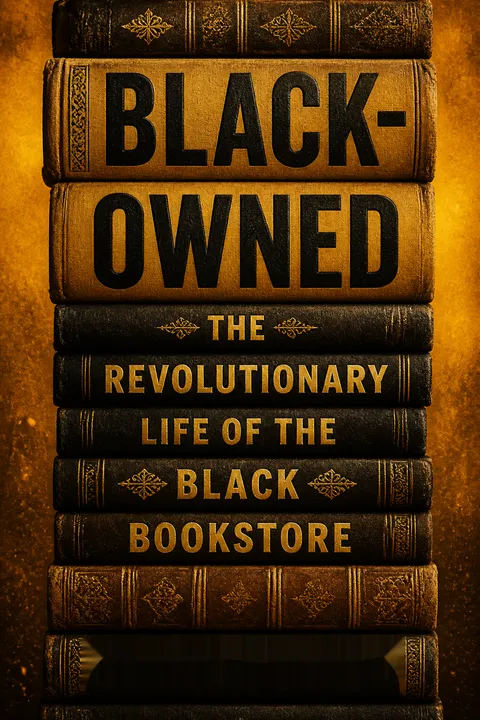

Key Takeaways
1. Black Bookstores: Centuries of Resistance and Community Hubs
It’s been almost two hundred years since Ruggles opened his little anti-slavery bookshop in Manhattan, but it hasn’t ever really closed.
Foundational activism. The tradition of Black bookstores as centers of resistance began with David Ruggles, a 19th-century abolitionist who opened the nation's first known Black bookstore in 1834. His shop was not merely a place to sell books but a hub for anti-slavery literature, a safe house on the Underground Railroad (sheltering figures like Frederick Douglass), and a community space for education and activism, defying anti-literacy laws and racial restrictions. Ruggles's vision established a blueprint: Black bookstores were inherently political, dedicated to liberation and community uplift.
Early pioneers. Following Ruggles, other figures like George Young, who opened Young's Book Exchange in Harlem in 1915, and Lewis Michaux, with his National Memorial African Book Store in 1933, continued this legacy. Michaux, a proud Black Nationalist, famously declared, "Knowledge is power!" and transformed his store into a vital center for civil rights activists, hosting Malcolm X and other leaders on its "Speakers' Corner." These early establishments laid the groundwork for future generations, proving that Black bookselling was a powerful vehicle for social change and cultural pride.
Beyond commerce. From their inception, Black bookstores have been more than commercial enterprises; they have been ideological hubs, gathering sites for political groups, and places of solace and education. They countered racist narratives, mobilized readers for liberation movements, and fostered community in the face of systemic oppression. This mission-driven posture, prioritizing community and knowledge over profit, became a defining characteristic that would persist through centuries of struggle and adaptation.
2. The Black Power Era: Surveillance, Struggle, and Activist Bookstores
To Hoover, these shops were “propaganda outlets for revolutionary and hate publications” and served as “cultural centers for extremism.”
Government targeting. During the Black Power era of the 1960s and 70s, Black bookstores became direct targets of the U.S. government's COINTELPRO operations, led by FBI director J. Edgar Hoover. Shops like Drum and Spear in Washington, D.C., founded by SNCC veterans, and Una Mulzac's Liberation Bookstore in Harlem, were subjected to intense surveillance, infiltration, and harassment. Agents posed as customers, tore down posters, and even orchestrated arson attacks, viewing these stores as threats to national security due to their role in fostering Black consciousness and radical political movements.
Unwavering commitment. Despite facing police brutality, false arrests, and economic sabotage, booksellers like Martin Sostre of Buffalo's Afro-Asian Bookshop and Ed Vaughn of Detroit's Vaughn's Bookstore kept their doors open, serving as refuges during urban rebellions. They continued to sell revolutionary literature, host discussions, and educate their communities, often at great personal risk. Mulzac, for instance, famously defied city summonses for not sweeping her sidewalk, viewing it as an attempt to control her and her store's political mission.
A movement's backbone. These activist bookstores were integral to the Black liberation movements, providing essential resources, meeting spaces, and intellectual nourishment. They published their own materials, hosted educational centers, and actively participated in protests, embodying a Pan-Africanist worldview that connected Black struggles globally. Their influence, though often short-lived due to relentless repression and economic pressures, deepened the foundation for future Black booksellers, making their shops synonymous with Black liberation.
3. Adapting to Change: Business Acumen and the Black Literary Renaissance
“A lot of people think that an African American business can’t be clean, well-lighted, and well-run,” she said back then.
Challenging stereotypes. In the 1980s, Clara Villarosa opened the Hue-Man Experience in Denver, determined to defy stereotypes about Black businesses. With no prior bookselling experience but a strong business background, she meticulously planned her venture, focusing on professionalism, strategic marketing, and community building. Villarosa's approach prioritized business acumen and innovation over overt political missions, aiming to prove that Black-owned businesses could be successful and well-managed, attracting Denver's affluent Black residents.
A new literary wave. This era saw a shift in the Black literary market, with a surge in fiction by Black women authors like Terry McMillan, Alice Walker, and Toni Morrison, who explored deeply personal stories of love, relationships, and the Black female experience. Villarosa leaned into this trend, curating extensive collections of Black women's fiction and children's books, and forming popular book clubs. Her efforts, alongside those of Emma Rodgers of Black Images Book Bazaar in Dallas, helped establish Black bookstores as premier resources for this burgeoning literary movement.
Industry integration and growth. Black publishers also matured during this decade, with figures like Haki Madhubuti (Third World Press) and Kassahun Checole (Red Sea Press) building sustainable enterprises. Villarosa actively engaged with the predominantly white American Booksellers Association (ABA), pushing for greater inclusion and resources for Black booksellers. This period, marked by a blend of entrepreneurial spirit and a renewed focus on Black cultural expression, laid the groundwork for a more cohesive Black book industry, even as it navigated the complexities of integration and commercialization.
4. The Golden Age's Challenges: Chains, Amazon, and the Fight for Survival
“Outside of a Black literary conference, I can’t imagine where you would ever see this many writers in one place,” George said then.
A flourishing era. The 1990s marked a "golden age" for Black bookselling, with the number of Black bookstores estimated to reach 200 and Black households increasing book purchases by 26%. Cultural phenomena like rap music with Black Power imagery, Spike Lee's "Malcolm X," and Oprah Winfrey's Book Club fueled a renewed interest in Black literature and history. This period saw the rise of influential stores like Eso Won in Los Angeles, which became a must-stop for authors and a vibrant cultural center, hosting everyone from Elaine Brown to a then-obscure Barack Obama.
Devastating competition. Despite this boom, Black bookstores faced existential threats from large chain retailers like Barnes & Noble and Borders, and the nascent Amazon.com. These chains adopted strategies like discounting and stocking Black literature, directly poaching customers from independent Black shops. The Aquarian Bookshop in Los Angeles, a long-standing institution, was tragically burned during the 1992 Rodney King uprising and, despite community efforts to rebuild, ultimately closed due to the owner's illness and the changing market landscape.
Resilience and adaptation. Black booksellers fought back with ingenuity and collective action. They cultivated deep customer loyalty through community events, author talks, and personalized service that chains couldn't replicate. The National Association of Black Book Publishers was formed to advocate for Black presses, and the ABA faced lawsuits over alleged preferential treatment of chains. While many independent stores struggled or closed, the most resilient ones, like Eso Won and Phenix Information Center, thrived by becoming exceptional cultural hubs and mastering innovative marketing strategies.
5. The Early 2000s: The Rise and Fall of Chains and the Resilience of Online Models
“We came up together, right,” Sana said of booksellers and authors. “We were on the bookselling side, but we’re basically doing the same thing. We were both selling books. They needed a place where people could come and buy their books. And we wanted to carry them, especially if they were popular.”
A new generation's ambition. The early 2000s saw the emergence of Karibu Books, a Black-owned chain founded by Simba Sana and Yao Glover, who were mentored by Eso Won's owners. Karibu aimed to blend business acumen with activism, creating a lucrative enterprise that also served as a "free Black space" for literature and culture. By 2005, Karibu had expanded to six locations and nearly $4 million in annual sales, becoming a darling of the Black bookselling community and a model for supporting self-published authors.
Internal strife and decline. Despite its outward success, Karibu was plagued by internal conflict between its co-founders, leading to financial mismanagement and a dramatic collapse. In 2008, the chain abruptly closed all its stores, a shocking loss for the industry and a stark reminder of the precariousness of even the most successful Black businesses. This downfall, shrouded in contradiction, highlighted the complex interplay of personal relationships, business practices, and the broader economic environment.
Adapting to the digital age. While brick-and-mortar stores like Karibu struggled, the new millennium also saw innovative approaches to bookselling. Derrick and Ramunda Young launched MahoganyBooks as an online bookstore in 2007, leveraging the internet to make Black books accessible nationwide. They built a strong online community through their "Lit Lounge" and hosted physical events, demonstrating that a successful Black bookstore could thrive without a traditional storefront. This period underscored the need for adaptability and diverse business models in a rapidly changing industry.
6. Gentrification and Racial Reckoning: Black Bookstores as Anchors
“Gentrification in DC is like a wildfire,” Shirikiana told a reporter. “People are looking for an oasis in the midst of a big, white snowstorm.”
Community under siege. The 2010s brought renewed challenges, particularly gentrification, which threatened Black businesses and communities across the country. Sankofa Video, Books & Café in Washington, D.C., run by Shirikiana and Haile Gerima, became a symbol of this struggle when it faced a crippling $30,000 tax bill in 2018. Despite prioritizing community and culture over profit, Sankofa rallied local activists and politicians, successfully securing a tax abatement, demonstrating the power of collective action in preserving "legacy Black businesses."
A decade of protest. This era was also defined by a series of high-profile police killings of Black individuals (Trayvon Martin, Michael Brown, Eric Garner, etc.), which ignited the Black Lives Matter movement. These events, amplified by social media, spurred a national racial reckoning and a surge of interest in books about systemic racism and Black consciousness. Black bookstores, though fewer in number, once again stepped into their historic role as educators and community hubs, providing spaces for dialogue, solace, and organizing.
Resilience and rebirth. Despite the grim statistics (Troy Johnson's 2014 report of only 54 Black-owned bookstores remaining), the decade ended with more Black bookstores than it began. Veteran shops like Hakim's Bookstore in Philadelphia were saved by community fundraising, and new stores like EyeSeeMe African American Children’s Bookstore and Uncle Bobbie’s Coffee and Books emerged. This period showcased the enduring resilience of Black booksellers, who adapted to new technologies and leveraged community support to navigate economic hardship and social upheaval.
7. The Bittersweet Boom of 2020: Unprecedented Demand and Publishing's Reckoning
“George Floyd died, and people were upset. People were wanting justice,” Tyehimba said. “People were determined to intentionally support Black businesses. It turned on a light inside of them that, ‘Look, we are all we got. We have to support each other.’ ”
A tragic catalyst. The murders of George Floyd, Breonna Taylor, Ahmaud Arbery, and Tony McDade in 2020 ignited a national racial reckoning and an unprecedented surge in demand for Black and anti-racist books. Black bookstores, many of which had been struggling due to the COVID-19 pandemic, were suddenly overwhelmed with orders, with lines wrapping around corners and online requests flooding in. This boom, while financially beneficial, was bittersweet, as booksellers grappled with the tragic circumstances that fueled their success.
Industry-wide impact. The spotlight also turned to the overwhelmingly white publishing industry. Campaigns like #BlackoutBestsellerList and #PublishingPaidMe exposed racial disparities in advances and representation, prompting major publishers to issue statements, launch new imprints dedicated to diverse voices (e.g., Tiny Reparations Books, Legacy Lit), and appoint more Black individuals to leadership roles. This period brought much-needed transparency and a commitment to change, though its lasting impact remained to be seen.
Community and adaptation. Black booksellers responded to the moment by transforming their shops into vital community hubs, hosting virtual town halls, organizing fundraisers for other Black businesses, and providing essential resources like Wi-Fi for students. They navigated the challenges of unprecedented demand, often relying on volunteers and adapting quickly to online sales and new protocols. This era reaffirmed the foundational role of Black bookstores as centers of support, understanding, and activism during times of national crisis, fostering a renewed sense of camaraderie within the Black book ecosystem.
8. A New Generation's Vision: Innovation, Mentorship, and Enduring Legacy
“I’m really hopeful for the future of Black-owned bookstores in the country. I think this generation and the next has a level of resilience that’s not going anywhere,” Clark said.
Passing the torch. The post-2020 era saw a shift in the Black bookselling landscape, with veteran owners like James Fugate and Thomas Hamilton of Eso Won retiring on their own terms, satisfied with their decades of impact. This paved the way for a new generation of booksellers, often younger and more attuned to pop culture and social media, to carry on the legacy. These newcomers, like Nia-Tayler Clark of Blacklit in Dallas, are actively seeking mentorship from industry elders, ensuring the continuity of knowledge and passion.
Innovation and adaptation. The new generation is embracing innovative models to ensure longevity, such as combining bookstores with cafes, event spaces, or subscription services. They leverage social media platforms like Instagram and TikTok for marketing and community engagement, transforming bookstores into culturally relevant and potent gathering centers. Projects like Noname's Radical Hood Library in Los Angeles and OlaRonke Akinmowo's Free Black Women’s Library in Brooklyn exemplify anti-capitalist approaches, offering free books, community organizing, and mutual aid, pushing the boundaries of traditional bookselling.
Enduring relevance. Despite the dissipation of the 2020 boom and a conservative backlash leading to widespread book bans, Black bookstores remain resilient. They serve as crucial havens against censorship, actively stocking and promoting challenged books about race and queer experiences. Celebrities and authors increasingly highlight their favorite Black bookstores, recognizing their vital role in the literary landscape and as pillars of Black culture and resistance. This ongoing recognition and the innovative spirit of new booksellers assure the enduring presence of Black bookstores.
9. The Enduring "Black Book Ecosystem": Interconnectedness and Collective Action
“Black booksellers have done it, Black publishers have done it, but we’ve never done it together. It represents a singular act. That’s as political as you get.”
A collaborative network. The Black book industry operates as a cohesive "ecosystem," where booksellers, publishers, authors, and distributors are deeply interconnected, supporting each other through challenges and successes. This collaborative spirit, evident in the mentorship relationships between generations and the sharing of resources, has been crucial for the survival and growth of Black bookstores. Figures like W. Paul Coates, the unofficial historian of the Black book industry, exemplify this commitment to collective uplift.
Beyond business. While the distinction between "Black bookstores" (specializing in Black literature) and "Black-owned bookstores" (owned by Black people, regardless of inventory) exists, the overarching mission remains consistent: to empower and educate Black communities. Many Black-owned stores expand their inventory to stay afloat, but their core commitment to Black literature and community service persists. This mission-driven approach ensures that these shops remain vital cultural centers, regardless of their specific inventory focus.
A foundation for change. The history of Black bookstores is a testament to resilience, entrepreneurial activism, and the enduring fight for Black liberation. From Ruggles's abolitionist efforts to the Justice4Garvey movement (where Black booksellers and publishers united to advocate for Marcus Garvey's pardon), these shops have consistently been at the forefront of Black politics. As long as the struggle for justice and equity continues, Black bookstores will remain a foundational force for change, adapting, innovating, and serving as indispensable pillars of their communities.
People Also Read








Download PDF
Download EPUB
.epub digital book format is ideal for reading ebooks on phones, tablets, and e-readers.








































