
Key Takeaways
1. Biblical Archaeology's Genesis: From Theological Quest to Scientific Method.
For the first “real” biblical archaeologist, one must turn to Sir William Matthew Flinders Petrie.
Evolving discipline. Biblical archaeology began not with trained archaeologists, but with theologians, biblical scholars, and engineers driven by a desire to locate and map biblical sites. This early phase, characterized by a "Bible in one hand and a trowel in the other," gradually transitioned into a more rigorous scientific discipline, largely thanks to figures like Sir William Matthew Flinders Petrie. The initial motivation was often to "prove" the Bible, but the methods evolved to systematically understand the ancient world.
Early pioneers. Edward Robinson, an American minister, and Charles Warren, a British army engineer, were instrumental in the field's infancy. Robinson identified over a hundred biblical sites by matching modern Arabic names to ancient Hebrew ones, while Warren meticulously explored Jerusalem's underground systems, including the shaft that bears his name. Their work, though lacking modern archaeological techniques, laid crucial groundwork for understanding the Holy Land's geography and ancient features.
Geopolitical motivations. Beyond religious zeal, imperialistic ambitions also fueled early explorations. British and German societies, like the Palestine Exploration Fund (PEF), sponsored surveys to map Palestine, anticipating the Ottoman Empire's collapse. These "biblical explorations" provided a convenient cover for military mapping operations, as exemplified by T. E. Lawrence's survey of the Negev, which doubled as intelligence gathering for potential wartime routes.
2. Pioneering Explorers Mapped the Holy Land, Unveiling Ancient Tells.
He knew that it must be somewhere close, but it never dawned on him that he was actually standing on it at that very moment and that there were at least twenty different levels of habitation stacked one on top of another within the ancient mound underneath his feet.
Unrecognized tells. Early explorers like Edward Robinson, despite their significant contributions to biblical geography, often failed to recognize the true nature of the prominent mounds, or "tells," scattered across the landscape. These tells, like the one at Megiddo, were in fact man-made mountains formed by successive cities built one on top of another over millennia, concealing layers of history beneath their surface.
Mapping the land. The British Palestine Exploration Fund (PEF) played a crucial role in systematically mapping Palestine in the 1870s. Led by Royal Engineers such as Captain Charles Wilson, Lieutenant Claude Conder, and Lieutenant Horatio H. Kitchener, these surveys produced extensive memoirs, maps, and architectural plans, providing an unprecedented understanding of the region's geography. This meticulous mapping was vital for future archaeological endeavors.
Inscriptions emerge. While mapping and architectural studies progressed, Charles Clermont-Ganneau, a French epigrapher, focused on ancient writings. His identification of the Mesha Inscription (Moabite Stone) in Jordan, dating to the 9th century BCE, was groundbreaking. It mentioned "Omri, king of Israel," providing one of the first extrabiblical confirmations of a figure from the Hebrew Bible, despite its dramatic destruction and reconstruction from fragments.
3. Stratigraphy and Pottery Revolutionized Dating Ancient Civilizations.
Essentially, Petrie realized that pottery types go in and out of style, just as today’s fashions do, and can therefore be used to help date the various cities and stratigraphical levels within a single tell.
Petrie's revolution. Sir William Matthew Flinders Petrie, honing his skills in Egypt, introduced the revolutionary concept of stratigraphy to Palestine at Tell el-Hesi in 1890. He understood that deeper layers in a tell were older than upper layers, allowing archaeologists to excavate backward in time. This geological principle of superposition transformed excavation from treasure hunting into a systematic historical inquiry.
Pottery as a clock. Petrie also pioneered pottery typology and seriation. He recognized that pottery styles changed over time, much like fashion, making broken pottery fragments invaluable chronological markers. By comparing pottery types across different sites, he could establish contemporary levels, a crucial method for dating periods before the invention of coins around 700 BCE.
Standardizing chronology. The influence of Petrie's methods, combined with the work of William Foxwell Albright, led to the first proper archaeological chronology for the Holy Land. Adopting the "Three Age System" (Stone, Bronze, Iron Ages) and subdividing them, Albright's publication of Tell Beit Mirsim in 1932 established a standardized terminology still refined and used today, moving the field beyond vague "Jewish Periods."
4. Post-War Archaeology Forged National Identity and Re-examined Biblical Veracity.
Yadin was not only interested in establishing an Israeli national identity with regard to ancient evidence for a Jewish presence in the land, but—like his American counterpart Albright—thought that archaeology could help prove the accuracy and authenticity of the Bible.
National narrative. After the 1948 Israeli War of Independence, biblical archaeology entered a new phase, intertwining with the construction of a national narrative for the new state of Israel. Archaeologists like Yigael Yadin, a former military chief of staff and later deputy prime minister, actively sought to link ancient Israelite history with modern Israeli identity, often with the direct support of figures like Prime Minister David Ben-Gurion.
Re-examining Jericho. Kathleen Kenyon, employing the precise Kenyon-Wheeler method of excavation, re-excavated Jericho from 1952-1958 to address questions raised by earlier work. She definitively dated the city's destruction to around 1550 BCE, much earlier than the 1400 BCE proposed by John Garstang, which he had linked to Joshua's conquest. Her findings suggested Jericho was uninhabited during Joshua's supposed arrival, creating a significant asymmetry between archaeological evidence and the biblical account.
Solomonic blueprint. Yadin's excavations at Hazor and Megiddo, and his subsequent collaboration with American teams at Gezer, aimed to confirm biblical accounts of Solomon's building activities. He identified similar six-chambered city gates and casemate walls at all three sites, dating them to the 10th century BCE, based on a passage in 1 Kings 9:15. This "Solomonic blueprint" was seen as strong archaeological corroboration for the biblical narrative, though it would later become a subject of intense debate.
5. Beyond 1967: Surveys, Science, and Shifting Interpretations.
The Six-Day War resulted not only in the capture of vast lands in the West Bank and the Sinai, but in the capture and occupation of the Old City of Jerusalem by Israeli forces during the war.
New territories, new surveys. The Six-Day War of 1967 dramatically expanded Israel's access to biblical lands previously under Jordanian, Syrian, and Egyptian control. This led to a new wave of wide-ranging archaeological surveys, particularly in the West Bank and Sinai, by Israeli archaeologists. These surveys, part of the global "New Archaeology" movement, aimed to systematically document sites and understand regional population dynamics.
Demographic insights. Surveys by Moshe Kochavi, Rudolph Cohen, Adam Zertal, and Israel Finkelstein uncovered hundreds of previously unidentified sites, significantly revising population estimates for periods like the Iron Age. For example, they revealed a much larger population in the Northern Kingdom of Israel before the Neo-Assyrian invasions and a dramatic increase in Judah's population in the late 8th century BCE, likely due to refugees from the north.
Jerusalem's growth. Post-1967 excavations in Jerusalem, led by Nahman Avigad and Benjamin Mazar, revealed substantial development in the late 8th century BCE, with the city's population surging from 1,000 to 15,000. They also found clear evidence of Nebuchadnezzar's destruction in 586 BCE, including ash, debris, and Neo-Babylonian arrowheads, corroborating biblical accounts and Josephus's descriptions. Microscopic analysis of ancient toilets even revealed dietary stress during the Babylonian siege.
6. Early Biblical Narratives Often Lack Direct Archaeological Corroboration.
The fact of the matter is that during the past one hundred or so years, there have been fabulous archaeological discoveries in the Near East of sites dating from the second millennium BCE. However, while these have provided enormous insights into the Canaanites of Syro-Palestine, the Hittites of Anatolia, the Egyptians, and the peoples of Mesopotamia, all of whom are relevant to the biblical text and to the world of the Bible, such discoveries have shed relatively little light on the actual stories found in the Hebrew Bible—particularly those in Genesis and Exodus.
Faith vs. evidence. Many early biblical stories, from Creation to the Exodus, remain uncorroborated by archaeological evidence, leaving them largely a matter of faith. While archaeological discoveries have illuminated the broader world of the Bible, they have provided surprisingly little direct proof for narratives in Genesis and Exodus, a fact often exploited by pseudo-archaeologists who offer sensational but unsubstantiated claims.
The Flood's echoes. Archaeological evidence for a worldwide flood remains elusive, though local floods in Mesopotamia, the "land between two rivers," are well-documented. Geological studies suggest a massive Black Sea flood around 7,500 years ago, which could have inspired ancient flood myths. These earlier Sumerian, Akkadian, and Babylonian narratives, featuring survivors like Ziusudra, Atrahasis, and Utnapishtim, share striking similarities with the biblical Noah story, suggesting a "transmitted narrative" rather than a unique historical event.
Exodus enigma. The Exodus, a foundational event for Judaism, lacks credible direct archaeological evidence. Despite extensive searches in the Sinai, no trace of the "600,000 men on foot, besides children" and their livestock has been found. While nomadic groups typically leave fewer permanent installations, archaeologists have found evidence of other nomadic emplacements, making the absence of Exodus-related finds particularly notable.
7. Later Biblical Accounts Find Stronger Echoes in Archaeological Discoveries.
In no case has the biblical account of an event in the early first millennium BCE yet been shown by an extrabiblical inscription to be completely false.
Corroborating kings. Unlike earlier narratives, events from the Divided Kingdoms period (ca. 925-586 BCE) often find strong corroboration in extrabiblical inscriptions and records. These texts frequently name individual kings of Israel and Judah, providing independent confirmation of their historical existence and, by extension, lending credibility to the biblical descriptions of daily life during their reigns.
Shishak's campaign. The biblical account of Pharaoh Shishak's invasion of Judah around 925 BCE is supported by Egyptian records. Pharaoh Sheshonq's inscription at Karnak lists 150 conquered cities, including Megiddo. A fragment of Sheshonq's victory monument was even found at Megiddo, archaeologically confirming his claim to have captured the city, though whether Sheshonq is precisely the biblical Shishak remains a point of scholarly consensus.
Sennacherib's siege. The Neo-Assyrian King Sennacherib's invasion of Judah in 701 BCE, including the siege of Lachish and Jerusalem, is one of the most archaeologically confirmed events. Excavations at Lachish by David Ussishkin uncovered a massive Assyrian siege ramp and a Judean counter-ramp. Furthermore, Sennacherib's own palace reliefs at Nineveh graphically depict the siege, capture, and brutal aftermath of Lachish, offering a multi-source corroboration of the biblical narrative.
8. Ancient Scrolls: Unlocking Millennia of Biblical and Historical Texts.
The fact that they so closely repeat what is said in today’s versions of the Hebrew Bible only adds to their importance.
Silver Amulet Scrolls. In 1979, Gabriel Barkay's excavation of tombs at Ketef Hinnom in Jerusalem yielded two tiny, rolled-up silver amulets. After painstaking unrolling and advanced imaging, these amulets revealed minuscule Hebrew inscriptions containing priestly blessings strikingly similar to Numbers 6:24-26. Dating to the 7th or 6th century BCE, these are the oldest biblical texts currently extant, demonstrating the remarkable textual continuity of the Hebrew Bible.
Dead Sea Scrolls. Discovered by Bedouins in 1947 near Qumran, the Dead Sea Scrolls are considered the greatest manuscript discovery of modern times. These more than 800 scrolls, dating from 200 BCE to 70 CE, include copies of nearly every book of the Hebrew Bible (except Esther), predating previously known texts by a millennium. They offer invaluable insights into the textual history of the Hebrew Bible and the fluidity of its versions before canonization.
Beyond the Bible. The Dead Sea Scrolls also contain fascinating non-biblical texts, such as the "War Scroll" and community rules, which illuminate the diverse forms of Judaism practiced in the Second Temple period. While no New Testament books are present, some scrolls contain ideas that would later evolve into Christian canon, demonstrating the shared intellectual and religious landscape of the era. The enigmatic Copper Scroll, detailing buried treasures, adds another layer of mystery to this extraordinary collection.
9. New Testament Archaeology Illuminates the World of Jesus and Early Christians.
This is the only inscription on stone known to mention Pontius Pilate and confirms the title given to him, previously known only from the New Testament.
Herod's legacy. New Testament archaeology focuses on the period immediately before, during, and after Jesus's life (40 BCE to late 1st century CE). Herod the Great's extensive building projects, such as Caesarea Maritimae and the renovation of the Second Temple in Jerusalem, provide rich archaeological context. Caesarea, built by Herod to honor Caesar Augustus, yielded a Latin inscription mentioning Pontius Pilate, the prefect of Judaea, confirming his title from the New Testament.
Jesus's world. While direct archaeological evidence for Jesus's life remains elusive, excavations illuminate the material culture of his time. The "Lost Tomb of Jesus" claim, for instance, was widely debunked by archaeologists. However, sites like Sepphoris and Capernaum in the Galilee reveal the vibrant, prosperous, and largely Jewish character of cities where Jesus lived and preached, fleshing out the social and economic backdrop of the New Testament narratives.
Unexpected finds. Archaeological discoveries often come from unexpected places. The Galilee Boat, exposed by a drought in 1986, dates to Jesus's lifetime and offers unique insights into 1st-century CE boat-building and sailing practices. The "Ossuary of Caiaphas," found in a Jerusalem burial cave, potentially contains the bones of the high priest mentioned in the New Testament, offering a rare physical link to a biblical figure. Even a mosaic found in a Megiddo prison, dating to the 3rd century CE, provides the earliest inscription mentioning "Jesus Christ" in Israel, hinting at early Christian communities.
10. The Shadow of Forgery: Distinguishing Fabulous Finds from Fantastic Fakes.
These objects are either among the most important ever announced in the field of biblical archaeology or among the greatest hoaxes ever perpetrated upon a gullible public.
Controversial artifacts. The turn of the new millennium brought intense debate over three artifacts: an ivory pomegranate, the James Ossuary, and the Jehoash Tablet. These objects, if genuine, would be monumental biblical discoveries, but they have been vigorously contested as sophisticated forgeries, highlighting the challenges of authentication, especially for items lacking clear archaeological provenance.
The Pomegranate's plight. The ivory pomegranate, inscribed with a partial Hebrew text possibly linking it to Solomon's Temple, was initially authenticated by scholars like André Lemaire and Nahman Avigad. However, later expert panels declared the inscription a modern addition to an authentic ancient artifact. Microscopic analysis focused on whether the inscription was carved before or after an ancient break, but a definitive answer remains elusive, leaving its authenticity in doubt.
Ossuary and Tablet. The James Ossuary, inscribed "James, son of Joseph, brother of Jesus," caused a global sensation but was later deemed a forgery by the Israel Antiquities Authority (IAA) panel. Similarly, the Jehoash Tablet, purportedly documenting repairs to Solomon's Temple, was also declared a modern fake. Scientific tests revealed artificial patinas and grammatical errors in the inscriptions. Undercover investigations even led to an Egyptian craftsman confessing to forging the Jehoash inscription for the ossuary's owner, Oded Golan, underscoring the pervasive issue of antiquities fraud.
11. Modern Biblical Archaeology: Reconstructing Culture, Not Just Confirming Scripture.
But biblical archaeology is not about proving or disproving the Bible; its practitioners are concerned with investigating the material culture of the lands and eras in question and reconstructing the culture and history of the Holy Land for a period lasting more than two thousand years.
Beyond confirmation. Modern biblical archaeology has moved beyond simply proving or disproving biblical narratives. The discipline now focuses on anthropologically oriented questions, investigating topics like ethnicity, migration, gender, feasting, and the rise of complex societies. This shift demands interdisciplinary collaboration and the integration of hard sciences with traditional excavation methods.
Technological advancements. Contemporary archaeologists utilize advanced detection techniques before digging, such as magnetometers, ground-penetrating radar, and satellite photography, to map buried features. Radiocarbon dating provides precise chronological anchors, while specialized analyses like ceramic petrography, residue analysis, and DNA analysis offer unprecedented insights into ancient daily life, diet, and trade.
New discoveries abound. Recent finds continue to enrich our understanding of the biblical world. Examples include:
- A pottery sherd at Tel Safi/Gath possibly bearing the name "Goliath."
- The oldest known abecedary (alphabet) at Tel Zayit, dating to the late 10th century BCE.
- Evidence of extensive copper production at Khirbat en-Nahas in Jordan, potentially linked to King Solomon's mines.
- Untouched First Temple-era remains on Jerusalem's Temple Mount.
- A massive 1st-century CE city drain in Jerusalem, matching Josephus's description of an escape route during the Roman siege.
These discoveries, whether confirming or challenging biblical accounts, contribute to a richer, more nuanced reconstruction of the Holy Land's ancient history and culture.
Review Summary
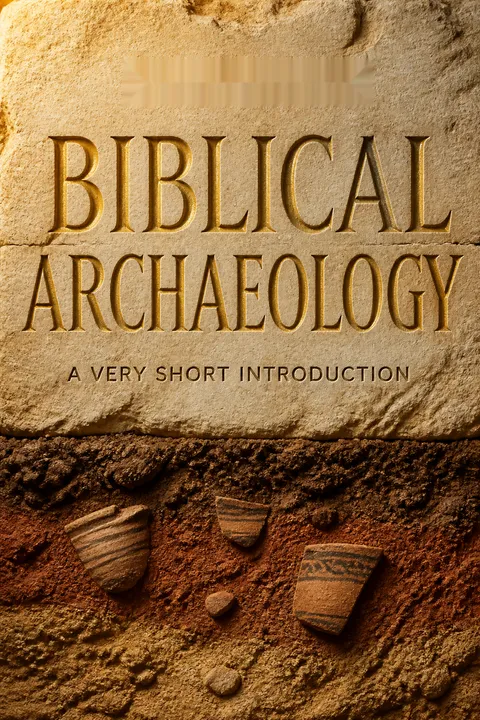
Biblical Archaeology: A Very Short Introduction receives mostly positive reviews, with readers praising its accessibility and balanced approach. The book is divided into two parts: the history of biblical archaeology and major archaeological discoveries related to biblical periods. Reviewers appreciate Cline's fair treatment of evidence, discussion of forgeries, and readable style. Some find the first half covering the field's history dry, while others value it. Common consensus: an excellent starting point for those interested in biblical archaeology, though published in 2009 so missing recent discoveries.
People Also Read




About the Author
Other books by Eric H. Cline

Download PDF
Download EPUB
.epub digital book format is ideal for reading ebooks on phones, tablets, and e-readers.








































