
Plot Summary
Haunted by Lost Love
Peter Pan, now a man, is haunted by dreams of Wendy, his first and only love, whose absence has left a permanent scar. The pain of her departure, and the betrayal he feels at her choosing the mortal world over him, festers within. He clings to her thimble, the last token of their connection, and finds himself unable to move on, his desires and anger mingling in a toxic longing. Neverland itself seems to echo his mood, the island's weather and magic reflecting his inner turmoil. Peter's obsession with Wendy is not just nostalgia—it's a wound that refuses to heal, shaping his every decision and relationship.
Across the Veil Again
Unable to resist the pull of his memories, Peter decides to cross the Veil back to the mortal world. He rationalizes his journey as a fulfillment of an old promise: to bring Wendy, or now her daughters, back to Neverland for spring cleaning. The Neverland Council's increasing restrictions and the sense of being watched only fuel his rebellious determination. Peter's longing is not just for Wendy, but for the sense of purpose and belonging she once gave him. He prepares to defy the rules, convinced that bringing a daughter of Wendy back will fill the void left in his heart.
Gathering the Lost Boys
Peter seeks out his closest allies—Tripp, Ryder, and Eben—each with their own complicated loyalties and histories. Tripp, ever reliable, agrees to support Peter's plan, though he warns against letting old wounds dictate new actions. Ryder, charming and impulsive, is easily swayed by the promise of adventure and novelty. Eben, the most defiant and independent, voices strong objections, fearing the chaos that human girls bring to Neverland. Despite their misgivings, the Lost Boys agree to help, bound by loyalty and the thrill of breaking the rules. Their camaraderie is laced with tension, as each senses the risks ahead.
Council Defiance
The Lost Boys convene in secret, aware that the Neverland Council would never approve Peter's plan. The council's surveillance and the presence of faerie sentries make their mission perilous. Peter's leadership is tested as he must balance honesty, manipulation, and outright deception to keep his friends on board and the council in the dark. The group's unity is fragile, threatened by old resentments and the ever-present danger of discovery. Peter's defiance is both a personal rebellion and a challenge to the very order of Neverland, setting the stage for conflict with powerful forces.
Daughter of Wendy Chosen
Peter's nightly visits to the Darling home lead him to Gwen, Wendy's descendant. He is captivated by her beauty, spirit, and the echoes of Wendy he sees in her. Gwen, burdened by loss and responsibility, is unaware of the magical world watching her. Peter's obsession shifts from memory to present, as he becomes determined to bring Gwen to Neverland, regardless of her wishes. His fixation is both romantic and possessive, blurring the line between love and selfishness. The choice is made: Gwen will be the new daughter of Wendy to cross the Veil.
Tiger Lily's Bargain
Tiger Lily, Princess of the Fae, confronts Peter about his secretive actions. She reveals her knowledge of his plans and offers a bargain: in exchange for her silence, Peter must retrieve a powerful magical artifact—a skull—from the deadly bone faerie in the Viridianwood. Tiger Lily's motives are layered: political power, personal desire, and a complex relationship with Peter. Their negotiation is fraught with seduction, manipulation, and mutual distrust. Peter is forced to accept, knowing refusal would mean the end of his quest and possibly the destruction of the Darling line.
Into the Viridianwood
Peter and the Lost Boys venture into the heart of the Viridianwood, a place of ancient magic and lurking danger. The forest is alive, disorienting them and turning them in circles. They encounter the remains of pirates, victims of the bone faerie's wrath, and the psychological toll mounts. The journey tests their courage, loyalty, and resolve, as the line between hunter and hunted blurs. The forest becomes a crucible, exposing each boy's fears and the limits of their trust in Peter's leadership.
The Bone Faerie's Price
The bone faerie, a terrifying and ancient being, confronts Peter and his companions. She demands a price for the artifact: a life for knowledge. The encounter is a battle of wits and wills, with the faerie's riddles and threats pushing Peter to the brink. Ryder is nearly sacrificed, and the group is forced to make a desperate, violent stand. The faerie's power is overwhelming, and the cost of their quest becomes painfully clear. The boys' survival depends on quick thinking, sacrifice, and the intervention of their faerie ally, Lilleybell.
Sacrifice and Survival
In the aftermath of the confrontation, Ryder is gravely wounded, and the group must rely on faerie magic to save him. The bone faerie is rendered dormant, but not destroyed, her threat lingering over Neverland. The boys are shaken, their bonds tested by trauma and guilt. Peter retrieves the skull, but the victory is hollow, tainted by the near loss of a friend and the realization that their actions have unleashed new dangers. The price of magic and ambition is etched into each of them, deepening the story's emotional stakes.
The Skull's Secret
Peter delivers the skull to Tiger Lily, who reveals its significance: a weapon of old magic, capable of shifting the balance of power in Neverland. The exchange is tense, with Peter resenting the manipulation and Tiger Lily asserting her dominance. The artifact's true nature remains shrouded in mystery, its potential for both protection and destruction hinted at but not fully explained. The bargain is fulfilled, but trust is shattered. Peter's quest for Gwen is now entangled with larger political and magical forces, and the consequences of his actions ripple outward.
Bargains and Betrayals
The aftermath of the quest leaves Peter and his allies wary and divided. Tiger Lily's ambitions, the council's suspicions, and the unresolved tensions among the Lost Boys create a web of shifting alliances and potential betrayals. Peter's single-minded pursuit of Gwen is now complicated by debts owed, secrets kept, and the knowledge that every action has a price. The fragile balance of Neverland is threatened, and Peter's leadership is more precarious than ever. The stage is set for further conflict, as old wounds and new ambitions collide.
Obsession's Consequences
Peter's obsession with Wendy—and now Gwen—drives him to increasingly reckless actions. His inability to let go of the past blinds him to the dangers he brings upon himself and those around him. The emotional cost is high: friendships strained, loyalties tested, and the very fabric of Neverland at risk. The story explores the destructive power of longing and the fine line between love and possession. Peter's journey is as much about confronting his own flaws as it is about external adventure.
Gwen's Awakening
Gwen, reeling from personal tragedy and the weight of caring for her ailing sister, is drawn into Peter's world. Her abduction is both a rescue and a violation, offering escape from her burdens but at the cost of her agency. In Neverland, Gwen is confronted with wonders and dangers, her senses overwhelmed by the island's magic and the attentions of Peter and the Lost Boys. She is both enchanted and unsettled, her identity and desires thrown into question. The journey is transformative, forcing Gwen to confront who she is and what she truly wants.
The Pull of Neverland
As Gwen immerses herself in Neverland, the island's magic begins to erode her memories of home and her sister. The pleasures and freedoms of Neverland are seductive, but they come at a cost: the gradual loss of self and the risk of forgetting what matters most. Peter and the Lost Boys vie for her attention, each relationship offering different forms of intimacy and danger. Neverland itself is a character, shaping and testing Gwen's resolve. The tension between escape and responsibility becomes the heart of her struggle.
Fading Memories
Gwen's memories of her sister and her old life begin to slip away, replaced by the immediacy of Neverland's enchantments. The process is subtle but relentless, and Gwen must fight to hold onto her sense of self. The locket she carries becomes her only anchor, a fragile link to the world she left behind. The story explores the pain of loss, the allure of forgetting, and the courage required to remember. Gwen's internal battle mirrors Peter's own struggle with memory and longing.
The Locket's Tether
The locket, a treasured family heirloom, emerges as a symbol of Gwen's connection to her past and her sister. Its magic resists Neverland's pull, offering Gwen a chance to reclaim her memories and agency. The locket's significance is both personal and mystical, representing the power of love, memory, and choice. Gwen's fight to hold onto the locket—and what it represents—becomes a central conflict, pitting her will against the seductive forces of Neverland and Peter's desires.
Truths and Temptations
As Gwen uncovers the secrets and lies at the heart of Neverland, she must decide whom to trust and what to believe. Peter's motives, Tiger Lily's ambitions, and the true nature of the island are all called into question. Gwen's journey becomes one of self-discovery, as she navigates temptation, betrayal, and the possibility of love. The story's emotional climax centers on the choice between surrendering to Neverland's illusions or fighting for her own truth.
The Story Continues
The novella ends with the promise of more: Gwen's fate, Peter's obsession, and the shifting balance of Neverland remain unresolved. The story is both a conclusion and a beginning, inviting readers to follow the characters as they confront the consequences of their choices and the mysteries that still lie beyond the Veil.
Analysis
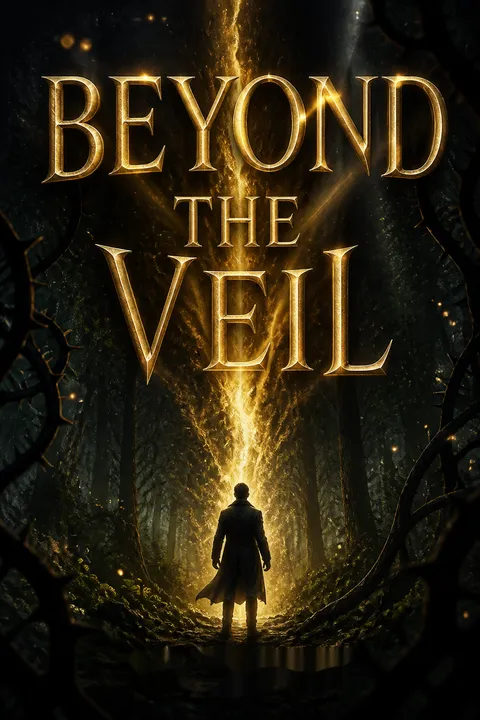
"Beyond the Veil" reimagines the Peter Pan mythos as a dark, sensual, and psychologically rich tale of obsession, loss, and the perilous allure of escape. At its core, the novella interrogates the cost of refusing to grow up—how nostalgia and longing can curdle into destructive obsession, and how the pursuit of fantasy can erode identity and responsibility. Peter's journey is a cautionary tale: his inability to let go of Wendy leads him to repeat old mistakes, endangering himself and those he loves. Gwen's arc, meanwhile, explores the seductive dangers of escapism and the courage required to hold onto one's truth amid overwhelming temptation. The story's use of magical artifacts, bargains, and memory loss serves as both plot engine and thematic exploration, asking what we are willing to sacrifice for love, power, or freedom. Ultimately, "Beyond the Veil" is a meditation on the necessity of choice, the pain of loss, and the possibility of redemption—reminding us that every fantasy has its price, and that true growth comes from facing, not fleeing, the realities of our lives.
Review Summary
Beyond the Veil is a novella that serves as a prequel to The Neverland Chronicles series. Readers generally found it to be a quick, engaging read that set up an intriguing Peter Pan retelling. Many praised the spicy scenes and character introductions, while others felt uncomfortable with the sexualization of Peter Pan. Some reviewers noted editing issues and a desire for more depth. Overall, the novella left most readers curious about the full series, though opinions varied on its execution and appropriateness.
Characters
Peter Pan
Peter Pan is no longer the eternal boy; he is a man shaped by loss, longing, and the burdens of leadership. His love for Wendy has curdled into obsession, driving him to reckless defiance of Neverland's rules. Peter is both hero and antihero—charming, magnetic, but deeply flawed. His relationships with the Lost Boys are marked by loyalty and manipulation, while his fixation on Wendy's descendants blurs the line between love and possession. Psychologically, Peter is trapped by his inability to let go, his need for control, and his fear of irrelevance. His development is a tragic arc: from hopeful lover to haunted leader, always chasing what he cannot have.
Gwen Darling
Gwen is Wendy's descendant, thrust into the role of caretaker after her parents' death. Her life is defined by responsibility and loss, leaving her yearning for escape and meaning. Gwen's journey to Neverland is both a fantasy and a crucible, forcing her to confront her desires, fears, and the risk of losing herself. She is intelligent, compassionate, and fiercely loyal to her sister, but also susceptible to the seductions of magic and love. Gwen's psychological arc is one of awakening: from passive victim to active agent, fighting to define her own destiny amid forces that seek to claim her.
Tripp
Tripp is Peter's second-in-command, a Lost Boy whose loyalty is born of gratitude and shared hardship. He is the group's moral compass, often serving as a stabilizing force amid chaos. Tripp's reliability masks a deep sense of debt and a fear of abandonment. He is protective of Peter but not afraid to challenge him, especially when old wounds threaten new dangers. Tripp's development is subtle: he grows from follower to quiet leader, his strength revealed in moments of crisis.
Ryder
Ryder is the most charismatic of the Lost Boys, using humor and bravado to mask his insecurities. He is a lover of pleasure and novelty, often acting before thinking. Ryder's near-death experience in the Viridianwood exposes his vulnerability and the depth of his loyalty to the group. His brush with mortality forces him to confront the emptiness beneath his charm, hinting at a potential for growth and self-awareness.
Eben
Eben is the most rebellious of the Lost Boys, challenging Peter's authority and questioning every decision. His skepticism is rooted in a desire for autonomy and a fear of being manipulated. Eben's relationship with Peter is fraught with tension, as he sees in Peter both a kindred spirit and a cautionary tale. Eben's development is marked by his willingness to risk everything for the group, even as he resists being controlled.
Tiger Lily
Tiger Lily is the Princess of the Fae, a powerful leader whose motives are as complex as her relationship with Peter. She is both ally and adversary, using seduction, manipulation, and political savvy to achieve her goals. Tiger Lily's desire for power is matched by a genuine, if conflicted, affection for Peter. Psychologically, she is driven by ambition, pride, and a need to assert her dominance in a world that often underestimates her. Her development is a dance of alliance and betrayal, always keeping her true intentions hidden.
Lilleybell (Lill)
Lill is Peter's faerie companion, fiercely protective and prone to jealousy. Her emotions are intense and singular, making her both a valuable ally and a potential liability. Lill's loyalty to Peter is unwavering, but her need for validation and fear of abandonment drive her to rash actions. She is both comic relief and emotional anchor, her magic and insight often saving the group from disaster.
The Bone Faerie
The bone faerie is a creature of old magic, feared by all who know of her. She is both oracle and predator, demanding a price for knowledge and power. Her motivations are inscrutable, her actions governed by a logic beyond mortal understanding. Psychologically, she represents the dangers of unchecked ambition and the cost of seeking forbidden knowledge. Her presence is a reminder that some powers are best left undisturbed.
The Neverland Council
The Council is the governing body of Neverland, enforcing rules and maintaining order. Its members are wary of Peter's defiance and the dangers posed by human interference. The Council's actions are driven by fear of change and a desire to preserve the status quo. Psychologically, the Council embodies the tension between tradition and rebellion, serving as both antagonist and necessary check on Peter's ambitions.
Gwen's Sister
Gwen's ailing sister is the anchor that ties Gwen to the mortal world. Her illness and dependence on Gwen represent the burdens of love and responsibility. Psychologically, she is both motivation and obstacle, embodying the pain of loss and the fear of forgetting. Her presence haunts Gwen's journey, a reminder of what is at stake.
Plot Devices
The Veil
The Veil is the magical boundary separating Neverland from the mortal world. Crossing it is both a literal and symbolic act, representing the choice between fantasy and reality, escape and responsibility. The Veil's permeability is central to the plot, enabling Peter's quest and Gwen's abduction. It also serves as a metaphor for the boundaries between childhood and adulthood, memory and forgetting.
Magical Artifacts
The thimble, the locket, and the bone faerie's skull are all imbued with magic and meaning. These artifacts drive the plot, serving as tokens of love, anchors of memory, and weapons of power. Their significance is both personal and political, shaping the characters' choices and the fate of Neverland. The artifacts symbolize the enduring power of the past and the dangers of seeking control over magic.
Memory and Forgetting
The gradual fading of memories—Wendy's in Peter, Gwen's of her sister—is a central device, heightening the stakes and emotional tension. Neverland's magic erases the past, offering freedom but threatening identity. The struggle to remember becomes a battle for selfhood, with the locket and thimble serving as fragile defenses. This device explores the cost of escape and the courage required to hold onto what matters.
Bargains and Sacrifice
The story is driven by bargains—Peter's with Tiger Lily, the bone faerie's demands, Gwen's choices. Each bargain requires sacrifice, often with unforeseen consequences. This device underscores the theme that every desire has a price, and that true freedom comes only through accepting responsibility for one's actions.
Shifting Alliances
The relationships among Peter, the Lost Boys, Tiger Lily, and the Council are marked by shifting alliances and betrayals. Trust is fragile, and every character must navigate a web of competing interests. This device keeps the narrative dynamic, ensuring that no victory is final and no relationship is secure.
The Neverland Chronicles Series

About the Author
Download PDF
Download EPUB
.epub digital book format is ideal for reading ebooks on phones, tablets, and e-readers.








































