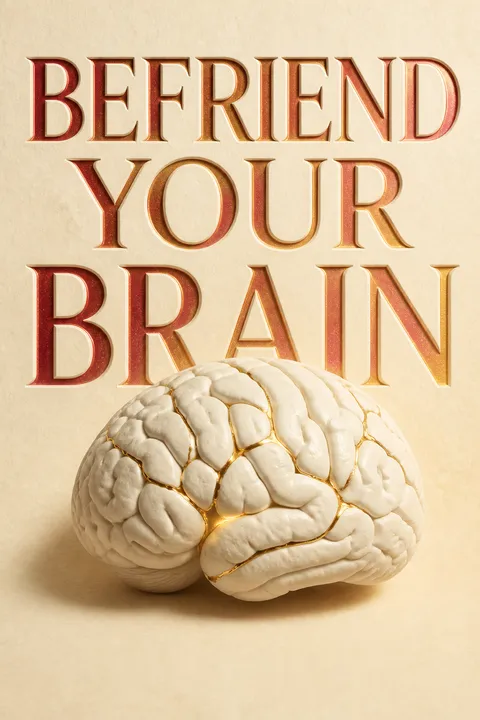

Key Takeaways
1. Your Brain is Wired for Survival, Not Happiness
We’re wired for self-protection and survival, and that’s exactly what your brain is doing when it’s acting like it forgot how to work right.
Brain's primary job. Your brain's fundamental purpose is to keep you alive, not necessarily to make you happy or calm. This survival instinct often overrides rational thought, leading to what feels like "messed up" responses in everyday situations. Understanding this core function helps demystify why you might feel overwhelmed or out of control.
Key brain players. The prefrontal cortex (PFC) handles thinking and problem-solving, but it's still developing into your mid-twenties. The limbic system, particularly the amygdala, is your "feel-y brain," linking memories to emotions, especially danger. The brainstem is your primal survival tool, triggering the fight, flight, or freeze response, flooding your system with neurochemicals that hijack the PFC.
Storytelling default. Your brain's default mode is storytelling, constantly creating narratives to make sense of the world and ensure safety. This can lead to believing false or exaggerated stories about threats, even when none exist. This hardwired tendency explains why you might rationalize irrational fears or cling to unhelpful coping mechanisms.
2. Trauma Rewires Your Brain's Default Settings
Basically, trauma is anything that overwhelms our ability to cope.
Trauma's lasting impact. Trauma is an event that shatters your understanding of how the world works, overwhelming your coping mechanisms. It's not just "big" events; anything that deeply hurts or breaks you can be traumatic. Crucially, trauma can even create genetic changes that are passed down through generations, influencing how you react to stress.
Disrupted healing. While most people recover from trauma within about three months, approximately one-third develop a trauma response or PTSD. This happens when the brain's ability to process the experience is disrupted, especially during the critical first thirty days post-trauma. Continuous exposure to stress or lack of support prevents the brain from re-establishing a "new normal."
Symptoms of trauma. A trauma response manifests in several ways, often disguising itself as other mental health issues. These include:
- Arousal: Feeling constantly freaked out, even without a clear threat.
- Avoidance: Steering clear of anything that might trigger distress.
- Intrusion: Unwanted thoughts, images, or memories of the trauma.
- Negative Thoughts and Feelings: Persistent guilt, shame, hopelessness, or detachment.
Recognizing these patterns is the first step toward understanding your brain's protective, albeit unhelpful, strategies.
3. You Can Retrain Your Brain to Befriend Itself
Healing trauma means working through what happened to us, rather than trying to overpower it.
Emotions are fleeting. Emotions are designed to be short-lived signals, lasting only about ninety seconds. They become prolonged when we fuel them with repetitive thoughts (rumination) or by constantly trying to avoid them. Both rumination and avoidance deepen the neural grooves of unhelpful emotional responses, keeping you stuck.
Negotiating with your brain. Your PFC (thinking brain) cannot directly control your instinctual amygdala or brainstem responses; it must negotiate. When you feel threatened, your animal brain takes over, prioritizing survival. Healing isn't about willpower, but about teaching your PFC to pause the "danger song" and distinguish between real and perceived threats.
Neuroplasticity in action. Your brain is adaptable, meaning you can absolutely retrain it. Just as you learned to differentiate a movie train from a real one, you can teach your brain to respond differently to triggers. This process takes time and consistent effort, but it's entirely possible to shift from a hijacked state to one where you feel more in control and safe.
4. Heal Through a Three-Part Framework
It really is going to be okay in the end. If it’s not okay yet, that means we aren’t at the end.
Structured healing journey. Healing from trauma, or any deeply ingrained unhelpful response, benefits from a clear framework. This isn't a linear process, but a guide to focus your efforts where they're most needed at any given moment. It acknowledges that progress isn't always forward, and setbacks are part of growth.
The three stages:
- Safety and Stabilization: The initial, crucial step where you learn to regain control over your body and mind when triggered. It's about establishing a sense of safety in the present moment.
- Remembrance and Mourning: This involves processing your trauma narrative—not just the facts, but the bundled thoughts and feelings. It's about owning your story without letting it own you.
- Reconnection: The final stage, where you integrate your experience, find meaning, and rebuild positive relationships with yourself and the world. It's about taking your life back on your own terms.
Empowerment through understanding. Knowing this framework helps you understand where you are in your healing journey and what steps are most effective next. It reduces frustration and shame, reminding you that you are a survivor, not broken, and deserve to feel better.
5. Grounding and Self-Compassion are Your Immediate Tools
Grounding is one of the best ways of saying, “Hey, amygdala? Slow your roll.”
Immediate relief. When your brain is hijacked by a trauma response, grounding techniques are your go-to for bringing yourself back to the present moment. They engage your PFC, disrupting the amygdala's panic signals and reminding you that you are safe now. Practice these skills when calm to make them accessible during distress.
Types of grounding:
- Mental Grounding: Focus on your surroundings or internal lists (e.g., naming colors, repeating a safe phrase, listing favorite movies).
- Physical Grounding: Engage your senses and body (e.g., mindful breathing, walking, touching objects, squeezing ice, eating slowly).
- Soothing Grounding: Self-care and self-compassion (e.g., visualizing a safe place, planning a treat, carrying comforting objects, giving yourself kindness).
Self-compassion's power. Self-compassion is treating yourself with the same kindness and understanding you'd offer a best friend. It's about honoring your imperfections as a human, not letting yourself off the hook, but recognizing your worth. This internal kindness is a powerful counter to shame and fuels your drive to be better.
6. Process Your Story to Reframe Your Reality
Telling your story in a coherent way can often help you to figure out the parts of the story that don’t make sense or to see other perspectives.
Unpacking your narrative. Once you've developed solid coping skills, you can begin the "Remembrance and Mourning" stage. This involves creating a trauma narrative—not just a factual account, but a deep exploration of your memories, thoughts, and emotions tied to the event. This process helps release trapped emotions and integrate the experience.
Methods for processing:
- Writing or Journaling: Pen to paper can reveal insights you didn't realize were there. Write letters you'll never send, or a letter to your future self, detailing your journey.
- Telling Your Story: Share your narrative with a trusted, non-judgmental therapist or loved one. This is about expressing your truth, not seeking validation or comparison.
- Reframing Your Story: Challenge the narratives your brain has created. Identify missing aspects, acknowledge your survival, recognize helpers, and forgive yourself for past decisions made under duress.
Rewiring through narrative. Your brain is constantly changing, and reshaping your story can literally reshape your DNA. By consciously challenging old narratives and creating new ones that emphasize resilience and growth, you actively participate in rewiring your brain for healing.
7. Reconnection Means Reclaiming Your Life on Your Terms
It means knowing that no matter what else happens . . . you have YOU in your corner.
Re-engaging with life. Reconnection is about integrating your trauma into your life story without letting it define or control you. It's about finding meaning in your experiences, not as a justification for suffering, but as a catalyst for growth, empathy, and advocacy. This stage is undertaken when you are ready, not when others push you.
Finding meaning and forgiveness. Learn from your past to inform your future, carrying forward lessons of survival and healing while letting go of what no longer serves you. Forgiveness, especially self-forgiveness, is crucial. It's not about condoning harm, but about releasing the emotional attachment to those who hurt you, freeing yourself to set healthier boundaries.
Building safe relationships. Trauma often distorts our ability to form healthy relationships. Reconnection involves consciously building relationships with safe boundaries. Ask yourself:
- Do these people challenge me to be my best self?
- Am I communicating my boundaries effectively?
- What are my non-negotiable boundaries?
This process may mean letting go of relationships that don't support your healing, but it opens the door to genuine connection.
8. Professional Help Offers Diverse Paths to Healing
Medication as a tool. Medication as something potentially life-saving. Not medication as a singular cure-all.
Tailored treatment. Healing is highly individual, and professional help offers a spectrum of options. A good treatment plan is holistic, addressing the whole person, and may combine traditional and complementary approaches. Advocating for yourself and understanding your choices is paramount.
Traditional and medical support:
- Talk Therapy: Licensed therapists provide insight, coaching, and a safe space to process. Seek specialists in trauma, depression, or anxiety, and don't hesitate to switch if it's not a good fit.
- Allopathic Meds: Prescription medications can be life-saving "pumps" to alleviate severe symptoms, allowing you to engage in deeper healing work. They help re-establish brain chemistry but are rarely a standalone cure.
- Naturopathic Meds: Whole food and herbal supplements can support the body's natural healing. Always consult a healthcare provider, as even natural supplements can interact with other medications.
Complementary therapies. These support the body's innate healing capacity:
- Acupressure/Acupuncture: Stimulates points to reduce pain and promote healing, aligning with vagus nerve mapping.
- Biofeedback/Neurofeedback: Teaches control over automatic bodily and brain responses, like playing a video game with your brain.
- Nutrition Changes: Reducing ultra-processed foods and addressing food sensitivities can significantly impact mental health, as the gut-brain axis is crucial.
9. Anxiety and Depression are Stress Responses, Not Flaws
Depression is the body’s way of saying, “Nothing I do is going to help anyway, it all sucks no matter what.”
Anxiety: The body's alarm. Anxiety is a total body chaos, an over-response to stress hormones like norepinephrine and cortisol, demanding your attention. It's your body actively fighting back against a perceived threat, even if that threat isn't real or immediate. Symptoms range from excessive worry and irritability to physical manifestations like a racing heart or stomach pain.
Depression: Learned helplessness. In contrast, depression is a biochemical learned helplessness response to stress, a shutdown of joy and engagement. It's your brain pulling into a "turtle shell" to avoid further danger, leading to low energy, chronic pain, difficulty concentrating, and feelings of worthlessness. It's not mere sadness; it's a profound thief of life's pleasures.
Biochemical roots. Both anxiety and depression are deeply rooted in brain chemistry and stress responses. They are not signs of weakness or personal failing. Epigenetics shows that while genetic predispositions exist, environmental triggers, especially unresolved trauma, can "turn on" these conditions. Understanding this helps reduce shame and empowers you to seek appropriate healing.
10. Anger is a Secondary Emotion Signaling Unmet Needs
Anger is an emotion designed to protect us from harm by pushing us into action.
Anger's protective role. Anger is a primal emotion, neither good nor bad, serving as information to protect you from harm and propel you into action. It triggers the fight, flight, or freeze response, preparing you for battle. However, culturally, we often misinterpret anger, viewing it as a positive force or an uncontrollable outburst, which can lead to destructive behaviors.
The AHEN model. Anger is rarely a primary emotion; it's a secondary response to deeper feelings or unmet needs. The AHEN model helps break it down:
- Hurt: Feeling insecure, unsafe, unvalued, or simply sad.
- Expectations Not Met: When reality deviates from what your brain anticipated, whether realistic or not.
- Needs Not Met: Fundamental needs for safety, security, and supportive relationships are unfulfilled.
Managing anger. Understanding the roots of your anger is 90% of the battle. When you feel anger, ask yourself what underlying hurt, unmet expectation, or unmet need is truly driving it. This allows you to respond thoughtfully rather than react impulsively, preserving your well-being and relationships.
11. Addiction is a Coping Skill Gone Wonky, Not a Moral Failing
When this thing we are doing (whether an addiction or out-of-control behavior) becomes our primary relationship.
Coping gone awry. Addiction, whether to substances or behaviors, is a coping mechanism that has spiraled out of control, becoming your primary relationship. It often stems from a deep hunger or unresolved pain, particularly from trauma, where individuals seek to soothe themselves or forget what they truly need. It's a sign of sensitivity, not a lack of willpower.
Treatment approaches. Two main paths exist for healing:
- Abstinence-Based: Complete cessation of the addictive behavior, often supported by programs like AA or SMART Recovery. These focus on a "Higher Power" or self-efficacy.
- Harm-Reduction: A negotiation to reduce the harm caused by the addiction, especially when complete abstinence isn't feasible or desired (e.g., food, technology). This approach often integrates trauma work while gradually reducing the problematic behavior.
Reclaiming your life. Healing involves consciously shifting from the addiction as a primary relationship to building healthier connections with yourself and others. This means:
- Accountability: Owning your choices without blame.
- Adding new behaviors: Focusing on what you can say "yes" to, rather than just saying "no."
- Identifying triggers: Understanding what leads to the behavior (e.g., HALT: Hungry, Angry, Lonely, Tired).
- Self-forgiveness: Acknowledging imperfections and learning from setbacks.
12. Honor Your Grief to Prevent Traumatic Responses
Grief is a realization of the certainty of abandonment. It is our worst fear made reality.
Grief is profound loss. Grief isn't just about death; it's the deep sorrow experienced from any significant loss or abandonment—a job, a relationship, a way of life. It's a literal burden that, if unaddressed, can lead to "traumatic grief" and trigger mental illnesses like depression and anxiety.
Complicated forms of grief:
- Complex: Multiple losses tied together.
- Anticipatory: Grieving before a loss occurs.
- Disenfranchised: Grief not recognized or validated by others (e.g., loss of an abusive parent).
- Delayed: Pushing grief aside until it resurfaces later.
- Displaced: Reacting strongly to a minor event as a proxy for deeper, unacknowledged grief.
Support and ceremony. Platitudes are unhelpful; genuine presence and compassionate listening are key. Allow yourself and others to feel the full spectrum of grief without judgment. Creating personal ceremonies—like writing a letter, listening to a meaningful song, or building a small altar—provides a sacred space to acknowledge and process loss, transforming it from a burden into a testament of love and resilience.
Review Summary
Readers generally found Befriend Your Brain informative and helpful, praising its simple explanations of mental health concepts. Many appreciated the relatable tone, though some felt the author tried too hard to sound "cool" with excessive language. The book was noted as more suitable for teens or young adults, focusing on trauma response and anxiety. While some found it invaluable for understanding their own struggles, others felt it was geared too much towards adolescents. Overall, reviewers appreciated the practical tools and insights provided for managing mental health.
People Also Read





About the Author
Other books by Faith G. Harper





Download PDF
Download EPUB
.epub digital book format is ideal for reading ebooks on phones, tablets, and e-readers.








































