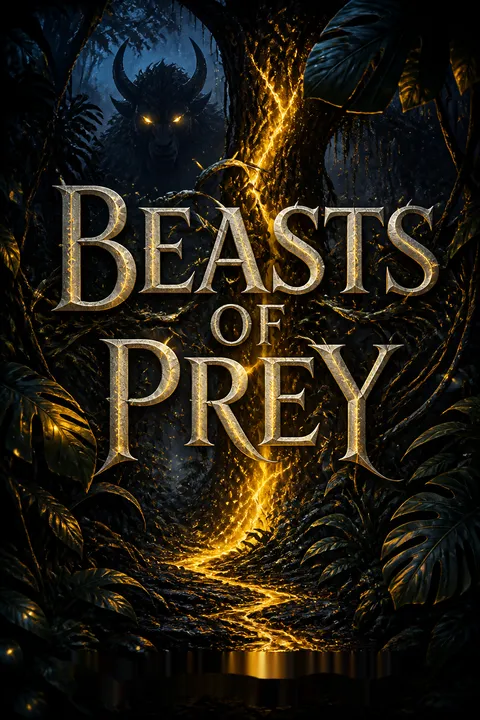

Plot Summary
Night Zoo Shadows
In the city of Lkossa, Koffi toils as a beastkeeper in the infamous Night Zoo, bound by the chains of her family's debt. Her life is a cycle of danger and drudgery, surrounded by exotic, magical creatures and the ever-present threat of her cruel master, Baaz. The Night Zoo is a microcosm of Lkossa's inequalities, where the Gede people like Koffi are exploited and expendable. When a tragic accident and a moment of lost control unleash a hidden power within Koffi, the zoo erupts in chaos and flames. In the aftermath, Koffi's hope for freedom is shattered, and she is forced to make a desperate bargain that will change her fate forever.
The Splendor's Call
Koffi's accidental display of power is not an isolated incident. The "splendor"—a mystical energy that once flowed freely in Lkossa—calls to her, awakening abilities she never understood. Meanwhile, Ekon, a young Yaba man training to become a Son of the Six, Lkossa's elite warriors, is haunted by his own past and the city's legacy of violence. Both are drawn to the Greater Jungle, a place of myth and terror, where the monstrous Shetani has stalked the borderlands for generations. The splendor's call is both a promise and a warning, binding Koffi and Ekon's destinies together.
Blood and Bonds
Koffi's life is shaped by the sacrifices of her mother and the memory of her father, whose debts have become her own. The Night Zoo's cruelty is matched only by the city's indifference to the suffering of the Gede. Ekon, too, is shaped by family: the shadow of his heroic father's death, the expectations of his brother Kamau, and the rigid traditions of the Yaba. Both protagonists are driven by a longing for belonging and a fear of disappointing those they love. Their choices are haunted by the bonds of blood and the wounds of loss.
The Monster's Mark
The Shetani, a legendary beast blamed for countless deaths, is both a symbol of Lkossa's fears and a real, stalking presence. Koffi and Ekon's lives intersect when the Night Zoo burns and the Shetani is sighted at the city's edge. Each is marked by the monster: Koffi by her connection to the splendor, Ekon by the trauma of his father's death at the Shetani's claws. The monster is not just a beast, but a mirror for the city's violence, secrets, and the darkness within its people.
Rites and Rivalries
Ekon faces the final rite of passage to become a Son of the Six, a test of faith and fortitude that forces him to confront his deepest fears and the legacy of his family. Rivalries with fellow candidates, the pressure of tradition, and the weight of his father's memory threaten to break him. Meanwhile, Koffi's own trials are more immediate: survival, escape, and the hope of freeing her mother and friend Jabir. Both are tested by the expectations of their people and the harsh realities of Lkossa.
Chains and Choices
In the aftermath of the Night Zoo's destruction, Koffi is forced into a new, impossible bargain: capture the Shetani in exchange for her freedom and the lives of those she loves. Ekon, disgraced and cast out after a moment of mercy, is driven by a need to reclaim his honor and avenge his father. Their paths converge as they enter the Greater Jungle, each with their own secrets and motives. The chains of debt, duty, and expectation bind them, but their choices will determine whether they remain captives or become something more.
The Jungle's Teeth
The Greater Jungle is a place of living myth, where the rules of the city no longer apply. Koffi and Ekon face dangers both magical and mundane: monstrous beasts, cunning spirits, and the jungle's own sentient will. They are tested by illusions, poisons, and the haunting of their own memories. Along the way, they encounter allies and enemies—yumboes, eloko, and the enigmatic goddess Badwa—each with their own lessons and warnings. The jungle strips them bare, forcing them to confront who they truly are.
Beasts and Betrayals
As Koffi and Ekon grow closer, their partnership is tested by secrets and betrayals. Ekon's loyalty to his brother and the Sons of the Six clashes with his growing feelings for Koffi and his dawning realization of the truth behind the Shetani. Koffi, learning to wield the splendor under Badwa's tutelage, must decide how much of herself to risk for others. The jungle's trials reveal the beast within each of them, and the line between hunter and hunted blurs.
The Goddess's Lesson
In a hidden enclave, the goddess Badwa reveals the true history of the splendor, the darajas (magic-wielders), and the Shetani. The monster is not what it seems: Adiah, a once-powerful daraja, was transformed by the splendor and scapegoated for the city's violence. The real architect of Lkossa's suffering is Fedu, the god of death, manipulating events through the corrupt Kuhani and the Sons of the Six. The lesson is clear: power can heal or destroy, and the stories told by the victors are not always true.
Truths in the Dark
Armed with new knowledge, Koffi and Ekon race to save Adiah and expose the true evil threatening Lkossa. But betrayal strikes from within: Ekon's brother Kamau, under the influence of Fedu and the Kuhani, leads the warriors to capture Adiah and Koffi. Ekon's own complicity and indecision come to a head, and Koffi is imprisoned, facing punishment and despair. The truth is a double-edged sword, and the cost of freedom is higher than either imagined.
The Price of Power
As the city prepares to execute Adiah and punish Koffi, Ekon uncovers the full extent of the Kuhani's corruption and Fedu's manipulation. The Sons of the Six, drugged and controlled, have been the true monsters all along. Ekon must confront his own guilt, the legacy of his family, and the meaning of true strength—not in violence, but in compassion and sacrifice. Koffi, learning the final lesson of the splendor, must choose between her own life and the hope of saving others.
The Final Barter
In a final confrontation, Koffi offers herself to Fedu in exchange for Adiah and Ekon's lives, taking the full burden of the splendor into herself. Her act of self-sacrifice is both a rejection of the city's old bargains and a new kind of barter: heart and mind, power and love, given freely. Ekon, broken but not defeated, must find the courage to face his own darkness and fight for Koffi's return. The chains that bound them—debt, duty, fear—are broken not by violence, but by the willingness to choose for oneself.
The New Dawn
In the aftermath, Lkossa is forever altered. The truth of the Shetani and the corruption of the Sons of the Six are revealed, but the scars of violence and betrayal remain. Koffi's fate is uncertain, her sacrifice both a loss and a hope. Ekon, no longer a Son of the Six, must forge a new path, guided by the lessons of the jungle and the power of forgiveness. The splendor returns to the earth, and the city faces a new dawn—one where magic, truth, and the bonds of chosen family may finally heal what was broken.
Analysis
Beasts of Prey is a powerful reimagining of the hero's journey, set in a world where magic is both a source of wonder and a legacy of trauma. Ayana Gray's novel interrogates the stories societies tell about monsters, scapegoats, and heroes, revealing that the true dangers often lie within systems of power and the wounds of the past. Through the intertwined journeys of Koffi and Ekon, the book explores the cost of survival, the meaning of family (both blood and chosen), and the possibility of healing in a broken world. The splendor, as both magic and metaphor, embodies the novel's central lesson: that power must flow, that pain must be faced, and that true strength lies in the willingness to choose compassion over fear. In a modern context, Beasts of Prey resonates as a story about reclaiming agency, challenging inherited narratives, and forging new bonds across lines of difference. Its lessons are urgent: that monsters are made, not born; that healing is possible, but never easy; and that the future belongs to those brave enough to barter for it with both heart and mind.
Review Summary
Beasts of Prey receives mostly positive reviews (3.94/5 stars), praised for its Pan-African mythology, immersive jungle setting, and engaging worldbuilding. Readers appreciated the dual protagonists Koffi and Ekon, with their distinct motivations and character development. Many loved the adventure aspects and plot twists, though some found them predictable. The OCD representation was noted positively. Common criticisms included fast pacing, younger YA feel, minimal romance, and repetitive perspective shifts. The cliffhanger ending left readers eagerly anticipating the sequel. Some felt characters made questionable decisions, and a few found it too typical of YA fantasy tropes.
People Also Read

Characters
Koffi
Koffi is a Gede girl born into debt and servitude, her life defined by the Night Zoo's cages and the sacrifices of her mother. Fiercely loyal and resourceful, she is haunted by loss and the fear of being "too much" for those around her. The accidental awakening of her magical abilities—the splendor—forces her to confront her own power and the city's prejudices. Koffi's journey is one of self-discovery, as she learns to balance heart and mind, vulnerability and strength. Her relationships—with her mother, Jabir, and Ekon—reveal her capacity for love and sacrifice. Ultimately, Koffi's willingness to barter herself for others is both her greatest strength and her deepest wound, marking her as a new kind of hero in a world that tried to break her.
Ekon
Ekon is a Yaba boy raised in the shadow of his father's heroism and his brother Kamau's strength. Driven by a need to prove himself, he is meticulous, anxious, and obsessed with order—his counting rituals a shield against chaos. Ekon's journey is shaped by trauma: the loss of his father to the Shetani, the pressure of tradition, and the guilt of his own perceived failures. His relationship with Koffi challenges his beliefs and forces him to confront the darkness within himself and his people. Ekon's greatest struggle is learning that true strength lies not in violence or obedience, but in compassion, forgiveness, and the courage to choose a new path.
Adiah (The Shetani)
Once a prodigious daraja, Adiah is transformed by the splendor and centuries of blame into the monstrous Shetani. Her story is one of manipulation and sacrifice: used by the god Fedu, she becomes the city's scapegoat, bearing the weight of its violence and fear. Adiah's humanity endures beneath her monstrous form, revealed in moments of vulnerability and connection with Koffi. Her arc is a meditation on the cost of power, the pain of isolation, and the hope of redemption. Adiah is both a warning and a promise: that monsters are made, not born, and that healing is possible, even after a century of pain.
Kamau
Ekon's older brother, Kamau is the embodiment of Yaba tradition: strong, respected, and loyal to the Sons of the Six. His love for Ekon is genuine, but his loyalty is manipulated by the corrupt Kuhani and the god Fedu. Under the influence of hasira leaf, Kamau becomes both victim and perpetrator, forced to commit atrocities he cannot remember. His arc is one of tragedy: the cost of blind obedience and the pain of realizing one's own complicity. Kamau's relationship with Ekon is both a source of strength and a site of betrayal, reflecting the novel's themes of family, duty, and forgiveness.
Badwa
The goddess of the jungle, Badwa is both nurturing and inscrutable. She guides Koffi in the use of the splendor, revealing the true history of the darajas and the city's hidden wounds. Badwa's lessons are both practical and philosophical, teaching that power must be balanced by emotional intelligence and that healing requires facing the truth. Her presence is a reminder of the world's magic and the possibility of change, but also of the limits of divine intervention. Badwa is a bridge between past and future, myth and reality.
Fedu (Brother Ugo)
Disguised as Brother Ugo, Fedu is the true villain of the story: a god who believes the world must be cleansed through violence and control. His manipulation of the Kuhani, the Sons of the Six, and the city's history is both subtle and devastating. Fedu's psychoanalysis reveals a being driven by a warped sense of justice, a desire to impose order on a flawed world. His relationship with Ekon is especially cruel, exploiting the boy's need for approval and belonging. Fedu is a cautionary figure: the danger of unchecked power and the seduction of righteous violence.
Jabir
Jabir is Koffi's closest friend in the Night Zoo, a fellow beastkeeper whose humor and resilience provide comfort in a harsh world. His loyalty to Koffi is unwavering, and his willingness to risk himself for her is a testament to the power of chosen family. Jabir's presence is a reminder of what is at stake: the lives and hopes of ordinary people caught in the city's web of power and violence.
Mama (Koffi's Mother)
Koffi's mother is the anchor of her world, a woman who endures suffering and loss with quiet strength. Her sacrifices—taking punishment for Koffi's mistakes, holding the family together—are both a source of guilt and inspiration for Koffi. Mama's wisdom, especially her advice to balance heart and mind, shapes Koffi's journey. Her love is both a shield and a wound, a reminder of what has been lost and what can still be saved.
Father Olufemi (The Kuhani)
The Kuhani is the public face of Lkossa's religious and political order, but beneath his authority lies weakness and corruption. Manipulated by Fedu, he becomes the instrument of the city's violence, drugging the Sons of the Six and perpetuating the cycle of fear and death. His arc is a warning about the dangers of power without wisdom, and the ease with which good intentions can be twisted into evil.
The Night Zoo (as a character)
The Night Zoo is more than a setting: it is a living symbol of Lkossa's inequalities, a place where magic, violence, and hope are caged together. It shapes Koffi's identity, tests her resilience, and provides the crucible for her transformation. The zoo's destruction is both an ending and a beginning, marking the collapse of the old order and the possibility of something new.
Plot Devices
Dual Protagonists and Intertwined Narratives
The novel alternates between Koffi and Ekon's perspectives, allowing readers to experience the story from both the oppressed and the privileged, the magical and the mundane. Their narratives are initially parallel, then converge and diverge as their choices and secrets shape the plot. This structure heightens tension, deepens character development, and allows for rich thematic exploration of power, identity, and belonging.
The Splendor as Symbol and Catalyst
The splendor is both a literal magical force and a symbol of potential, pain, and transformation. Its presence awakens Koffi's abilities, marks Adiah's suffering, and becomes the battleground for the city's future. The splendor's rules—its need to flow, its danger when hoarded—mirror the novel's themes of emotional intelligence, the cost of repression, and the necessity of release and healing.
The Monster as Mirror
The Shetani is a classic monster, but its true nature is a mirror for the city's violence, prejudice, and the stories it tells about itself. The revelation that the monster is a victim, not a villain, subverts expectations and forces characters (and readers) to question the narratives of power. The real monsters are not always those with claws and fangs, but those who wield power without compassion.
Barter and Sacrifice
The motif of barter—literal and metaphorical—runs throughout the novel: Koffi's bargains for freedom, Ekon's deals for honor, the city's trade in lives and power. Sacrifice is both a curse and a gift, the price of love and the path to redemption. The final barter—Koffi's willingness to give herself for others—reframes the meaning of power and agency.
Foreshadowing and Revelation
The novel is rich in foreshadowing: the splendor's dangers, the true nature of the Shetani, the corruption of the Sons of the Six. Revelations are carefully seeded and then revealed at moments of maximum emotional impact, forcing characters to reevaluate their choices and alliances. The use of dreams, visions, and magical encounters deepens the sense of mystery and inevitability.
Emotional Intelligence as Magic
The lessons Koffi learns from Badwa—that power must be balanced by emotional awareness, that healing requires facing pain—are not just magical rules, but the heart of the novel's philosophy. The ability to feel, forgive, and choose is as important as the ability to fight, and the true victory is not in defeating monsters, but in breaking the cycles of violence and fear.
Beasts of Prey Series
Download PDF
Download EPUB
.epub digital book format is ideal for reading ebooks on phones, tablets, and e-readers.








































