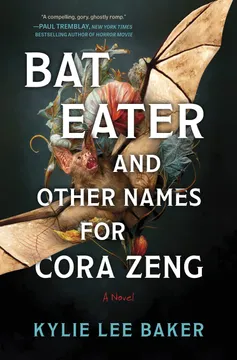
Plot Summary
Pandemic's Empty Subway
In the early days of the COVID-19 pandemic, New York City is a ghost town. Cora Zeng and her half-sister Delilah, both Chinese American, navigate a city emptied by fear and racism. Their bond is complicated—Cora is practical, anxious, and haunted by self-doubt, while Delilah is luminous, impulsive, and always the center of attention. On a desperate trip for toilet paper, they encounter a white man who, fueled by pandemic-fueled xenophobia, calls them "bat eaters" and pushes Delilah onto the subway tracks. The train kills her instantly, leaving Cora drenched in her sister's blood and forever changed. The city's silence is now filled with Cora's grief, rage, and the echo of a hate crime that no one will witness or avenge.
Blood and Bats
Months later, Cora works as a crime scene cleaner with Harvey and Yifei, both Chinese immigrants. Their job is to erase the aftermath of violent deaths, mostly of Asian women, as anti-Asian violence surges. In one apartment, Cora finds a bat tangled in a drain, a grotesque echo of the "bat eater" slur. The team's banter masks their trauma, but the pattern is clear: Asian women are being targeted, and the police seem indifferent. Cora's obsessive cleanliness is both a coping mechanism and a shield against a world that sees her as dirty, disposable, and dangerous. The city's filth is mirrored in the violence against her community, and Cora's sense of safety erodes with every job.
Cleaning the Uncleanable
Cora's life is a cycle of scrubbing away blood and memories. She lives alone, isolated by her compulsions and haunted by Delilah's absence. Her apartment is spotless, but her mind is cluttered with intrusive thoughts and missing time—food disappears, objects move, and she wonders if she's losing her grip on reality. Visits to her Auntie Zeng for traditional rituals and to Auntie Lois for church only deepen her sense of alienation. Neither Chinese nor American traditions offer comfort. Cora's grief is compounded by guilt: she feels responsible for Delilah's death, for not burning joss paper, for not being enough. The city's hostility and her own mind's betrayals leave her raw and exposed.
Ghosts and Hungry Shadows
As the Hungry Ghost Festival approaches, Cora's world grows stranger. She sees shadows and hears knocking, convinced Delilah's ghost is haunting her. Her coworkers, Harvey and Yifei, reveal their own brushes with the supernatural—Yifei bears a scar from a ghost bite, and Harvey's childhood was haunted by a silent apparition. The boundaries between the living and the dead blur. Cora's apartment is invaded by a monstrous, needle-necked ghost that devours her food and furniture. She realizes that Delilah—or something wearing her face—is starving, angry, and unable to rest. The city's violence has created an army of hungry ghosts, and Cora is both their witness and their unwilling caretaker.
Rituals and Remembrance
Desperate for relief, Cora turns to her aunt's rituals: burning joss paper, lighting incense, and setting up altars. She learns that violent deaths leave ghosts hungry and vengeful, especially when the living neglect their duties. But the rituals are interrupted by the realities of pandemic life—roommates, racism, and the ever-present threat of violence. Cora's attempts to honor Delilah are clumsy and incomplete, and the ghost's hunger only grows. The rituals become a battleground between old beliefs and new traumas, between the desire for closure and the impossibility of it in a world that refuses to acknowledge the suffering of people like Cora and Delilah.
Confessions and Spit
Cora's attempts at normalcy—attending church, seeking forgiveness—are shattered when she is spat on by a white man who calls her a "bat eater." The humiliation and fear are visceral, and Cora's compulsions spiral out of control. The church offers no solace; her aunt's forgiveness feels hollow. The city's hostility is relentless, and Cora's body becomes a battleground for shame, rage, and contamination. The violence is both physical and psychological, a constant reminder that she is seen as an outsider, a threat, and a scapegoat. The pandemic has made her both invisible and hyper-visible, and there is no safe space left.
Bat Eater, Bat Hated
The "bat eater" slur becomes a curse that follows Cora everywhere. She is harassed on the street, in the subway, and even in her own home. The violence against Asian women escalates, and Cora's work as a crime scene cleaner becomes a grim catalog of hate crimes. The police are indifferent, the media uninterested, and the community is left to mourn in silence. Cora's sense of self is eroded by the constant barrage of hatred, and she begins to internalize the city's contempt. The ghost in her apartment is both a literal and metaphorical manifestation of this hatred—a hunger that cannot be satisfied, a wound that will not heal.
Haunted by the Living
Cora's encounters with the living—her landlord, her coworkers, strangers on the street—are often more frightening than her encounters with the supernatural. The threat of violence is constant, and the city's indifference is suffocating. Even her friends are not immune: Harvey's dark humor masks deep trauma, and Yifei's bravado hides a history of abandonment and survival. The trio's bond is forged in shared fear and loss, but it is fragile. When Cora discovers a USB drive hidden by a ghost, she realizes that the true horror is not the dead, but the living who create them. The ghosts are hungry because the world refuses to feed them justice or remembrance.
The Hungry Ghost Festival
On the night of the Hungry Ghost Festival, Cora, Harvey, and Yifei prepare a feast to appease the ghosts. The ritual is interrupted by Yifei's white roommates, who unknowingly disrupt the ceremony and are devoured by the ghost. The violence is sudden and shocking, a reminder that the boundaries between the living and the dead are thin. The trio is left to clean up the aftermath, both literally and figuratively. The feast is both an act of remembrance and a reckoning—a moment when the dead demand to be seen, fed, and avenged. The city's refusal to acknowledge its ghosts has consequences, and Cora is left to bear the burden.
Shadows in the Apartment
Cora's apartment becomes a battleground between light and darkness. The ghost's hunger intensifies, and Cora realizes that it is not just Delilah who is haunting her, but all the forgotten women whose deaths have gone unavenged. The boundaries between self and other, living and dead, blur. Cora's compulsions, grief, and rage coalesce into a singular purpose: to give the ghosts what they need, even if it means breaking the rules of the living. The city's shadows are filled with the hungry dead, and Cora is both their victim and their avenger.
The Ghost's True Face
Cora discovers that the ghost haunting her is not Delilah, but Yuxi He, one of the murdered women whose case she cleaned. The revelation is devastating—Cora has been feeding and mourning the wrong ghost, and her guilt deepens. Yuxi leads Cora to a hidden USB drive containing evidence of a serial killer targeting Asian women, aided and abetted by police indifference and white supremacist forums. The true horror is systemic: the violence is not the work of a single monster, but a network of hatred, complicity, and erasure. The ghosts are not just hungry for food, but for justice, remembrance, and acknowledgment.
The Serial Killer's Mark
The evidence reveals that the murders are not the work of a lone killer, but of multiple men inspired by online hate and emboldened by police inaction. The city's institutions are complicit, prioritizing public image over justice. Officer Wang, the one cop who tried to investigate, is murdered and his evidence nearly destroyed. Cora, Harvey, and Yifei realize they are in mortal danger—the killer knows who they are, and their only hope is to expose the truth. The ghosts demand vengeance, and Cora is forced to confront the reality that justice may never come from the systems meant to provide it.
Copycats and Cover-Ups
As Cora pieces together the evidence, she realizes that the violence is not the work of a single "Batman," but a movement of copycat killers fueled by racism, misogyny, and impunity. The police and city officials, including the mayor, have actively suppressed investigations to protect their own interests. The ghosts are legion, each one a victim of a system that refuses to see them as human. Cora's rage crystallizes—she cannot forgive, cannot forget, and cannot rely on anyone else to do what must be done. The city's silence is complicity, and Cora decides to break it by any means necessary.
Friends Lost, Rage Found
Harvey and Yifei are murdered in quick succession, victims of the same violence they tried to expose. Cora is left utterly alone, her found family destroyed. The ghosts gather around her, demanding justice. Cora's grief is transmuted into rage—a cold, clear purpose. She realizes that she cannot save the dead, but she can refuse to let their stories be erased. The city's indifference is a second death, and Cora vows to make the world see what it has tried to ignore. The ghosts are no longer just hungry—they are an army, and Cora is their unwilling general.
Lanterns for the Dead
On the last night of the Hungry Ghost Festival, Cora and her aunt light lanterns and send them down the river, guiding the ghosts back to the underworld. The ritual is both an act of mourning and defiance—a refusal to let the dead be forgotten. The city's violence has created an endless cycle of suffering, but Cora's act is a small, stubborn assertion of humanity. The ghosts follow the lanterns, and for a moment, the boundary between worlds is peaceful. Cora is left with her grief, but also with a sense of purpose: to remember, to witness, and to fight.
Becoming the Bat Eater
Cora is confronted by a white man who tries to harass her, calling her a "bat eater." Instead of shrinking, she claims the name, turning it into a badge of survival and resistance. The ghosts gather behind her, and the man flees in terror. Cora realizes that the only way to survive is to embrace the identity forced upon her, to become the thing that scares those who would harm her. The city's hatred cannot erase her, and the ghosts are no longer just a burden—they are a source of strength. Cora is no longer just a victim; she is a witness, an avenger, and a survivor.
The Last Feast
Cora leads the ghosts to the mayor's mansion, douses it in gasoline, and sets it ablaze. The fire is both literal and symbolic—a reckoning for the city's complicity in violence against Asian women. The ghosts are fed, the dead are remembered, and the city is forced to confront the consequences of its silence. Cora's act is both a crime and a catharsis, a refusal to let the dead be forgotten. The boundaries between justice and vengeance blur, but for the first time, Cora feels at peace. The ghosts are gone, and the city is forever changed.
Justice in Flames
In the aftermath, Cora rebuilds her life with her aunt, haunted by loss but determined to remember. The city is forced to reckon with its failures as the truth comes to light. Cora's grief is still raw, but she finds solace in small rituals, in feeding the living and the dead, in refusing to let the world forget. The ghosts are gone, but their stories remain. Cora is no longer just an echo of her sister—she is her own person, shaped by pain but not defined by it. The future is uncertain, but Cora faces it with hard-won strength, carrying the memory of the dead with her into whatever comes next.
Analysis
A searing allegory of pandemic-era racism, trauma, and the hunger for justiceBat Eater and Other Names for Cora Zeng is a visceral, haunting exploration of what it means to be both haunted and erased in a world that refuses to see you. Set against the backdrop of the COVID-19 pandemic and the surge in anti-Asian violence, the novel uses horror and the supernatural to externalize the psychological and social wounds inflicted by racism, misogyny, and institutional indifference. Ghosts are not just the dead, but the living's refusal to remember, to mourn, to seek justice. Cora's journey—from passive victim to reluctant avenger, from haunted to haunting—is a powerful meditation on grief, rage, and the limits of forgiveness. The novel refuses easy answers: justice is partial, vengeance is costly, and healing is uncertain. Yet, in its insistence on remembrance, ritual, and the stubborn refusal to be erased, Bat Eater offers a hard-won hope. It is a story for anyone who has ever been made to feel invisible, dirty, or disposable—and a call to witness, to remember, and to fight.
Review Summary
Characters
Cora Zeng
Cora is a Chinese American woman in her mid-twenties, defined by anxiety, obsessive cleanliness, and a deep sense of inadequacy. Her relationship with her half-sister Delilah is fraught—she both idolizes and resents her. After witnessing Delilah's murder in a pandemic-fueled hate crime, Cora is consumed by grief, guilt, and rage. She becomes a crime scene cleaner, scrubbing away the evidence of violence against women like herself. Cora's psychological journey is one of transformation: from passive victim to reluctant avenger, from invisible to hyper-visible, from haunted to haunting. Her compulsions are both a shield and a prison, and her eventual embrace of the "bat eater" slur is an act of reclamation and resistance. Cora's development is marked by loss, but also by a stubborn refusal to be erased.
Delilah Zeng
Delilah is Cora's older half-sister, beautiful, charismatic, and seemingly untouchable. She is the center of every room, the embodiment of dreams and possibilities that Cora feels excluded from. Delilah's murder is the catalyst for the novel's events, and her presence lingers as both memory and ghost. In life, Delilah was both loving and dismissive, a source of comfort and pain for Cora. In death, she becomes a symbol of all the women erased by violence and indifference. The ghost that haunts Cora is at first believed to be Delilah, but is later revealed to be another victim, underscoring the interchangeability of the dead in a world that refuses to see them as individuals. Delilah's absence is as powerful as her presence, shaping Cora's journey toward selfhood and justice.
Yifei Liu
Yifei is Cora's coworker and reluctant friend, a Chinese immigrant with a sharp tongue and a hidden vulnerability. She is practical, resourceful, and fiercely protective, but her bravado masks deep wounds—abandonment, trauma, and a history of survival at any cost. Yifei's relationship with Cora is complex: she is both mentor and peer, challenging Cora to confront her fears and take action. Yifei's own haunting—by a ghostly sister she left behind—mirrors Cora's, and her eventual death is a devastating loss. Yifei's character arc is one of reluctant intimacy, as she allows herself to care for Cora and Harvey, only to be destroyed by the same violence they all sought to escape.
Harvey Chen
Harvey is the third member of the crime scene cleaning crew, a Chinese American man whose dark humor and video game references mask deep trauma. He is both a source of levity and a reminder of the psychological toll of violence. Harvey's childhood was haunted by a silent ghost, and his fascination with gore is both a coping mechanism and a symptom of desensitization. Harvey's loyalty to Cora and Yifei is unwavering, but his attempts to fight the supernatural end in tragedy. His death is a turning point for Cora, transforming her grief into rage and action. Harvey's character embodies the ways in which marginalized people are forced to laugh in the face of horror, even as it consumes them.
Auntie Zeng
Auntie Zeng is Cora's paternal aunt, a pragmatic and fiercely loving woman who bridges the gap between old-world rituals and new-world realities. She provides Cora with both material and spiritual support, offering joss paper, incense, and practical advice. Auntie Zeng's belief in ghosts and rituals is both a comfort and a challenge to Cora, who struggles to reconcile her American skepticism with her Chinese heritage. Auntie Zeng's presence is a stabilizing force, but she is not immune to the city's violence and loss. Her insistence on remembrance and ritual is a form of resistance, a refusal to let the dead be forgotten.
Auntie Lois
Auntie Lois is Cora's maternal aunt, a white Midwesterner whose support is contingent on Cora's adherence to Christian norms. She pays Cora's student loans and offers a semblance of family, but her love is conditional and often tinged with racism and condescension. Auntie Lois's church is both a refuge and a site of humiliation for Cora, who is never fully accepted. Lois's insistence on forgiveness and repentance is both well-meaning and deeply alienating, highlighting the limits of white allyship and the ways in which faith can be weaponized against the marginalized.
Yuxi He
Yuxi He is one of the murdered Asian women whose case Cora cleans. Her ghost is the true hungry presence haunting Cora, demanding justice and remembrance. Yuxi's life—a doctor, an immigrant, a victim—is emblematic of the novel's themes: the erasure of Asian women, the hunger for acknowledgment, and the violence of indifference. Yuxi's guidance leads Cora to the evidence that exposes the serial killer(s), and her suffering becomes the catalyst for Cora's transformation from victim to avenger. Yuxi's ghost is both a warning and a call to action.
Officer Wang
Officer Wang is the only police officer who tries to investigate the murders of Asian women. His efforts are stymied by institutional racism, bureaucracy, and active cover-ups by his superiors and the mayor. Wang's murder is both a literal and symbolic silencing of those who seek justice for the marginalized. His hidden USB drive becomes the key to exposing the truth, and his presence haunts Cora as both a failed protector and a fellow victim of the system.
The Serial Killers / "Batman" / Copycats
The novel's antagonists are not a single villain, but a network of men inspired by online hate, emboldened by police inaction, and protected by institutional cover-ups. The "Batman" killer is both a real person and a symbol of the city's indifference to violence against Asian women. The copycat killers are ordinary men—insurance salesmen, office workers, neighbors—whose banality is more terrifying than any monster. Their violence is both personal and systemic, a product of racism, misogyny, and impunity. They are the true hungry ghosts, feeding on the suffering of others.
The Hungry Ghosts
The ghosts that haunt Cora are not just individual spirits, but embodiments of collective trauma, rage, and longing. They are the women erased by violence, the dreams destroyed by hate, the memories denied by a city that refuses to see them. Their hunger is both literal and metaphorical—a demand for justice, acknowledgment, and peace. Cora's journey is one of learning to see, feed, and honor these ghosts, even as she is haunted by her own.
Plot Devices
Ghosts as Trauma and Justice
The novel uses ghosts not just as supernatural entities, but as metaphors for unresolved trauma, collective grief, and the hunger for justice. The Hungry Ghost Festival, joss paper rituals, and haunting apparitions all serve as plot devices to externalize Cora's internal struggles and the city's refusal to acknowledge its violence. The ghosts are both literal and symbolic—manifestations of the dead's suffering and the living's complicity. The line between haunting and being haunted is blurred, making the supernatural a vehicle for exploring racism, misogyny, and the limits of forgiveness.
Crime Scene Cleaning as Metaphor
Cora's job as a crime scene cleaner is a powerful metaphor for the erasure of violence against marginalized people. The act of scrubbing away blood and memories mirrors the city's attempts to forget its dead, to sanitize its history, and to move on without reckoning. The cleaning scenes are both literal and symbolic, highlighting the impossibility of true cleanliness in a world built on violence. Cora's compulsions are both a survival strategy and a symptom of trauma, and the act of cleaning becomes a battleground for memory, guilt, and resistance.
Pandemic as Amplifier
The pandemic is not just a backdrop, but an active force that amplifies the novel's themes. The city's emptiness, the fear of contamination, and the surge in anti-Asian violence are all heightened by the pandemic's chaos. The "China virus" slur, the hoarding of resources, and the isolation of quarantine all serve to intensify Cora's sense of alienation and vulnerability. The pandemic is both a literal and metaphorical plague, exposing the city's underlying sickness and the fragility of its social fabric.
Online Hate and Copycat Violence
The novel uses online hate forums as a plot device to show how violence is not just individual, but collective and systemic. The copycat killers are inspired by each other, emboldened by anonymity, and protected by institutional cover-ups. The internet becomes a breeding ground for misogyny, racism, and impunity, turning ordinary men into monsters. The evidence Cora uncovers is both a literal key to justice and a symbol of the ways in which violence is networked, normalized, and perpetuated.
Ritual and Remembrance
Traditional Chinese rituals—burning joss paper, lighting lanterns, setting up altars—are used as plot devices to bridge the gap between the living and the dead. These rituals are both acts of mourning and resistance, a refusal to let the dead be forgotten. The Hungry Ghost Festival becomes a moment of reckoning, when the city's ghosts demand to be seen, fed, and avenged. The rituals are imperfect, interrupted, and often clumsy, but they are acts of love and defiance in a world that prefers erasure.
Narrative Structure and Foreshadowing
The novel's structure is nonlinear, recursive, and haunted by echoes—memories, dreams, and intrusive thoughts repeat and mutate, blurring the boundaries between past and present, living and dead. Foreshadowing is used throughout: the missing food, the knocking, the shadows, and the recurring motif of the "bat eater" slur all build toward the revelation that the violence is systemic, not individual. The narrative's recursive structure mirrors Cora's psychological journey, as she circles around trauma, grief, and rage, unable to escape until she confronts the truth.
Download PDF
Download EPUB
.epub digital book format is ideal for reading ebooks on phones, tablets, and e-readers.








































