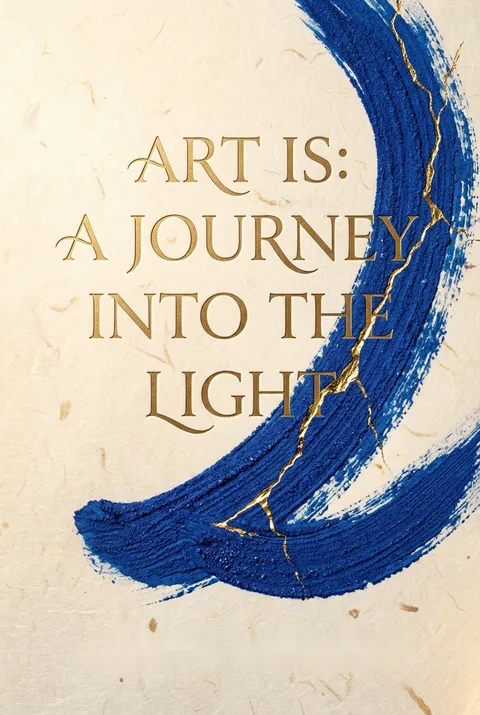

Key Takeaways
1. Art as a Journey into Light and Awareness
Art is awareness.
Uncovering wonder. Art, for Makoto Fujimura, is not merely self-expression but a profound journey into light, making us aware of the world's wonders and sorrows. It's a quest to understand "Life is," revealing both its generative hopes and destructive ends. By emptying our egos, artists can honestly be present, uncovering beauty in complexity, mystery, and even darkness.
Beyond self-expression. True art transcends hedonism or narcissism, enduring by exposing hidden truths and capturing the full spectrum of human experience—from the stench of death to the aroma of spring narcissus. Artists, like William Blake's "Minute Particulars," see panoramically yet notice every detail, from mason bees to coreopsis, as entry points to an expansive world. This awareness allows grace to enter through our senses, recognizing art as an ultimate gift.
A path to grace. Fujimura's daily walk to his studio, observing bluestars and creeping thyme, is already a mental painting process. This deep connection between nature and culture, especially in Japanese tradition, informs his art. He sees art as a path to inject charis (grace) into a fragmented world, much like Sen no Rikyū's tea ceremony, which was a ritual of peacemaking resistance.
2. Embrace Slow Art and Attentiveness
Nihonga is slow to make and slow to see.
The need for rest. Art cannot be fully appreciated until our minds, often consumed by fear and anxiety, are given rest. Just as a samurai humbly removes his sword before entering a teahouse, we must lay down our defenses to embrace beauty. This slowness allows for a deeper, more panoramic vision, contrasting with the constricted view caused by stress.
A liturgical rhythm. Fujimura's "slow art" involves a daily liturgy, a rhythm of making that integrates complex sensory experiences. His walk to the studio, though brief, filters myriad details that become seeds for his intuition. This process, likened to a seasoned baseball player's preparation, creates an unconscious rhythm that cultivates somatic knowledge and opens sensory perceptions.
From blue field to galaxy. As David Brooks observed, staring at Fujimura's paintings for ten to twelve minutes transforms a seemingly plain blue field into a "galaxy of color." This shift from an anxiety-driven world to a vibrant galaxy is what art enables. It moves us from seeing with the eye (segmented data) to seeing through the eye (holistic essence), envisioning future states within present reality, beyond digital fragments.
3. Beauty Emerges from Brokenness (Kintsugi & Wabi-Sabi)
In Kintsugi, beauty and justice can coexist, as the master restores the broken and yet beautifully creates the new as an emblem of all our journeys forward.
Rikyū's legacy. Sen no Rikyū, the 16th-century tea master, redefined Japanese aesthetics by elevating wabi-sabi—the beauty found in broken, worn, and humble forms. His tea ceremony, a disciplined ritual of restraint and silence, became an act of peacemaking resistance against dictatorial warlords, even using Korean vessels as a subtle protest against invasion. This aesthetic of lament and repose, born in violent times, deeply influences Fujimura's art.
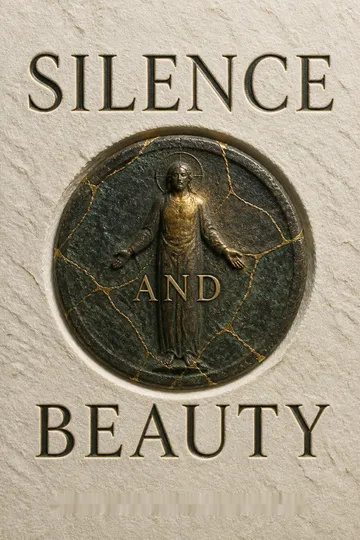
The art of Kintsugi. Flowing from Rikyū's influence, Kintsugi is the venerable tradition of mending broken ceramics with lacquer and gold, making the mended object more valuable than the original. It honors brokenness, allowing light to shine through cracks, and expresses divine presence through vulnerability. This practice teaches that our broken journeys can be honored, and each piece can become beautiful, leading to abundance.
Trauma into art. Fujimura's "Columbines—Hope" painting, started in lament over the Columbine massacre and finished twenty years later, exemplifies this. Using translucent oyster shell gofun on silver, the painting captures vulnerable young souls and the passage of time as the silver tarnishes. His art, made with pulverized minerals and painted with tears and ashes, is an elegiac response to pulverization and trauma, inviting viewers into a portal of perpetual light.
4. Navigate Cross-Cultural Gaps for Deeper Insight
Even the term “Nihonga” was coined by an outsider who valued and wanted to protect Japanese heritage.
The outsider's advantage. Fujimura's identity as a Japanese-American, born in Boston and educated in Japan, positions him as a "border-stalker" between cultures. This liminal space allows him to see clearly the values of Japanese culture, often taken for granted by insiders, and to appreciate the indelible art of the West. This cross-cultural navigation becomes a portal into blended identities and an appreciation for all cultures.
A legacy of advocacy. The very term "Nihonga" (Japanese painting) was coined by American art historian Ernest Fenollosa, who, along with Japanese connoisseur Okakura Tenshin, advocated for preserving traditional Japanese art during the Meiji Restoration. Their efforts, which included bringing masterworks to the U.S., laid the foundation for Fujimura's own study at Tokyo University of the Arts and his contemporary practice. This history shows that cultural legacies often depend on external advocacy and cross-cultural exchange.
Yobi-tsugi: calling cultures together. Fujimura sees Japan not as an isolated island but as a "yobi-tsugi" (calling together) mosaic of Silk Road cultures. The yobi-tsugi method in Kintsugi intentionally brings fragments from foreign vessels to mend a broken piece, often mimicking geographical borders of warring countries to envision peace. Fujimura's art, mixing Nihonga minerals with space-age materials, creates intentional tension and unexpected resonance, embodying this ethos of blending and beholding.
5. Cultivate Generativity and Abundance through Culture Care
Culture care is to steward the soil of culture, as gardeners tend to their gardens.
Beyond battlegrounds. "Culture care," a term coined by Fujimura, views culture as an ecosystem to steward, a garden to tend, rather than a battleground to fight over. This approach seeks abundance in faith, moving beyond scarcity mindsets and the divisive "we-versus-them" mentality fueled by culture wars. It recognizes that true cultural flourishing requires nurturing, much like a garden needs constant attention and care.
Estuaries of creativity. Fujimura likens thriving cultural environments to estuaries, where saltwater and freshwater mix to create diverse and abundant ecosystems. Artists, like oysters in an estuary, filter cultural waters, turn irritants into iridescence, and form aggregated communities that buffer against the storms of utilitarianism and commodification. These "oyster beds" of creative catalysts serve as seawalls against the erosion of humanity.
Historical precedents. History offers examples of such cultural estuaries:
- 16th-century Japan, with Portuguese and Italian missionaries, became a vibrant cultural estuary.
- Early 20th-century New York City, with exiles and struggles, birthed Abstract Expressionism and the Harlem Renaissance.
- Pre-Renaissance Europe, despite the Black Plague and Ottoman invasions, saw artists like Fra Angelico lead to Shakespeare.
These periods demonstrate that even in bleak times, or perhaps because of them, generative cultural movements can emerge.
6. See Through the Eye, Not Just With It
When you see with, not thro’, the Eye
Blake's profound insight. William Blake's distinction between seeing with the eye and seeing through the eye is central to Fujimura's philosophy. Seeing with the eye is about outlining, categorizing, and segmenting information—what machines can detect. Seeing through the eye is a holistic, mysterious, deeper realm of processing nuances, envisioning the essence of our being and the future states within reality.
Beyond segmented data. Fujimura's father, a speech scientist, believed segmented acoustic data couldn't fully reproduce human speech. Similarly, art cannot be reduced to segmented visual data, as social media algorithms attempt. To access the mystery of seeing through the eye, we must slow down and cultivate our sensory and somatic knowledge, integrating what the mind has separated.
Art as a portal. Art serves as a portal to this deeper realm of knowledge, connecting rational understanding with spiritual insight. Fujimura's own "inversion" into faith came from "seeing" Blake's poetry, realizing that his artistic "flow" was connected to the divine. This process of mindful self-discovery, tracing sensory input and somatic knowledge, allows artists to paint what the "inner eye" truly sees, leading to integration and wholeness.
7. Art as Play: Recovering Innocence and Resilience
Art is closely related to a child’s experience of play.
Gratuitous freedom. Art, like a child's play, is gratuitous and free, yet it involves finding freedom within boundaries and pushing them to forge new rules. Fujimura recalls the energy and "flow" he felt painting as a child, an experience he later connected to the divine. This childlike faith and sense of play are essential for cultivating the gift (charisma) of life and seeing small miracles.
Discipline for innocence. Recovering this innocence demands discipline—a long-term commitment to developing somatic knowledge and integrating mind and body. Just as a sado practitioner spends decades mastering humility, artists vacillate between innocence and experience. This journey allows us to play the expanded music of life, freeing us from self-imposed limitations and bringing healing to the world.
Weeding out hubris. Fujimura likens the hard work of art to weeding, digging out the deep-rooted hubris of making a name for oneself. He learned to "love his enemies" by studying dandelions, recognizing their resilience and "uncalculating, diffusive self-emptying." This kenosis—self-giving until nothing is left—is the path to authentic expression, where the "self" is found not through self-expression but by playing in the prismatic light of what is discarded.
8. Sacrifice and Service as the Core of True Creation
Urushi trees give their life blood so we can create beauty.
The cost of beauty. The indispensable medium of urushi (Japanese lacquer), made from sumac trees, illustrates the profound sacrifice inherent in creating beauty. These precious trees, carefully cultivated for generations, yield only a small amount of sap through orchestrated cuts, making urushi more expensive than gold. This process, where trees "give their life blood," reminds Fujimura of Christ's sacrifice and the generational giving required for all creativity.
Wounds as portals. Fujimura connects the suffering of nature, like the cut urushi tree, to the wounds of Christ, seeing them as portals into miraculous sacrifice that leads to beauty. He asks if we, too, are mosaics of broken shards, reconnected by the Creator, the ultimate Kintsugi master. Proper generational stewardship can transform even poison into beauty, making our communities offerings to a violent world.
Defiant humanism. Fujimura's own journey, marked by trauma and despair, has been sustained by the discipline of painting, embedded in his somatic knowledge, even when his mind lost hope. This "defiant humanism"—creating when the world falls apart—is a testament to art's power to serve. His liturgical panels at All Saints' Church, created for worship and community life, became the basis for many of his recent works, demonstrating that service often leads to generative growth in expression.
9. The Interdependence of Colors Reflects Community
Colors are interdependent.
Paradoxes of light and color. Modern physics reveals light as both a particle and a wave—contradictory models that coexist in mystery. Fujimura, as an artist, infers that these paradoxes are not problems to be solved but ways to train our imagination to hold complexity and accept mystery. Art delves into this mystery, developing the imagination to move beyond false binaries and embrace multiple, simultaneously operating models.
Albers's relational colors. Josef Albers's "Interaction of Color" taught Fujimura about complementary colors and their relational realities. Albers's "Homage to the Square" series depicted squares in various relationships, a portrait through pure color. This demonstrates that colors operate strictly in an interdependent paradigm, refusing to be reduced to binaries or isolation. This principle, applied to art and life, is an antidote to our tendency to demonize "the other."
Beyond conventional schemes. If color can capture personhood and community, then its interdependence offers a model for human interaction—communally interdependent while individually distinct. Nihonga materials, with their refractive and coarse minerals, expand the color wheel into complex permutations. This "principle of interdependence" guides us toward prismatic refractions, training our brains to reject false binaries and "think in colors" for a more robust and abundant future.
10. Art as a Portal for Miraculous Discoveries and Dreams
Art documents our miraculous discoveries.
Visions in darkness. Fujimura's art often begins in prayer, facing devastation. A profound experience in a Mumbai brothel, where he saw a golden light descending on an "upside-down" ladder, transformed a visual conundrum in his painting into "Jacob's Ladder." This vision, eight thousand miles away, revealed the purpose of his struggle with materials and visual movement, completing the painting in a prismatic white splendor.
Time-warping art. In art, time warps in strange ways, allowing linear time to bend and art to become a portal of eternity. Fujimura paints what he intuits, and often future events complete the work in ways he couldn't have imagined. This process, where materials lead the way, demonstrates that art is fundamentally about the "impossibility of art"—the miracle of Easter morning, where the wounded body of Christ is resurrected as a New Creation.
Ground Zero as genesis. Fujimura's "Nagasaki Koi" video installation, projected onto Kumohada paper, questions if art can reverse time. By slowing and reversing koi swimming in a pond at Nagasaki's Ground Zero, he poses a visual prayer: can Ground Zero be a genesis point, a "true zero cancellation point" for past evil, rather than a detonation point for more violence? Art, as a reverse current of dreams from our brokenness, is a golden river whose "streams make glad the city of God."
Review Summary
Reviews of Art Is are generally positive, averaging 4.11 out of 5. Many readers appreciate its meditative, lyrical quality and Fujimura's exploration of art, faith, and culture. Fans of abstract and spiritual themes find it deeply resonant and beautifully produced, particularly in hardback. Critics, however, note the book's meandering, unstructured nature, with some feeling it retreads familiar ground from his earlier works. Most agree it suits readers who enjoy reflective, exploratory writing rather than those seeking clear arguments or structured analysis.
People Also Read
About the Author
Download PDF
Download EPUB
.epub digital book format is ideal for reading ebooks on phones, tablets, and e-readers.








































