
Key Takeaways
1. Neuromania's Core Flaw: Confusing Correlation with Identity
Seeing correlations between event A (neural activity) and event B (say, reported experience) is not the same as seeing event B when you are seeing event A.
Fundamental error. Neuromania, the belief that the mind is identical to brain activity, fundamentally conflates correlation, causation, and identity. While brain activity and conscious experiences are often correlated, this does not mean one causes the other, much less that they are the same thing. This logical leap is a pervasive error in contemporary thought.
The "double-aspect" fallacy. Attempts to bridge this gap, such as the "double-aspect" theory (neural activity and experience are two sides of the same coin), fail because they implicitly rely on a conscious observer. For instance, nerve impulses do not inherently "look" like the color yellow; their appearance as electrochemical activity is itself an observation. To claim they are the experience of yellow requires smuggling in the very consciousness one is trying to explain.
Necessary, not sufficient. Brain activity is undoubtedly a necessary condition for consciousness. Damage to the brain can impair or eliminate conscious experience. However, necessity does not imply sufficiency. Electrical stimulation of the brain might trigger a "memory," but this is a re-activation of a prior experience had by a person in the real world, not the brain creating consciousness de novo. The isolated brain cannot generate a world of experience on its own.
2. Brain Scans Cannot "See" or Explain Consciousness
[Neuro-talk] is often accompanied by a picture of a brain scan, that fast-acting solvent of critical faculties.
Indirect and imprecise. Functional Magnetic Resonance Imaging (fMRI), the darling of Neuromania, does not directly measure neural activity but rather changes in blood flow, which lag behind neuronal firing by seconds. Each "voxel" (3D pixel) represents millions of neurons, meaning fine-grained activity crucial to consciousness can be missed. This indirectness and lack of precision limit what fMRI can truly reveal about subjective experience.
Methodological flaws. Many fMRI studies suffer from crude experimental designs, oversimplifying complex human experiences into isolated "stimuli" and "responses." Examples include:
- Reducing "unconditional love" to viewing pictures.
- Pinpointing a "beauty spot" based on reactions to images.
- Identifying "wisdom circuits" from responses to moral dilemmas.
Such studies often use statistical methods that inflate correlations, leading to "voodoo correlations" and misleadingly strong conclusions.
The "crooked estate agent" brain. The brain is not a collection of neatly demarcated "spots" for each mental function. The same brain regions often "light up" for disparate activities, and complex functions involve widely distributed networks. Reducing consciousness to localized brain activity overlooks the brain's integrated, networked nature, where communication among regions is paramount, not just activity within them.
3. Intentionality: The Mind's Unexplained "Aboutness"
The causal chain points in one direction, from the hat to my cerebral cortex, with the light being translated into electrochemical events as the key step; but the aboutness of my experience points in another direction, from my cerebral cortex back to the hat.
The paradox of "aboutness." Intentionality is the fundamental property of mental states—perceptions, thoughts, desires—to be "about" or "directed towards" something other than themselves. When I see a red hat, the physical causal chain runs from the hat (light reflecting off it) to my brain. However, my perception is directed back to the hat, recognizing it as an external object distinct from me. This counter-causal direction of intentionality is inexplicable by purely physical processes.
Beyond physical causation. Physical science describes events as effects of prior causes. Intentionality, however, is not merely an effect. It's a revelation of an object to a subject, maintaining a distinct separation between them. Neuroscience, by locating consciousness within the brain, makes this separation a literal spatial distance, further highlighting the mystery of how brain activity can "reach back" to its external cause and present it as an object.
Denying the undeniable. Some neurophilosophers, like Daniel Dennett, attempt to dismiss intentionality as a mere "intentional stance"—an interpretive strategy we use to predict behavior, not a real property of mind. This reduction is a profound error, as it denies the very subjective experience of "aboutness" that is foundational to human consciousness and our engagement with the world. Intentionality is not ascribed; it is experienced.
4. The Unity and Temporality of Consciousness Defy Neural Explanation
Our sensory/perceptual/cognitive fields are simultaneously unified and divided. This mystery — greater to me than that of the Trinity, of the three-in-one, that exercises theologians — is insufficiently appreciated, even by those aware of the so-called 'hard problem' of consciousness.
The "binding problem" remains. Consciousness presents a paradox of unity and multiplicity. We experience a single, coherent visual field, yet are simultaneously aware of its distinct components (colors, shapes, objects). Neural theories of "integration" or "convergence" fail to explain this, as merging disparate inputs at a synapse would lead to a "mushing" of information, losing the individual identity of components. The brain, as a material object, cannot self-unify its activity into a coherent, yet differentiated, whole without an external observer.
Time without tenses. Human consciousness is deeply temporal, characterized by an explicit sense of past, present, and future. Memory, for instance, is not merely a recurrence of an experience but an awareness of it as past. The physical world, however, has no tenses; it simply "is." A synaptic change is a present state, not an explicit record of its past causes or a projection into the future.
"Memory in a dish" is a misnomer. Eric Kandel's Nobel-winning work on sea slugs, showing synaptic changes linked to learned reflexes, is often touted as explaining memory. However, this "memory in a dish" bears little resemblance to human memory, which involves:
- Semantic and episodic recall.
- Autobiographical self-attribution.
- An explicit sense of time and a structured "past world."
Reducing human memory to altered synaptic excitability is a linguistic fudge, equating complex conscious recall with unconscious behavioral conditioning.
5. "Information" and "Computation" are Misleading Metaphors for Mind
The obvious point that what goes on in a computer would not count as, or be, a calculation, recollection or measurement in the absence of humans who use them to calculate, recollect or measure, was highlighted by Searle in a brilliant thought experiment.
Anthropomorphic language. The computational theory of mind, which posits the mind as software running on the brain's hardware, relies heavily on anthropomorphic language. We speak of computers "calculating" or "detecting," but these are functions we attribute to them as tools. Without a conscious human user, a computer's internal processes are just electrical currents, not genuine calculations or information processing.
Searle's Chinese Room. John Searle's thought experiment vividly illustrates this flaw: a person in a room manipulating Chinese symbols according to rules, without understanding Chinese, can produce appropriate outputs. This simulates understanding but is not understanding. Similarly, the brain's neural activity, however complex, does not become consciousness or understanding merely by processing "information."
Myth-information. The term "information" is widely misused. In engineering, information quantifies uncertainty reduction, distinct from meaning. Cognitive psychologists, however, conflate this technical sense with ordinary meaning, claiming:
- Light "contains" information.
- DNA is "information technology."
- The universe itself is a "giant computer" processing "bits" of information.
This "informationalization" of the universe divorces information from conscious awareness, allowing any physical state to be deemed "information," thereby obscuring the unique role of consciousness in creating meaning.
6. Darwinitis: Why Evolution Cannot Fully Explain Human Consciousness
If there are no sighted watchmakers in nature and yet humans are sighted watchmakers, in the narrower sense of making artefacts whose purpose they envisage in advance, and in the wider sense of consciously aiming at stated goals, then humans are not part of nature: or not entirely so.
The blind watchmaker's paradox. While Darwin's theory explains the emergence of complex organisms through "blind" natural selection, it struggles to account for the emergence of conscious beings who can then see and utilize these blind forces. If nature has no purpose, how did creatures with foresight and deliberate goals arise? This "sighted watchmaker" paradox highlights a fundamental gap in Darwinitis.
Consciousness: an evolutionary disadvantage? From a purely biological perspective, consciousness, especially complex human consciousness, seems like a "disabling requirement." It consumes vast energy, introduces deliberation (which can be slow and error-prone), and creates a capacity for suffering and existential angst. More efficient, unconscious mechanisms would seemingly be favored for survival. The "explanatory gap" for consciousness's origin and adaptive value remains unaddressed.
The "pincer movement" of distortion. Darwinitis distorts our understanding by:
- Animalizing humans: Reducing complex human behaviors (e.g., dining, learning, art) to "feeding behavior" or "instincts," ignoring their explicit, cultural, and self-conscious dimensions.
- Humanizing animals: Attributing human-like mental states (e.g., "counting" to insects, "planning" to birds, "beliefs" to dogs) to animal behaviors that are better explained by conditioning or hard-wired responses.
This linguistic blurring creates a false equivalence, obscuring the profound qualitative differences between humans and other species.
7. Human Uniqueness: A Profound Gulf, Not Just a Degree of Difference
The point is that our difference from beasts is wall to wall, permeating every moment of our day. We are as remote from animals when we queue for tickets for a pop concert as when we write a sublime symphony.
Beyond the "top 2%." Human uniqueness is not confined to high-level activities like art or science; it permeates every aspect of our lives. Even seemingly basic biological functions are transformed by our self-consciousness and culture. For example, human defecation involves privacy, sanitation, and manufactured toilet paper—a far cry from animal behavior. Our needs and appetites are appropriated and subordinated to uniquely human ends.
The hand hypothesis. A key driver of human divergence was the upright position, which liberated the hands. The fully opposable thumb and independent finger movement created "constrained manipulative indeterminacy," fostering an "existential intuition" ("I am this body"). This instrumentalized the body, awakening a sense of agency and self, and initiating a slow-burning fuse of collective self-fashioning.
The human world: a collective creation. This emerging self-consciousness, combined with the hand's role as a "proto-tool," led to the creation of a unique "human world." This is a public sphere, a "semiosphere," built on:
- Shared attention (e.g., pointing).
- Explicit facts, norms, and possibilities.
- Language and artifacts.
This collective realm, distinct from the biosphere, allows humans to transcend individual organic existence and engage with nature from a "virtual outside," shaping it through technology and shared knowledge.
8. Reclaiming Free Will: Beyond Brain Impulses to Self-Directed Action
The decision to participate in the experiment, which alone gave the wrist flexion its meaning, began not milliseconds, seconds, or minutes, but hours before the wrist was flexed: perhaps weeks before, when the person decided to become a subject in the experiment.
Context matters. Neuro-determinist experiments, like Libet's studies on wrist flexion, claim that brain activity precedes conscious intention, thus negating free will. However, these experiments grotesquely simplify human action by stripping it of its context. The "decision" to flex a wrist in a lab is merely the final, trivial component of a much larger, sustained, and conscious intention (e.g., "to participate in the experiment," "to help science").
Reasons, not just causes. Human actions are not mere physical movements or reflexes. They are rooted in explicit purposes, reasons, and a "self-world" that extends across time and meaning. These reasons "pull from in front," guiding a complex sequence of sub-actions, rather than being "pushed from behind" by unconscious biological or material causes. This "virtual causality" is distinct from the linear cause-and-effect of the material world.
Utilizing nature's laws. Freedom is not about defying the laws of nature but about using them. As John Stuart Mill argued, we can "use one law to counteract another." From the "extra-natural space" of the human world—our collective knowledge and technology—we consciously align ourselves with natural laws to achieve our chosen ends. This ability to "step back" and manipulate the material world demonstrates our capacity for genuine agency and deflection of events.
9. The Enduring Self: An Intuition Beyond Neural Activity
The intuition 'that I am this' must precede any question as to whether I am or am not the same 'this'. Without self-appropriation, self-stipulation, the question cannot arise as to whether or not something is the same thing over time.
Beyond Hume's "bundle." David Hume famously argued the self is a "bundle of perceptions," unfindable through introspection. However, the self is not a perception among perceptions; it is the presupposition of perception—the "I" that thinks, feels, and owns experiences. Neuroscience's inability to locate a "self spot" in the brain does not prove the self is an illusion; it proves the limitations of neuroscience in capturing this fundamental aspect of personhood.
The "existential intuition." Personal identity begins with the "existential intuition": the sense "That I am this," where "this" initially refers to one's own body. This self-appropriation is the "beating heart" of identity, preceding any objective criteria for continuity. It's a fundamental, non-reducible assertion of being, not a conclusion derived from memories or bodily states.
A robust, homunculus-free self. The enduring self is a continuing body animated by a stable, internally connected psyche (memory, values, intentions), supported by social roles and a sense of "who I am" reinforced by others. This self is:
- Unified: Coherent across different aspects of life.
- Temporally deep: Connected to a personal past and future.
- Agentive: The source of actions and moral responsibility.
This self is not a "ghost in the machine" but an embodied subject, whose personally apprehended connectedness cannot be reduced to impersonal synaptic activity.
10. The Humanities' Battle: Resisting Neuro-Evolutionary Reductionism
Neuro-evolutionary science casts as little light on the subjects studied by the humanities as physics does on the law of tort, electromyography on ballet, or pharmacology on the culture of the lounge bar or the coffee house.
Scientism's encroachment. Neuro-evolutionary pseudo-sciences seek to absorb the humanities, reducing complex human phenomena to biological mechanisms. This often involves presenting common-sense observations as groundbreaking scientific discoveries (e.g., "inequality leads to anxiety" is "hard-wired") and using brain scans to lend "seductive allure" to trivial claims. This "neuro-trash" devalues genuine humanistic inquiry.
Art and literature reduced. Neuroaesthetics reduces art to "supernormal stimuli" or "brain tingles" (Zeki, Ramachandran), ignoring artistic intention, cultural context, and evaluative judgment. Neuro-lit-crit attempts to explain literary effects by "syntactic anomalies" activating brain regions (Davis), failing to grasp that literature's power lies in its meaning, narrative, and engagement with uniquely human concerns like mortality and the search for meaning.
Undermining human institutions. Neuro-law's "my brain made me do it" plea, based on brain scan "abnormalities," threatens to erode personal responsibility and justice. Neuro-economics oversimplifies complex financial decisions, attributing them to "primitive brains" rather than social, historical, and rational factors. Neuro-theology reduces profound religious beliefs to "God spots" or "God genes," diminishing both the divine and the extraordinary human capacity for spiritual thought.
11. Biologism's Self-Contradiction: Undermining Its Own Truth Claims
The very existence of the mind—brain identity theory demonstrates the extent to which the mind transcends, and so is not identical with, activity in the brain.
Pragmatic self-refutation. Biologism, in its various forms, often undermines its own claims to truth and knowledge. If, as John Gray argues, the human mind serves "evolutionary success, not truth," then his own assertion about Darwin's theory cannot be objectively true. Similarly, if all beliefs are "meme infestations" (Dawkins), then meme theory itself is just a meme, lacking any privileged truth status.
The unmasking paradox. If our brains "make up the mind" (Frith) and create illusions of reality, how can neuroscientists, who are supposedly products of these same brains, "unmask" these illusions and discover the "truth" about how the brain operates? This implies a transcendent viewpoint, a "conscious science of our unconsciousness," that cannot be accounted for within a purely materialist framework.
Eroding the basis of knowledge. By collapsing the public sphere—the "community of minds" where abstract truths are established, debated, and tested—and reducing the human world to an inlet of the biosphere, neuromaniacs and Darwinitics remove the very foundation upon which objective knowledge, including science itself, is built. This intellectual self-sabotage highlights the inherent contradiction of their position.
12. A New Dawn: Rethinking Mind Beyond Materialism's Limits
The revisions of our concepts and theories that imagining a solution will eventually require are likely to be very deep and very unsettling ... There’s hardly anything we may not have to cut loose from before the hard problem is through with us.
Beyond the "hard problem." The failure of materialist, brain-based theories to explain consciousness is not merely a scientific gap but a profound philosophical mystery. It necessitates a radical rethinking of our fundamental concepts of matter, mind, and their relationship, moving beyond the impoverished account offered by physics.
Critique of quantum solutions. Attempts to "spread mind" (panpsychism) or invoke quantum mechanics to explain consciousness are flawed. Quantum phenomena, by requiring an observer to define their properties, presuppose consciousness rather than explaining its origin. Panpsychism, by attributing proto-consciousness to all matter, fails to explain why some matter (humans) is explicitly conscious while other matter (pebbles) is not.
A new philosophical quest. We need a new approach that acknowledges our hybrid status:
- Material beings: Subject to physical laws.
- Organisms: Governed by biological processes.
- Persons: Self-conscious agents who narrate and lead their lives in a shared human world.
This quest must begin by fully acknowledging intentionality as a counter-causal force, recognizing the human world as a collective creation distinct from nature, and reasserting philosophy's role in clarifying the conceptual framework of existence. This intellectual adventure offers a path to understanding the human spirit without resorting to outdated supernaturalism or reductive naturalism.
Review Summary
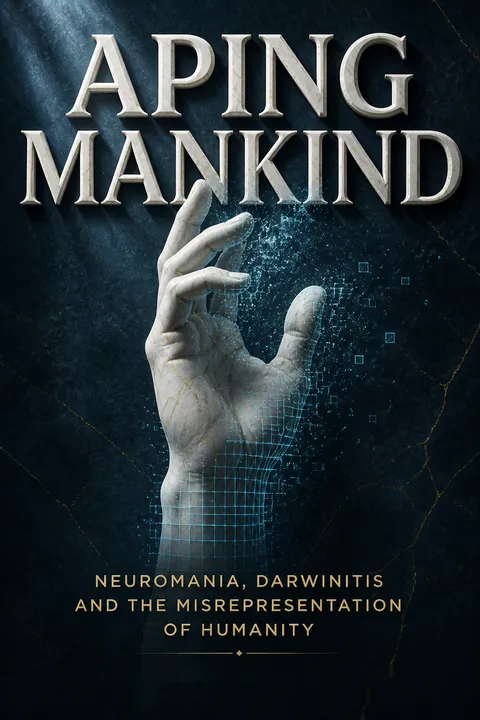
Aping Mankind receives mixed reviews (4.04/5 average). Supporters praise Tallis's critique of "neuromania" (reducing consciousness to brain activity) and "Darwinitis" (reducing humans to evolutionary biology). Many appreciate his atheist-humanist defense of human exceptionalism and free will against reductionist scientism. Critics note the book's density, repetitiveness, and lack of clear alternatives to the theories he attacks. Some find his writing verbose and his arguments unclear about consciousness's nature. Several reviewers value his insider critique as a neuroscientist challenging neurodeterminism, while others dismiss his position as pseudo-intellectual mysticism masquerading as scientific critique.
People Also Read

About the Author
Other books by Raymond Tallis
Download PDF
Download EPUB
.epub digital book format is ideal for reading ebooks on phones, tablets, and e-readers.








































