
Plot Summary
Bloodlines and Hidden Wings
In Paris, a young girl endures a clinical examination, her mother's fairy tales of angels and transformation echoing in her mind. This prologue sets the stage for a world where angelic bloodlines are hidden among humans, and the boundaries between myth and reality blur. The girl's resilience and the sense of a protective presence hint at her extraordinary nature, foreshadowing the revelation that she is not entirely human. Her mother's stories, filled with gods, swans, and knights, instill hope that nightmares can end and new eras begin. This opening establishes the central theme: the legacy of angelic blood, the pain of otherness, and the longing for belonging, all of which will drive the characters' journeys as they confront the truth of their origins and the dangers that come with it.
Murder Beneath the Eiffel Tower
Verlaine, an angel hunter, investigates a gruesome murder beneath the Eiffel Tower. The victim, a mutilated angelic creature, bleeds blue, and the scene is swarming with beings only he can see. Verlaine's unique vision, a gift and a curse, allows him to perceive the hidden angelic world. The discovery of Evangeline's ID on the corpse shakes him—she is someone he once loved and whose secret he has protected for years. The murder is not just a crime but a signal: the ancient war between angelologists and Nephilim is escalating. Verlaine's loyalty, guilt, and longing for Evangeline are reignited, setting him on a collision course with forces that threaten both the human and angelic worlds.
The Hunter and the Hunted
Evangeline, believed dead, is alive and on the run in Paris. She narrowly escapes an assassination attempt by Eno, a mercenary Emim angel. Verlaine, torn between duty and love, tracks her through the city, haunted by memories and dreams of her. Their reunion is fraught with tension—Evangeline reveals she is hunted for a mysterious jeweled egg, a relic tied to her family's past. She entrusts it to Verlaine, seeking his help to decipher its meaning. Their encounter is interrupted by another attack, forcing Evangeline to flee once more. The chapter explores the blurred lines between hunter and hunted, love and betrayal, and the cost of survival in a world where trust is a rare commodity.
The Grigori's Ruthless Pursuit
The Grigori Twins (Axicore and Armigus), heirs to a powerful Nephilim dynasty, orchestrate a campaign to capture Evangeline. Their disdain for humanity and obsession with purity drive their actions. Eno, their deadly agent, is dispatched to eliminate threats and retrieve the egg. The Grigori's machinations reveal the depth of angelic politics, the brutality of their methods, and the lengths they will go to preserve their bloodline. Their pursuit is not just personal but existential—a bid to reclaim lost power and reshape the world in their image. The chapter delves into the psychology of the oppressors, their fear of dilution, and the violence that underpins their rule.
The Egg's Secret Legacy
The Fabergé egg, passed down through generations, is more than a treasure—it is a vessel of secrets. Evangeline's connection to the egg draws the attention of both angelologists and Nephilim. In St. Petersburg, Vera Varvara, a scholar, helps Verlaine and Bruno trace the egg's provenance. They discover it is one of the missing imperial eggs, linked to the Romanovs and the Grigori family. Hidden within is a clue to a lost formula, a medicine from the time of Noah said to disarm angels. The egg becomes a symbol of hope and danger, its legacy entwined with the fate of both species. The quest for its meaning propels the characters deeper into a web of history, myth, and conspiracy.
Duel on Paris Rooftops
A dramatic confrontation unfolds on the rooftops of Paris. Eno challenges Evangeline to a ritual duel, a display of power and hierarchy among angels. Verlaine and Bruno witness the spectacle, torn between intervention and awe. Evangeline, though capable of victory, chooses mercy, submitting rather than killing Eno. Her refusal to embrace violence marks her as different from her kin—a choice that costs her freedom as Eno abducts her. The duel crystallizes the novel's central conflict: the struggle between inherited nature and chosen identity, the temptation of power versus the strength of compassion. It also cements Verlaine's resolve to rescue Evangeline, whatever the cost.
The Hermitage's Forbidden Archives
In the depths of the Hermitage Museum, Vera guides Verlaine and Bruno through hidden archives. They uncover Rasputin's Book of Flowers, a cryptic volume containing a recipe for Noah's legendary medicine. The book, filled with pressed flowers and Enochian script, links the Romanovs, Rasputin, and the angelic struggle. The discovery of Angela Valko's film, documenting her interrogation of Percival Grigori, reveals the Nephilim's plan to create a utopia—Angelopolis—by restoring their lost purity. The archives become a battleground of ideas, where history, science, and faith collide. The characters grapple with the moral implications of their discoveries, the burden of knowledge, and the possibility of redemption or destruction.
Rasputin's Book of Flowers
Rasputin's journal, passed down through revolution and exile, is revealed to be a coded manual for creating a substance capable of stripping angels of their powers. Nadia, the last keeper of the book, recounts its journey from the Romanov court to her Parisian antique shop. The formula requires rare ingredients: ancient flowers, silphium, and the mythical metal Valkine. Vera, Azov, and Sveti race to assemble the components, believing the elixir could end the Nephilim threat. Yet the book's history is one of failed hopes and unintended consequences. The chapter explores the allure and danger of forbidden knowledge, the thin line between medicine and poison, and the human longing to control fate.
The Black Sea's Ancient Seeds
On the Black Sea coast, Azov reveals his life's work: recovering seeds from the time of Noah, preserved in anoxic depths. These seeds, and the tablets inscribed in Enochian, are the genetic and linguistic keys to the pre-Flood world. The angelologists learn that Noah's medicine was real—a divine intervention to level the playing field between humans and angels. The search for silphium and Valkine leads them to Dr. Raphael Valko, who has cultivated an antediluvian garden in Bulgaria. The chapter weaves together myth, archaeology, and genetics, showing how the past shapes the present and how the hope for salvation is always shadowed by the risk of catastrophe.
The Siberian Panopticon
Deep beneath the Siberian tundra lies the panopticon, a vast prison where thousands of angels are held and studied. Dr. Merlin Godwin, once Angela Valko's protégé, now serves the Grigori, conducting experiments to create a master race. The panopticon is both a marvel of surveillance and a chamber of horrors, its design enforcing obedience through constant observation and brutal discipline. Verlaine, Bruno, and Yana infiltrate the facility, seeking to rescue Evangeline and stop Godwin's plans. The prison becomes a microcosm of the larger conflict—a place where the boundaries between captor and captive, human and angel, are tested to the breaking point.
The Angelic Uprising
Godwin's machinations trigger a catastrophic chain reaction. Explosions rock the panopticon, releasing its prisoners—Nephilim, Watchers, and lesser angels—into the world. The carefully maintained order disintegrates as violence erupts. Verlaine and Evangeline, reunited in the chaos, must navigate a landscape of fire, blood, and betrayal. The uprising is both literal and symbolic: the suppressed rise against their oppressors, and the old world is consumed in the flames of rebellion. The chapter captures the terror and exhilaration of revolution, the unpredictability of unleashed power, and the cost of freedom.
The Devil's Throat Descent
In Bulgaria, Vera, Azov, and Valko descend into the Devil's Throat Cavern, seeking Lucien—the egg-born archangel and Evangeline's true father. The cave, a place of myth and death, houses the Watchers, ancient angels imprisoned since the dawn of time. The angelologists witness the awakening of these beings, their beauty and sorrow overwhelming. The descent is both physical and spiritual—a confrontation with the origins of evil, the limits of human understanding, and the possibility of redemption. The chapter is suffused with awe, fear, and the sense that history is repeating itself on a grand, apocalyptic scale.
The Alchemical Child
The truth of Evangeline's parentage is revealed: she is the product of a "chemical wedding" between Angela Valko and Lucien, designed to be a weapon against the Nephilim. Her existence is both miracle and curse, a synthesis of human, Nephilim, and archangelic blood. The angelologists debate the ethics of her creation, the meaning of free will, and the dangers of playing God. Evangeline herself must choose between her inherited nature and her chosen path. The chapter explores the themes of identity, agency, and the burden of being made for a purpose not of one's own choosing.
The Watchers Awaken
The release of the Watchers from their subterranean prison marks a turning point. These beings, neither wholly good nor evil, bring with them the potential for both salvation and destruction. Lucien, as their leader, offers them a chance at redemption, but the scars of their fall run deep. The world above is unprepared for their return, and the balance of power shifts irrevocably. The chapter is a meditation on forgiveness, the cyclical nature of history, and the unpredictable consequences of awakening forces long kept in check.
The Collapse of Angelopolis
The panopticon's destruction and the escape of its prisoners signal the end of the world as it was known. The nuclear meltdown poisons the land, and the skies fill with warring angels. Human and angelic societies alike are thrown into chaos. The angelologists, battered and traumatized, must reckon with their failures and the new reality they have helped create. The collapse is both physical and metaphysical—a reckoning with the hubris of control, the limits of science, and the inevitability of change.
The Choice of Humanity
Amid the ruins, Evangeline is offered a choice: to take Noah's medicine and become human, or to remain an angel and risk becoming a weapon in the coming war. Her decision is fraught with uncertainty, love, and sacrifice. Verlaine pleads with her to return to humanity, promising to help her find her place. Evangeline's choice is left unresolved, a symbol of the ongoing struggle between destiny and free will, power and vulnerability, love and duty.
The Gathering Storm
As the dust settles, the angelologists regroup in Paris. The council disbands, recognizing that the old ways are no longer sufficient. Verlaine is chosen to lead the fight against the Nephilim and the Watchers. The world is on the brink of apocalypse, with armies forming and the boundaries between species dissolving. The chapter is a call to arms, a recognition that survival will require new alliances, new strategies, and the courage to face the unknown.
War at the End of the World
The novel ends with the promise of war—a final, decisive battle for the fate of humanity and angels alike. Verlaine, now a leader, is resolved to find Evangeline, torn between love and duty. The world is transformed, the old order destroyed, and the future uncertain. The emotional arc is one of loss, hope, and the determination to fight for a better world, even as the darkness gathers. The story closes on the threshold of a new age, where the outcome is unwritten and every choice matters.
Analysis
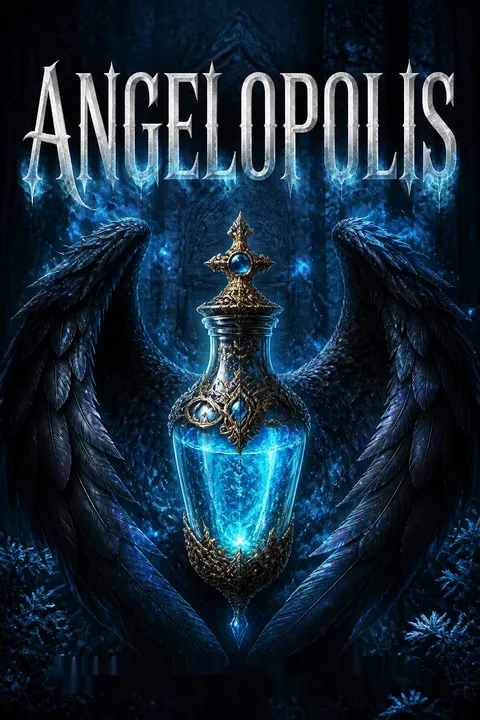
Angelopolis is a sweeping, genre-blending tale that fuses myth, history, and speculative science to explore the perennial struggle between power and compassion, destiny and choice. At its core, the novel interrogates the dangers of purity—whether genetic, ideological, or moral—and the violence that arises from the desire to control or perfect the world. The angelic and human characters alike are haunted by the legacies of their ancestors, yet the story insists on the possibility of transformation: mercy in the face of violence, love in the midst of war, and the courage to choose one's own path. The use of historical artifacts and real-world settings grounds the fantastical elements, inviting readers to question the boundaries between legend and reality. In a modern context, Angelopolis resonates as a cautionary tale about the costs of fanaticism, the perils of unchecked ambition, and the enduring need for empathy. Its lessons are clear: true power lies not in domination but in understanding, and the future belongs to those who can reconcile the contradictions within themselves and their world.
Review Summary
People Also Read

Characters
Evangeline Cacciatore
Evangeline is the heart of the narrative—a woman born of human, Nephilim, and archangelic blood, engineered to be a weapon but longing for agency and belonging. Raised in ignorance of her true nature, she is thrust into a deadly game of pursuit and survival. Her compassion and refusal to embrace violence set her apart from her kin, while her powers make her both a target and a hope for change. Psychoanalytically, Evangeline embodies the struggle for self-definition against the weight of destiny and genetic inheritance. Her relationships—with Verlaine, her would-be lover and hunter; with Lucien, her true father; and with the Grigori, her enemies—are fraught with longing, betrayal, and the search for identity. Her arc is one of transformation, as she moves from hunted to chooser, from object to subject, her final decision symbolizing the possibility of redemption and the enduring power of free will.
V.A. Verlaine
Verlaine is an angelologist whose unique vision allows him to see the hidden world of angels. Once an academic, he is drawn into the war by his love for Evangeline and his sense of duty. His journey is marked by guilt, obsession, and the struggle to reconcile his role as a hunter with his compassion for the hunted. Verlaine's psychological complexity lies in his divided loyalties—he is both protector and pursuer, lover and executioner. His relationship with Bruno is that of mentor and protégé, while his connection to Evangeline is the emotional core of the story. Over time, Verlaine evolves from a passive observer to a decisive leader, ultimately chosen to guide humanity in the coming war. His arc is one of self-discovery, sacrifice, and the painful recognition that love and violence are often intertwined.
Bruno
Bruno is a seasoned angel hunter, Verlaine's mentor, and a man marked by loss and obsession. His past is entwined with the Valko family, and his history with Eno, the mercenary angel, is both professional and deeply personal. Bruno's psychological profile is that of a man who has seen too much, whose cynicism is tempered by loyalty and a lingering hope for redemption. He is pragmatic, resourceful, and willing to bend the rules to achieve his goals. His relationship with Verlaine is paternal, while his interactions with Yana and the Russian angelologists reveal his adaptability and respect for competence. Bruno's arc is one of endurance, as he navigates the collapse of the old order and prepares for the uncertainties of the new world.
Eno
Eno is an Emim angel, a warrior bred for violence and seduction. She serves the Grigori with ruthless efficiency, her loyalty born of fear and ambition. Eno's psychology is shaped by trauma and humiliation—her early betrayal by humans fuels her hatred and her pleasure in killing. She is both predator and prey, her beauty masking a capacity for cruelty. Eno's relationship with the Grigori is transactional, while her encounters with Verlaine and Bruno are charged with danger and eroticism. Her arc is one of self-destruction, as her violence ultimately leads to her own downfall, a symbol of the costs of unchecked power and the cycle of vengeance.
Vera Varvara
Vera is a Russian angelologist, brilliant and emotionally guarded. Her expertise in history and artifacts makes her indispensable to the quest for Noah's medicine. Vera's psychological makeup is defined by intellectual ambition, a desire for recognition, and a reluctance to form attachments. Her brief romance with Verlaine is a reminder of her vulnerability, while her partnership with Azov and Sveti reveals her capacity for collaboration and courage. Vera's arc is one of awakening, as she moves from detached observer to active participant, risking her life to unlock the secrets that could save or doom the world.
Dr. Raphael Valko
Valko is a legendary angelologist, father to Angela and grandfather to Evangeline. His life's work is the preservation and study of antediluvian seeds and the pursuit of knowledge. Valko's psychology is marked by grief, pride, and a sense of responsibility for the consequences of his discoveries. He is both mentor and gatekeeper, his garden a symbol of hope and hubris. Valko's relationships—with his daughter, his colleagues, and Lucien—are complex, shaped by love, loss, and the burden of legacy. His arc culminates in sacrifice, as he gives his life to complete the formula that may change the fate of angels and humans alike.
Dr. Merlin Godwin
Godwin is a former protégé of Angela Valko, now the chief scientist of the Siberian panopticon and a collaborator with the Grigori. His psychology is defined by ambition, resentment, and a willingness to cross any ethical line in pursuit of power. Godwin's experiments are both scientific and sadistic, his betrayal rooted in a desire to surpass his mentors and reshape the world. His relationships—with Eno, the Grigori, and his former colleagues—are manipulative and transactional. Godwin's arc is one of hubris and downfall, his death a fitting end for a man who sought to play God and was consumed by his own creations.
Lucien
Lucien is the product of a "chemical wedding" between Alexandra Romanov and the archangel Gabriel, raised in secrecy and later imprisoned for his uniqueness. He is Evangeline's true father, embodying the possibility of a new, purer race of angels. Lucien's psychology is serene, detached, and compassionate, yet marked by the sorrow of exile and the burden of being a living experiment. His relationship with Evangeline is both paternal and symbolic—a meeting of the old and new orders. Lucien's arc is one of awakening, as he leads the Watchers into the world and offers a vision of reconciliation or apocalypse.
The Grigori Twins (Axicore and Armigus)
The Grigori twins are the embodiment of Nephilim arrogance and the obsession with bloodline purity. Identical in appearance and purpose, they are ruthless, cunning, and disdainful of humanity. Their psychology is shaped by entitlement, fear of dilution, and a willingness to use any means to achieve their ends. Their relationship with Eno is exploitative, while their pursuit of Evangeline is both personal and political. The twins' arc is one of escalation, as their actions help trigger the collapse of the old order and the unleashing of forces beyond their control.
Nadia Ivanova
Nadia is the last keeper of Rasputin's Book of Flowers, a woman whose life has been shaped by loss, exile, and the burden of history. Her psychology is marked by resilience, bitterness, and a deep hatred for the Nephilim who destroyed her family. Nadia's relationships—with Vera, Bruno, and the angelological community—are defined by trust hard-won and easily lost. Her arc is one of reluctant participation, as she passes on the knowledge that may save or doom the world, her story a testament to the endurance of memory and the costs of survival.
Plot Devices
Duality of Nature and Choice
The novel's central plot device is the tension between genetic inheritance and personal choice. Characters like Evangeline and Lucien are engineered or born for specific purposes, yet their actions defy the expectations of their creators. The narrative structure mirrors this duality of nature and choice, alternating between the perspectives of hunters and hunted, scientists and subjects, angels and humans. Foreshadowing is used extensively—dreams, prophecies, and historical parallels hint at the coming apocalypse. The use of artifacts (the Fabergé egg, Rasputin's book, Noah's seeds) as MacGuffins drives the plot, each object a repository of history, power, and potential salvation or destruction. The panopticon prison serves as both a literal and metaphorical crucible, testing the limits of control and the inevitability of rebellion. The story's climax—the release of the Watchers and the collapse of the old order—is both a fulfillment of prophecy and a consequence of human (and angelic) hubris, leaving the future open and the meaning of victory ambiguous.
Angelology Series
Download PDF
Download EPUB
.epub digital book format is ideal for reading ebooks on phones, tablets, and e-readers.








































