
Key Takeaways
1. Asian Americans: The "Inconvenient Minority" Challenging Racial Narratives
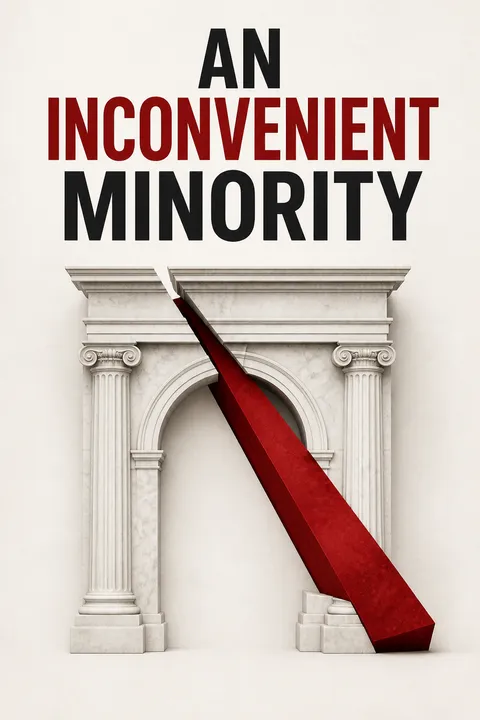
Asian American success—arising through little more than merit—positions them as an inconvenient minority for the narrative of Critical Race Theory.
Challenging the narrative. Asian Americans, despite historical oppression like the Chinese Exclusion Act and Japanese internment, have achieved significant social and economic advancement in the U.S. This success, largely driven by merit, contradicts the intellectual Left's framework of dividing society solely into privileged (white) and oppressed (minority) classes. Their upward mobility, often without historical wealth or social connections, highlights the power of hard work and talent.
Historical context. Asian immigrants, particularly those from South and East Asia, faced severe discrimination, yet many arrived with a strong desire for a fair chance in a country valuing fairness and equality. Their disproportionate success, especially in fields valuing merit, makes them an anomaly in the Critical Race Theory narrative, which posits systemic racism as the primary determinant of life outcomes for "minoritized" groups.
Paradox for CRT. Critical Race Theorists struggle to explain Asian American success within their framework. They often resort to labeling Asian Americans as "model minorities," "white-adjacent," or even "white," accusing them of upholding "white supremacy culture" and engaging in "anti-Blackness" to maintain perceived privilege. This redefines merit as a feature of white supremacy, dismissing hard work and sacrifice as reasons for success.
2. America's Meritocracy is Eroding, Sacrificing Excellence for Identity Politics
When identity politics undergird merit-based principles and replace them with Leftist divides along the lines of race and proximity to power, Asian Americans are squeezed out of positions for which they are well qualified, and the totality of our culture of excellence suffers.
The decline of merit. The U.S. is witnessing a decline in meritocracy, where talent and hard work are increasingly overshadowed by identity politics. This shift is evident in institutions like Thomas Jefferson High School, a top-ranked math and science school, where admissions policies were drastically altered to reduce Asian American enrollment in the name of "diversity."
Thomas Jefferson High School case. Historically, TJ's admissions were based on standardized tests, grades, and recommendations. As Asian American students, driven by parental investment in math education, began to dominate admissions (73% in 2020), the school board, aiming for more Black and Hispanic students, overhauled the process. They introduced a "merit lottery" system, which projected a significant drop in Asian admissions (up to 55%) while Black and Hispanic representation remained in single digits.
- Old system: Standardized test, grades, recommendations.
- New system (post-2020): "Merit lottery" for students above a 3.5 GPA.
- Projected impact: Asian enrollment down 27-55%, white enrollment up, Black/Hispanic still low.
Consequences for excellence. This move, influenced by figures like Ibram X. Kendi who decry standardized tests as "racist policies," sacrifices the principle of meritocracy. Such policies not only disadvantage highly qualified Asian Americans but also risk lowering overall institutional performance and America's competitive edge, as seen in declining international test scores and critical failures in institutions like the CDC.
3. Harvard's Admissions System Discriminates Against Asian Americans
Either Harvard admissions officers were biased, then, against Asian American applicants, or the personality score was simply a pretext to include race as a defining category of admission, Arcidiacono argued.
The Harvard lawsuit. The Students for Fair Admissions (SFFA) v. Harvard case exposed Harvard's long-standing practice of using race in admissions, allegedly to the detriment of Asian Americans. Economist Peter Arcidiacono's analysis of Harvard's data revealed a significant "personality score" penalty for Asian applicants, despite their superior academic and extracurricular ratings. This penalty, if removed, would increase Asian admissions by 19%.
Mechanisms of discrimination. Harvard's system rated applicants on academics, extracurriculars, athletics, and a subjective "personality score." Asian Americans consistently received the highest academic and extracurricular scores but the lowest personality scores. This suggests either explicit bias or that the personality score served as a pretext for racial balancing.
- Asian applicants: Highest academic and extracurricular scores.
- Personality score: Asian Americans rated significantly lower than all other races.
- SAT scores: Asian students needed 140 points higher than white students, and 450 points higher than Black students, for the same chance of admission.
Legal and cultural implications. Harvard, with its vast resources, vigorously defended its "race-conscious" admissions. The case highlighted how elite institutions, while claiming to value diversity, may perpetuate an "exclusive clique" mentality. This system, which also favors legacies and donors, disproportionately disadvantages Asian Americans who lack these connections, forcing them into a hyper-competitive environment where their merit is penalized.
4. "Diversity and Inclusion" Often Excludes Asian Americans and Serves Bureaucratic Agendas
To be clear on who Google welcomes as part of its diversifying efforts, Forbes diversity writer Ruth Umoh wrote, "Google released its seventh consecutive diversity report on Thursday, revealing modest gains in representation for women and people of color, and a disproportionately white, Asian and male workforce."
Silicon Valley's paradox. Despite Asian Americans constituting a majority of tech workers in the Bay Area (50.1% in 2010) and a significant portion of technical roles at companies like Facebook (53.4%), they are often overlooked or even implicitly excluded from "diversity and inclusion" (D&I) initiatives. Google's diversity reports, for instance, focus almost exclusively on increasing representation for "Black+" and "Latinx+" employees, barely mentioning Asians.
The D&I industry's origins. The modern D&I industry emerged from Equal Employment Opportunity (EEO) compliance officers in the 1980s. Facing deregulation, they rebranded their role from enforcing affirmative action quotas to promoting "diversity" as a business advantage. This shift allowed them to perpetuate their positions by aligning D&I with corporate profitability, often using the success of highly skilled Asian immigrants to bolster the economic case for "minority" representation.
Disparities in leadership. This ideology leads to stark disparities:
- Facebook: Asians make up 44.5% of total positions and 53.4% of technical roles, but only 25.4% of leadership positions—a nearly 50% depression.
- Other races: Black employees have 3.9% of all roles and 3.4% of leadership; Hispanic employees have 6.3% of all roles and 4.3% of leadership. White employees have 41% of all roles and 63% of leadership.
This suggests that D&I, while ostensibly promoting inclusion, often marginalizes Asian Americans, exploiting stereotypes to limit their advancement and maintain existing power structures.
5. Standardized Tests Offer Objective, Meritocratic Pathways for Immigrants
We liked the Specialized High Schools because we knew they didn’t discriminate against Asians. How could they? Admissions is solely based on one objective, race-blind test.
The SHSAT's role. New York City's Specialized High Schools (SHS), like Stuyvesant and Bronx Science, use a single, objective entrance exam (SHSAT) for admissions. This system is highly valued by low-income immigrant communities, particularly Chinese Americans, as it provides a clear, meritocratic path to quality education, free from subjective biases or social connections.
Historical context and impact. The SHSAT's origins are rooted in providing opportunities for groups historically excluded from elite institutions, such as Jewish Americans in the early 20th century. The 1971 Hecht-Calandra Act permanently enshrined the SHSAT as the sole admissions criterion, ensuring a race-blind process.
- Jewish students: Dominated SHS in the mid-20th century.
- Black/Hispanic students: Reached 55% enrollment at Brooklyn Tech by 1982, demonstrating the test's initial inclusivity.
- Asian students: Now comprise 70% of Stuyvesant, reflecting their academic focus.
Defending the test. Despite criticisms labeling the SHSAT as "racist" or a tool for "opportunity hoarding," the test consistently identifies top academic talent and has produced numerous Nobel laureates and leaders. Attempts by NYC Mayor Bill de Blasio to dismantle the SHSAT, replacing it with a "top seven percent" rule from each middle school, were met with fierce opposition from Asian American communities, who saw it as an attack on meritocracy and their children's opportunities.
6. Critical Race Theory Justifies Discrimination in the Name of "Equity"
If discrimination is creating equity, then it is antiracist. If discrimination is creating inequity, then it is racist.
The core of CRT. Critical Race Theory (CRT) posits that law and legal institutions are inherently racist, and race is a social construct used by white people to maintain power. It divides society into empowered (privileged white) and disempowered (oppressed Black and "people of color") groups. From this, concepts like "systemic racism" and "racial equity" emerge.
Kendi's "antiracist" framework. Ibram X. Kendi, a prominent CRT proponent, argues that one can only be "racist" or "antiracist," never "race-neutral." He defines "antiracist discrimination" as discrimination that creates "racial equity" (equality of outcome based on race). This ideology provides a moral justification for treating individuals differently based on race to achieve predetermined racial outcomes.
- Racist discrimination: Creates inequity.
- Antiracist discrimination: Creates equity.
Anti-Asian implications. This framework directly impacts Asian Americans. Their "overrepresentation" in fields like tech and education is seen as an "inequity" that must be corrected. CRT dictates that Asian Americans should be "shoved out" to make room for "underrepresented" minorities, sacrificing meritocratic excellence for unmerited equity. This ideology labels Asian achievement as "white adjacency" or complicity in white supremacy, making their suppression morally justifiable.
7. Affirmative Action's "Mismatch" Harms Intended Beneficiaries
Mismatch: How Affirmative Action Hurts the People It Intends to Help, a 2012 book by Sander and his colleague Stuart Taylor, explicates his studies on how racial preferences at elite universities tend to harm Black and Hispanic students’ graduation rates and performance on important graduate-level statistics, like bar and STEM exam passage rates.
The mismatch theory. Dr. Richard Sander's research on affirmative action reveals a "mismatch" phenomenon: Black and Hispanic students admitted to elite universities through racial preferences often perform worse in certain subjects (STEM, law) than if they had attended schools better matched to their academic aptitude. This can lead to lower grades, higher dropout rates, and poorer performance on graduate exams.
UCLA Law School example. After California banned affirmative action in public universities (Proposition 209 in 1996), Sander observed significant gains at other UC campuses for Black and Hispanic students, including higher graduation rates and grades. While Black enrollment at UCLA initially decreased, students who would have been admitted through preferences instead thrived at schools where they were better matched academically.
- Tier 1 Law Schools (with AA): Black students often perform two standard deviations worse in GPA.
- Salary impact: This GPA penalty can offset the prestige benefit, leading to similar or even lower salaries compared to attending a lower-tier, non-AA school.
Elite guilt and unintended consequences. Affirmative action, while often driven by elite guilt and a desire for "diversity," primarily benefits privileged Black and Hispanic students (71% of underrepresented minorities at Harvard come from well-off backgrounds). It also diverts attention and resources from Historically Black Colleges and Universities (HBCUs), which often provide a more supportive and effective educational environment for Black students.
8. Asian American Political Awakening: Grassroots Activism
Our victory is a more decisive indicator of political awakening or political coming of age of Asian Americans.
Challenging Proposition 16. In California, Asian Americans spearheaded a grassroots movement against Assembly Constitutional Amendment 5 (ACA-5), which sought to repeal Proposition 209, a 1996 ban on racial preferences in public employment, education, and contracting. Led by figures like Wenyuan Wu and Ward Connerly, the "No On 16" campaign (ACA-5 became Proposition 16 on the ballot) mobilized thousands of Asian American donors and volunteers.
The campaign's struggle. The "No On 16" campaign faced immense opposition, outspent 13 to 1 by the "Yes On 16" side, which included wealthy liberal donors and powerful teachers' unions. The Attorney General's biased ballot title ("Allow Diversity as a Factor...") further skewed public perception. Despite these challenges, the campaign reframed the battle as a fight of the grassroots against the elite, using car rallies and targeted media outreach.
A decisive victory. On November 3, 2020, California voters rejected Proposition 16 by a 57% margin, a more decisive defeat than Proposition 209's initial passage. This victory, largely attributed to the unprecedented political mobilization of Asian Americans, signaled a significant "political awakening" for the community. It demonstrated their growing willingness to fight for meritocracy and equal rights, even against powerful liberal establishments.
9. Lack of Cultural Capital Leaves Asian Americans Vulnerable to Stereotypes
Asian Americans’ failure to obtain cultural capital—a result of the community’s de-emphasis of American political matters—continues to allow both the Left and Radical Right to ignore them.
The "invisible" minority. Despite significant contributions and high intermarriage rates, Asian Americans often remain "invisible" in mainstream American culture. They lack the widespread cultural capital—knowledge and sympathy for their culture and history—that other minority groups have cultivated. This makes them vulnerable to negative stereotypes and political marginalization.
Weaponized stereotypes. Historically, stereotypes like "hardworking but cold" or "lacking personality" have been weaponized against Asians.
- 19th Century: Chinese immigrants were resented for their work ethic during the gold rush and railroad boom, leading to discriminatory laws and violence. Denis Kearney, an Irish immigrant, effectively used rhetoric to portray Chinese men as selfish, servile "coolies" taking American jobs.
- Modern era: These stereotypes persist, influencing perceptions in dating (Asian men as "least desirable") and professional settings (Asian tech workers as "quants" but not leaders).
Hollywood's role. Hollywood has historically perpetuated one-dimensional or emasculating portrayals of Asian men (e.g., Long Duk Dong) and exoticized Asian women. While "diversity and inclusion" initiatives aim to increase representation, they often lead to tokenization or superficial portrayals, failing to build genuine cultural capital. Asian Americans need to build cultural influence from the ground up, as Black culture did with rap, rather than relying on capricious mainstream acceptance.
10. America Must Choose Between Meritocracy and Enforced Racial Sameness
America is diverse—in all respects, racially and otherwise. The trick is to learn how to appreciate not only the diversity of background that people bring, but also how one’s background informs one’s choices; and to allow people the freedom to choose branches that diverge from their backgrounds.
The core dilemma. The U.S. faces a critical choice: uphold meritocracy, where individuals are judged by their character and contributions, or embrace an ideology of "racial equity" that mandates equality of outcome through racial preferences. The latter, championed by critical race theory, risks transforming America into a society where background defines destiny, rather than individual effort.
The true meaning of diversity. Authentic diversity, as envisioned by thinkers like Friedrich Hayek and Catholic tradition, arises from spontaneous order and individual freedom. It celebrates the unique talents and choices people make, allowing communities to gravitate naturally towards areas of strength. This contrasts sharply with "diversity and inclusion" as practiced by many elite institutions, which often imposes "enforced sameness" by artificially balancing racial demographics, regardless of individual merit or choice.
The path forward. Asian Americans, by fighting for objective meritocracy and equal rights, are advocating for a principle that benefits all Americans. Their activism, exemplified by figures like Lin Yang and Gwen Samuel, seeks to dismantle policies that divide people by race and instead foster a society where hard work and character are paramount. This struggle is not just for Asian Americans but for the fundamental promise of the American Dream: that one's background does not have to define them, and opportunity is open to all.
People Also Read








Download PDF
Download EPUB
.epub digital book format is ideal for reading ebooks on phones, tablets, and e-readers.








































