
Key Takeaways
1. Chicago's Pervasive Violence
The numbers are staggering.
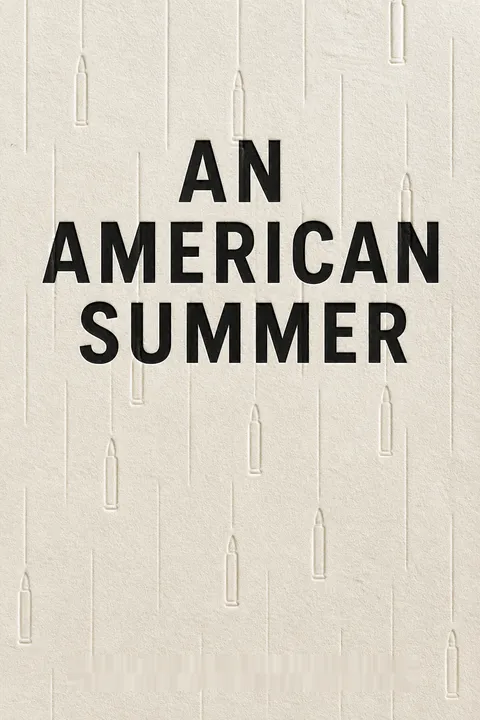
A city under siege. Alex Kotlowitz immerses himself in Chicago's violence, revealing a relentless summer in 2013 where 172 people were killed and 793 wounded by gunfire. This carnage, concentrated in impoverished and segregated neighborhoods, far exceeds American combat deaths in Afghanistan and Iraq combined, yet often goes unnoticed by the wider nation. The author highlights how Chicago has become a symbol of protracted distress, where citizens kill citizens, and children kill children.
A daily reality. The violence is not an abstract statistic but a deeply personal and public reality for residents of the South and West Sides. Shootings occur like "summer rain showers," often with unintended targets, making life unpredictable and dangerous. The author notes that if you are Black or Hispanic in these areas, it's "virtually impossible not to have been touched by the smell and sight of sudden, violent death."
A clouded conversation. This persistent violence has made it difficult to have reasonable conversations about poverty and race in the country. Unlike national tragedies like Newtown or Parkland, the widespread killings in Chicago's most ravaged communities do not elicit the same national grieving or questioning, revealing a paradox of "generosity beside such neglect."
2. The Deep Scars of Trauma
Trauma splinters memory.
Invisible wounds. The psychological toll of constant violence is profound, leaving individuals with fragmented memories, anxiety, and a sense of being "rattled." Pharoah, after witnessing a murder, initially appeared numb, but years later relived the event with hyperventilation and fright, demonstrating how violence gets "in his bones."
Coping mechanisms. People develop various ways to cope with this pervasive trauma, from emotional detachment to physical manifestations.
- Marcelo developed skittishness, nervous laughter, and nail-biting, requiring Wellbutrin for anxiety after being stabbed and shot.
- Jimmy Allen was consumed by a decade-long desire for revenge after being shot and seeing his mother wounded.
- Roel Villarreal, paralyzed by a gunshot, found a strange tranquility, believing his injury was "payback" or "the only way God could stop me."
A constant struggle. The author emphasizes that one cannot get accustomed to violence; instead, individuals must "fight—and fight hard—not to let the ugliness and inexplicability of the violence come to define you." The struggle is to maintain balance in a world that is constantly shifting beneath their feet.
3. Justice's Elusive Nature
Justice too often feels arbitrary. Like a game of craps.
A broken system. The criminal justice system in Chicago often fails to deliver equitable outcomes, particularly for youth in marginalized communities. Marcelo's case exemplifies this, where prosecutors sought an "exceptionally high bond" for a first-time offender, viewing robbery as a "gateway crime" to more violent acts.
The felony trap. A felony conviction can permanently derail a life, restricting access to:
- Voting rights
- Federal college loans
- Federally funded housing
- Licenses for professions like nursing or teaching
- Employment opportunities
Arbitrary outcomes. The system's rigidity and focus on statistics over individual circumstances lead to outcomes that feel unjust. Judge Neville's "total reluctance" in sentencing Gerald Rice to natural life, despite acknowledging his cognitive delays and lesser role, highlights how mandatory sentences strip judges of the ability to consider individual defendants.
4. Forgiveness Amidst Devastation
The only thing you can do is love, because it is the only thing that leaves light inside you, instead of the total, obliterating darkness.
A mother's profound choice. Lisa Daniels, whose son Darren was killed in a drug-related shootout, embodies a rare form of "compassionate relief" and forgiveness. Despite her initial shame and anger, she refused to hold a grudge against Michael Reed, her son's killer, recognizing that "he was in a messed-up place, like Darren."
Blurring lines. Lisa's decision was influenced by the ambiguous nature of her son's death, where both Darren and Reed came prepared to rob each other. She understood that "victim" and "perpetrator" lines blurred, and that her son could have easily been in Reed's position. This led her to advocate for leniency for Reed, stating, "I was just looking for the right thing to be done."
Transformative empathy. Lisa's journey led her to establish the Darren B. Easterling Center for Restorative Practices, aiming to help troubled children and grieving mothers. Her act of forgiveness, even writing to Reed in prison, transformed her grief into a powerful force for good, demonstrating that "in death there is love."
5. Identity and the Streets
It’s tough enough to be a teen in the best of circumstances, grappling with who you are and who you want to be.
Dual lives. Many young people in Chicago's violent neighborhoods are forced to navigate a complex dual identity. Pharoah, living with the author, struggled with his sense of self, caught between his family's expectations and his new environment. Marcelo, "the stupid smart kid," balanced straight A's at a Catholic school with "cavorting with his old running mates" from the Latin Kings.
Seeking belonging. In communities marked by abandonment and lack of opportunity, gang affiliation often provides a sense of belonging and respect. Victor, adopted by Mike, felt like a "misfit" and joined the Latin Counts, seeking a place where he felt he belonged. Napoleon English, a former gang enforcer, admitted, "It’s the fear that make people respect you. I used to love people shutting their doors when they see me coming."
Challenging stereotypes. Ashara Mohammed, growing up in Auburn Gresham, consciously distanced herself from the "thugs" and "criminals" she saw around her, believing she was "better." However, Aries's arrest for murder forced her to confront her own "mask" and realize that young men like him were "struggling just like me," leading to a profound shift in her perspective.
6. The Weight of Witnessing
The violence, the trauma, he realizes, has this paradoxical narrative. It isolates people.
Unseen burdens. The act of witnessing violence leaves deep, often unspoken, scars. Thomas, the Harper High School student, became the "Zelig of Englewood's violence," witnessing:
- His friend Nugget killed at her birthday party at age ten.
- His brother Leon shot and paralyzed across the street from their home.
- A boy shot in the face in a park.
- Two men shot and killed in a car.
These experiences led him to retreat, become taciturn, and express a desire to "hurt someone" to alleviate his own pain.
Isolation and connection. While trauma can isolate individuals, it can also forge deep bonds. Pete Nickeas, the overnight crime reporter, initially felt isolated by the constant exposure to violence but found comfort and connection with people in the streets who had seen similar horrors. He got a tattoo: "The closest bonds we will ever know are bonds of grief. The deepest community one of sorrow."
The cost of empathy. Social workers like Anita Stewart, who worked with Thomas, also bear the emotional weight of witnessing their students' suffering. Anita herself experienced numbness in her face and recurring nightmares, acknowledging, "We weren't trained for this. We weren't taught how to bury a child."
7. Systemic Failures and Unintended Outcomes
Cut the snake off at the head. And it worked, for a while. It disrupted the street-corner drug trade and seemed to reduce the violence. But it had unintended consequences, as public policy so often does.
Policing strategies. Chicago's police department has tried various tactics to combat violence, including:
- Community policing
- SWAT teams
- Data-driven hot spot deployment
- Algorithms to predict shooters
- Efforts to win over gang members
Despite these, the shootings continue, leading to cynicism from observers like reporter Pete Nickeas, who criticized public officials for "touting numbers" only when they looked good.
Gang fragmentation. The aggressive targeting of gang chiefs in the late 1990s and early 2000s, while initially reducing violence, led to unintended consequences. The vacuum created by incarcerating leaders caused gangs to fracture into hundreds of smaller, localized cliques or crews. This made it "virtually impossible not to be associated with one group or another," and disputes became more arbitrary and petty, as noted by former OGs Jimmie Lee and Napoleon English.
Disrespect and neglect. The author highlights how public policy often exacerbates existing problems. The razing of public housing projects, while intended to integrate communities, sometimes left former residents feeling blamed for any issues. The closure of schools and El stops in neighborhoods like Englewood further isolates communities, contributing to a "despair tour" where residents feel abandoned and without hope.
8. The Cycle of Fear and Silence
Fear runs through these communities like a steady rip current, pulling people out to sea, where they’re on their own, flailing to stay afloat.
The "no-snitch" code. The pervasive "no-snitch" culture in Chicago's violent neighborhoods is often misunderstood. It's not solely about defiance or dishonor, but primarily an act of "self-preservation." Witnesses, like Ramaine's cousin, fear retaliation if they cooperate with police, knowing that "if I testified, they'd come after me."
Low clearance rates. The low rates of solving murders (one in four) and non-fatal shootings (one in ten) reinforce this fear. When justice is rarely served through official channels, individuals are left to either take matters into their own hands or live in constant vigilance. This creates a climate where "if you do the right thing, bad things often happen."
Hyper-vigilance. Communities become "hyper-vigilant," constantly on guard against threats. Parents advise children to "stay alert. Keep your head up. Look around you. Be safe." This constant state of alert, coupled with the knowledge that police often fail to protect, leads to a deep distrust of law enforcement and a sense that "nobody cares."
9. Reclaiming Life After Incarceration
The worst enemy I had in prison was myself.
The struggle for re-entry. Life after prison is fraught with challenges, from finding employment to rebuilding relationships and confronting past actions. George Spivey, after serving ten years, found his relationship with his son Daquan complicated by distance and resentment, and struggled to reconnect with a world that had moved on.
Internal battles. Ex-offenders often grapple with profound internal conflicts. Eddie Bocanegra, who killed a man at eighteen, dedicated himself to a "day of atonement" every July 17, fasting and helping others, constantly seeking to prove his worthiness. He confessed, "I don’t feel like I’ve done enough to honor his life."
Finding purpose. Despite the immense difficulties, many find ways to transform their experiences into positive change. Eddie became an outreach worker, then executive director of the YMCA's violence prevention efforts, creating the "Urban Warriors" program to connect combat veterans with gang-involved youth. Gerald Rice, after decades in prison for a crime he may not have fully understood, sought to clear his name and rebuild his life, though his struggle with addiction continued.
10. Finding Hope in the Aftermath
I look at my little girls. What would I do if someone were to do something to my daughters?
The enduring human spirit. Despite the overwhelming despair and violence, individuals find ways to push back and find meaning. Lisa Daniels transformed her grief into activism, while Eddie Bocanegra, haunted by his past, found solace and purpose in helping others and building a family. His love for his daughters made him confront his own capacity for violence and forgiveness.
Small acts of resilience. Hope manifests in various forms:
- Mothers forming support groups to mourn and advocate.
- Individuals pursuing education and new careers.
- The simple act of planting a garden, as Eddie did, to find peace.
- The determination to break cycles of violence, even when it feels impossible.
A collective responsibility. The author implicitly argues that understanding these individual struggles is crucial for the nation to confront its own paradoxes. The stories reveal that hope, though fragile, exists in the determination of those who refuse to be defined by their worst experiences, and who continue to seek connection and meaning amidst profound loss.
Review Summary
An American Summer is widely praised for its empathetic, humanizing portrayal of gun violence in Chicago's south and west side neighborhoods. Readers commend Kotlowitz's immersive reporting and ability to give voice to victims, survivors, and perpetrators alike. Many found the stories deeply moving and lingering. Common criticisms include the book's lack of policy solutions or analytical framework, and its sometimes disjointed narrative structure. Some international readers noted translation issues. One reviewer questioned the ethics of a white author profiting from Black tragedy. Overall, readers consider it essential, powerful reading.
People Also Read

Download PDF
Download EPUB
.epub digital book format is ideal for reading ebooks on phones, tablets, and e-readers.








































