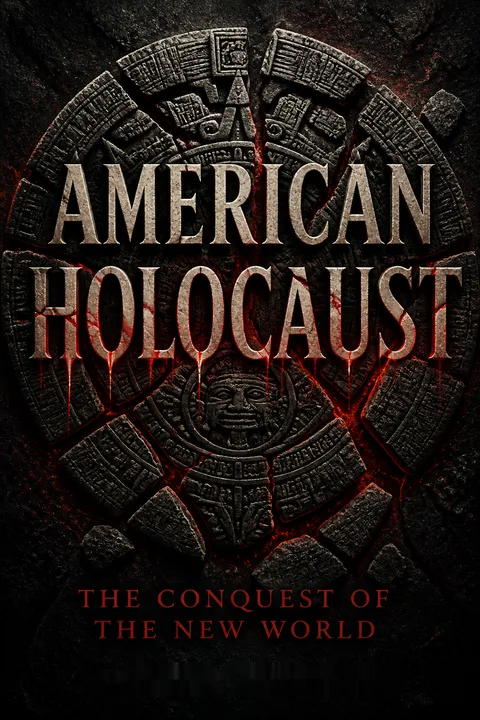

Key Takeaways
1. The Americas before Columbus were a world of immense population and cultural sophistication.
When we saw so many cities and villages built in the water and other great towns built on dry land and that straight and level causeway going towards [Tenochtitlán], we were amazed and said that it was like the enchantments they tell of in the legend of Amadis, on account of the great towers and [temples] and buildings rising from the water, and all built of masonry.
A vibrant hemisphere. Before 1492, the Americas were home to tens of millions of people, possibly exceeding Europe's combined population, living in diverse and complex societies across 16 million square miles. From the Arctic to Tierra del Fuego, indigenous cultures thrived, developing sophisticated agricultural, architectural, and social systems.
Urban marvels and advanced societies. Cities like Tenochtitlán, with an estimated 350,000 residents, dwarfed contemporary European capitals in size and cleanliness, boasting intricate canal systems, floating gardens, and bustling marketplaces. Other cultures, like the Hopewell and Anasazi, built massive earthen mounds and multi-story complexes, demonstrating advanced engineering and social organization.
- Tenochtitlán: 350,000 residents, larger than London or Seville.
- Hopewell Culture: Extensive trade networks, monumental earthworks.
- Inca Empire: 25,000 miles of roads, advanced irrigation, cities like Cuzco.
Rich cultural tapestry. Beyond grand cities, countless independent nations flourished, each with unique languages, political structures, and spiritual beliefs deeply connected to their environment. Their ingenuity in adapting to diverse climates, from Arctic tundra to Amazonian rainforests, showcased a profound understanding of their lands.
2. European arrival unleashed catastrophic "virgin soil" epidemics, decimating native populations.
So many Indians died that they could not be counted.
Invisible killers. The isolation of the Americas for tens of thousands of years meant native populations had no immunity to Old World diseases like smallpox, measles, influenza, and typhus. These pathogens, carried by Europeans, spread with unprecedented virulence, often preceding the explorers themselves.
Unimaginable mortality. On Hispaniola, the population of approximately 8 million in 1492 plummeted by a third to a half by 1496, and to less than 20,000 by 1518. This "virgin soil" phenomenon meant death rates of 90-98% were common across the hemisphere, far exceeding any European plague.
- Hispaniola: 8 million to near extinction in decades.
- Central Mexico: 25 million to 1.3 million in 75 years (95% decline).
- Florida Timucuan: 720,000 to 36,000 in a century (95% decline).
Famine and despair. Epidemics crippled societies, leaving no one healthy enough to tend crops, leading to widespread famine. Despair was rampant, with many natives committing suicide or refusing to procreate, recognizing that their children would only face slavery and suffering.
3. Spanish conquest was driven by a relentless, religiously justified quest for gold and enslaved labor.
Gold represented the only profit immediately realizable of such costly enterprises, and provided the most direct means of financing an oceanic expedition in this critical epoch of Spain’s economic life.
Gold, glory, and God. Columbus and subsequent conquistadors were driven by a potent mix of personal ambition, the promise of vast wealth, and a fervent belief in their divine mission to spread Christianity. They saw the New World as a source of gold to fund crusades and a realm of "idolators" ripe for conversion or destruction.
Systematic enslavement and terror. When gold was not immediately found, the Spanish instituted systems like the repartimiento and encomiendas, dividing up entire native communities as forced labor. Torture, mutilation, and mass murder were used as instruments of terror to extract tribute and force labor in mines and plantations.
- Hands cut off for failing to meet gold quotas.
- Natives hunted down by mastiffs trained to disembowel.
- Women raped, children fed to dogs, or dashed against rocks.
Dehumanization as justification. To rationalize their atrocities, the Spanish systematically dehumanized natives, portraying them as "natural slaves," "beasts," or "a third species of animal between man and monkey." This racial degradation, rooted in ancient Western thought, made their extermination morally permissible in the eyes of the conquerors.
4. Christian ideology, steeped in sexual repression and contempt for "wildness," fueled dehumanization.
All the killers were Christian.
Theological roots of violence. European Christian culture, particularly since the late Middle Ages, was characterized by a "contempt for the world" (contemptus mundi) tradition, viewing human flesh and earthly pleasures as corrupt and sinful. This asceticism, combined with a zealous intolerance for non-believers, created a fertile ground for violence against "infidels."
Wildness and the monstrous races. European thought categorized non-Christian, non-European peoples as "monstrous races" or "wild men," creatures on the ambiguous border between human and beast. These beings were associated with untamed sexuality, lack of civilization, and devil worship, making them targets for conversion, domestication, or destruction.
- Pliny the Elder's "Natural History" cataloged monstrous races.
- Wild men were seen as "voraciously sexual creatures."
- Witches, often associated with sexual perversion, were burned alive.
Divine mandate for conquest. The belief that the world was nearing its end, and that Christ's Second Coming required the conversion or annihilation of all non-Christians, provided a powerful religious justification for imperial expansion. Columbus himself was obsessed with these prophecies, seeing his voyages as divinely guided to gather wealth for the final crusade.
5. The "Black Legend" is a false defense; other European powers, like the English, were equally genocidal.
The Spaniards were no more and no less human, and no more and no less humane than were other Europeans at that time.
Shared brutality. The argument that Spanish atrocities were unique ("Black Legend") is largely disproven. English, French, and other European powers engaged in similar levels of violence and dehumanization against indigenous peoples, often drawing on Spanish accounts as models.
Irish precedent. The English experience in Ireland, where they massacred and dispossessed the "wild Irish," served as a direct precursor to their actions in North America. While the English sought to assimilate the Irish, their violence was extreme, demonstrating a willingness to destroy "barbaric" populations.
- Humphrey Gilbert's "lane of heddes" in Ireland.
- English justified Irish brutality by citing Spanish precedent.
North American parallels. Early English colonists, like those in Virginia and New England, quickly adopted policies of intimidation, kidnapping, and mass murder. They viewed Indians as "savage foes" and "devil's helpers," justifying their extermination through religious and racial rhetoric.
6. Anglo-American genocide prioritized land acquisition and extermination, viewing natives as expendable.
The Lord hath cleared our title to what we possess.
Land hunger, not labor. Unlike the Spanish, who sought gold and enslaved labor, the English colonists primarily desired land for settlement and agriculture. North America lacked the vast mineral wealth and dense, exploitable populations of Meso- and South America.
Divine sanction for dispossession. The English interpreted devastating epidemics among Indians as divine providence, clearing the land for "a better Growth" of Christian settlers. They invoked the principle of vacuum domicilium, claiming that uncultivated (by European standards) Indian lands were "empty" and free for the taking.
- John Winthrop: Indians had only "Natural Right" to land, not "Civil Right."
- Cotton Mather: God "cleared the Woods of these pernicious Creatures."
Extermination as policy. Since Indians were not needed as a labor force and resisted conversion, outright extermination became the most "economically sensible" solution. Massacres, destruction of villages and crops, and the hunting of natives like animals were common practices.
- Jamestown: George Percy's troops massacred women and children, "shoteinge owtt their Braynes in the water."
- Pequot War: English burned entire villages, killing hundreds of women and children, a "sweet sacrifice" to God.
7. American leaders systematically pursued Indian annihilation, equating natives with wild beasts.
The white man, to whom time is money, and who labors hard all day to create the comforts of life, cannot sit up all night to watch his property; after being robbed a few times he becomes desperate, and resolves upon a war of extermination.
Founding fathers' genocidal intent. America's revered leaders, including George Washington, Thomas Jefferson, and Andrew Jackson, openly advocated for the extermination or forced removal of Indians. They consistently equated natives with dangerous animals like wolves, justifying their destruction.
- Washington: Ordered "total ruin" of Iroquois settlements, called Indians "beasts of prey."
- Jefferson: Advocated "extermination" or driving Indians "beyond our reach."
- Jackson: Supervised mutilation of Creek corpses, called Indians "savage dogs."
State-sanctioned violence. In California, the state legislature passed laws legalizing the kidnapping and enslavement of Indian children, while governors openly called for "a war of extermination" against the native population. This policy led to a 60% decline in the Indian population within eight years of statehood.
- Indian children sold as "orphans" for labor and "lust."
- Laws prohibited Indians from testifying against whites, enabling unchecked violence.
The "Trail of Tears" and Wounded Knee. Forced removals, like the Cherokee's "Trail of Tears," were death marches, liquidating half of the remaining Cherokee nation. The Wounded Knee Massacre, where hundreds of unarmed Lakota women and children were slaughtered, exemplified the "nits make lice" mentality.
- Wounded Knee: Hotchkiss guns fired on women and children, bodies mutilated.
- L. Frank Baum (Wizard of Oz author): Advocated "total annihilation of the few remaining Indians."
8. The historical genocide against indigenous peoples continues in modern forms of systemic oppression.
They traveled for three days, and found an infinite number of small villages and people without number, but nothing of importance.
A persistent legacy. The five-century-old genocide in the Americas did not end with the "Indian wars." Its legacy persists in the systemic poverty, ill health, and cultural dissolution imposed on indigenous communities today. The historical dehumanization of natives as "unworthy victims" continues to fuel apathy.
The modern requerimiento. Indigenous peoples across the Americas still face a modern version of the Spanish requerimiento: surrender cultural integrity and autonomy, or endure torment and deprivation. This includes governmental expropriation of lands, forced labor, and military violence in Central and South America.
- Guatemala: Ongoing murder of Maya Indians by government agents.
- U.S. Reservations: High rates of poverty, suicide, and alcohol-related deaths.
Unratified conventions and ongoing assaults. The United States' conditional ratification of the U.N. Genocide Convention, and its continued abdication of responsibility for tribal sovereignty, allows for the ongoing dissolution of Native American families and cultures. The relentless assault on tribal lands and resources continues.
- U.S. Senate's reluctance to use "genocide" for Indian destruction.
- Comparison to Poland's apology for the Holocaust highlights American moral chasm.
People Also Read





Download PDF
Download EPUB
.epub digital book format is ideal for reading ebooks on phones, tablets, and e-readers.








































