
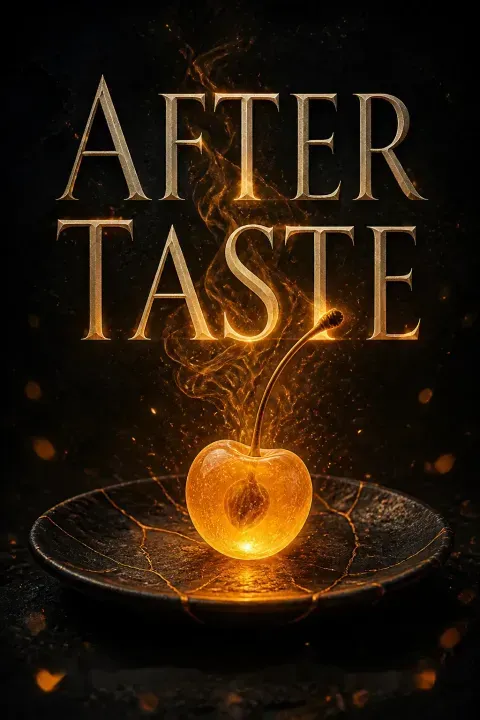


Plot Summary
The Poolside Pechonka
Kostya,1 eleven, sits abandoned at the edge of Brighton Beach's public pool. His chaperone vanished hours ago. He watches other boys with their fathers, jealousy blistering, and kicks violently at the water. A taste floods his mouth: savory, mealy, slightly sweet, then bitter like a bruise blooming in his throat.
Chicken liver sautéed with onions, dill, a squeeze of lemon. Pechonka, his dead father5's favorite dish. Kostya1 has never eaten it, yet he recognizes it instantly. A year earlier, ten-year-old Kostya1 fought with his father Sergei.5
Humiliated by American kids mocking his clothes and food, Kostya1 shouted that his father5 was selfish for bringing them to America, that he wished they had stayed in Kyiv. He told Sergei5 to go to the Devil. Sergei5 left without a word, shoulders defeated. Hours later, his bus was in an accident. He never came home.
The aftertaste arrives not as a gift but as an accusation: food Kostya never tasted, from a father he sent away with cruel words. The bitterness in the dish mirrors the bitterness of guilt. Kostya's clairgustance is established as intrinsically connected to unresolved grief. The pool scene encapsulates his isolation: fatherless among fathers, waiting for someone who will never return. The pechonka itself is a paradox: a dish his mother stopped making after Sergei died, now arriving from beyond as both invitation and indictment. The dead reach out through food, but this first taste suggests they may not be offering comfort so much as demanding acknowledgment of what was lost.
A Spectral Sour Served
Years later, Kostya1 is thirty, washing dishes at The Library of Spirits, a speakeasy hidden behind a bookstore. Near closing one Tuesday, a gaunt man named Charlie11 stumbles in, frantic for a drink on his wife's death anniversary. Kostya1 admits he is only the dishwasher, but Charlie11's desperation is palpable.
When Charlie11 shouts that he needs to toast his dead wife, an aftertaste strikes Kostya:1 Cava, gin, Meyer lemon, patchouli oil, St-Germain, and a Luxardo cherry. He mixes the cocktail despite having no bartending experience. Charlie11 sips, and his dead wife Anna materializes on the bar in shimmering green light.
She tells Charlie11 he was about to swallow the pills in his pocket, that he must let her go and choose to live. He finishes the drink, shatters the glass, and Anna vanishes. The next morning, Kostya1 is fired for the broken glassware and the mess.
This is the inciting event that transforms clairgustance from private burden to active power. The cocktail is a three-way collaboration: Anna sends her memory, Kostya translates it into ingredients, and Charlie's consumption opens the bridge. Anna's return inverts the expected ghost story: she did not come back because she was suffering, but because Charlie was. This reframes Kostya's entire understanding. The dead may be reaching out not for their own sake, but for the sake of the living who cannot release them. Charlie smashing the glass becomes a ritual of completion: the drink is finished, the message delivered, the tether severed.
Madame Everleigh's Verdict
Frankie3 drags Kostya1 to Seyoncé, an underground warehouse party, where a tarot reader named Maura2 operates from a striped tent. Kostya,1 still reeling from the Library incident, confesses his aftertastes. Maura2 identifies the ability as clairgustance, a rare psychic sense.
But when he admits raising a ghost with the cocktail, her warmth evaporates. She warns him that he is dealing with hungry spirits, capital-D Death, forces he does not comprehend. She calls him a coward, paralyzed by his father5's loss, using ghosts to avoid moving forward with his own life.
Kostya1 flings money at her and storms out. After he leaves, Maura2 flips his abandoned tarot cards and realizes she made a catastrophic mistake in pushing him away. She rushes through the party to find him, but he is already gone.
Maura functions as both mirror and foil to Kostya. She sees through him with brutal clarity, diagnosing his motivations in minutes. Her warning carries weight because it comes from experiential knowledge she is not yet willing to share. The tarot cards she reads after he leaves introduce fate into the narrative: these two are destined to intersect because the dead have already threaded them together through overlapping griefs. Maura's attempted pursuit and failure to find him establishes a pattern of missed connections that will define their relationship until the tattoo parlor reunion.
Burn at the Bouche de Noël
Through Frankie3's connection, Kostya1 lands a dishwashing job at Saveur Fare, a three-Michelin-star restaurant run by chef Michel Beauchêne.8 He works obsessively, arriving early and staying late, absorbing techniques by watching the line cooks. He earns a promotion to garde-manger.
At the Bouche de Noël, the most important private party of the year, Kostya1 is put in charge of sauces. During the frenzy of service, he tastes his father5's pechonka again and suddenly understands: the liver was burnt because his mother4 burned it the night she told Sergei5 she was pregnant.
Kostya1 cooks the dish in a desperate rush. His father5's ghost begins materializing in the pastry station in warm citrine light. But Michel8 storms in, enraged that Kostya1 mixed up the pasta sauces, and hurls the plate of liver into the deep fryer. Boiling oil sprays across Kostya1's right arm. The ghost vanishes.
This is the cruelest near-miss in the novel. Kostya finally understands the dish's meaning (celebration, not just sustenance) and nearly achieves reunion, only to have it destroyed by the very culinary institution he has worshipped. Michel's violence literalizes what haute cuisine does to soulful cooking: it throws authentic, messy, burnt memory into the deep fryer of perfectionism. The burn scar becomes the external manifestation of internal scarring. The settlement money from this incident will become the seed capital for Hell's Kitchen Supper Club, transforming Kostya's personal failure into a public mission.
Love in Buffalo Chowder
Using the settlement, Kostya1 starts Hell's Kitchen Supper Club from his cramped apartment. His first customer is Sister Louise,10 a nun seeking contact with Sister Stacy, who died mysteriously during a morning run thirty years earlier.
When Louise10 describes her guilt over not joining Stacy that day, Kostya1 tastes an unexpected aftertaste: buffalo chicken baked potato chowder with blue cheese, hot sauce, and Guinness. He makes it. Sister Stacy's ghost materializes as blue firefly lights.
In a long conversation over the soup, Stacy reveals that she was poisoned by Sister Agnes, who witnessed the two nuns sharing a kiss and feared a scandal would destroy her chance at becoming Superior. Stacy urges Louise10 to bring Agnes to justice, then let go. Louise10 finishes the chowder, and Stacy scatters like a dying sparkler.
This chapter demonstrates that the 'best thing ever eaten' is never about flavor alone but about irreplaceable context. The chowder was the only outside meal the nuns shared, brought by Stacy's brother. The aftertaste system is revealed as emotionally forensic: a food becomes iconic because of who shared it, what it meant, and what was at stake in that moment. Stacy's confession that she was murdered introduces the idea that spirits may linger because they need something from the living: justice, acknowledgment, the truth finally spoken aloud. The Supper Club's mission crystallizes here as mutual service between the living and the dead.
Frankie Never Came Back
The Supper Club struggles: most seatings fail. Kostya1 studies his notebook and discovers the pattern. Aftertastes are always the single best thing a spirit ever ate, linked to emotionally charged memories, usually painful ones involving the person trying to reach them.
But an influencer's Instagram post about the club gets the Health Department's attention, and they shut him down with a cease-and-desist notice. On the same day, a police officer calls: there was a fire at Wolfpup. Frankie3 is dead. The insurance company suspects suicide because the walk-in cooler had a glowing safety release, but Kostya1 refuses to believe it.
Frankie3 was full of plans, working on spring menus, dating, dreaming. At the funeral, Wolfpup's staff presents Frankie3's knife set to his mother. Weeks pass. Frankie3 sends no aftertaste. Kostya1 is alone with his secret.
Frankie's death is the novel's emotional fulcrum. The ambiguity of the fire (accident, suicide, or something stranger) introduces doubt that will later be resolved in unexpected ways. Kostya's grief for Frankie mirrors his grief for his father: sudden, unresolved, heavy with guilt. The Health Department shutdown and Frankie's death on the same day suggest a cosmic convergence: one door closes as another opens onto deeper darkness. The silence from Frankie's spirit is conspicuous and painful, raising the question that will drive the second half of the novel: why do some ghosts reach out and others stay silent?
Ink and Second Chances
At Last Rites Tattoo, Kostya1 gets a sleeve matching Frankie3's design, but his arm swells from an allergic reaction to the ink. The next client is Maura,2 the psychic from Seyoncé. She reads his palm to distract him while the tattoo artist treats the reaction, then the two of them go for drinks.
Their evening stretches through a tiki bar, an arcade where she masters a ghost-themed Ms. Pac-Man variant, and an immersive Orpheus and Eurydice production where they kiss in the stairwell. They go to her apartment.
During intimacy, Kostya1 witnesses her eyes go briefly empty, a small death, but she revives. In the morning, he makes her an elaborate breakfast. She asks if he is still raising ghosts, and he lies, saying he stopped after that first drink. He tells himself it is a small lie to protect what is beginning between them.
Maura's 'little deaths' during sex are the first visible sign of the Hunger that defines her secret life. The choice of Orpheus as their first date is thematically loaded: a myth about failing to retrieve the dead from the underworld. Kostya's lie about stopping with the ghosts plants the seed of betrayal that will later unravel their relationship. Their connection is built on mutual concealment, each protecting the other from truths they believe would destroy their chance at love. The Ms. Pac-Man 'Hungry Ghost Maze' secret level foreshadows the Food Hall and the logic of the afterlife: ghosts searching for the one meal that will let them move on.
Borscht for Baba Fira
After the Supper Club closes, a Russian oligarch named Viktor Musizchka6 contacts Kostya,1 wanting to bankroll a ghost restaurant. Kostya1 fails to impress at their first meeting. But Viktor6 gives him a second chance: a private dinner at his penthouse, where three personal chefs compete to impress wealthy guests.
Kostya1 arrives with no dish planned. He instructs the guests to focus on painful memories, and a cacophony of fragmentary tastes bombards him until one crystallizes: borscht with ketchup and Miracle Whip, a grandmother's unconventional recipe.
He cooks it, and Baba Fira's ghost materializes as scarlet fireworks above the table. Viktor6 is convinced. They toast with Krug champagne. Viktor6 welcomes Kostya1 to his 'family.' Later, Kostya1's mother4 calls, frantically warning that the Musizchka family are gangsters who will get him killed. Kostya1 dismisses her as paranoid.
The penthouse dinner uses the cooking competition format to critique how the wealthy consume both food and spectacle. Viktor treats ghost-summoning as a profit opportunity, and Kostya, desperate for a kitchen of his own, ignores the warning signs. His mother's unheeded warning establishes dramatic irony that will pay off when Viktor reveals his criminal enterprise. The borscht itself, with its lowbrow ingredients, makes the novel's case that authentic food memory has nothing to do with luxury and everything to do with the specific, imperfect, unmarketable details of a life.
Fainting at the Fountain
Kostya1 plans an elaborate evening at Lincoln Center to finally tell Maura2 he loves her. But outside the opera house, as she walks toward him in a lavender gown, her eyes go dead and she crumples. He sprints three blocks carrying her to Mount Sinai West.
In the hospital, he confronts her: he has seen her 'little deaths' before, during sex. He keeps tasting her dead sister Everleigh7's Reese's Cup around her. He has seen the scars on her wrists. Maura2 deflects, claiming low blood sugar and old history.
She asks him to trust her, to give her privacy about her grief the way he guards his own. But just as the conversation reaches an uneasy truce, Kostya1 tastes the Reese's Cup again, right there in the hospital room, proof that Everleigh7's spirit is still present and restless, contradicting everything Maura2 has said.
The hospital scene is the relationship's breaking point, though neither character fully acknowledges it yet. Kostya's planned love confession is preempted by crisis, and his genuine concern is met with evasion. Maura's refusal to disclose her history, particularly given how much Kostya has shared of his own, creates a fundamental power imbalance. The Reese's aftertaste in the hospital room functions as a ghostly third party, a silent witness that exposes the gap between Maura's reassurances and reality. The reader begins to understand that Maura's secrets are more dangerous than Kostya has allowed himself to imagine.
Everything She Confessed
The night before DUH's public opening, Kostya1 gives Maura2 a private restaurant tour. He produces a bag of Reese's Cups and offers to summon Everleigh7 again for closure. Maura2 breaks down completely.
She confesses: she has been dying repeatedly (overdose, a death club, slit wrists) to visit the Afterlife, a vast Food Hall where spirits eat memories to process their lives. She contracted a Hunger from these trips, an insatiable craving that only proximity to death can soothe. Worse, she reveals that the ghosts Kostya1 has been raising are not moving on.
They are trapped, tethered to him by his cooking, becoming Hangry and dangerous. They have torn a hole in the veil between worlds. She admits she initially approached him to use his gift, but fell in love for real. Kostya1 reels from the betrayal.
Maura's confession restructures everything the reader and Kostya thought they understood about the novel's magic. Every act of closure he provided was actually imprisoning a spirit. His gift, which he believed was helping people, was slowly creating a catastrophe. The Food Hall concept introduces a metaphysical bureaucracy where grief processing is literal consumption, and the torn veil sets apocalyptic stakes for the finale. Maura's confession also reframes her from love interest to unreliable co-protagonist with her own desperate, morally complex agenda rooted in love for her dead sister.
The Veil Tears Open
Opening night at DUH begins with triumph: glowing tasting chambers, awed diners, a smooth kitchen. Then the veil tears. Spirits pour through the ceiling, the walls, the floor. They are the ghosts Kostya1 raised: Sister Stacy, the climbing instructor, the ketchup-soup teenager, all transformed into Hangry monsters with gaping mouths and dead eyes.
Patrons scream and flee over shattered glass. The dining room descends into chaos. Everleigh7's ghost finds Kostya1 in the dark and explains: his aftertastes tethered the spirits to him, trapping them in the living world.
The tear in the veil keeps widening, and more spirits keep flooding through. Everleigh7 tells Kostya1 he must enter the Afterlife and cook their aftertastes there to release them. She also reveals that Maura2 has already gone to try to fix things herself, alone.
The opening-night disaster is collective consequence made terrifyingly visible. Every shortcut Kostya took, every ghost he raised without understanding the full implications, returns literally to haunt him. The Hangry Ghosts are tragic figures: they came seeking closure and received imprisonment. Everleigh's appearance as guide rather than antagonist subverts expectations; she has been trying to help from the other side all along. The scene dramatizes the novel's central thesis: unprocessed grief does not disappear; it accumulates in the spaces between worlds and eventually erupts, demanding to be reckoned with.
Mama Tasted It Too
Kostya1 returns home after the disaster to find his mother Vera4 watching his television interview. He erupts at her: for institutionalizing him after his father5 died, for abandoning him emotionally, for making him parent her through her depression. Vera,4 weeping, reveals the truth.
After Sergei5 died, she also tasted aftertastes. She thought she was losing her mind and that she had passed her illness to Kostya.1 She attempted suicide and was saved by a neighbor who took her to an unlicensed Russian clinic.
When Kostya1 told her about the pechonka, she believed he was suffering the same sickness and deserved real psychiatric help. She has been trying to protect him, not punish him. They reconcile. Vera4 tells him the hardest truth of all: they have been holding Sergei5 back for twenty years. Real love is letting him go.
This scene recontextualizes the novel's entire mother-son relationship. Vera was not neglectful; she was traumatized and operating from her own limited understanding, in a foreign country without adequate support. The revelation that she shared Kostya's gift but interpreted it as shared pathology makes her earlier actions legible as misguided love. Her decision to finally let Sergei go models what Kostya must now do: release the dead rather than cling to them. This is the emotional preparation for his final sacrifice, the permission he needed from the only other person who truly understands.
Death by Pufferfish
Kostya1 finds a note from Maura:2 she has taken his recipe pad and gone to die again, hoping to fix things alone. He races to her apartment and discovers her body on the kitchen floor, but she revives.
She explains she went to the Afterlife and found Frankie3 running a ghost tour, but Frankie3 could not cook the aftertastes precisely enough to lure the trapped spirits. Only Kostya1 can taste the Dead with the precision required. Kostya1 decides he must near-die and enter the Afterlife himself.
He calls Michel Beauchêne8 for access to Saveur Fare's walk-in freezer, and Yume Kutsuki,12 the fugu chef from Viktor6's dinner, for pufferfish liver. In the subzero freezer, he and Maura2 strip to T-shirts. Kostya1 slices open the pufferfish, eats its poisonous liver, and feels his body begin to shut down.
The near-death by pufferfish is both practical and richly symbolic. The poison is also a delicacy: the ultimate food-as-risk, the meal that can kill you. Using Saveur Fare's walk-in, the place where he learned to cook and lost his father's ghost, closes a profound loop. The symmetry of Kostya's first and last tastes both being liver completes an arc that began at the Brighton Beach pool. The meticulous medical planning (timing, hypothermia, the ambulance) shows how far he has come: this is not the impulsive self-destruction of his youth but a calculated sacrifice made with full knowledge of the cost.
Memories on the Menu
In the Afterlife, Kostya1 discovers the Food Hall is a vast consumption paradise, but it refuses to provide him ingredients. Frankie3's ghost finds him and explains: the Hall's food is made from memories. Kostya1 must use his own past as ingredients.
He starts cooking Anna's cocktail; the Cava costs him a memory of a kind waitress who fed him when he was hungry. The gin takes the camping trip with his father.5 Each dish strips away another piece of his history. He cooks for hundreds of trapped spirits. He saves his father5's pechonka for when he is still coherent enough to mean it.
When he plates the burnt liver, Sergei5's ghost appears, not Hangry but proud. Sergei5 reveals the truth: the aftertastes were a game, their tasting game, continued beyond death. Kostya1 weeps, tells his father5 he loves him, and watches Sergei5 board a gleaming train and move On.
The memory-as-ingredient mechanic transforms cooking into sacrifice made visible. Every dish represents a permanent loss of self, literalizing how we spend our past to feed our present. The reveal that Sergei's aftertastes were a continuation of their childhood tasting game reframes Kostya's entire life: he was not cursed or uniquely gifted; he was being invited to play, to stay connected, by a father who refused to fully leave. Sergei's peaceful departure proves that closure is possible when both sides release each other, giving Kostya the courage to continue even as he forgets almost everything.
Fleur de Sel
Kostya1 has cooked for countless ghosts and lost nearly everything: his childhood, his father,5 Frankie,3 his own name. Only one memory remains: the fight with his father,5 the morning Sergei5 died. Maura2 arrives, breathless with news that she and Frankie3 have sealed the veil by patching it like varenyky dough.
But she finds Kostya1 blank, unrecognizing. He does not know her. She begs him to hold on. Something stirs in him at the word salt. He uses his final memory to create one last ingredient: fleur de sel, delicate crystals tasting of regret and longing and love.
He kisses Maura,2 passing the salt into her mouth. The taste anchors her to life, and her body pulls her back. Kostya1 forgets her completely but is left with an instinct: he is waiting for someone, someone he will know by taste. He stays in the Afterlife as Frankie3's Sous-Chef.
The climax redefines love as the willingness to be forgotten so the beloved can live. Kostya does not save himself; he sacrifices his entire remembered self so Maura can return to her body. The fleur de sel—the 'flower of salt,' hand-harvested and irreplaceable—is the novel's culminating metaphor: salt as what preserves, seasons, and makes life worth tasting. Their kiss transmits not just flavor but everything he was. His forgetting is the price of her living. The image of the Sous-Chef waiting, instinctively, for a taste he cannot name, captures the persistence of love beyond memory, beyond self, beyond death.
Epilogue
Maura2 wakes in the Saveur Fare walk-in beside Kostya1's frozen body. He is dead. She goes on: she finishes her degree, designs video games, and creates one about the Food Hall that screens players for suicide risk and saves lives. She travels, learns to cook, but never loves anyone else.
Salt reminds her of him: fleur de sel especially, which she tastes on everything. Vera Duhovny4 lives on an upstate cherry orchard, growing vishnya trees she brought from Ukraine. She makes sour cherry preserves not with sugar but with salt, a recipe Sergei5 taught her.
In the Afterlife, Frankie3 runs Last Supper, a one-seat restaurant where spirits eat their final meal before moving On. His Sous-Chef is Kostya1's amnesiac soul, who cooks by instinct but always oversalts. He collects stray ingredients in glass vials, waiting for someone he will recognize by taste.
The epilogue offers hard-won continuance rather than resurrection. Each survivor has found a way to carry the dead forward: Maura through creation and sensory memory, Vera through cultivation and preservation, Frankie through service. The Sous-Chef's compulsive oversalting is both a joke and a profound statement: some part of Kostya remembers love even when his conscious mind cannot. The vials of crumbs represent hope that fragments can be reassembled across lifetimes, that when Maura eventually dies and arrives at Last Supper, the Sous-Chef will taste salt on her lips and remember everything. The novel's final gesture is toward reunion delayed but not denied, a meal that will one day be served.
Analysis
Aftertaste operates on a deceptively simple premise: love tastes like salt, and grief is a kind of hunger that can starve both the living and the dead. The novel's magic system literalizes what psychology has long understood: unprocessed loss does not disappear. It accumulates, festers, and eventually consumes. Kostya1's clairgustance is framed first as a curse, then as a gift, then finally as a responsibility. Each aftertaste is a tether, a hook cast by a spirit still bound to someone living. By cooking these tastes, Kostya1 does not merely summon ghosts; he temporarily feeds their hunger for closure. But closure, the novel argues, must be mutual: the living must release the dead as much as the dead must release the living. The Food Hall afterlife transforms eating into emotional labor. Spirits consume memories to digest their lives; the living consume food to create memories. When this system breaks, when the living hold on too tightly, the dead become Hangry: starving, dangerous, desperate. Grief is not a private emotion but a transactional one, with consequences that ripple across boundaries between worlds. Maura2's Hunger, contracted from her repeated near-deaths, is grief somaticized into addiction. She craves death because her sister7's death left her permanently unsated. Salt is the novel's master metaphor. Fleur de sel, hand-harvested and irreplaceable, represents the particularity of love: not generic affection but the specific, granular flavor of one person's presence. When Kostya1 sacrifices his memories to feed the trapped spirits, he performs the ultimate act of love: letting go so others can move forward. His final gift to Maura2 is not a grand gesture but a taste, a kiss seasoned with everything he was. She carries that salt into her future, into every meal. The Sous-Chef,1 amnesiac but instinctively oversalting, waiting for a flavor he cannot name, embodies the persistence of love beyond memory. The novel's final message is both devastating and stubbornly hopeful: we are what we taste, and what we taste of each other can never truly be lost.
Review Summary
Aftertaste receives overwhelmingly positive reviews, praised for its unique concept blending culinary arts with supernatural elements. Readers appreciate the vivid food descriptions, emotional depth, and exploration of grief and closure. Many find the characters compelling, particularly the protagonist Kostya. The book is described as genre-defying, combining elements of romance, fantasy, and contemporary fiction. While some criticize pacing issues or dislike certain characters, most reviewers consider it a standout debut, recommending it for its originality and emotional impact.
People Also Read










Characters
Konstantin Duhovny
Clairgustant chef, grieving sonA Ukrainian-American man in his thirties who has tasted food from the dead since age eleven. His defining wound is the fight he had with his father Sergei5 moments before Sergei5 died in a bus accident; Kostya told him to go to the Devil. He carries intense guilt and spends decades hiding his aftertastes, which he experiences as uninvited flavors coating his tongue: a message from a spirit, always the best thing they ever ate. He becomes a chef to learn how to recreate these dishes. Emotionally, he is stuck in the moment of his father5's death, unable to forgive himself or move forward. His gift, which he initially sees as a curse, becomes the means by which he seeks redemption: feeding the dead so the living can say goodbye. His core drives are reunion with his father5, proving his worth, and being loved without reservation.
Maura Struk
Psychic, haunted loverA violet-haired tarot reader, video game designer, and suicide survivor who operates as Madame Everleigh. Her younger sister Everleigh7 died by suicide a decade ago, and Maura's inability to process that loss led her into a spiral of near-death experiences, each one brief and deliberate. These trips to the Afterlife infected her with a supernatural Hunger: an insatiable craving that only proximity to death can temporarily soothe. She meets Kostya1 at a party and initially warns him away from the Dead, terrified that his power will draw her back into the self-destruction she is barely controlling. She is brilliant, sharp-tongued, and fiercely independent, but her Hunger has made her manipulative out of desperation. Her arc moves from using people to survive to loving someone enough to risk her own life.
Frankie O'Shaunessey
Best friend, kitchen brotherKostya1's roommate and best friend, a half-Dominican, half-Irish sous-chef with movie-star looks and an infectious personality. He is the person who pushes Kostya1 into professional kitchens and believes in his ghost-summoning talent before anyone else. Underneath his effortless charm lies a relentless ambition: he wants fame, Michelin stars, his own restaurant. He also carries a spiritual openness inherited from his Dominican grandmother's Vudú practice and his Irish grandmother's Catholicism. His relationship with Kostya1 is fraternal and competitive; he both supports Kostya1 and, secretly, envies the profundity of what Kostya1's food can do. He lives fast, burns the candle at every end, and refuses to slow down even when exhaustion and overwork become dangerous.
Vera Duhovny
Grieving mother, secret sharerKostya1's Ukrainian mother, deeply superstitious and perpetually worried about her son. After Sergei5's death, she collapsed into a depression so profound she spent months bedridden, leaving young Kostya1 to feed them both. She had Kostya1 institutionalized when he told her about the aftertastes, an act he resented for twenty years. She carries talismans, believes in the evil eye, and makes frantic phone calls. Beneath her nagging exterior is a woman who has endured more than her son understood, including her own experience of the same supernatural gift that defined his life. Her story is one of misinterpreted protection: every controlling, fearful choice was an attempt to keep Kostya1 from suffering as she did.
Sergei Duhovny
Dead father, culinary museKostya1's father, a bus driver in New York who had been a promising cook in Kyiv. He immigrated to America for his family's future, sacrificing his culinary dreams. He played a tasting game with young Kostya1, slipping morsels into his mouth for him to identify blindfolded, teaching him to taste heritage. His death in a bus accident, immediately after a fight in which Kostya1 told him to go to the Devil, is the foundational trauma of the novel. From the Afterlife, he continues playing the tasting game by sending Kostya1 aftertastes of pechonka, his favorite dish, as a way to reach across death and tell his son he was never truly angry.
Viktor Musizchka
Oligarch investor, hidden threatA young, obscenely wealthy Russian businessman who backs DUH. He is impeccably dressed, disarmingly charming, and speaks in a thick accent that makes him seem almost comical. He presents himself as a patron of the arts and a lover of fine dining, but his interest in Kostya1's restaurant has layers Kostya1 fails to see. He surrounds himself with luxury brands, bodyguards, and people who owe him favors. He is a pragmatist who treats relationships as transactions and restaurants as assets. His psychology is that of a man who grew up in a world where power meant survival and money meant power; sentiment is a luxury he cannot afford.
Everleigh Struk
Dead sister, restless spiritMaura2's younger sister, who died by suicide at seventeen. She was the original Madame Everleigh, the spiritualist whose name Maura2 adopted. In life, she was vivid and passionate, with violet hair and a love for the arcane. Her signature food, the taste that follows Maura2 everywhere, is a Reese's Peanut Butter Cup from their last Halloween together, dented on the edge from when they clinked their candies like champagne glasses. Her suicide was driven by the same darkness that afflicted their bipolar father, but she never told Maura2 how much she was suffering. In the Afterlife, she becomes a guide figure, trying desperately to repair the damage caused by the living's inability to let go.
Michel Beauchêne
Tyrannical mentor chefThe executive chef at Saveur Fare, a three-Michelin-star restaurant. He is young for his position, lean and intense, with cold, calculating eyes. His parents were French expats, and he trained in Paris before building his New York empire. He runs his kitchen like a demigod, demanding perfection and offering little warmth. He is nepotistic and classist, preferring cooks with culinary school pedigrees, yet he gives Kostya1 a chance against his better judgment. His fury at imperfection is genuine, but it masks a deeper relationship to control and tradition. He is capable of grudging respect and, when his former protégé calls in a debt, unexpected loyalty.
Rio Torres
Loyal sous-chef, friendFrankie3's executive chef at Wolfpup and later Kostya1's sous-chef at DUH. A Mexican-American chef who brings spiritual fluency to Kostya1's kitchen: he already understands that the dead return for food because he practices Día de Muertos traditions. He is steady, warm, and fiercely loyal, creating the kitchen culture that allows Kostya1's strange work to function. After Frankie3's death, he becomes a bridge between Kostya1's past and future. He runs the line with authority and humor, the kind of chef who can curse out a cook one moment and throw a protective arm around them the next.
Sister Louise
First Supper Club seekerA Catholic nun and music director who comes to Hell's Kitchen Supper Club seeking contact with Sister Stacy, her fellow nun who died mysteriously thirty years ago. Her grief is complicated by guilt and by the truth of her relationship with Stacy, which was romantic. She represents the Supper Club's mission in its purest form: someone who has carried a burden for decades and only needs one conversation to begin healing.
Charlie Katzowsky
First ghost reunion witnessA grieving widower who stumbles into the Library of Spirits on his wife's death anniversary, carrying a bottle of pills he intends to swallow. His desperation triggers Kostya1's first deliberate ghost-summoning. His wife Anna's spirit tells him to live, and he pours the pills across the bar. He is the proof of concept for everything that follows.
Yume Kutsuki
Fugu chef, cautious allyA personal chef trained in the dangerous art of preparing fugu (pufferfish). She works for wealthy New Yorkers who treat her skill as party entertainment. She is the only person at Viktor6's penthouse dinner who understands the danger of Hungry Ghosts and leaves before Kostya1 serves. When Kostya1 later needs fugu liver to near-die, she provides it despite the risk to her license, because she believes he must undo what he has done.
Plot Devices
Clairgustance (Aftertastes)
Tasting the Dead's best mealKostya1's supernatural ability to taste food he has not eaten: specific dishes sent by spirits from the Afterlife. Each aftertaste is the single best thing the spirit ever consumed in life, defined by the emotional weight of the memory attached to it. The taste arrives unbidden, coating his tongue with complete sensory detail, including every ingredient. By recreating the dish precisely and having the spirit's living loved one eat it, Kostya1 can temporarily materialize the ghost. However, the novel reveals that this process inadvertently tethers the spirit to Kostya1, trapping them in the living world rather than allowing them to move on. The aftertastes require the living person's painful, grief-filled memories to trigger.
The Food Hall
Afterlife where spirits eat memoriesThe afterlife that Maura2 visits during her near-death experiences and where Kostya1 ultimately travels. It presents as an endless culinary paradise where spirits consume meals made from their own memories to process their lives and achieve closure. Once satisfied, spirits board gleaming trains and move On to their next incarnation. The Hall can translate memories into food, but it cannot handle the most complex emotional dishes (aftertastes), which is why Kostya1's cooking is uniquely powerful. When the veil between worlds tears, the Hall begins to destabilize, and spirits trapped in the living world become Hangry. Frankie3's restaurant Last Supper operates within the Hall, serving spirits their final meals before they depart.
The Veil
Barrier between living and deadThe metaphysical membrane separating the world of the living from the Afterlife. Described as thin as dough or the skin on hot milk, it can be stretched and torn when enough trapped spirits push against it together. Kostya1's repeated ghost-summoning weakens it, and the Hangry Ghosts eventually tear it open, allowing spirits to flood into Manhattan. Maura2 and Frankie3 seal the tear from the Afterlife side by patching it like varenyky dough, using the technique Kostya1 taught Maura2 for mending torn dumpling wrappers: pinching and crimping the edges closed.
Hungry and Hangry Ghosts
Spirits warped by unfinished griefSpirits in the Food Hall who cannot move On because their living loved ones hold onto them too tightly. The living person's grief creates a tether that starves the spirit, making them Hungry: unable to feel satisfied no matter what they eat. Over time, this Hunger transforms them into Hangry Ghosts: monstrous, violent entities with gaping mouths, shadowed limbs, and desperate, impulsive rage. They are powerful enough to tear the veil and attack the living. The only cure is closure: both the spirit and the living person must release each other. Once released, spirits can eat their aftertaste, become satisfied, and depart.
Fleur de Sel
Salt of love, final memory ingredientHand-harvested sea salt from the marshes of Guérande, France, which Kostya1 uses as a finishing salt in his cooking. It becomes the novel's central metaphor for love: salt as the thing that preserves, seasons, enhances, and makes life worth tasting. In the climax, Kostya1 uses his final remaining memory (the fight with his father5) to create one last ingredient: fleur de sel tasting of regret, longing, and love. He passes it to Maura2 in a kiss, and the taste anchors her back to her living body. Afterward, the amnesiac Sous-Chef instinctively oversalts every dish, and Maura2 tastes fleur de sel to remember him. It represents love persisting beyond memory.
FAQ
```markdown
Synopsis & Basic Details
What is Aftertaste about?
- A Sensory Haunting: Aftertaste follows Konstantin "Kostya" Duhovny, a Ukrainian-American chef haunted by the ability to taste foods associated with the deceased, a phenomenon he calls "aftertastes". This unique clairgustance, triggered by his father's early death, becomes both a burden and a desperate link to the past.
- Culinary Quest for Closure: Driven by a longing to reconnect with his lost father and to understand his mysterious gift, Kostya embarks on a culinary journey. He opens an underground supper club and later a high-end restaurant, DUH, where he attempts to reunite grieving individuals with their loved ones through the power of food.
- Love, Loss, and the Veil: The narrative intertwines Kostya's supernatural endeavors with his complex relationships, particularly with Maura, a psychic with her own traumatic past and a mysterious "Hunger." Their intertwined destinies explore themes of grief, memory, addiction, and the fragile boundary between life and death, culminating in a high-stakes confrontation with the consequences of meddling with the afterlife.
Why should I read Aftertaste?
- Unique Blend of Genres: Aftertaste masterfully combines magical realism, culinary fiction, and psychological drama, offering a fresh and innovative narrative that transcends typical genre boundaries. Readers seeking a story that is both deeply emotional and wildly imaginative will find it compelling.
- Visceral Exploration of Grief: The novel uses the sensory experience of taste to explore the complexities of grief and memory in a profoundly visceral way. It delves into the unspoken burdens of loss, the longing for connection, and the difficult journey towards acceptance, making it highly relatable for anyone who has experienced profound sorrow.
- Rich Character Arcs: Beyond its fantastical premise, the book offers compelling and flawed characters whose journeys of self-discovery, healing, and sacrifice are meticulously crafted. Kostya's transformation from a lonely, guilt-ridden boy to a selfless, extraordinary chef, alongside Maura's battle with her inner demons, provides a deeply satisfying emotional core.
What is the background of Aftertaste?
- Immigrant Experience & Identity: The story is deeply rooted in the immigrant experience, particularly that of Ukrainian-Americans in New York City. Kostya's struggle with his Russian heritage, his family's poverty, and his desire to fit into American culture are central to his identity and motivations, highlighting the tension between old-world traditions and new-world assimilation.
- New York City as a Character: The novel vividly portrays various iconic and lesser-known New York City locales, from Brighton Beach and Hell's Kitchen to upscale Michelin-starred restaurants and abandoned subway stations. These settings are not mere backdrops but active participants, reflecting the characters' emotional states and the city's diverse, often unforgiving, landscape.
- Culinary World Immersion: The author demonstrates a deep understanding of the professional culinary world, from the grueling demands of a Michelin-starred kitchen (Saveur Fare) to the gritty reality of underground supper clubs. The detailed descriptions of cooking techniques, ingredients, and kitchen dynamics lend authenticity and richness to the magical elements of the story.
What are the most memorable quotes in Aftertaste?
- "For James, the salt in my banquet.": This dedication, appearing before the story even begins, subtly foreshadows the profound significance of "salt" as a multifaceted symbol throughout the novel, representing love, tears, pain, and the essence of life itself, culminating in Kostya's final act of love.
- "My father died when I was young. That is the central tragedy of my life. But his spirit never left me, and that may be the defining miracle of my life.": This opening epigraph from Eric Ripert perfectly encapsulates Kostya's lifelong struggle and the dual nature of his gift, setting the tone for a story where loss and miraculous connection are inextricably linked.
- "Love. The closest thing to godliness we'll ever know. The chef who prepared this meal, for instance. He did a selfless thing, reuniting us. An act of love.": Spoken by Sister Stacy's ghost, this quote from "Potage" elevates Kostya's culinary gift beyond mere magic, framing his work as a profound act of compassion and love, hinting at the ultimate sacrifice he will make.
What writing style, narrative choices, and literary techniques does Daria Lavelle use?
- Sensory-Rich Prose: Lavelle employs highly descriptive and evocative language, particularly focusing on sensory details related to taste, smell, and texture. This immersive style allows readers to viscerally experience Kostya's clairgustance and the emotional weight of each "aftertaste", making the abstract concept of grief tangible.
- Non-Linear & Multi-Perspective Narrative: The story frequently shifts between past and present, and between the perspectives of various characters (Kostya, Maura, Frankie, and even the collective "Hungry Ghosts"). This fragmented structure mirrors the fragmented nature of memory and grief, gradually revealing layers of backstory and motivation, enhancing the reader's interpretive engagement.
- Symbolism & Metaphorical Language: The novel is rich with symbolism, particularly around food, salt, and the "veil" between worlds. Food serves as a powerful metaphor for memory, identity, and emotional connection, while the "Hunger" and "Hangry Ghosts" personify unresolved grief and addiction, adding depth to the magical realism.
Hidden Details & Subtle Connections
What are some minor details that add significant meaning?
- The "Cherrystone" Nickname: Kostya's father calls him "Kostochka," explaining it means "cherrystone," and tells him, "So much waiting in so small a thing." This seemingly tender detail foreshadows Kostya's immense, hidden potential and the profound impact he will have, despite his humble beginnings and self-doubt, ultimately becoming the "seed" of change for the afterlife.
- Maura's Tattooed Tally Marks: Maura has "three jagged strokes of ink in ballpoint blue" on her thigh, described as "like a tally being kept." This subtle detail, revealed in "Just Desserts," hints at her multiple near-death experiences and her desperate attempts to "die" and return, foreshadowing her own complex relationship with the veil and her self-destructive coping mechanisms.
- The 6 Train as a Liminal Conduit: The 6 Train, which runs past DUH's kitchen windows, is more than just a setting detail; it acts as a literal and symbolic conduit between worlds. Its "strobing light" and "thunderous sound" accompany significant supernatural events, suggesting its role in thinning the veil and facilitating the movement of spirits, making it an active, if inanimate, participant in the unfolding chaos.
What are some subtle foreshadowing and callbacks?
- Frankie's "Death Row Dish": Early in "Backburners," Frankie casually refers to his mother's rum cake as his "death row dish." This seemingly throwaway line subtly foreshadows his eventual death and the rum cake becoming his "aftertaste", the very dish Kostya tastes when Frankie's spirit is trying to communicate with him from the afterlife.
- The "Dented" Reese's Cup: The specific detail of the Reese's Peanut Butter Cup having a "dented" side is mentioned multiple times, from Kostya's first tasting at the party to Maura's memory of sharing it with Everleigh. This seemingly insignificant imperfection becomes a unique identifier, a "calling card" that confirms the specific memory and the presence of Everleigh's spirit, highlighting the precision of the "aftertastes".
- Michel Beauchêne's Ortolan Story: The detailed anecdote about Chef Beauchêne's single, life-changing experience with the illegal ortolan dish ("How the Other Half Eat") foreshadows Kostya's own culinary ambition and the lengths he will go to create extraordinary, even taboo, experiences. It also subtly sets up the "Iron Chef" competition where Volière attempts to pass off goldfinch as ortolan, emphasizing the theme of authenticity versus perception in fine dining.
What are some unexpected character connections?
- Kostya and Dan Evans's Shared Trauma: The food critic, Dan Evans, initially appears as a purely antagonistic figure. However, Kostya's realization that Dan is also a "kid without a dad" who is "lashing out" creates an unexpected parallel between them, revealing a shared core of grief and anger beneath their abrasive exteriors. This connection allows Kostya to understand Dan's "bitter" "aftertaste".
- Maura's Mother and the "Cleaning Girl": In "Food Poisoning," Vera mentions a "cleaning girl with purple hair" who let her into Kostya's apartment and "borrowed recipes." This seemingly innocuous detail reveals that Maura, in her desperation to help Everleigh and understand Kostya's gift, was actively stalking him and gathering information, highlighting her resourcefulness and the depth of her "Hunger" long before her full confession.
- The Kitchen Brigade's Loyalty: While the existing summary mentions the brigade as "found family," the depth of their loyalty is subtly emphasized in "Discomfort Food" when Rio, Big Mike, and Mica step in front of Kostya to face Viktor's armed bodyguard. Stephanie's act of live-streaming the confrontation further solidifies their unexpected courage and unity, transforming them from mere employees into a true "family" willing to risk their lives for their chef.
Who are the most significant supporting characters?
- The Food Hall's "Old-Timers": These unnamed, "Hungry" spirits in the Food Hall, with their "sunken faces, shadowed limbs," provide crucial exposition about the "Magic Meal" and the "Reincarnosh." They represent the collective wisdom and suffering of the trapped dead, guiding Frankie and later Maura in their understanding of the afterlife's mechanics and the true nature of the Hunger.
- Cal, the Tattoo Artist: Cal, the overly effervescent tattoo artist, serves as a significant, albeit brief, catalyst for Kostya's emotional and physical transformation. He not only inks Kostya with Frankie's chef knife tattoo, symbolizing his commitment to his friend's legacy, but also facilitates the unexpected reunion between Kostya and Maura, acting as a subtle agent of fate.
- Stella, the Designer: Stella, the interior designer for DUH, initially appears as a minor professional contact. However, her personal confession that she took the job "to see my mom again" and her design of the "aurora of souls" light show reveal her as a fellow mourner seeking connection, subtly reinforcing the universal longing that drives the restaurant's concept and its clientele.
Psychological, Emotional, & Relational Analysis
What are some unspoken motivations of the characters?
- Kostya's Need for Validation: Beyond simply wanting to see his father, Kostya is deeply motivated by a subconscious need for validation and to prove his worth. His desire to impress Michel Beauchêne, to "make his name" in the culinary world, and to be seen as "special" by Maura, all stem from the childhood trauma of feeling abandoned and "unseen" after his father's death and his mother's subsequent withdrawal.
- Maura's Addiction to "Dying": Maura's repeated near-death experiences, initially framed as attempts to find Everleigh or escape the Hunger, also reveal an underlying psychological addiction to the "thrill" and "rush" of dying. She admits to "chasing thrills" and seeking "the next rush," suggesting a self-destructive pattern that provides a temporary escape from her unresolved grief and guilt.
- Frankie's Pursuit of "Real" Connection: Despite his outward persona as a charismatic, ambitious chef focused on fame and "hustle," Frankie's confession in the afterlife reveals a deeper, unspoken motivation: a yearning for "real" connection and love. He admits his life was "just surface" and that he "never loved anybody. Not like you," implying his ambition was a substitute for genuine intimacy, a void he only recognized in death.
What psychological complexities do the characters exhibit?
- Grief as a "Hunger" and "Addiction": The novel personifies grief as a literal "Hunger" that consumes both Maura and the trapped spirits. This complex psychological state is depicted as an insatiable craving, an addiction that drives self-destructive behaviors (Maura's near-deaths, the ghosts' "Hangry" rage) and prevents true closure, highlighting the difficulty of letting go.
- The Burden of "Plausible Deniability": Kostya's repeated use of "plausible deniability" as a coping mechanism, first with his mother about his "aftertastes", then with Maura about his ghost-raising, and finally with Viktor about his criminal activities, reveals a deep-seated fear of confrontation and a tendency to avoid difficult truths, leading to escalating complications and emotional isolation.
- The Paradox of Self-Sacrifice: Kostya's ultimate act of self-sacrifice, using his own memories to feed the ghosts, is psychologically complex. While it offers closure to the spirits, it results in his own self-erasure, raising questions about the true cost of heroism and whether forgetting is a necessary component of healing, or simply another form of loss.
What are the major emotional turning points?
- Kostya's Institutionalization: His mother's decision to institutionalize him after he reveals his "aftertastes" is a pivotal emotional turning point. It shatters his trust, forces him to internalize his gift as a "curse," and fuels his lifelong shame and isolation, profoundly shaping his future relationships and his desperate need for external validation.
- Maura's First Near-Death Experience: Maura's accidental overdose and subsequent brief death, where she encounters Everleigh in the afterlife, is a critical emotional turning point for her. It transforms her grief from abstract pain into a tangible mission, compelling her to seek ways to help her sister, even as it introduces the dangerous "Hunger" into her own life.
- Kostya's Mother's Confession: Vera's confession that she, too, tasted Sergei's pechonka and attempted suicide to make it stop is a profound emotional turning point for Kostya. It shatters his long-held resentment, reveals a shared, hidden trauma, and allows for a moment of genuine connection and forgiveness, shifting his understanding of his own gift and his mother's past actions.
How do relationship dynamics evolve?
- Kostya and Vera: From Resentment to Empathy: Their relationship begins fraught with Kostya's deep-seated resentment over his mother's abandonment and perceived indifference after his father's death. Through Vera's confession of her own suicidal ideation and shared "aftertastes", their dynamic evolves into one of mutual understanding and empathy, culminating in a moment of profound, healing connection.
- Kostya and Maura: From Manipulation to Sacrificial Love: Their relationship starts with Maura's calculated manipulation of Kostya to achieve her own ends (finding Everleigh, curing her Hunger). However, as they spend more time together, their connection deepens into genuine, passionate love, culminating in a mutual willingness to sacrifice for each other, transcending the initial deception.
- Kostya and Frankie: From Friendship to Enduring Legacy: Their bond is initially one of typical male friendship, evolving into a professional partnership and deep loyalty. Frankie's death is a devastating blow, but his continued presence as a guide in the afterlife transforms their relationship into an enduring legacy, with Frankie becoming Kostya's spiritual mentor and the keeper of his memories.
Interpretation & Debate
Which parts of the story remain ambiguous or open-ended?
- The Nature of Kostya's Final State: While Kostya sacrifices his memories and remains in the Food Hall, his exact nature is ambiguous. Is he truly "gone" as the person he was, or has he become a new entity, a "Sous" who retains the essence of his culinary gift and love? The ending leaves open whether this is a tragic loss or a transcendent transformation.
- The Afterlife's True Purpose: The Food Hall is presented as a place for spirits to find closure and "move On," but its ultimate destination or purpose remains undefined. The narrative hints at "next lives" but doesn't elaborate, leaving the reader to ponder the cyclical nature of existence and what truly lies beyond the veil.
- The Long-Term Consequences of the Veil's Tearing: While Maura and Frankie manage to "close" the veil, the story doesn't fully explore the lasting repercussions of its temporary rupture. The influx of "Hungry Ghosts" into Manhattan and the potential for future breaches remain an open question, suggesting that the balance between worlds is perpetually fragile.
What are some debatable, controversial scenes or moments in Aftertaste?
- Maura's Initial Manipulation of Kostya: The revelation that Maura initially sought out Kostya and pursued a relationship with him primarily to exploit his clairgustance for her own benefit (to find Everleigh and cure her Hunger) is a controversial moment. It forces readers to question the authenticity of their early connection and the ethics of using another person's unique abilities for personal gain.
- The Ethics of Raising the Dead: The core premise of the novel, bringing back the dead for "closure," raises ethical questions. While presented as a benevolent act, the consequences (the "Hunger," the "Hangry Ghosts", the tearing of the veil) suggest that interfering with the natural order of life and death, even with good intentions, can have disastrous and unforeseen repercussions.
- Kostya's Choice to Forget His Memories: Kostya's decision to use his own memories as ingredients, effectively erasing his past and identity, is a highly debatable act. Is it a selfless sacrifice for the greater good, or a tragic loss of self? It challenges the reader to consider the value of memory and whether true healing requires forgetting.
Aftertaste Ending Explained: How It Ends & What It Means
- The Ultimate Sacrifice for Closure: Aftertaste culminates in Konstantin's profound self-sacrifice. To send the "Hangry Ghosts" back to the Food Hall and mend the torn veil, Kostya must cook for them using his own memories as ingredients. Each dish he prepares erases a piece of his past, leading to his complete self-erasure and transformation into the "Sous" chef in the afterlife's Last Supper restaurant. This act signifies that true closure for the dead, and the healing of the living, sometimes requires the ultimate price: forgetting.
- Maura's Return to Life & Enduring Love: Maura, having nearly died herself in the walk-in, is sent back to the living world by Kostya's final act of love. His last memory, the "fleur de sel" kiss, is imprinted on her, allowing her to live without the "Hunger" and to remember him through the taste of salt. Her survival and ability to move forward symbolize the possibility of healing and finding peace after profound loss, even if it means the loved one is gone.
- A New Balance in the Afterlife: The ending establishes a new, albeit bittersweet, balance in [the afterlife](#the-food-
Download PDF
Download EPUB
.epub digital book format is ideal for reading ebooks on phones, tablets, and e-readers.








































