
Plot Summary
The First Broken Birth
Avery, nineteen, raises her youngest brother from birth to burial on the compound—a rural doomsday commune ruled by her survivalist father. Only her brother Cole helps her bury the lifeless baby near the vegetable garden. Their family, twelve in all, carries on as though death is nothing. The children are deeply conditioned to accept brutality, deprivation, and obedience as nature. Avery's father confers meaning on every event, twisting heartbreak into a lesson about preparedness for the coming apocalypse. In these early days, Avery learns endurance and emotional self-sufficiency but starts questioning the value of mere survival after witnessing the birth and burial of a brother. The moment marks the quiet beginning of doubt—a splinter in the faith that life means only to prepare, endure, and never break rank.
Survival Lessons in Silence
Life at the Clovelite compound is a cycle of chores, harvests, and constant alertness. Avery and her siblings grow up with bodies and minds tailored for survival: digging water, starting fire by hand, recognizing edible plants, enduring pain and hunger. Their father's rules are unyielding: break one, and punishment falls on your partner. Death by exposure or violence is normalized from a young age, and stories of the outside world paint it as both evil and irrelevant, breeding compliance. Avery is exiled to a tent for "weakness," learning to fend for herself through bitter cold and loneliness, but finds comfort in Cole's rare acts of secret kindness. The drumbeat of "prepare, endure, thrive" is ever-present, and the children's individuality is suppressed beneath communal identity.
Partners and Punishments
The children receive "partners," a calculated move by the father: if one child runs or falters, their partner will suffer the consequences. This cements compliance, weaponizes affection, and sours sibling bonds with dread and guilt. Avery and Cole are paired, their closeness becoming both solace and threat. Cole, gentler and more questioning, offers Avery her only real emotional connection. Yet loyalty is suspect; the memory of witnessing adults' suicides, and punishments meted out to keep everyone in line, haunts Avery. The partners system works—until the father repurposes it for darker ends, and their bond becomes an anchor and a chain as the family's numbers dwindle.
Chosen for Sacrifice
After a family tragedy (the latest baby's death), the compound's fragile equilibrium tips. The father and mother set their sights on Avery: it's time to "continue the bloodline" since her mother can bear no more. Avery is groomed as the next vessel for the community's survival. She is isolated in the best room, lavishly fed and cared for—an alien kindness. The intent soon becomes clear: an outsider man is brought in to impregnate her, a violation meant for both reproduction and a lesson to the others. Powerless and drugged, Avery suffers sexual violence, awakening to the truth that no survival skill could shield her from the wounds inflicted by those she's been shaped to trust. Her only confidant, Cole, is caught between wanting to believe in safety and beginning to sense the lie.
A Plan for More
Her father's plan to breed more "chosen" children unmasks the family's logic: people are livestock, belonging to the group and to him. The mythology of strength, blood, and preparation is a cover for control, coercion, and violence. Even Cole fails to fully grasp the horror, clinging to the idea of exceptionalism. Avery's suffering isolates her further, and her desperate attempts to warn or rally Cole falter on his inability to imagine rebellion. The community's rules—partners, punishments, isolation—become intolerable as Avery realizes they're not chosen, but collected and used. With her pleas for help unheeded, survival narrows to escape, turning the father's skills against the life they were meant to protect.
The Night of Smoke
Avery's memory of the fateful night is foggy and dream-like. As the compound is engulfed by fire—set off by a chaotic catalyst involving resistance, violence, and sabotage—Avery claws her way to freedom. Blinded by smoke and fear for her partner, Cole, she escapes through a window, crawls over burning land, and stumbles upon Cole, unconscious. They watch the only world they've known incinerate—unsure who set the fire, who lived or died, and too terrified to find out. As the first outsiders—rescue workers—arrive, Avery and Cole hide, their skills repurposed for concealment and self-preservation, stumbling into a new world, nameless, wounded, and uncertain.
Burned Into Becoming
In the aftermath, as dawn reveals the remains and thick ash covers all memory, Avery and Cole grapple with loss and liberation. The outside world is vast, unfamiliar, and deeply indifferent. They are homeless, torn between the impulse to hide from pursuers (real or imagined) and the desperate need for food and shelter. Mantras repeat as survival skills give way to petty theft and scavenging in towns where they can't blend in. Hunger, cold, and the threat of exposure define new routines. For the first time, they must judge others—and themselves—without their father's script. Their sibling bond is tested: Avery yearns for more than surviving; Cole, lost without rules, mourns a family he barely understands.
Escape Into Unknowing
Avery and Cole reach a city, their exhaustion making them conspicuous, their pain taking new shapes—panic attacks, nightmares, distrust. A mirror offers the first real look at themselves, shattering old identities. Even as they mimic "normal" behaviors to steal food and blend in, they realize they don't belong anywhere. When they're caught stealing, authorities take them in—both are traumatized, suspicious, and unable to answer basic questions. Fingerprinting, interviews, and the spectacle of rescue bring them face to face with a modern world eager to consume their story while utterly ignorant of its scars.
Outsiders, Homeless, Hungry
Identified through missing children's records, Avery and Cole become Noah and Celeste, "miracle survivors" torn instantly from each other by well-meaning authorities and biological relatives desperate to rewrite their memories. The state's efforts at healing—therapy, foster care, press conferences—are clumsy and often cruel. In their new settings, both feel more alone and less real than ever. Avery, deposited at a shelter with other wounded women, and Cole, with his affluent birth family, rewrite their own stories out of self-defense. The world's gaze, media attention, and the relentless machine of "saving them" threaten to destroy their last traces of self.
Mirror Reflections: Who Am I?
In therapy, she is encouraged to write and remember, attempting to separate herself from the "chosen" identity instilled by the cult. Toby, a shelter-mate, becomes her anchor and mirror—himself a survivor of sexual abuse and homelessness. Their friendship (sometimes abrasive, always honest) helps Avery learn that being a survivor does not mean being broken. She takes small, radical steps: claiming new routines, working at the local theater, and finding meaning in small pleasures. She spends her nights awake, haunted by nightmares, staring into literal and figurative mirrors, searching for a coherent self not shaped by her trauma.
Discovered and Reborn
The media frenzy around the "cult kids" intensifies. Cole becomes a symbol—interviewed nationally, repackaged by his real parents and journalists as a victim and hero. Avery sees herself in news headlines, strangers' letters, and relentless speculation—all fiction. She struggles for privacy and truth, resenting the world's appetite for her suffering. When Avery seeks out Cole, their once-inseparable bond ruptures; he is a stranger, medicated, weary, and angry, blaming Avery for their mutual escape and loss of certainty. Their differences—how they tell their stories, how they process trauma—can no longer be bridged by memories or blood.
The Unmaking of Family
As Avery navigates the "real" world, she is forced to confront how cult conditioning erased her original self and made real family impossible, both before and after her escape. The search for biological relatives provides no comfort—her family is gone, or unwilling. The special bond with Cole, too, unravels. As both revise their own narratives for survival, they realize they are unmoored: siblings not by birth but by trauma, their bond both lifesaving and doomed. Attempts at reconciling or returning fail, leaving Avery to face the future alone, haunted by what family means and whether she deserves one.
Divided by Truth
Questioned by police, pressed by therapists, Avery's memory of the night the cult burned becomes clearer—and more tragic. Investigators suspect Cole, or perhaps Avery herself, of starting the fire. Avery wrestles with guilt over surviving and over acts she can barely recall. A chance discovery reconnects her with Amaris—another "sister" who escaped long before. Conversations with Amaris force Avery to confront buried truths: the intricate web of complicities, betrayals, and the moment she chose survival over loyalty. Avery painfully reconstructs not just what happened, but who she became as a result.
Roads That Lead Nowhere
Avery seeks Amaris, revisiting physical and emotional landscapes of trauma, betrayal, and understanding. Through their confrontation, she learns how each girl's escape was defined by choices and sacrifices—sometimes for the greater good, often at the expense of others. Avery realizes the "partners" system, the cycles of protection and punishment, infected every relationship. Together, they agree on a public version of events to shield themselves and the dead—a final act of survival by rewriting history. Each must choose what truths to share, which to bear alone, and which to transform into hope.
Facing Shadows, Naming Ghosts
Avery comes to accept her role as both victim and agent: she started the fire, both out of self-defense and for the sake of protecting Cole from further harm. She remembers drugging Cole to save him and is forced to face the violence she enacted against her "parents." Amaris, too, confesses her efforts to manage harm—locking Avery away out of fear and necessity. The sisters reach a hard-won peace, agreeing to tell authorities a version of events that shields their broken family. Avery, for the first time, feels the absence of fear, her pain transmuted into something like freedom.
Forging The Future Self
Avery begins the slow work of rebuilding. Supported by Toby and therapy, she moves into her own apartment, claim self, making small, deeply meaningful choices. She reframes her story—not a confession, but a victory: she will let herself retain the best parts of her experience, letting ghosts live as reminders, not jailers. She chooses to focus, endure, and thrive: not as traits forced on her, but as acts of will. Her connection to Cole is left as a wound that may never heal but no longer defines her. The past is neither erased nor all-consuming; healing is possible, not by renouncing pain but by transcending it.
Analysis
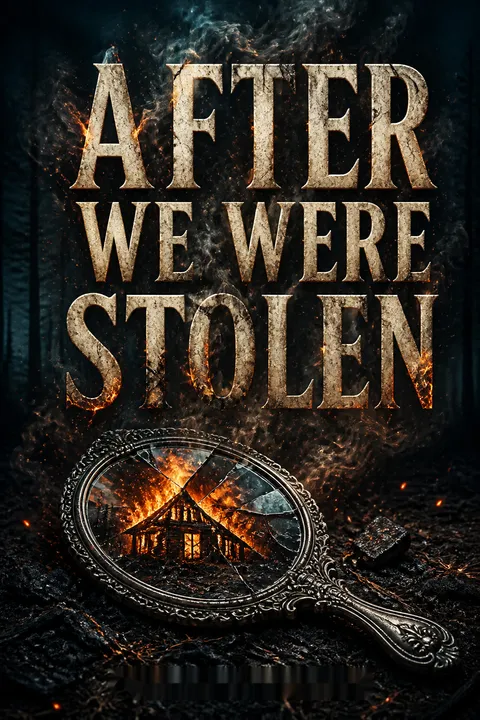
Brooke Beyfuss's After We Were Stolen is a haunting and nuanced examination of cultic abuse, resilience, and the complicated journey toward autonomy and selfhood. While outwardly a story of survival and escape, its power lies in its exploration of psychological captivity—the way trauma warps perception, memory, and morality. The narrative refuses simple binaries: villains are sometimes victims; survivors can be complicit; recovery is slow, nonlinear, and deeply personal. The "family" structure weaponizes love, duty, and even hope against the children, setting up a microcosm of control that makes the outside world both promise and threat. The motif of "preparing, enduring, thriving" becomes not just a mantra of control, but a map of healing as Avery learns to claim agency, forge boundaries, and choose what is worth carrying forward. The book is also a meditation on storytelling itself—who gets to narrate, which truths are bearable, when rewriting is an act of survival rather than erasure. Ultimately, the central lesson is both deeply painful and tentatively hopeful: breaking cycles of abuse requires both the courage to remember and the willingness to write an ending of one's own, even if what comes next is uncertain, partial, and incomplete.
People Also Read







Characters
Avery (Celeste Bishop)
Avery is the narrator and the emotional core of the story—a girl stolen as a child, raised in an apocalyptic cult where her worth is in her utility. Conditioned for endurance, she is both strong and emotionally guarded, yet possesses a stubborn, questioning intelligence that cannot wholly submit. Her relationship with Cole is the sole warmth in her childhood; their sibling bond is mutual dependence, a partnership against chaos and abuse. As circumstances force her into the role of "breeder" for the cult, her sense of autonomy is gradually crushed, but she refuses to be wholly extinguished. After escaping, Avery's psychoanalysis reveals deep trauma, dissociation, and survivor's guilt. Her arc is one of moving from self-effacing endurance to active authorship of her life; forging identity and meaning from shattered origins, ultimately embracing herself as both survivor and self-creator.
Cole (Noah Reid Pierce)
Cole, stolen as a toddler, grows up inside the cult but never entirely adapts to its brutal code. Sensitive, loyal, and imaginative, he clings to Avery as a mother and anchor, rarely questioning the cult's logic until forced into complicity with its horrors. The pressure of his partner relationship with Avery is both burden and lifeline. After escape, he struggles to reconcile the world's adulation as a rescued "miracle child" with his guilt, confusion, and grief over the only life he knew. Subjected to therapy and medication, Cole becomes alienated from Avery and himself—adopting society's narrative but never healing its wounds. His eventual rejection of Avery is both an act of pain and self-preservation, a tragic consequence of being asked to survive too much.
The Father (Clovelite Leader)
The father, never named, is both patriarch and cult leader—a man obsessed with apocalypse, strength, and the necessity of suffering. To him, love is weakness, and survival is the only virtue; he rules through terror, punishment, and calculated "lessons." He weaponizes affection with the partner system, makes progeny a project of group immortality, and ultimately sees his children as possessions and tools. Psychologically, he is both grandiose and insecure, terrified of outside contamination and of losing his grip on those he controls. His legacy is trauma, perpetuated across generations.
The Mother
The mother, broken by years as the "strong" woman of the cult, is both enforcer and victim. She wields religious and biological authority, enacting brutal pragmatism on Avery and her siblings—justifying sexual violence and the "breeder" role as a necessity. She is both emotionally distant and sometimes chillingly kind, offering twisted love and practicality. She embodies the way trauma perpetuates itself, rationalizing abuse as collective survival when she, too, is powerless.
Toby
A sharp-witted, fiercely honest and flamboyant former prostitute, Toby is Avery's first real friend outside the cult. Himself a survivor of family abuse and exploitation, he is both jaded and deeply nurturing, guiding Avery through self-doubt, self-harm, and the bewilderment of autonomy. Their relationship is nonsexual but deeply intimate; he functions as counselor, brother, and co-conspirator in forging new identities. Toby is proof that trauma can be transformed into empathy, humor, and care.
Amaris (Emily)
Amaris arrived at the compound as a teenager—lured by the promise of specialness and community. Unlike the others, she remembers life outside and soon resents what she finds. Trapped by the partner system, she becomes complicit in the cult's abuses, but her guilt never fades. After escaping, she hides her past, forcibly adopting a new life. Her confrontation with Avery is cathartic for both—forcing them to acknowledge the sins they committed, the limits of their choices, and the ambiguous nature of survival.
Amelia
Amelia is the DCF caseworker who shepherds Avery through bureaucracy, therapy, and recovery. She is earnest, careful, and caring, but often constrained by the machinery of the welfare system. She is a gentle counterpoint to the cult's authority figures, offering choices and validation, though sometimes unable to grasp the depth of Avery's wounds.
Zoe
Zoe runs the women's shelter Haven House, enforcing boundaries, rules, and structure. She serves as Avery's therapist and mentor, encouraging her to narrate her own story and providing critical shelter from the world's gaze. Her professional detachment is balanced by real respect and understanding of trauma.
Officer Rodolfo
The police officer who first processes Avery and Cole, Rodolfo embodies both the well-meaning and the limitations of external help. He is skeptical but not cruel, enforcing systems that help and hinder the siblings in equal measure.
The Stranger (the "Man")
The man hired by the father to rape Avery for procreation is the face of external evil—the ultimate violation of her body and autonomy. In reality and in nightmare, he becomes the recurring manifestation of all dangers that lie both outside and within the compound: the ever-present threat that control cannot prevent.
Plot Devices
Nonlinear, Trauma-Obscured Narrative
The story's structure is fractal—spiraling forwards and backwards through time, often as Avery's recollections are triggered or muddied by trauma. The true events of the compound's destruction, as well as her own agency, are concealed by psychological defense mechanisms; suspense is built as Avery and the reader together puzzle out memories, truth, and lies. This narrative mode mirrors the experience of trauma survivors: fragmented, circular, and slow to heal, making the act of self-narration a radical reclamation.
"Partner System" as Control and Foreshadowing
The partner system—a brilliant device—both binds and divides the children, foreshadowing every major betrayal and act of self-sacrifice. Avery and Cole's unbreakable alliance is both salve and source of guilt, leading to critical choices that save and scar them. The device induces tension in every act of defiance or escape, forcing moral tradeoffs.
Repetition and Mantras as Indoctrination
The father's mantras ("prepare, endure, thrive") are both shields and cages; repeated throughout, they reveal how language shapes belief, restricts imagination, and persists long after authority is gone. Their continued echo in Avery and Cole's minds after escape dramatizes the difficulty of deprogramming.
Mirrors, Names, and Lost Identity
Mirrors—literal and figurative—mark turning points as Avery and Cole see themselves as separate from their stories. The change or revelation of names (Avery/Celeste, Cole/Noah) dramatizes the violence of being rewritten by others' narratives. Recovery is marked by the tentative claiming, or forging, of a true self.
Layers of Outsider Gaze
Media attention, rescue attempts, police interrogation, and even "helpful" caseworkers all reframe the siblings' trauma, sometimes healing, often deepening the wound. The layering of perspectives keeps readers questioning whose version of truth is authoritative.
Ambiguous Agency and Guilt
The question of who started the fire runs beneath everything, building moral suspense. Even when the truth is revealed—Avery's role is both understandable and unforgivable—survival means making impossible choices. The ambiguity of agency, as well as forgiveness between survivors, is both plot engine and message.
Download PDF
Download EPUB
.epub digital book format is ideal for reading ebooks on phones, tablets, and e-readers.








































