
Key Takeaways
1. The Collapse of American Exceptionalism and the Liberal Order
In the span of just thirty years, this assumption would come crashing down.
Post-Cold War disillusionment. The end of the Cold War ushered in an era of American preeminence, fueled by the belief that democracy and free markets were the "inevitable endpoint of history." This assumption, deeply ingrained in the American psyche, suggested a natural order where the U.S. would lead a benevolent globalized world. However, this period of unchallenged dominance proved fleeting, as the very forces enabling America's rise began to accelerate its decline.
Self-inflicted wounds. The author reflects on how America's own actions inadvertently sowed the seeds of its diminished standing. Unbridled capitalism led to rampant inequality and corruption, while the post-9/11 "forever war" propagated a politics of "Us versus Them." These internal contradictions eroded confidence in American leadership, both at home and abroad, making the nation vulnerable to the resurgence of older, darker forms of nationalism.
A new global reality. The world shifted from a unipolar American-led order to a more fragmented and contested landscape. The author's travels post-Obama presidency revealed a pervasive sense that the "currents of history had turned against democracy itself," bringing back nationalism and social control in new forms. This global transformation forced a re-evaluation of what it meant to be American in a world no longer defined by its exceptionalism.
2. Authoritarian Playbook: Nationalism, Corruption, and Control
A new model of nationalist authoritarian politics is a defining reality of our world today.
A global template. The author identifies a consistent "authoritarian playbook" employed by leaders worldwide, notably Viktor Orban in Hungary, Vladimir Putin in Russia, and later mirrored by the Republican Party in the U.S. This model leverages populist outrage over globalization's failures and economic inequality to consolidate power. It systematically dismantles democratic institutions while presenting itself as the sole defender of national identity.
Pillars of power. Key elements of this playbook include:
- Enriching cronies: Funneling public money and resources to loyal oligarchs who, in turn, fund political campaigns.
- Propaganda machine: Creating vast, partisan media networks to control narratives and demonize opponents.
- Electoral manipulation: Redrawing districts, changing voting laws, and packing courts to entrench power.
- Identity politics: Wrapping the project in Christian nationalist messages, tapping into historical grievances, and relentlessly attacking "the Other" (immigrants, liberals, minorities).
Eroding democracy. This systematic approach doesn't rely on a single dramatic takeover but rather a "years-long process of many scattered, seemingly insignificant little fires." The goal is to breed apathy and cynicism, making people believe that all systems are corrupt and that political participation is futile. This erosion of trust in democratic processes paves the way for leaders to rule with impunity, justifying their actions as necessary for national greatness.
3. Russia's Counterrevolution: Weakness Invites Aggression
We demonstrated weakness, and the weak are beaten.
Post-Soviet humiliation. For Alexey Navalny and many Russians, the collapse of the Soviet Union brought not liberation but profound humiliation and economic chaos. The "shock therapy" privatization of the 1990s, often advised by Western technocrats, enriched a few oligarchs while ordinary Russians lost savings and dignity. This period of perceived weakness and Western triumphalism fueled a deep resentment that Vladimir Putin expertly tapped into, promising to restore Russia's lost greatness.
Putin's consolidation of power. Putin's rise was a direct counterrevolution to the post-Cold War order. He systematically dismantled democratic institutions, reasserted state control over media, and built a vast network of corruption benefiting his cronies. His foreign policy became increasingly aggressive, culminating in the invasions of Georgia (2008) and Ukraine (2014), actions justified by the narrative that Russia was reclaiming its rightful place and avenging past humiliations.
Weaponizing cynicism. Putin's strategy wasn't just about military might; it was about undermining the moral authority of the West. He propagated the idea that all governments, including democracies, are inherently corrupt and cynical, merely "hiding it better." The 2008 financial crisis and America's own political dysfunction provided ample evidence for this narrative, allowing Russia to "level the playing field" and turn America into a "mirror image" of its own perceived flaws.
4. China's New Model: Techno-Totalitarianism Meets Capitalism
Remove any democratic values, and you get the shift from the recent American model to the emerging Chinese one.
A unique path. Unlike Russia or Hungary, China never pretended to embrace liberal democracy after the Cold War. Instead, it forged a new model blending state-controlled capitalism with sophisticated techno-totalitarianism. This approach, driven by the Chinese Communist Party (CCP), prioritized economic growth and national pride, lifting hundreds of millions out of poverty while maintaining absolute political control.
The Chinese Dream. Under Xi Jinping, the "Chinese Dream" became a nationalist project to achieve "great rejuvenation of the Chinese nation," shedding Deng Xiaoping's earlier caution. This involved:
- Economic dominance: Leveraging global trade and investment to become a manufacturing and market powerhouse.
- Technological supremacy: Investing heavily in AI and surveillance technologies, often with U.S. venture capital.
- Cultural control: Promoting a revised Chinese identity rooted in Confucianism and historical grievances against the West, while erasing inconvenient historical events like Tiananmen.
Exporting authoritarianism. China's influence extends globally through initiatives like the Belt and Road Initiative (BRI), which builds infrastructure in developing nations, often leading to debt traps and political leverage. The CCP also exports its surveillance technologies and authoritarian methods, creating a dilemma for democracies: isolating China pushes countries further into its orbit, while engagement risks complicity in its repressive model, exemplified by the mass detention of Uighurs in Xinjiang.
5. The Global Weaponization of Information and Identity Politics
The unifying allure of the Internet and social media segmented people back into lonely tribes where they could be more easily manipulated by propaganda, disinformation, and conspiracy theory.
Digital battleground. American-made social media, initially hailed as tools for connection and democracy, became potent weapons in the hands of authoritarian regimes and domestic political factions. Platforms like Facebook and Twitter, driven by algorithms that prioritize engagement, inadvertently amplified anger, disinformation, and conspiracy theories, segmenting populations into "lonely tribes."
Manufacturing reality. This digital landscape enabled a new form of information warfare:
- Discrediting opponents: Autocrats and their allies use state-controlled media and online trolls to "name and shame" critics, casting doubt on their motives and truthfulness.
- Conspiracy theories: From "Deep State" narratives in the U.S. to "Soros Leaks" in Hungary, these theories offer simple explanations for complex problems, fostering distrust in institutions and objective reality.
- Self-censorship: The constant threat of online harassment, doxing, or legal repercussions leads individuals and organizations to self-censor, further narrowing the space for open discourse.
Identity over ideology. In this environment, identity politics replaced traditional ideological debates. Leaders like Orban, Putin, and Trump defined "Us" by relentlessly attacking "Them"—immigrants, liberals, minorities, or foreign powers. This grievance-fueled nationalism, amplified online, provided a sense of belonging and purpose to disaffected masses, often obscuring underlying corruption and economic inequality.
6. America's "Forever War" Undermined Its Own Values
The invasion of Iraq introduced a destabilizing new normal to global politics: Laws and norms were for the weak, and the strong could do anything they wanted, even invade and occupy a foreign country on a false pretense.
A misguided response. The post-9/11 "War on Terror" fundamentally reshaped American foreign policy and domestic life. The invasion of Iraq, based on false pretenses, not only destabilized the Middle East but also eroded America's moral authority. It signaled to the world that the U.S. was willing to disregard international law and norms, providing a convenient template and justification for authoritarian leaders to pursue their own aggressive agendas.
Securitization at home and abroad. Domestically, the PATRIOT Act and the expansion of surveillance powers, immigration restrictions, and extrajudicial detentions transformed American society. These measures, while ostensibly for security, were seen by many globally as a betrayal of American values. Abroad, the U.S. supported authoritarian regimes (Egypt, Saudi Arabia) as "allies" in the War on Terror, even as these regimes brutalized their own populations and inadvertently fueled radicalization.
Unintended consequences. The "forever war" created a cycle of violence and blowback. America found itself fighting against the very networks it had once armed (e.g., mujahideen in Afghanistan) and inadvertently fostering new terrorist groups like ISIS. This prolonged engagement, coupled with the demonization of "the Other" (Muslims, immigrants), diverted attention and resources from pressing domestic issues and further eroded the nation's democratic fabric, making it vulnerable to its own authoritarian turn.
7. The Corrosive Impact of Unchecked Capitalism and Inequality
The globalized spread of profit-seeking capitalism accelerated inequality, assaulted people’s sense of traditional identity, and seeded a corruption that allowed those with power to consolidate control.
Globalization's dark side. The post-Cold War era saw an explosion of American-led globalization, driven by the relentless pursuit of profit and unregulated markets. While this created immense wealth, it also dramatically accelerated economic inequality, both within nations and globally. This widening gap between the rich and everyone else became a fertile ground for populist resentment, as ordinary people felt the system was "rigged" against them.
Financial crises and lost trust. The 2008 global financial crisis, triggered by American-made financial schemes, exposed the inherent flaws and recklessness of this system. The subsequent bailouts of "too big to fail" banks, while preventing a deeper depression, further solidified the perception that the wealthy were protected while ordinary citizens bore the costs. This collapse of confidence in liberal economics directly fueled the rise of nationalist movements that promised to "take our country back" from corrupt elites.
Money in politics. Unchecked political finance, exemplified by decisions like Citizens United in the U.S., allowed wealthy individuals and corporations to pour unlimited "dark money" into political campaigns. This created a symbiotic relationship between money and power, where political agendas (tax cuts, deregulation) served the interests of donors, further entrenching corruption and making structural reforms nearly impossible. This dynamic mirrored the graft seen in authoritarian states, blurring the lines between democratic and autocratic systems.
8. The Personal Cost of Resisting Global Authoritarianism
The message is clear and the same: It’s not worth the cost of opposing the powerful, particularly those willing to respect few or no limits in exercising their power.
Courage in the face of repression. The author highlights the immense personal risks taken by individuals who resist authoritarianism, from Alexey Navalny in Russia to Mohamed Soltan in Egypt and Hong Kong protesters. These individuals face:
- Physical harm: Poisoning, beatings, imprisonment, and even assassination.
- Psychological warfare: Constant surveillance, disinformation campaigns, and threats against family members.
- Erosion of identity: Forced renunciation of citizenship or cultural traditions.
The chilling effect. The goal of such repression is not just to silence specific dissidents but to create a "chilling effect" across society. By making examples of those who speak out, authoritarian regimes foster apathy and self-censorship, convincing people that resistance is futile and that it's "not worth getting involved." This strategy aims to break the spirit of opposition and normalize the absence of freedom.
Unlikely kinship. The author finds an unexpected kinship with these global opposition figures, recognizing a shared "righteous anger" at the lies, hypocrisy, and injustice of the systems they confront. Their stories underscore that while the dangers they face are exponentially greater, the underlying motivations—a desire for truth, dignity, and a better future—are universal, offering a powerful counter-narrative to the cynicism propagated by those in power.
9. America's Internal Crisis: "Maybe This Is Who We Are"
Maybe this is who we are.
A fractured identity. The Trump presidency forced a painful reckoning with America's self-perception. The long-held belief in American exceptionalism and its inherent goodness was challenged by the election of a leader who embodied white supremacy, crude nationalism, and a "longing for an ill-defined past." This raised the uncomfortable question: Was Trump an aberration, or did he reveal a deeper, more troubling truth about the nation's character?
Polarization and false realities. America's political culture descended into "triviality and racialized grievance," fueled by a radicalized Republican Party and a media ecosystem that amplified conspiracy theories. This created a "separate reality" for a significant portion of the population, where objective facts were contested, and political discourse became a "cacophony of noise" rather than a search for common ground.
Eroding democratic norms. The "ocean liner" of American government, once seen as resilient, proved vulnerable to internal sabotage. Efforts to suppress voting, pack courts, and weaponize government power against political opponents mirrored tactics seen in authoritarian states. This internal decay, coupled with a "hypersecuritized narrative" that prioritized fear over freedom, left America diminished on the world stage and struggling to define its own identity.
10. The Imperative to Reclaim a Universal American Identity
America cannot arrest the direction of events in the world—the decay, as Lorraine said—simply through one election or even a new set of policies. More fundamentally, we need to figure out who we are—what it means to be American.
Beyond the "Us vs. Them." The author argues that America's path forward requires a profound redefinition of its national identity, moving beyond the "Us versus Them" tribalism that has plagued its politics. This means confronting historical sins, celebrating diversity, and re-committing to the universal values of freedom, dignity, and equality that America has imperfectly represented. The goal is to forge an identity that allows individuals to "be yourself in full because we respected one another’s equal worth."
Learning from global resistance. The struggles of activists and opposition figures worldwide offer a mirror for America's own challenges and a source of inspiration. Their fight for truth, accountability, and self-determination, often against overwhelming odds, underscores the enduring human longing for freedom. By recognizing itself in these global movements, America can expand its "lens of vision" and learn how to better defend its own democratic principles.
A new beginning. The current overlapping crises—pandemic, climate change, authoritarianism—present an inflection point. They reveal the absurdity of isolationist nationalism and the necessity of collective action rooted in truth and expertise. By getting its "act together as a multiethnic democracy," America can once again set a relevant example, not as a global hegemon, but as a nation that embodies the belief that "underdogs can win" and that the world "can change again for the better." This requires an "uncompromising and unshakable belief: This is not who we are."
Review Summary
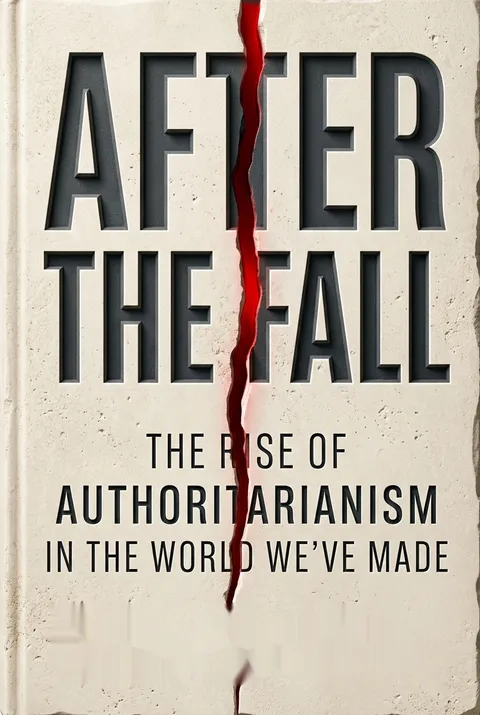
After the Fall receives mixed reviews averaging 4.17/5 stars. Readers appreciate Rhodes' insider perspective on authoritarianism's rise and connections between American policies and global authoritarian trends. Many praise his analysis of Hungary, Russia, and China, finding it eloquent and insightful. However, critics note the book lacks depth as a history, feels too partisan, contains excessive personal anecdotes that don't add value, and disappoints those expecting deeper analysis of social and economic factors. Several reviewers wished for more critical self-reflection on American and Obama-era policies.
People Also Read







About the Author

Download PDF
Download EPUB
.epub digital book format is ideal for reading ebooks on phones, tablets, and e-readers.








































