
Key Takeaways
1. American Democracy Skews Towards Plutocracy
The American government does respond to the public’s preferences, but that responsiveness is strongly tilted toward the most affluent citizens.
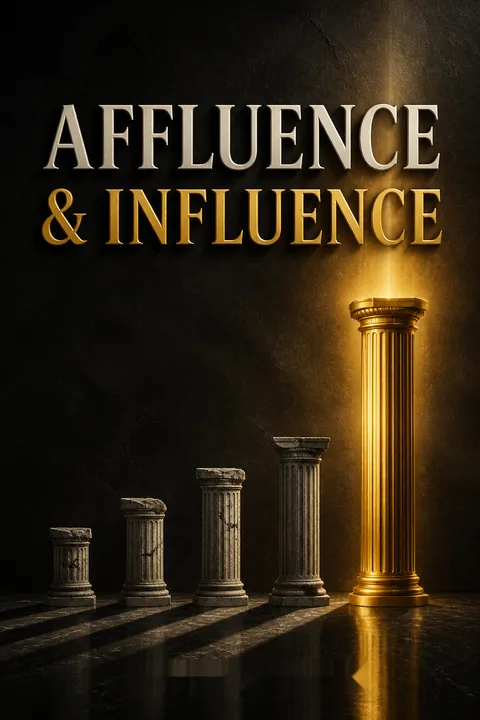
A grim assertion. Justice Louis Brandeis once warned that America could not have both democracy and concentrated wealth. This book empirically confirms his assertion, revealing a stark reality: the U.S. government is significantly more responsive to the policy preferences of its wealthiest citizens. This isn't about millionaires and billionaires alone, but the broader group of Americans at the 90th income percentile, whose desires disproportionately shape national policy.
Defining responsiveness. The study meticulously analyzes thousands of survey questions on proposed policy changes, comparing public support across income levels with actual policy outcomes. This "preference/policy link" measures how much government action aligns with citizen desires. A strong, equal link across income groups would signify "democratic responsiveness," an ideal rarely achieved.
The status quo bias. The research consistently shows a substantial bias towards the status quo in American policymaking. Policies strongly opposed by the public have little chance of adoption, but even policies with overwhelming public support face uncertain prospects. This inherent inertia benefits those who prefer existing policies, often the affluent, and makes it harder for the majority to enact desired changes.
2. Affluent Preferences Drive Policy, Especially When Divergent
Indeed, under most circumstances, the preferences of the vast majority of Americans appear to have essentially no impact on which policies the government does or doesn’t adopt.
The vanishing influence. While the preferences of the affluent consistently correlate with policy outcomes, the influence of middle- and low-income Americans largely disappears when their preferences diverge from those of the wealthy. This means that when the rich and the rest of the population disagree on a policy, the government tends to follow the lead of the affluent.
Challenging the median voter. This finding directly contradicts the "median voter theorem," which posits that political parties and candidates converge on the preferences of the average voter to maximize electoral appeal. The data show that actual government policy does not respond to the preferences of the median voter, instead prioritizing the desires of the top income earners.
Not just about agreement. The observed association between policy outcomes and the preferences of the poor or middle-income groups is often an artifact of shared preferences with the affluent. When less-well-off Americans hold views that differ from the wealthy, their impact on policy becomes virtually nonexistent, highlighting a profound representational inequality.
3. Citizen Competence: Imperfect, Yet Sufficient for Democracy
If the public is incapable of forming sensible preferences on matters of public policy, then the representational inequalities that I document in the following chapters take on a very different normative hue.
Addressing skepticism. Critics of democracy, from Plato to Schumpeter, have questioned the capacity of ordinary citizens to guide political rulers due to perceived ignorance or fickleness. However, this book argues that despite demonstrably low levels of political knowledge, the public's aggregate preferences are a reasonable basis for democratic decision-making.
Compensatory mechanisms. Citizens employ several strategies to form meaningful preferences:
- Cue-taking: Relying on more knowledgeable elites or like-minded acquaintances.
- Issue publics: Specializing in a subset of issues they care most about, rather than being informed on all topics.
- Aggregation: Individual errors and temporary fluctuations tend to cancel out, making collective opinion more stable and coherent.
Beyond "nonattitudes." While survey responses can be influenced by question wording or temporary considerations, the "magic of aggregation" means that collective preferences are generally stable and responsive to changing conditions. The gap between actual and hypothetical "well-informed" preferences is modest, suggesting that expressed public opinion is a valid, albeit imperfect, guide for policy.
4. Interest Groups: Powerful, But Parallel to Affluent Influence
Interest groups and affluent members of the public appear to shape federal policy making largely independently of each other.
A separate channel of influence. Organized interest groups exert a strong influence on policy outcomes, comparable in magnitude to that of affluent Americans. However, this influence operates largely independently; interest groups neither significantly enhance nor detract from the affluent's policy impact, nor do they explain the lack of responsiveness to the poor or middle class.
Asymmetrical impact. Interest groups are generally more effective at blocking policy changes they oppose than at securing the adoption of changes they support. This reinforces the existing status quo bias in the American political system. While some interest groups, like unions, consistently align with the preferences of less-well-off Americans, their power is often counterbalanced by other organized interests.
No "force multiplier." The study finds no evidence that interest groups and public preferences act as "force multipliers" for each other, meaning their combined influence is not greater than the sum of their individual impacts. This suggests that while interest groups are crucial actors in policymaking, they do not fundamentally alter the underlying patterns of representational inequality.
5. Elections Coerce Responsiveness, But Parties Prioritize Policy
This understanding of the political system as both responding to electoral pressure and undermining that responsiveness when pressure abates is less consistent with models of parties as vote maximizers and more consist with the view of parties as policy maximizers seeking to implement their favored policies.
Electoral boost. Policy responsiveness to all income groups is highest during presidential election years. This "representational boost" is particularly pronounced for the least well-off Americans, suggesting that electoral pressures can temporarily compel policymakers to address broader public preferences. However, policies adopted during these periods of "coerced responsiveness" are often less durable.
Parties as policy maximizers. Political parties, rather than being solely driven by vote maximization, often behave as "policy maximizers." They pursue agendas shaped by activists, donors, and interest groups, responding to public preferences only when necessary to gain or retain power. This explains why responsiveness to the poor and middle class largely disappears in non-election years.
Regime change benefits the affluent. When a new party takes control of the presidency, responsiveness to the affluent increases in the initial years, as the new regime implements policies favored by its wealthy base. However, responsiveness to the middle class and the poor remains low, and overall responsiveness declines as a party's tenure in power lengthens.
6. Strong Party Control Suppresses Public Influence
When one party gains strong control of the levers of government, the preferences of the public—including its most affluent segments—are least likely to be reflected in policy outcomes.
Insulation from public will. Periods of strong, unified party control over the federal government are associated with lower levels of policy responsiveness to all income groups. When a party holds significant power, it becomes more insulated from public pressure and is freer to pursue its own ideological agenda, often dictated by its core activists and policy-demanding groups.
The Johnson paradox. For example, the Johnson administration (1964-68), despite overwhelming Democratic majorities, exhibited very low responsiveness to public preferences across all income levels. This was due to the administration's ability to pursue its Great Society agenda, which included many policies unpopular with the public, without facing significant political constraints.
Republican control and responsiveness. Surprisingly, policies adopted during periods of greater Republican control are generally more consistent with public preferences than those adopted under strong Democratic control, across most policy domains. The exception is social welfare, where responsiveness to the poor is greater under Democrats. This reflects the public's general preference for tax cuts and defense spending, often championed by Republicans, and the Democratic Party's shift towards free-market policies.
7. Political Competition Enhances Democratic Responsiveness
When political pressure is present (in the form of an impending election or uncertain control of government), policy shows a stronger connection to public preferences, but with a decided tilt toward the well-off.
The gridlock paradox. Counter-intuitively, higher levels of legislative gridlock are associated with higher policy responsiveness, particularly for middle- and affluent Americans. Gridlock acts as a "filter," making it harder to pass any legislation, but especially unpopular policies that the minority party can effectively obstruct. This means that policies that do pass during gridlock are more likely to be broadly popular.
Divided government's silver lining. A closely divided Congress, or a small majority-party seat advantage in the Senate, also enhances responsiveness. This uncertainty about continued control increases political stakes, compelling both parties to temper ideological demands and appeal to centrist voters. This creates a window where policy outcomes align more closely with public preferences, though still with a tilt towards the affluent.
Coercion, not conversion. These findings suggest that political competition and uncertainty coerce policymakers into responsiveness, rather than fundamentally changing their policy preferences. When the pressure is off, parties revert to pursuing their core agendas, often at the expense of broader public opinion.
8. The "Bush Anomaly" and the Johnson Paradox in Responsiveness
Neither affluent nor other Americans appear to have had any more influence over policy making during 2005–06 than they did during the height of Democratic Party control in the mid-1960s.
Contrasting extremes. The Johnson administration (mid-1960s) and the later years of the George W. Bush administration (2005-06) represent periods of strong, unified party control. Both exhibited remarkably low levels of policy responsiveness to all income groups, as the dominant parties pursued their own agendas, insulated from broader public preferences.
The early Bush anomaly. In stark contrast, the early years of the G. W. Bush presidency (2001-02) saw unusually high levels of responsiveness to all income levels, including the poor and middle class. This "Bush anomaly" was attributed to:
- A closely divided Congress and tenuous Republican control.
- Bush's "compassionate conservative" rhetoric and focus on broadly popular policies (e.g., Medicare drug benefit, No Child Left Behind, faith-based initiatives).
- A strategic focus on political considerations by the White House.
Circumstances over inclination. The dramatic shift from high responsiveness in early Bush years to low responsiveness in later years, once Republicans secured stronger control, underscores that political circumstances, rather than the inherent inclinations of a particular administration, are paramount in shaping democratic responsiveness.
9. Rising Economic Inequality Fuels Affluent Political Power
This raises the disturbing prospect of a vicious cycle in which growing economic and political inequality are mutually reinforcing.
A disturbing trend. Over the past three decades, the share of national income going to the top 10% of U.S. families has surged from one-third to nearly one-half, with the top 1% seeing their share more than double. This dramatic increase in economic inequality coincides with a steady strengthening of policy responsiveness to the affluent.
Policy choices matter. While factors like globalization and technological change contribute to economic inequality, government policy plays a crucial role. Unlike many other advanced democracies that have adopted redistributive policies to mitigate inequality, the U.S. has seen policies that exacerbate it, such as tax cuts for the wealthy and financial deregulation.
The vicious cycle. As economic resources become more concentrated among the already advantaged, their ability to influence policy through donations and lobbying increases. This, in turn, leads to policies that further benefit the wealthy, creating a self-reinforcing cycle of growing economic and political inequality.
10. Money: The Root of Representational Inequality
Political donations, then, but not voting or volunteering, resembles the pattern of representational inequality we saw in earlier chapters: under typical circumstances, the middle class has no more sway than the poor when their preferences diverge from those of the affluent.
The power of the purse. The most direct explanation for the disproportionate influence of affluent Americans is their greater propensity to make political donations. While voting and volunteering rates are lower for the poor, the differences between middle-income and affluent Americans in these activities are modest. However, when it comes to campaign contributions, high-income Americans stand out dramatically.
Beyond the 90th percentile. The "truly rich" (e.g., the top 1% or 0.1%) contribute vastly more to political campaigns and organizations than the "merely affluent" (90th percentile). Their preferences are often more extreme, and their substantial financial contributions provide unparalleled access and influence, suggesting that the observed responsiveness to the 90th percentile may, in part, reflect the even greater sway of this smaller, wealthier elite.
Money's complex role. While money doesn't guarantee victory in elections or policy battles, it is crucial for political viability and access. Campaign spending has become exponentially more expensive, increasing the pressure on politicians to cultivate wealthy donors. This financial imperative acts as a powerful filter, ensuring that candidates and policies appealing to affluent interests receive disproportionate attention.
11. Congressional Affluence: Less Direct Impact Than Campaign Finance
But it does appear that the substantial existing differences in economic status among members of Congress are not related to broad patterns of voting on economic policy.
The "Millionaires Club" effect. While a significant portion of Congress members are millionaires and all are in the top income decile, their personal wealth or outside income does not directly correlate with their voting records on broad economic issues. This suggests that simply being affluent does not automatically dictate a conservative economic stance in Congress.
Professional background matters. However, legislators' professional histories before entering Congress do show a link to their voting behavior. Those from more "conservative professions" (e.g., business owners) tend to vote more conservatively on economic issues than those from "liberal professions" (e.g., manual laborers), even when controlling for district characteristics. This implies that the class composition of Congress, shaped by who runs and wins, can subtly influence policy.
Limited explanatory power. While the class bias of Congress might play a role, it cannot fully explain the fluctuating patterns of responsiveness observed over time. Since responsiveness to the affluent itself varies with political pressures, the relatively unchanging personal preferences of elected representatives can only account for a small part of the documented representational inequalities.
12. Reforming for Equality: A Difficult, Yet Necessary, Path
But the costs of not doing so are considerable as well. The poor and the middle class are already far more likely than the affluent to feel that their preferences and interests are ignored by government policy makers.
The imperative for reform. The pervasive representational inequality threatens the very perception and reality of a shared political community. The poor and middle class increasingly feel their voices are unheard, undermining faith in democratic institutions. Addressing this imbalance is crucial for the health of American democracy.
Promising avenues for reform:
- Campaign finance reform: Reducing reliance on affluent donors through public financing (e.g., "voting with dollars" vouchers) or stricter contribution limits.
- Enhancing electoral competitiveness: Nonpartisan redistricting to reduce gerrymandering, and nonpartisan voter mobilization efforts.
- Targeting within universalism: Focusing on policies that are broadly popular across income groups but disproportionately benefit the less well-off (e.g., minimum wage increases, child care support).
A challenging but hopeful outlook. While the obstacles are immense, particularly with increasing economic inequality and a Supreme Court often hostile to campaign finance restrictions, the fact that political circumstances can reduce inequality offers hope. Political destiny is not predetermined, and conscious reforms can push the system towards greater responsiveness and equality.
Review Summary
Affluence and Influence examines how economic inequality translates to political inequality in America. Martin Gilens uses extensive data analysis of policy preferences across income levels from 1961-2002, finding that affluent Americans (top 10%) exert substantial influence over policy outcomes while lower-income citizens have virtually none. The book demonstrates through rigorous statistical analysis that U.S. democracy resembles plutocracy. While reviewers praise the comprehensive research and important findings, many note the writing is dense, technical, and aimed at academics rather than general readers, though the conclusions are significant for understanding American democracy.
People Also Read








About the Author
Other books by Martin Gilens
Download PDF
Download EPUB
.epub digital book format is ideal for reading ebooks on phones, tablets, and e-readers.








































