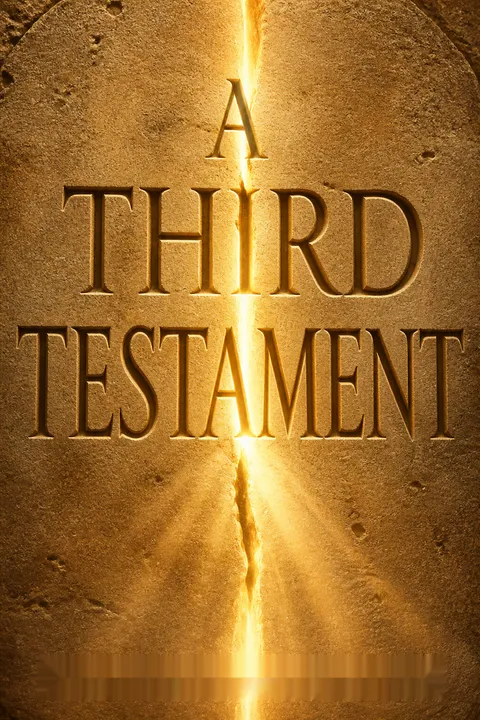

Key Takeaways
1. God's Spies: Bridging Eternity and Time
Between the fantasies of the ego and the truth of love, between the darkness of the will and the light of the imagination, there will always be the need for a bridge and a prophetic voice calling on us to cross it.
Timeless mission. Malcolm Muggeridge presents seven figures—Augustine, Pascal, Blake, Kierkegaard, Dostoevsky, Tolstoy, and Bonhoeffer—as "God's spies." Their shared purpose was to connect their eras to eternity, serving as prophetic voices to recall humanity to God amidst self-sufficiency or despair. They acted as celestial agents in "enemy-occupied territory," battling the Devil's influence.
Beyond the temporal. These individuals, deeply rooted in their times, transcended temporal concerns to articulate universal spiritual truths. They understood that human progress, untethered from divine purpose, inevitably leads to a cul-de-sac of meaninglessness. Their lives and works form a "Third Testament," offering guidance for new challenges beyond earlier testaments.
Enduring relevance. Muggeridge argues their insights remain profoundly relevant, addressing the recurring human tendency to forget God and succumb to ego-driven fantasies. Each spy provided a vital bridge, reminding us that true hope and humility are found only in rediscovering our divine connection. Their collective witness calls us to cross from the darkness of will to the light of imagination and love.
2. Augustine: Architect of Faith in Rome's Ruin
His worldly credentials were impeccable – a highly successful professorship of rhetoric at Milan University, which in his regenerate days he called his Chair of Lies, friends and acquaintances in the highest circles and occasional speech-writing jobs for the Emperor himself.
From worldly success. Augustine, born in 354 AD, initially pursued a brilliant secular career as a rhetorician, enjoying high society and imperial connections. Despite this outward success, he felt a profound inner dissatisfaction, calling his prestigious academic post a "chair of lies." His early life was marked by sensuality and intellectual exploration of heresies like Manicheism.
Spiritual transformation. His conversion was a long process, culminating in a garden where he heard a child's voice urging him to "Take it and read it" from scripture. This moment dispelled his doubts, flooding his heart with confidence. He realized that earthly beauty points to God, and true joy lies not in "licking the earth" but in spiritual reality.
Foundational legacy. Confronted with the collapse of the Roman Empire, Augustine became the Bishop of Hippo, tasked with preserving the Christian Church. His monumental works, Confessions and City of God, provided a spiritual ark for the Church, guiding Christians to survive and build a new civilization. His insights into moral vacuity and the contrast between earthly and heavenly cities remain timeless.
3. Pascal: The Thinking Reed's Leap of Faith
Man is only a reed, the feeblest thing in nature, but he is a thinking reed.
Brilliant mind. Blaise Pascal, a 17th-century prodigy, excelled as a mathematician, scientist (inventing an early calculator), and thinker. Yet, he famously critiqued the "vainglorious pretensions of science," recognizing its limitations in addressing ultimate truths. He saw that scientific advancement, without God, could lead to a "cul-de-sac" of meaninglessness.
Personal revelation. Pascal's profound spiritual conversion, marked by an intense experience he called "Fire," led him to prioritize God above all else. This personal drama, rather than abstract intellectualism, became his focus. He famously countered Descartes' "I think, therefore I am" with "I look for God, therefore I have found Him."
Defense of faith. His posthumously published Pensées are a powerful apologia for the Christian faith, arguing that man's greatness lies in recognizing his wretchedness and the infinite beyond reason. Pascal's work challenged both self-indulgence and scientific arrogance, prophesying the terror of the "eternal silence of these infinite spaces" if humanity turned from God.
4. Blake: Imagination's Light Against Dark Mills
We ever must believe a lie / When we see with, not through, the eye.
Visionary artist. William Blake, an 18th-century poet and artist, profoundly distrusted the intellect and science as paths to truth. He championed Imagination as "human existence itself," the faculty through which one perceives spiritual reality. He believed that "seeing with" the physical eye leads to lies, while "seeing through" it reveals divine truth.
Critique of the age. Blake was a fierce critic of the burgeoning Industrial Revolution and the Enlightenment's emphasis on reason. He saw "dark Satanic Mills" not just as factories, but as the oppressive systems of thought (like Locke's philosophy) that stifled human creativity and spiritual insight. He rejected the notion of human perfectibility through material progress.
Christian radical. Though often seen as eccentric, Blake was deeply religious and Christian. He saw the Lamb of God as salvation and the destruction of the ego as true freedom. He challenged conventional morality and institutional religion, believing they often obscured genuine worship and virtue. His visions, though deemed madness by some, were for him the most profound sanity.
5. Kierkegaard: The Individual's Cry Against the Crowd
A passionate, tumultuous age will overthrow everything, pull everything down; but a revolutionary age that is at the same time reflective and passionless leaves everything standing but cunningly empties it of significance.
Prophet of the individual. Søren Kierkegaard, a melancholic 19th-century Dane, foresaw the dangers of mass society, universal suffrage, and mass media. He scorned the "fallacy of numbers," arguing that collectivism inevitably leads to a new, more comprehensive servitude, where "the divine right of the people" becomes a greater deception than that of kings.
Against the leviathan. He pitted the individual human soul, made in God's image, against the "new leviathan" of democracy or the triumphant proletariat. Kierkegaard insisted on salvation through suffering, contrasting the Cross with the ballot box or clenched fist. He warned that mass communications would shape hopes and values, deluding people with the axiom that "numbers are decisive."
Spiritual pilgrimage. Kierkegaard charted a spiritual journey through aesthetic, ethical, and religious stages. He moved from seeking sensual satisfaction to an awareness of moral duty, and finally to absolute subjection and faith in God. He fiercely criticized the worldly Danish Church for its geniality and subservience to the state, believing it had made Christ's kingdom "of this world."
6. Dostoevsky: Freedom's Burden and Redemption's Path
"I kill, therefore I am!" says Raskolnikov, and even as he says it he realizes that it was not the old hag he murdered, but himself.
Exploring human depths. Fyodor Dostoevsky, a 19th-century Russian novelist, delved into the profound interplay of Good and Evil, crime and punishment, and suffering and redemption. His own experiences—a mock execution and penal servitude in Siberia—profoundly shaped his understanding of human nature and the path to inner life.
The will to power. Through characters like Raskolnikov in Crime and Punishment, Dostoevsky explored the ultimate godlessness of worshipping one's own will, leading to violence for its own sake. Raskolnikov's chilling declaration, "I kill, therefore I am!", ultimately reveals self-destruction, not liberation. Dostoevsky's message, delivered through Sonia, is to "Accept suffering and be redeemed by it."
Critique of revolution. In The Devils, Dostoevsky exposed how romantic revolutionary ideas inevitably lead to merciless destruction, echoing Rousseau's flawed premise that freedom comes from doing what one likes. He argued that when men are dominated by their own desires, they fall into the most terrible servitude. His Grand Inquisitor parable starkly illustrates the Church's choice of "miracles, mystery, and authority" over Christ's burden of freedom.
7. Tolstoy: The Inner Kingdom vs. Earthly Illusions
I was happy, yet I hid away a cord to avoid being tempted to hang myself by it to one of the pegs between the cupboards of my study where I undressed alone every evening, and ceased carrying a gun because it offered too easy a way of getting rid of life.
Spiritual crisis. Despite immense literary success and a seemingly happy family life, Leo Tolstoy experienced a profound spiritual crisis in middle age. He found no lasting satisfaction in worldly pursuits, art, or the notion of human progress. His Confession reveals a deep despair, a fear of life and death, which led him to seek meaning beyond material existence.
Quest for faith. Tolstoy observed that only the uneducated peasants (muzhiks) possessed a simple faith and peace, accepting life's hardships and death without fear. This realization spurred his lifelong quest for God, leading him to resume Orthodox practices, though he later broke with the Church over its worldliness and support for state power. His search became a lonely, solitary pilgrimage.
Prophetic vision. Tolstoy passionately expounded the New Testament's message of the "Kingdom of Heaven within us," advocating universal love and non-violence. He foresaw the world's false direction, warning against technology, affluence, and egotistical happiness. His writings, like Resurrection, powerfully presented Christ's teachings, ensuring their survival even in an avowedly atheistic state, influencing figures like Gandhi.
8. Bonhoeffer: Conscience, Conspiracy, and Christian Martyrdom
Death is the supreme festival on the road to freedom.
Confronting evil. Dietrich Bonhoeffer, a Lutheran pastor in Nazi Germany, immediately recognized Hitler's regime as an attack on fundamental human decency and Christ himself. He moved from a classic pacifist stance to the conviction that active resistance, even conspiracy to assassinate Hitler, was a necessary "act of repentance" for Christians.
Prison and revelation. Imprisoned in Tegel Prison for his involvement in the plot, Bonhoeffer's Letters and Papers from Prison became a contemporary Christian classic. In his affliction, the theologian became a mystic, generating hope in a dark historical moment. He found that his greatness grew directly from his suffering, transforming his earthly hopelessness into spiritual triumph.
Ultimate sacrifice. Despite opportunities to escape, Bonhoeffer deliberately chose to remain, prioritizing solidarity with his fellow conspirators and his commitment to Christ. Upon learning of the plot's failure, he accepted his fate, seeing his impending execution as a path to freedom. His martyrdom, just before Germany's defeat, spared him the disillusionment of the post-war world, leaving a legacy of unwavering faith and moral courage.
9. Spiritual Reality: The Soul's True Sustenance
To see a World in a Grain of Sand / And a Heaven in a Wild Flower, / Hold Infinity in the palm of your hand / And Eternity in an hour.
Beyond the visible. Across the lives of these "God's spies," a consistent theme emerges: the profound importance of spiritual reality as the soul's true sustenance. Figures like William Blake articulated this most vividly, emphasizing that true perception involves "seeing through" the physical world to grasp the infinite and eternal dimensions of existence.
Inner truth. This spiritual reality is not an abstract concept but an inward truth, accessible through imagination, faith, and a deep connection to the divine. It stands in stark contrast to the superficial realities offered by material pursuits, scientific reductionism, or ego-driven fantasies. The quest for this inner truth, though arduous, is presented as the only path to genuine fulfillment.
Transformative power. Embracing spiritual reality transforms one's perception of life, infusing it with meaning and purpose. It allows individuals to find joy amidst suffering, to see God's presence in creation, and to transcend the limitations of time and mortality. This profound shift in perspective is what enabled these figures to act as beacons of hope and truth in their respective eras.
10. The Prophetic Warning: Dangers of Godless Pride
Pride separates him from God, and induces him to believe that he is a god himself.
Hubris of humanity. A recurring warning from these prophetic voices is against the perils of godless pride and human self-sufficiency. Pascal observed that man's ego leads him to believe he is a god, while Augustine questioned, "O greedy men, what will satisfy you if God Himself will not?" This hubris, they argued, inevitably leads to chaos and destruction.
False promises. The figures collectively exposed the false promises of earthly paradises built on human reason, scientific advancement, or collective power. Kierkegaard warned that such endeavors, whether through universal suffrage or triumphant proletariat, would lead to new forms of servitude and mindlessness. Dostoevsky illustrated how the worship of one's own will culminates in self-destruction.
Consequences of denial. When humanity turns away from God, it loses its moral compass, leading to moral vacuity, insensate passions, and the enthronement of false gods like technology and affluence. The "Third Testament" serves as a stark reminder that without a sense of divine order, no lasting order of any kind can be maintained, and the pursuit of happiness becomes a futile, despairing endeavor.
Review Summary
A Third Testament presents brief biographies of seven influential Christian thinkers: St. Augustine, Pascal, Blake, Kierkegaard, Dostoevsky, Tolstoy, and Bonhoeffer. Readers appreciate Muggeridge's accessible approach to these "God's spies," though some find it superficial since it's based on a TV series script. The book effectively introduces these spiritual giants and inspires readers to explore their works further. While some criticize Muggeridge's personal interjections and pessimistic tone, most value the balanced portraits showing both strengths and weaknesses. The writing style receives mixed reviews, ranging from engaging to textbook-like.
People Also Read


About the Author
Other books by Malcolm Muggeridge
Download PDF
Download EPUB
.epub digital book format is ideal for reading ebooks on phones, tablets, and e-readers.








































