
Plot Summary
Gates of the Underworld
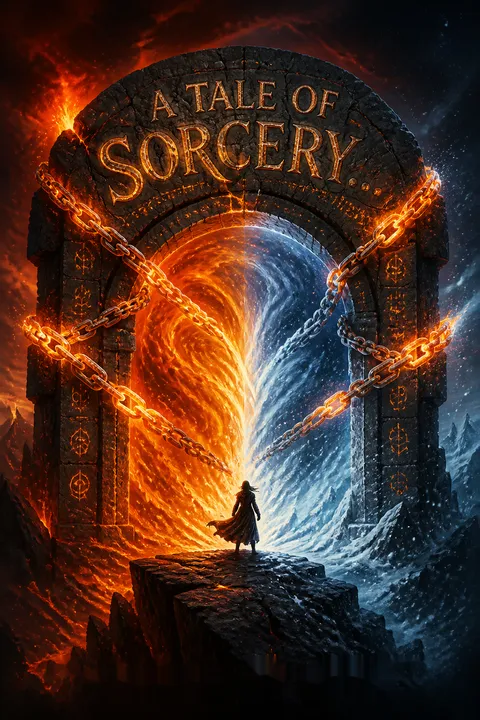
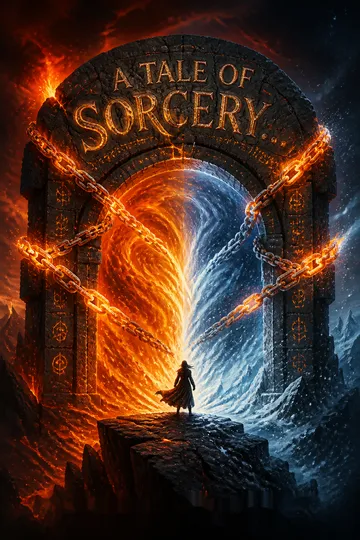
In the dead of night, a powerful woman and her loyal servant descend through a secret passage beneath her home, venturing deep into the earth. After hours of perilous travel, they reach a pair of colossal, chained iron doors, glowing with heat and leaking fire and magma. The woman, driven by a centuries-old ambition, commands her companion to open the gates—revealing the entrance to the underworld and setting in motion a plan that will threaten the world above. The sense of ancient evil and forbidden power is palpable, foreshadowing the darkness soon to be unleashed.
Empire of Shadows
The Southern Kingdom has fallen under the iron grip of Emperor Seven, who transforms it into the Righteous Empire. He abolishes freedom, outlaws magic, and rules with an undead army. The people live in fear, creativity is crushed, and executions loom for those accused of magical sympathies. Seven's obsession is to destroy Brystal Evergreen, the Fairy Godmother, and he sets a trap using her family as bait. But Brystal and her allies outwit him, rescuing the prisoners in a daring magical heist, exposing Seven's cruelty and the resilience of hope.
The Countdown Begins
Brystal, cursed by Death, has only two weeks left to live unless she can find the legendary Book of Sorcery and destroy the Immortal—a woman who cheated Death centuries ago. The Fairy Council and their witch allies frantically search libraries and ancient records for clues, while Brystal's friends try to identify the Immortal, who could be anyone, anywhere. The pressure mounts as time slips away, and Brystal's calm determination masks her inner turmoil. The stakes are not just her life, but the fate of the magical world.
The Icy Bargain
Brystal and Lucy journey to the Northern Mountains to consult Madame Weatherberry, whose spirit is trapped with the monstrous Snow Queen. Brystal confesses her curse and the impossible task before her. Weatherberry reveals the Book of Sorcery's legend and its hiding place: the Temple of Knowledge, protected by deadly guardians and challenges. Brystal also admits her moral struggle—she cannot bring herself to kill the Immortal, even to save herself. Weatherberry, haunted by her own guilt, understands, and a glimmer of hope is born for another way.
Fires and Fears
In the Eastern Kingdom, a catastrophic fire devastates Ironhand. Xanthous, a fairy with fire magic, is blamed, though he insists the flames are not his. Haunted by shame and fear, he flees, pursued by both friends and enemies. Meanwhile, the Fairy Council and witches scramble to clear his name, but the world's leaders, desperate and afraid, are quick to believe the worst. Xanthous's journey becomes one of self-acceptance, as he confronts not only external threats but the pain of being different in a world slow to accept him.
The Alchemist's Invitation
Dr. States, a mysterious alchemist, appears before Seven and the Fairy Council, warning of a planetary threat: the unnatural fire. He invites the world's leaders to the hidden Alchemy Institute for a Conference of Kings, where the fate of Xanthous and the world will be decided. The alchemists, secret stewards of both science and magic, reveal their advanced society and their policy of noninterference—until now. The stage is set for a confrontation between old prejudices and new possibilities.
Conference of Kings
At the floating Alchemy Institute, leaders of kingdoms and territories gather. Evidence mounts against Xanthous, and the majority vote for his elimination to save the world. Brystal, desperate, proposes a quest for the Book of Sorcery, which could strip Xanthous of his powers without killing him. The leaders agree, but only if delegates from each realm accompany her. The mission is fraught with distrust, hidden agendas, and the ever-present threat of Seven's sabotage.
Xanthous on the Run
Xanthous, wrongly accused, flees into the wild, using every trick to avoid detection. He meets Elrik, a kind elvish prince, and the two form a deep bond, sharing their pain and dreams. As Xanthous hides in the Elf Territory, betrayal strikes—King Elvin trades him to Seven in exchange for safety, and Xanthous is captured. Yet, the connection between Xanthous and Elrik becomes a beacon of hope, showing that love and acceptance can be found even in the darkest times.
The Temple's Guardians
Brystal and her diverse team of delegates—knights, witches, goblins, and more—reach the Temple of Knowledge, hidden within the Dragon Keys, a sanctuary of living dragons. Gaining entry requires the help of Ryder, a young dragon caretaker, and his mother, the formidable Caretaker Supreme. Inside, the group faces lethal physical, mental, and emotional challenges, losing companions along the way. The temple's true guardians are not monsters, but the truths and fears within themselves.
Dragon Keys Sanctuary
The Dragon Keys, a chain of volcanic islands, are home to dozens of dragon species and the Caretakers who protect them. Brystal, Lucy, and the delegates recover from their injuries with the help of magical dragon fire. Ryder, their guide, reveals the sanctuary's history and the key to the temple's vault. The group learns that the Book of Sorcery has already been taken—by the Immortal, centuries ago. The realization that their enemy is closer than ever spurs them to race against time.
The Riddle of Doors
Deep within the temple, the group faces a riddle: four doors, each promising a different path to the same destination. The wrong choice means death. Through logic, intuition, and the help of Brystal's curse (now a source of insight), they choose the correct door, but not without loss. The challenge is not just physical, but existential—forcing each to confront the meaning of sacrifice, destiny, and the cost of survival.
The Immortal Revealed
In the Eastern Kingdom, Queen Endustria, on her deathbed, reveals to Princess Proxima the truth: she is Immortalia, the Immortal, who has manipulated history for centuries. She possesses the Book of Sorcery and has unleashed the demons of the underworld, intent on revenge against humanity. The fire devastating the world is not Xanthous's doing, but the work of Immortalia and her demon army. The true enemy stands revealed, and the final battle looms.
War of Fire and Ice
As Immortalia leads her demon army to destroy Chariot Hills, the Fairy Council and witches unleash the Snow Queen to counter the inferno. The city becomes a battleground of fire and ice, with the Alchemy Institute, the Army of the Dead, and the demon horde clashing in a cataclysmic struggle. Brystal, Lucy, and their friends must retrieve the Book of Sorcery, stop Immortalia, and save Xanthous, all while the world teeters on the brink of annihilation.
The Demon King Rises
In the chaos, Xanthous learns the truth: he is the prophesied Demon King, the only one who can command the demons and end their rampage. With Elrik at his side, Xanthous accepts his heritage, recites the ancient oath, and brings the demons under his control. The firestorm ceases, and the world is saved from destruction. Xanthous's journey from outcast to king is complete, and he chooses to lead his people to a new, peaceful existence.
The Final Sacrifice
As the Snow Queen threatens to destroy all, Brystal faces an agonizing choice. Madame Weatherberry, her mentor, reveals she has bargained with Death to save Brystal's life in exchange for her own. Brystal must allow the dragon to destroy the Snow Queen, ending both Weatherberry's torment and the threat to her friends. The sacrifice is heartbreaking, but it grants Brystal a future—and the wisdom to lead with compassion.
A New Dawn
With the Army of the Dead vanquished, Seven and Immortalia imprisoned, and the Book of Sorcery secured, the world begins to heal. The Alchemy Institute vows to embrace compassion alongside science, and Brystal dedicates herself to nurturing humanity's dreams. Xanthous and Elrik depart to rule the demons with kindness. Brystal, free from her curse, looks to the future with hope, knowing that the greatest magic is the courage to change, forgive, and dream.
Analysis
A Tale of Sorcery… is a sweeping fantasy that explores the cost of power, the complexity of morality, and the enduring strength of compassion. At its heart, the novel is about the struggle to do what is right when every choice carries a price. Brystal's refusal to kill, even to save herself, is a radical act of empathy in a world that often demands violence for peace. The story interrogates the dangers of fear-driven leadership, the seduction of scapegoating, and the ease with which societies can turn on the vulnerable. Yet, it also celebrates the possibility of change—within individuals, communities, and even ancient institutions. The inclusion of LGBTQ+ themes, the nuanced portrayal of trauma and healing, and the blending of science and magic make the book deeply relevant to modern readers. Ultimately, Colfer suggests that the greatest magic is not in spells or sorcery, but in the courage to forgive, to dream, and to build a better world together.
Review Summary
A Tale of Sorcery... receives mostly positive reviews with a 4.34/5 rating. Readers praise Colfer's imaginative world-building, vibrant covers, and meaningful themes including LGBTQ+ representation, environmental issues, and diversity. Many appreciate character development, particularly Xanthous and his relationship. Some reviewers note it may be the series' final book, expressing sadness but satisfaction. Common praise includes the blend of magic, humor, and life lessons suitable for middle-grade readers and adults. A few critics found the plot disorganized or felt certain elements didn't fit, while others discontinued reading due to specific content choices.
People Also Read


Characters
Brystal Evergreen
Brystal is the heart of the story—a young woman burdened by a curse that gives her only a year to live unless she can destroy the Immortal. As the Fairy Godmother, she leads the magical community with empathy and resolve, but is haunted by the knowledge that saving herself may require killing another. Her journey is one of self-sacrifice, wrestling with the ethics of power, and learning to accept help and forgiveness. Brystal's relationships—with her friends, her mentor Madame Weatherberry, and her enemies—are defined by her refusal to give in to hatred or despair. Her greatest strength is her compassion, which ultimately saves not only herself but the world.
Xanthous Hayfield
Xanthous is a fairy with fire magic, tormented by guilt and fear after being blamed for catastrophic fires. His struggle with self-acceptance is mirrored in his journey to understand his true nature. Hunted and alone, he finds love and belonging with Elrik, and ultimately discovers he is the prophesied Demon King. Xanthous's arc is one of transformation—from victim to leader, from shame to pride. His acceptance of his identity and power is a powerful metaphor for embracing one's differences and turning them into strengths.
Lucy Goose
Lucy is brash, irreverent, and fiercely loyal. As a witch and Brystal's closest confidante, she provides both levity and wisdom. Lucy's journey is about finding her place in a world that often misunderstands her, and stepping up as a leader when needed. Her humor masks deep insecurities, but her courage and quick thinking are vital in the group's darkest moments. Lucy's relationship with Brystal is a testament to the power of friendship and the importance of being true to oneself.
Madame Weatherberry
Once a powerful fairy, Weatherberry is now a spirit trapped with her monstrous alter ego, the Snow Queen. Haunted by her past mistakes, she becomes a symbol of the cost of unchecked ambition and the pain of guilt. Her final act—sacrificing herself to save Brystal—redeems her and offers a lesson in forgiveness and the possibility of change. Weatherberry's wisdom and sorrow shape Brystal's choices and the fate of the magical world.
Emperor Seven Gallivant
Seven is the architect of the Righteous Empire, ruling through terror, censorship, and an undead army. His obsession with destroying Brystal and magic is driven by insecurity and a lust for control. Seven's psychological unraveling is marked by paranoia and cruelty, and his eventual downfall is a cautionary tale about the self-destructive nature of tyranny. He is both a personal and systemic antagonist, representing the dangers of unchecked power.
Dr. States
Dr. States is the enigmatic leader of the Alchemy Institute, blending science and magic. He is logical, diplomatic, and initially detached from human affairs, but the crisis forces him to confront the limits of neutrality. His evolution—from observer to participant, from skeptic to ally—mirrors the book's message about the necessity of compassion and engagement. Dr. States's guidance is crucial in uniting the world's leaders and finding a solution that values both truth and mercy.
Immortalia (Queen Endustria/Proxima)
Immortalia is the legendary woman who cheated Death and has shaped history from the shadows. Her quest for revenge and power is rooted in centuries of suffering and ambition. As both queen and villain, she is a master of disguise, capable of immense cruelty and cunning. Her psychological complexity lies in her ability to justify her actions as necessary, even as they bring ruin. Immortalia's exposure and defeat are a reckoning with the consequences of unchecked vengeance.
Ryder
Ryder is a young man raised among dragons, embodying kindness, curiosity, and a longing for connection. He helps Brystal and her friends navigate the Dragon Keys and the Temple of Knowledge, and his relationship with Brystal hints at the possibility of new beginnings. Ryder's role as a caretaker is both literal and symbolic—he represents the hope that comes from nurturing, understanding, and protecting what is misunderstood or endangered.
Elrik
Elrik is compassionate, brave, and open-minded, offering Xanthous the love and support he has always craved. Their relationship is a quiet but powerful thread, showing that true acceptance and partnership can flourish even in adversity. Elrik's willingness to defy his family and join Xanthous in the underworld is a testament to the transformative power of love.
Gobzella
Gobzella is loud, brash, and fiercely protective of her friends. Her physical strength is matched by her emotional resilience, and she often surprises others with her insight and loyalty. Gobzella's journey through the temple's challenges reveals her vulnerability and her capacity for growth, making her both a source of humor and inspiration.
Plot Devices
The Curse and the Countdown
Brystal's curse—a literal ticking clock—drives the narrative urgency and shapes her decisions. The curse is both a psychological antagonist and a source of insight, as Brystal learns to use her inner voice to solve challenges. The countdown device heightens stakes, forcing characters to confront what truly matters and what they are willing to sacrifice.
The Book of Sorcery and the Temple of Knowledge
The search for the Book of Sorcery is the central quest, but the journey is as important as the goal. The Temple's challenges—physical, mental, emotional—mirror the characters' internal struggles and force them to confront their deepest fears and desires. The book itself is a symbol of both hope and danger, representing the double-edged nature of power.
The Conference of Kings
The gathering of world leaders at the Alchemy Institute is a crucible for alliances, betrayals, and the exposure of deep-seated biases. The conference structure allows for debate, persuasion, and the testing of ideals against real-world consequences. It also serves as a microcosm of the broader struggle between truth and fear, compassion and expediency.
Identity and Disguise
Many characters—Immortalia, Seven, even Brystal—wear masks, both literal and figurative. The motif of disguise underscores the difficulty of discerning friend from foe, and the danger of judging by appearances. Revelations about true identity drive key plot twists and force characters to reevaluate their assumptions.
Foreshadowing and Parallelism
The narrative is rich with foreshadowing—early hints of the underworld, the true nature of the fire, and the moral dilemmas to come. The story's structure parallels past and present: the ancient war with demons, the persecution of dragons, and the current crisis all reflect recurring patterns of fear, scapegoating, and the need for courage to break the cycle.
A Tale of Magic Series
About the Author
Other books by Chris Colfer
Download PDF
Download EPUB
.epub digital book format is ideal for reading ebooks on phones, tablets, and e-readers.








































