
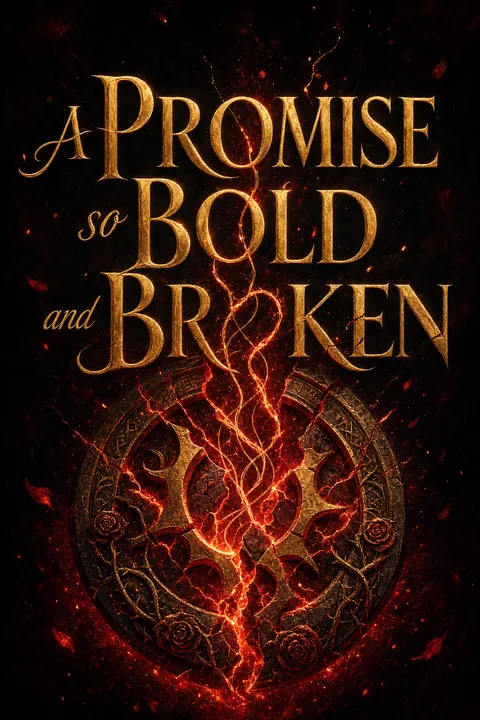


Plot Summary
Truth Below Deck
Aboard a cramped ship fleeing Ellow, Lessia1 slams the table and forces her sullen companions to talk. Ardow,6 her part-Fae friend, and Venko,7 a bribed merchant, confess their ties to a rebellion of shifters and outcast half-Fae bent on toppling Havlands' corrupt rulers.
Merrick,2 the Fae warrior once chained to serve King Rioner,10 cuts through their idealism with a bleaker warning: a dying realm of Oakgard Fae plans to invade, and Rioner10 refuses to believe it. Worse, Lessia1 admits her buried secret, that she is Rioner's10 hidden niece, daughter of his estranged brother Alarin.9 She fears the friends and children she abandoned are already rotting in cellars. Escape, she realizes, only widened the war she cannot outrun.
The opening weaponizes silence and guilt. Lessia's rage is really grief wearing armor, a coping mechanism the book explicitly names later. By staging exposition as interrogation, the narrative converts backstory into conflict, letting revelation double as character friction. The chapter establishes the trilogy's core tension between ideology and cost: Ardow's revolution romanticizes violence, Merrick's realism distrusts inherent goodness. Lessia's concealed royalty introduces the recurring motif that identity is inheritance one did not consent to. Her refusal to compel her friends, though she threatens it, signals the moral spine that will define her: power restrained is her form of penance for past harm.
The Wyvern in the Deep
Merrick2 steers them toward Midhrok, a hidden island where his estranged brother-in-arms Raine4 lives. A sea wyvern capsizes their rowboat, and Lessia1 plunges into black water, certain she will drown or be devoured. Cornered by the creature's violet eyes, she stops suppressing her compulsion magic and commands it to stop, discovering she can bend even magical beasts.
She blacks out and wakes on a white beach, coughing seawater, her clothes shredded. Raine,4 a copper-haired warrior bonded to the wyvern Ydren,12 claws through her mind to test her before grudgingly agreeing to shelter the fugitives. Lessia's1 terror hardens into a decision: she is finished cowering before a world that keeps trying to swallow her whole.
The near-drowning is a literal baptism into agency. Lessia has spent years treating her gift as poison; underwater, survival demands she wield it without apology, and the reframing sticks. The wyvern, later revealed as an orphan of slaughter, mirrors Lessia herself: a feared creature judged by surface menace rather than wound. Raine's mental invasion introduces consent and violation as governing anxieties in a world of mind-magic, where privacy is a privilege the powerful strip away. The chapter also relocates the story to a sanctuary of exiles, geographically insisting that belonging exists only at the margins, among the broken who refuse the empire's cruelty.
The Death Whisperer's Wound
In Raine's4 cabin, Lessia1 learns what Merrick2 truly is. His whispers are the voices of vengeful souls he holds at the threshold of death, a gift he loathes as a curse. Raine,4 drinking himself numb over his murdered mate Solana, recounts how Rioner's10 father caged the warriors' loved ones as leverage.
To free them, Merrick2 swore an unbreakable blood oath binding him to Rioner,10 only for the king10 to hunt those mates down and slaughter them afterward. Merrick2 has carried that guilt for centuries, half-convinced he deserves his monstrous reputation. Lessia,1 who has despised her own magic just as fiercely, begins to see the brooding warrior2 anew, and to wonder whether perhaps neither of them is genuinely evil.
This is the book's thesis on gifts and self-perception: magic is neither good nor evil but shaped by its wielder. Merrick's death-whispering literalizes the fear that to be powerful is to be damned, and his martyrdom (trading freedom for others' safety) reveals a self-punishing man who weaponizes his own reputation as a wall. Raine functions as a cautionary double, a hero hollowed by grief into a functioning corpse. Their parallel with Lessia is deliberate: three people convinced their power makes them irredeemable. The scene reframes the enemies-to-something arc as two wounded people slowly granting each other the mercy they deny themselves.
Vincere and the Blade
Merrick2 drills Lessia1 mercilessly on the beach, refusing wooden weapons. To harden her against enemies who can smother magic, they train dosed with Vincere, a liquid engineered by Rioner's10 father that mutes power and drowns the body in pain.
Half-mad but anchored by Merrick's2 steadying voice, Lessia1 finally sinks a dagger into his shoulder, and instead of fury he grins with pride, scolding her only for missing his heart. Raine,4 drunk and needling, spars alongside them, goading Merrick2 into a brutal demonstration duel.
Between bruises and reluctant confessions about loneliness and lost love, Lessia1 and Merrick2 circle a closeness neither will name, forged in the strange intimacy of controlled violence. She stops fearing the warrior who once terrified her.2
Pain becomes pedagogy. Vincere externalizes the book's psychology: to fight, Lessia must feel her worst emotions rather than repress them, converting agony into control. Her stabbing Merrick, met with approval, inverts the language of harm; here wounding is trust, proof she can commit. The training montage is really courtship, intimacy smuggled through combat because both characters are safer in violence than tenderness. Raine's provocation exposes the warriors' shared trauma economy, where feeling is a liability drowned in liquor or discipline. The section quietly argues that mastery is not suppression but direction, a lesson Lessia applies to grief, rage, and eventually love.
Fire, Songs, and Hatred
On Zehmkell, a soldiers' night of remembrance, Raine4 leads the group to a village of exiled Fae. A gray-bearded elder recounts their history: how their ancestors expelled the gods, splintered into four royal kingdoms, and how the Rantziers ruled with an iron, power-hungry fist.
Circling the bonfire, Lessia1 realizes these people loathe her family name with incandescent intensity. Sensing her dread, Merrick2 steps in front of her and swears a fierce vow: her name does not define her, her blood does not dictate her, and he will let no one, not Rioner,10 the rebels, the Oakgards, nor these Fae, harm her again.
The festival, meant to bind warriors before battle, instead crystallizes Lessia's1 fear that her heritage could get her killed the instant it surfaces.
Communal ritual becomes a mirror for individual shame. The origin myth reframes the whole saga: even gods were overthrown, so no throne is sacred, and rebellion is woven into this world's genesis. Lessia sits inside a room of people who would kill her for a name she never chose, dramatizing the inherited-guilt theme at its most claustrophobic. Merrick's promise is the emotional pivot, an outsider granting her the separation of self from lineage that she cannot grant herself. Zehmkell's purpose, unity before war, ironically underscores how fractured this world remains, and foreshadows the impossible coalition Lessia must assemble from mutual enemies.
The Sister Who Lived
Alarin's9 ship arrives carrying Frelina,8 the sister Lessia1 believed she had killed with her magic as a child. Alive but seething, Frelina8 slaps her for vanishing and leaving the family to grieve a ghost. Kerym,5 a blue-eyed Siphon Twin who drains others' energy, disembarks to answer Merrick's2 war summons.
Then Alarin9 confirms the wound beneath the wound: Lessia's1 mother Miryn is dead, taken by a human illness found the same season as Frelina's8 fall, never knowing her elder daughter lived. Lessia1 screams her grief across the cliffs until her voice frays, then chooses purpose over collapse. She reconciles with father9 and sister,8 and vows to fight for Havlands so her mother's kindness might still shape the world Miryn loved.
Reunion refuses catharsis. The sister Lessia mourned survives, yet forgiveness arrives only after honest rage, dramatizing the book's claim that love often disguises itself as fury. The mother's death is crueler than the imagined fratricide: Miryn dies unknowing, denying Lessia the reconciliation she craved and converting guilt into permanent absence. This is grief without a door. Frelina's darkened eyes, having killed to protect the family, extend the motif that innocence cannot survive this world. Lessia's transformation, from wallowing to resolve, marks her true arc: she reframes duty not as self-erasure but as inheritance of her mother's decency, a legacy she can still enact.
The Curse and the King's Scheme
Alarin9 reveals the gods' parting curses on each royal house. The Rantziers are fated to fall by a reluctant ally, one loved by Fae and human, who cannot be slain without unleashing catastrophe. Convinced this ally is Loche,3 the beloved regent of Ellow, Rioner10 has bargained with the invading Oakgard Fae: they help crush the Vastalan rebellion, and afterward he gifts them a weakened Ellow to conquer.
Sickened, Lessia1 rallies the warriors, her father,9 Raine,4 Kerym,5 and her friends Ardow6 and Venko,7 to unite Havlands before it is dismembered. They resolve to sail to Ellow, warn Loche,3 extract the smuggled children and her friend Amalise, and hunt for a legendary stone that summons sea wyverns into an army.
The prophecy converts private trauma into geopolitical machinery. Rioner's misreading, that fate can be dodged by murdering the right man, exposes tyranny's logic: preemptive cruelty justified as protection. His willingness to trade his own people's land to preserve his rule indicts leadership that confuses self-preservation with duty, a foil to Loche's later self-sacrifice. Lessia's pivot to coalition-building marks her graduation from survivor to strategist; she chooses the collective over vengeance even with her sister endangered. The wyvern stone plants a concrete hope in an abstract dread, giving the coming war a tangible objective and echoing the book's insistence that bonds, not bloodlines, generate real power.
One Drunken Kiss
The night before departure, Lessia1 drinks Raine's4 potent liquor and, weightless for the first time in years, dances freely at the tavern. Watching Merrick2 soften into someone almost boyish, she climbs into his lap and kisses him. He responds with hunger until she blurts that he is only a distraction, that she no longer cares about Loche,3 and he pulls back, visibly wounded, and walks away.
Later, on the beach with the wyvern Ydren12 coiled protectively around her, Merrick2 finds her and admits he does not regret the kiss. He urges her to stop drowning in guilt and instead to burn, to forge her rage and grief into fuel for the world she wants to build. Something between them has shifted irreversibly.
Intoxication becomes truth-telling by lowering the defenses Lessia has kept locked. Her careless words wound because they expose her habit of using people to numb pain, a self-protective cruelty she inherited from surviving. Merrick's refusal to punish her, and his exhortation to burn, reframes negative emotion as generative rather than shameful. The wyvern's embrace, a monster comforting a woman, restates the book's central sympathy for the misjudged. This is the romance's hinge: not a grand declaration but a hungover apology and a philosophy of feeling. The scene insists intimacy requires owning one's ugliness, not performing perfection, preparing both for the vulnerability ahead.
The Rebel Leader's Ambush
Sailing toward Ellow, the group is intercepted by a rebel ship commanded by Meyah,11 a shifter who has secretly surveilled them by spying through Ardow's6 mind. Lessia1 begs for alliance against the coming invasion, but Meyah11 refuses, content to let Ellow burn and rebuild her people elsewhere.
When Lessia's1 magic surges, Meyah11 blinds them all with a half-Fae voider and teleports Frelina8 away, planting her as an unwilling spy inside Rioner's10 court to expose Alarin's9 hidden family. She also threatens to butcher Lessia's1 tavern staff if harmed. Powerless and shaking with fury, Lessia1 watches the rebels vanish into fog. Her sister,8 barely reclaimed days earlier, is now bound for the very cellars their father9 spent a lifetime hiding them from.
Meyah is the antagonist as dark mirror: a marginalized leader whose just cause has metastasized into the same expendability logic she claims to oppose. Her willingness to sacrifice Ellow's innocents mirrors Rioner sacrificing his own people, collapsing the rebel/tyrant binary and sharpening the book's ethical thesis that ends corrupt means. The betrayal through Ardow's mind literalizes how idealists become unwitting weapons. Frelina's abduction weaponizes Lessia's deepest fear, the cellars, and tests her new resolve: she must choose the realm over immediate rescue, the hardest leadership decision yet. The scene converts a hopeful alliance into a devastating loss, escalating stakes precisely when Lessia felt strongest.
Branded in the Cellars
Trekking to Asker's capital, the group is ambushed with Vincere-tipped arrows and thrown into a lightless cell whose walls are dusted to smother magic. When Lessia1 spirals into memories of past torture, Merrick2 pulls her back with a kiss in the dark. Guards drag them out and, relishing her helplessness, carve the word traitor into both Merrick's2 forearm and Lessia's,1 grinding coal into the raw wounds.
Refusing to give them her screams, Lessia1 holds Merrick's2 gaze the entire time. Rescue arrives through Soria and Pellie,13 two sisters Lessia1 once saved, who knock the guards senseless. Merrick2 deals with the torturers privately. The matching brands, meant as humiliation, become instead a mark the pair quietly claim as their own.
Torture returns the story to Lessia's origin trauma, but with transformation: where the cellars once broke her, she now endures without surrender, holding love's gaze as anchor. The shared brand inverts a symbol of shame into intimacy, letting the couple overwrite the empire's meaning with their own, a recurring move in the book (names, gifts, curses all reclaimed). Soria and Pellie's rescue pays off Lessia's earlier compassion, dramatizing that kindness compounds into loyalty. Merrick's off-page vengeance preserves his lethality without moralizing. The sequence stages endurance as the truest defiance: pain inflicted to dominate instead forges solidarity, proving cruelty cannot manufacture the submission it craves.
The Ally Was Always Her
Confronting the regent Loche,3 they uncover the truth: he never intended to betray Rioner.10 He forced Lessia1 to erase his own memories and feelings to shield her, because the curse's true target is Lessia1 herself, the reluctant ally bound by blood oath, loved by both a Fae and a human. That human is Loche;3 the Fae, Raine4 finally blurts, is Merrick,2 her fated mate.
Merrick2 recognized her the day he swore his oath, forbidden to speak while Rioner10 used their nearness as exquisite torment. Reeling, Lessia1 rounds on Merrick,2 who confesses he refused to rely on the mating bond, wanting her to choose him without fate's coercion. She does, furiously and completely. That night they finally seal the bond.
The double revelation recontextualizes the entire narrative: Loche's cruelty was disguised sacrifice, and Merrick's coldness was suppressed devotion enforced by the oath. Both men loved her by hurting themselves, reframing betrayal as protection, the book's most persistent inversion. The mate reveal complicates consent, the story's obsession: Merrick's refusal to exploit the bond insists that fate must be chosen, not obeyed, aligning romance with the larger theme of resisting predetermined destiny. Lessia's anger is really grief for years stolen. The consummation is less about desire than authorship, two people claiming a bond the powerful tried to weaponize, converting fate into free will.
A Poison and a Prophecy
Rioner10 demands a meeting, and Alarin's9 frantic eagle carries a single word: run. Determined to spare Lessia,1 Loche3 secretly doses the Fae warriors with a refined Vincere that strips their magic, gambling that Merrick2 will hide her rather than fight defenseless.
Furious but cornered, Lessia1 turns the sabotage into strategy: they will pretend she has compelled the warriors and offer them to Rioner10 in exchange for her captured family, then kill the king10 aboard his ship. Meanwhile, revisiting her abandoned home, Lessia1 discovers the curse's hidden ending scrawled in a book, that the ally and her lovers must perish for the promised new world to be born. She conceals the terrible truth and clings to Merrick2 through the night.
Loche's poison is control disguised as devotion, and Lessia's rejection of it, insisting Merrick alone never strips her agency, sharpens the book's meditation on love versus ownership. She distinguishes protection that empowers from protection that cages, the moral line separating her allies from her enemies. The discovered prophecy reintroduces fate's cruelty at the worst moment, granting Lessia tragic foreknowledge she hides to spare her mate. Her choice to proceed anyway reframes sacrifice as agency: if she must perish, she will do it defiantly, on her terms, spitting at the gods. The chapter's tenderness under a death sentence intensifies every subsequent beat.
The Bargain on the Water
The ships meet at dusk. To hide that Lessia1 now carries Merrick's2 scent, the warriors mask her; Rioner10 forces Alarin9 to restore Loche's3 erased memories as a test, flooding the regent with fresh grief. Kerym's5 brutalized twin Thissian is paraded as a captive. Playing the ruthless niece who has enslaved the warriors, Lessia1 nearly convinces the king,10 until both Loche3 and Merrick2 step forward to shield her, unwittingly exposing her as the one loved by Fae and human.
Rioner10 realizes the truth. Loche3 kisses her and presses the wyvern stone into her hand. Chaos detonates. Rioner10 sinks his own ship, seawater floods Lessia's1 lungs, the stone is ripped away, and she loses consciousness as the trap she built collapses into the king's10 grip.
The climax turns love itself into the fatal tell: the two men's instinct to protect her betrays the prophecy Rioner sought to solve. It is a devastating irony, devotion as undoing, that fuses the romantic and political plots. Lessia's performance as a cold Rantzier tests whether she can wield deception without becoming her uncle; she nearly succeeds, only to be defeated by others' love, not her own failure. Rioner drowning his own ship displays tyranny's nihilism, willing to destroy everything to retain control. The stone, hope made physical, is torn away at the threshold, and the cliffhanger denies resolution, leaving fate momentarily victorious.
Epilogue
Merrick2 surfaces into a sea that has swallowed Rioner's10 ship whole. Lessia1 is gone, dragged into the depths by the king10 he can no longer reach. The blood oath's leash has finally frayed, and the vengeful souls he has spent centuries restraining strain to break loose.
He locks eyes with Loche,3 blaming both regent and king for exposing his mate,1 and lets the whispers surge free. He does not care what shatters. He promised Lessia1 she would never see a dungeon again, and if honoring that vow means unmaking Havlands soul by soul, so be it. There will be no realm left to save.
Shifting to Merrick's point of view for the first time weaponizes the intimacy the book spent chapters building; the reader now feels the bond from its most dangerous side. His fraying oath removes the last restraint on the Death Whisperer, converting grief into apocalyptic threat and literalizing the book's warning that love and death travel together. The cliffhanger withholds Lessia's fate deliberately, transferring the story's momentum onto vengeance rather than rescue. Merrick's willingness to destroy everything inverts the sacrificial ethos of the heroes: where Lessia and Loche gave themselves for the world, Merrick would burn the world for one person, a chilling redefinition of devotion.
Analysis
This middle volume runs on a single provocative engine: the tension between fate and chosen agency. Every institution here, the crown, the rebellion, the gods' curses, insists people are defined by inheritance, be it bloodline, prophecy, or a mate's scent. The book's moral argument, voiced repeatedly through Merrick,2 is that gifts and destinies are neutral raw material shaped by the wielder's choices. Lessia's1 arc enacts this thesis. She begins convinced her compulsion magic makes her irredeemable and that events merely happen to her; she ends declaring that she forges her own fate and spitting at the gods who tried to script it. The recurring image of reclamation runs throughout: a traitor's brand becomes a lover's mark, a hated family name is separated from inherited darkness, a curse meant as doom is answered with defiance. St. Germain repeatedly stages love as protection that wounds, Loche3 erasing his own feelings, Merrick2 suppressing the bond, Alarin9 endangering one child to shield another, forcing readers to weigh sacrifice against control. Crucially, the narrative distinguishes protection that preserves agency from protection that strips it, drawing the ethical line between Lessia's1 allies and her enemies. Its politics are unusually pointed for the genre: the rebel Meyah11 and the tyrant Rioner10 become mirror images, both willing to sacrifice innocents for a purportedly righteous end, indicting revolution and reaction alike when they treat people as expendable. Against them, Lessia's1 coalition of mutual enemies models a fragile ethic of solidarity among the marginalized. The psychology of trauma anchors the fantasy: rage as a mask for grief, pain endured rather than repressed, intimacy reached only by owning one's ugliness. The cliffhanger, refusing rescue in favor of vengeance, leaves the thesis unresolved, love as either salvation or apocalypse.
Review Summary
People Also Read
Characters
Lessia
Half-Fae mind-benderA twenty-five-year-old half-Fae woman who can compel minds, a gift she has spent her life fearing as poison after she believed she killed her sister8 as a child. Raised hidden by her father9, later imprisoned and blood-bound to serve a Fae king10, she rescued half-Fae children and built a fragile family in Ellow. Lessia is fierce, guilt-ridden, and self-punishing, converting grief into rage because rage is easier to survive. Across the book she learns to feel rather than repress, to direct her emotions instead of drowning in them, and to distinguish self-sacrifice from self-erasure. Loyal to the point of recklessness, she loves unconditionally and fights hardest for people the world has discarded, gradually accepting that a name and a power need not dictate who she becomes.
Merrick
Feared Fae warriorAn ancient Fae warrior called the Death Whisperer, whose magic tethers vengeful souls at the border of death. Once bound by an unbreakable blood oath to serve King Rioner10, he is lethal, brooding, and relentlessly honest, refusing false comfort. Beneath the icy exterior lies a self-loathing man who half-believes he deserves his monstrous reputation, having sacrificed his freedom trying to save others only to fail. He becomes Lessia's1 demanding trainer and steadfast anchor, reading her moods with uncanny precision. Merrick's defining principle is agency: he insists people forge their own fates and refuses to force choices on those he protects. His tenderness, rationed and fierce, emerges only for Lessia1, whom he treats as the one place worth being gentle.
Loche
Regent of EllowThe sharp, calculating human regent of Ellow whom Lessia1 loved during the election before she betrayed him and he banished her. Handsome, guarded, and unnervingly perceptive, he wears cold competence like armor. Loche genuinely believes in a fairer Havlands where Fae, humans, and outcasts coexist, and he has quietly changed his priorities because of Lessia's influence. Capable of chilling ruthlessness in service of his people, he is also secretly selfless, willing to shoulder pain and hatred alone to protect what he loves. His reunion with Lessia1 is complicated by memories and feelings he cannot fully access, leaving him haunted by a love he can remember having but no longer feel.
Raine
Grieving wyvern-bonded warriorA copper-haired Fae warrior, once among the mightiest in Havlands, now a functioning drunkard hollowed by the murder of his mate Solana. He reads minds, controls the wyvern Ydren12, and hides devastating grief behind mockery and cynicism. Reluctant to fight for a world he feels abandoned him, Raine nonetheless harbors deep loyalty to Merrick2 and a buried decency that resurfaces under pressure. His arc tests whether love lost is worth having had.
Kerym
Reckless Siphon TwinA blue-eyed Fae warrior, one of the feared Siphon Twins who drain the energy and emotions of others. Battle-weary and half in love with death since losing his mate, Kerym greets doom with grim delight, welcoming impossible odds. Sharp-tongued and provocative, he masks his pain in bravado. His devotion to his brother Thissian remains his rawest nerve, the one wound his flippancy cannot cover.
Ardow
Idealistic part-Fae friendLessia's1 gentle part-Fae friend who joined the rebellion after years of discrimination and guilt toward the family he left. Warm, quick to hug, and desperate for a fairer world, he believes the rebels' cause even as he recoils from their bloodshed. Torn between loyalty to Lessia1 and to the movement, and secretly in love with Venko7, Ardow embodies the tragedy of a good person compromised by a corrupted revolution.
Venko
Reluctant human merchantA blond human trader lured into the rebellion by promises of trade monopoly, who recoiled once he learned it meant killing innocents. Bitter, frightened, and feeling betrayed by Ardow6, whom he loves, Venko refuses to fight but offers ships and resources. His journey traces disillusionment softening back toward tentative loyalty.
Frelina
Lessia's estranged sisterLessia's1 younger sister, believed dead for years, who survived the childhood accident and lied to protect the family. Now grown, she wields a memory-glimpsing gift and carries a new darkness, having killed to shield her father9. Furious at abandonment yet longing for her sister1, Frelina is impulsive, brave, and hungry for the world beyond her sheltered island home.
Alarin
Lessia's protective fatherLessia's1 Fae father and brother to King Rioner10, who spent his life hiding his human-loved family from the crown. Loyal, sorrowful, and cunning, he plays double agent, feeding the king10 enough secrets to survive while quietly working against him. His devotion is absolute, though his choices to protect one loved one sometimes endanger another.
King Rioner
Tyrannical Fae kingThe Fae king of Vastala, Lessia's1 uncle, a vain, paranoid ruler obsessed with preserving his crown. He wields water magic, keeps a serpent, brands traitors, and despises half-Fae. Believing a prophecy foretells his fall, he schemes with an invading realm to sacrifice his own allies and lands. Cruel and self-justifying, he mistakes preemptive brutality for leadership.
Meyah
Ruthless rebel leaderThe shapeshifting leader of the rebellion, ageless-faced and coldly strategic, who commands shifters and half-Fae. She champions a world without borders for the marginalized yet embraces the same expendability logic she condemns, willing to let entire lands burn. A dark mirror of the tyrants she opposes, she surveils enemies through borrowed minds and manipulates loyalists like Ardow6.
Ydren
Orphaned sea wyvernA purple-scaled sea wyvern bonded to Raine4 after shifters slaughtered her family. Lonely and grieving, she recognizes kinship in Lessia1 and becomes an unexpected comfort, dispelling assumptions that fearsome creatures are heartless.
Soria and Pellie
Grateful rescuer sistersTwo auburn-haired sisters Lessia1 once saved from a captive life, playful and fierce. Repaying their debt, they infiltrate a stronghold and free the prisoners, proving that Lessia's1 past compassion breeds loyalty.
Plot Devices
Vincere
Magic-suppressing agony draughtA liquid engineered by Rioner's10 late father to neutralize Fae in battle, muting all magic while flooding the body with blinding pain so warriors fight injured and half-mad. It appears first as a training tool: Merrick2 makes Lessia1 drink it so she can learn to fight through agony without her gift. It recurs as a weapon when Vincere-tipped arrows and powder-dusted cell walls strip the group's powers during their capture. Later, a refined version becomes a pivotal sabotage. Beyond plot mechanics, Vincere externalizes the book's psychology, that pain endured and directed, rather than suppressed, becomes strength, and it repeatedly levels the field between the mighty and the desperate.
The Rantzier curse
Fated doom prophecyA parting curse the exiled gods laid on each royal house. The Rantzier version foretells the dynasty's fall by a reluctant ally, loved by both Fae and human, who cannot be slain without unleashing catastrophic war. King Rioner10 misreads it as pointing to the regent Loche3 and builds his entire war strategy around eliminating that supposed threat. The prophecy drives the plot's misdirection and its central revelation about who the ally truly is, and a hidden final passage reframes salvation as sacrifice. Thematically it embodies the book's argument about fate versus free will: whether prophecy is destiny to obey or merely a cruelty to defy.
The wyvern stone
Beast-summoning war relicA softly glowing stone, gift of the gods, that lets a Fae or Fae-blooded wielder communicate with and summon sea wyverns, once abused to conscript the creatures into war. Lessia1 recalls that Loche3 gave her one during the election, and it becomes the coalition's hope for raising an army against both rebels and invaders. Its possession turns into a bargaining chip and a wedge of mistrust when Loche3 refuses to surrender it, suspicious she might flee with it. The stone crystallizes the book's tension between hope and control, and its fate at the climax converts tangible salvation into loss.
Compulsion magic
Mind-controlling giftLessia's1 Fae gift lets her command minds, forcing people to obey, speak, or forget, and even bend magical creatures like wyverns. She loathes it as the poison that seemingly killed her sister8 and shattered her relationship with Loche3, and she vows never to use it on those she loves. The restraint becomes her moral spine. Throughout, she trains to control the gift rather than fear it, and its uses and refusals repeatedly define ethical lines: the difference between protection and violation. The world's parallel mind-magics, shared by Raine4, Kerym5, and others, make consent and mental privacy recurring anxieties, positioning Lessia's1 self-control as quiet heroism.
The mating bond
Fated soul-connectionIn Fae lore, mates are fate-bound souls who recognize each other by scent, an instinct so powerful it can drive a male to madness or death if separated or rejected. The bond operates beneath the surface for much of the book, explaining unspoken pulls, protective fury, and a warrior's centuries of suffering. It raises the story's sharpest question about consent: whether love compelled by fate can be freely chosen. The refusal to exploit the bond, insisting the choice be genuine, aligns the romance with the larger theme of resisting predetermined destiny. Its sealing carries both intimacy and danger, since severing it weakens the bonded profoundly.
About the Author

Download PDF
Download EPUB
.epub digital book format is ideal for reading ebooks on phones, tablets, and e-readers.








































