
Plot Summary
A Brotherhood Burns
In 1912 Cairo, a clandestine gathering of English expatriates—the Hermetic Brotherhood of Al-Jahiz—meets for a ritualistic ceremony under Lord Worthington. Their opulent event is violently interrupted by a masked figure wielding preternatural power. He claims the name al-Jahiz, mythic Master of Djinn, and pronounces judgment on the brotherhood. In a horrifying display, he and his supernatural accomplices slaughter nearly everyone with otherworldly, flesh-consuming fire. Only charred bodies and a trail of supernatural destruction remain, setting the city abuzz with rumor and terror as authorities discover the devastation.
Smoke and Summoning
Investigator Fatma el-Sha'arawi, Ministry of Alchemy agent, goes undercover to intercept an enchanted relic—a sealed bottle, rumored to imprison a djinn. The transaction with two resourceful Cairo youths, Gamal and Saeed, quickly spins out of control and the seal breaks, releasing an ancient, immensely powerful Marid. The boys demand wishes, but Fatma's quick negotiation—and understanding of the literal-minded djinn—twists their demand, sparing lives but dooming them to unnatural longevity. The event foreshadows the labyrinthine bargains with djinn woven throughout her world, and marks Fatma as a clever, unorthodox protector.
Investigation in Giza
Summoned to the Worthington estate, Fatma confronts the carnage left by supernatural fire. The scene—a mix of English ritual and Egyptian mysticism—unsettles even the seasoned agent. Police and the city's modern servants struggle with evidence that refuses rational explanation. Fatma's investigation brings her into contact with the only survivor, Worthington's daughter Abigail, and hints at a deeper conspiracy threaded through Cairo's elite. She learns of secret societies, ritual murders, and the city's dense mesh of the magical and mundane.
Partnership and Past Lives
Fatma is assigned a new partner, Agent Hadia, a spirited young woman with sharp instincts and academic rigor. Their collision of personalities—Fatma's guarded pragmatism, Hadia's eager modernity—sets the tone for a relationship fraught with generational and philosophical differences. While navigating Cairo's vibrant, sometimes dangerous underworld, they uncover ties between the murdered brotherhood, old religions, and the hidden power struggles that connect the city's magical past to its uncertain future.
Wounded Hearts, Restless City
Fatma's private life surfaces as she reconnects with Siti, a mysterious, alluring woman entwined with the city's temples of ancient gods. Their reunion is passionate but precarious, set against mounting political tension and religious secrets. Siti's immersion in the worship of Hathor draws Fatma deeper into the world of Egypt's "idolaters"—outcasts clinging to fading gods for dignity in a city entranced by modernity and magic. As cracks in the social fabric widen, so does Fatma's anxiety over dual loyalties—to her work and her heart.
Temples of Forgotten Gods
Fatma seeks the confidence of Merira, a high priestess, and Ahmad, the crocodilian priest of Sobek, who reveal the Hermetic Brotherhood's infiltration of cultic circles and acquisition of al-Jahiz's legendary relics. Through tarot and cryptic lore, they map the brotherhood's obsession with magical power and empire. Among the outcast gods' followers, the murders are not just political but sacrilegious—an attack on the last embers of Egypt's mystical inheritance. The investigation uncovers warnings of an Ifrit, a being of living fire, suggesting the magical crime is a herald of something apocalyptic.
Masked Intrusions
Fatma's pursuit of the case is upended when a masked figure preaching as al-Jahiz appears in the city's slums, winning the devotion of the poor and stirring public unrest with visions of lost justice and revolution. The figure's magical demonstrations—supernatural strength, replication, command of flames—provoke fear and awe, destabilizing both magical and political hierarchies. When Fatma confronts the imposter, she witnesses the terrifying prospect of djinn magic being harnessed for populist, perhaps tyrannical, ends.
Streets of Ash and Fire
Aimed at disrupting a riotous rally orchestrated by the imposter, Fatma and Hadia's calculated intervention quickly deteriorates as crowds clash with police and gangs. The masked figure's supernatural enforcer—a ghullike entity capable of multiplying—escapes capture, proving immune to mortal weapons. The confrontation leaves the city on the verge of total conflagration, political institutions paralyzed, and Fatma herself wounded. The Ministry faces its greatest failure and the sense that magic, once assumed controllable, is now an existential threat.
The Imposter's Appeal
Fatma and Hadia plunge into the mysticism and mythmaking surrounding al-Jahiz, delving into city archives and the memories of Cairo's storytellers. The imposter's narrative—of colonial crimes, lost glory, and the need for purification—proves a seductive weapon, one that turns spiritual confusion into revolution. The real enemy may not be the imposter's fire but their ability to channel myth, stoking the city to fever-pitch. Fatma realizes they face a foe fluent in both magic and the psychology of collective belief.
Collapse at the Ministry
As social unrest boils over, Fatma witnesses an orchestrated assault on the Ministry itself. Through sabotage, magic, and an army of ghuls, the imposter destroys the mechanical "brain" at the Ministry's heart. The sacred library is looted; spells meant to protect now bind the Ministry's own djinn to violence. The city loses its main line of magical defense, and the public—seeing the protectors burn—descends into chaos. Fatma is left scrambling as magical and civil authorities founder.
Hidden Histories Revealed
Fatma and Hadia uncover evidence of deliberate, supernatural erasure: knowledge of the legendary Seal of Sulayman—a ring granting absolute power over djinn—has been systematically removed from the world's memory by a coalition of djinn and angels. The clues, only visible to the most willful, reveal the ring as the source of the imposter's ascendancy. This revelation reframes the plot: the ring didn't pass accidentally into evil hands; it was placed there by design, for someone 'worthy' enough to master it.
Nine Lords Awaken
With the Seal of Sulayman, Abigail Worthington—unmasked as the imposter—binds the djinn of Egypt and sets the ancient Ifrit Lords, beings of apocalyptic fire, loose upon Cairo. Her ambition: to reclaim a faded British empire by magical conquest. A climactic battle erupts as machine-djinn, Ifrit, and water-giant Jann devastate the city. Fatma, aided by her allies and the outcast priests, must confront the entwined nature of violence, justice, and power—from ancient slavery to modern nationalism.
Wheels of Empire
The Worthington siblings' fraught ambitions collide. While Alexander becomes a red herring, Abigail's deep-seated resentments against parental and colonial constraints drive her to seize magical power, not for justice but domination. Using the rebuilt Clock of Worlds, she breaches realms and leads djinn armies. As the Nine Lords ravage Cairo, a broken city must turn for salvation not to its rulers or its supposed heroes, but to the determined acts of unlikely, marginalized agents—Fatma, Siti, and their companions.
Masks Unveiled
Fatma's investigation, aided by her companions' skills and the genuine bonds of trust, exposes not only magical machinations but the ways power is masked: gender, race, worship, and desire are all sites of concealment and revelation. The confrontation with Abigail, skilled not only in magic but in mimicry and deception, lays bare the systems that silence and diminish—proving that resistance, too, is an act of creative disguise.
The Seal of Sulayman
The true Seal reveals itself to Fatma—not as a simple ring, but a fathomless artifact visible only to those whose desires are selfless and hearts are "pure." Given the ultimate power to enslave djinn or save Cairo, Fatma resists temptation, wielding the power of the Seal only to end the cycle of domination. Her refusal to become a tyrant proves her worth, allowing her to command the Seal and send the Ifrit Lords back beyond the realm's edge.
Contracts and Consequences
The novel's magical climax brings reckoning to all who have bound others to serve: Abigail is reduced to a shell by her own monstrous tools; the djinn—especially the half-djinn Siti—must live with the costs of their forced submission. Even triumphant, Fatma is marked and changed by the act of wielding absolute power. Alliances with gods and djinn are both a source of strength and warning—magic, allegiances, and power cannot be trusted unless freely given, and all come due.
Jasmine Night Confessions
The city begins to recover, as Fatma, Siti, and Hadia mourn their wounds and measure their triumphs. Relationships long kept secret—between lovers, partners, faiths—come into the open. Forgiveness is tentative and incomplete, but the possibility of trust and new friendship offers hope. The struggles of women, queers, people of color, and believers in persecuted faiths are woven into a tapestry of survival and defiant joy.
Gathering Storm
The city's repair is as much spiritual and social as material. The marginalized temples, the police, and the Ministry find uneasy equilibrium, even as the scars of colonialism, religious hatred, and magical battle linger. The city endures—exuberantly alive, complex, and unwilling to submit to either old gods or new empires. Fatma and her friends, though weary, are hailed as heroes of the new Egypt—a world that must constantly renegotiate its bargains.
Clockwork Cataclysm
As the city tests its new boundaries, Fatma and Siti face the limits of their love, their nation, and their own selves. Ultimately, the fate of both the magical and mortal worlds rests not with those born to rule, but with those who, in the name of hope, community, and justice, refuse to let others be bound—by spell, chain, or destiny.
Mortal Hands, Djinn Chains
The Seal of Sulayman is consigned to oblivion, vanished into obscurity by those who understand too well its allure and cost. The city's magic, never truly tamed, is now held in the care of the "marginal"—the women, the queers, the gods, the djinn, the poor, and the dreamers. Fatma, tested and changed by power, returns to her friends, her lover, her city, and the promise to keep seeking truth—knowing the stories of gods and men will always remain unfinished.
Analysis
**A Master of Djinn is a dazzlingly imaginative meditation on power, identity, and the perils of unchecked authority—a steampunk fantasy as much about the magic of Cairo as about the hazards and hopes of modernity. Clark brilliantly subverts colonial narratives, giving voice and agency to women, queers, the racialized "other," and those labeled heretic or criminal. The book demonstrates that domination—whether by magic or social order—always breeds resistance, but also that justice and freedom must be chosen, not compelled. The device of memory-erasure by angels exposes how even the most well-meaning authorities can harm in the quest for control; only selfless intent, and the willingness to set power aside, can break cycles of oppression. Richly characterized and fiercely immersive, the novel suggests that healing comes not from masters or messiahs, but from everyday acts of solidarity and courage. Its deep relevance for contemporary audiences lies in its refusal to accept easy dichotomies—good/evil, tradition/modernity, magic/rationality—and in its unshakable faith that stories, even unfinished, hold the key to freedom.
Review Summary
Reviews for A Master of Djinn are largely positive, averaging 3.99/5. Most praise the richly imagined alternate 1912 Cairo, blending steampunk, magic, and Islamic mythology into a vibrant, immersive world. Readers love the diverse cast, particularly protagonist Fatma and rookie partner Hadia. Common criticisms include pacing inconsistencies, an overly predictable mystery, and Fatma occasionally appearing incompetent despite her reputation. Several reviewers note Clark handles shorter fiction more effectively, feeling the novel sometimes loses focus. Nevertheless, the stunning worldbuilding and entertaining characters win most readers over.
People Also Read






Characters
Fatma el-Sha'arawi
The beating heart of the story, Fatma is a sharp, principled agent of the Ministry who moves through both Cairo's magical underworld and its cosmopolitan streets with equal skill. Her self-doubt, dry humor, and dogged refusal to exploit magical power for personal gain make her a relatable heroine. Her relationship with Siti is transformative—forcing her to face hidden prejudices, her own loneliness, and the rewards (and dangers) of loving across boundaries. Fatma's growth is seen most intensely as she learns to lead, to trust Hadia, to challenge structural injustices, and ultimately, to wield ultimate magical power without succumbing to its seductions.
Siti
Siti is Fatma's lover, a vibrantly queer Nubian woman whose heritage fuses ancient gods and djinn. A passionate defender of the marginalized, Siti is fiercely independent and playful. Her ability to shift from human to djinn form, and her vulnerability when torn between agency and magical coercion, mirror the story's themes of identity and control. Siti's relationship with Fatma is a space of healing and honesty, complicated by secrets (her true nature as half-djinn) and by the risk of magical domination at Abigail's hands. She embodies the possibility and cost of transformation—personal, magical, and political.
Hadia
Hadia, Fatma's new Ministry partner, is a younger, highly educated, and devout woman who blends modern ambition with empathetic insight. She craves mentorship but soon becomes a true partner, challenging Fatma to let others in. Hadia's own journey—from eager sidekick to competent co-investigator and friend—mirrors the awakening of Cairo's new generation. Her determination to confront both magical mysteries and social inequalities makes her the symbol of the city's changing face.
Abigail Worthington
Abigail is the overlooked daughter of a colonial "English Basha," raised to be invisible in male-dominated spaces—until she uncovers the secrets of djinn power. Resentful, cunning, and a master of illusion, Abigail channels her bitter intelligence and sense of exclusion into seizing the Seal of Sulayman, aiming to reforge empire through subjugation of the magical. Her descent—culminating in madness and catatonia—traces the costs of wielding power meant to enslave others.
Ahmad (Lord Sobek)
Ahmad, the crocodile-headed priest of Sobek, is a figure haunted by love lost (Nephthys) and struggling with his own shifting identity—between human and god, between vengeance and forgiveness. Ahmad's quest for justice fuels key plot points, but his refusal to become another "master" of magic—passing the ring to Fatma, not wielding it himself—underscores the story's themes of mercy over domination.
Merira
As high priestess of the Temple of Hathor, Merira represents the resilience and wisdom of the marginalized faiths and communities. Her strategic alliance with Fatma, blending ritual, wit, and street acumen, is crucial to unlocking the Hermetic Brotherhood's secrets. She brings both spiritual gravity and practical cunning, urging Fatma to understand the stakes for the outcast temples.
Zagros
Zagros, the Ministry's half-daeva librarian, is both guardian and tragic casualty of the magical intrigues—forced against his will to violence, marked by trauma, and ultimately redeemed by Fatma's understanding. His vast knowledge, pride, and pain reflect how magical creatures are vulnerable to both other magic and their own belief in respectability.
The Imposter ("al-Jahiz" / Abigail's Mask)
The masked figure who claims to be al-Jahiz is a master of manipulation—magically and politically—guiding Cairo to revolt with sermons woven of truth, myth, and threat. Skilled at exploiting social wounds, the imposter is both the instrument and victim of those who would rewrite history. Their multiplicity (through illusion and proxies) symbolizes the amorphous nature of populist power and its dangers.
The Ifrit King (Nine Lords)
One of the ancient lords of wildfire, the Ifrit King embodies unchecked power, arrogance, and the hunger for dominance. His contempt for mortals and "lesser" djinn, and subsequent rage on learning djinn have embraced equality and freedom, frames the conflict as not only a magical war but a battle for the future of self-determination.
The Marid in the Bottle
This ancient djinn, awakened early in the novel, serves as both narrative foreshadowing and existential warning: his embodiment of magical contract, price, and literalism shapes the unfolding drama, while his final bargain with Fatma highlights the costliness of miracles and the limits of control.
Plot Devices
Masking, Unmasking, and Illusion
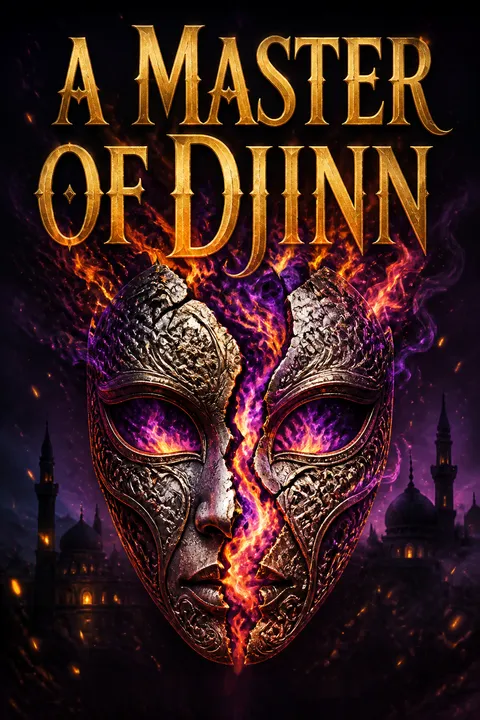
Central to the novel is the motif of masks—literal and figurative. Abigail's impersonation of al-Jahiz, Siti's hidden half-djinn self, and the illusions that cloud memory and disguise motives, all play on the theme that power often hides behind performance. The act of unmasking is both magical (breaking illusory spells) and psychological (breaking self-imposed constraints, confronting prejudice, acknowledging hidden love or ambition). The gradual "unveiling" of truth structures the narrative, as clues about the Seal, the imposter, and the underlying conspiracy are doled out through revelations that mirror magical unmasking.
Magical Contracts and Consequences
Powerful contracts, bargains, and spells drive the action—be they djinn bargains with mortals or the angelic compacts that erase knowledge. Every deal exacts a cost: wishes granted come with grim literalism, Forgotten knowledge extracts gaps in memory or painful self-mutilation, and the use of the Seal promises both salvation and annihilation. Fatma's refusal to wield the Seal for personal gain, and her recognition that chains—even "benevolent"—are still chains, mark the ethical heart of the story.
Trope of the Outsider-Savior, Subverted
Much is made of the legend of al-Jahiz, the Master of Djinn whose myth serves those in power. Abigail's bid both mimics and subverts the trope: as the overlooked daughter, she uses the role of revolutionary savior to become a new colonizer. Against her stands a queer, brown, marginalized coalition—Fatma, Siti, Hadia, outcast priests—offering an alternative heroism grounded in community and refusal to dominate.
Foreshadowing by Parallel Structure
The narrative rhythmically echoes early events (the Marid's wish, bargains gone awry) on larger scales. Betrayal of trust (magical or social), the temptation of ultimate power, violent magical contracts, and the toll of ignoring price—these themes unfurl through repeating narrative "beats," establishing a sense of fated consequence. The personal story of Fatma and Siti's relationship is reflected in the political story of Cairo and its djinn.
Epistolary and Discursive Clues
Portendorf's ledger, the bookseller's notes, and academic investigations serve as narrative "archives" through which the protagonists (and readers) reconstruct suppressed or erased truths. These documents, laced with secrets, betrayals, and subtle commentary, allow the story to explore both the power and limitations of written history—and the importance of will in seeing past deception.

Download PDF
Download EPUB
.epub digital book format is ideal for reading ebooks on phones, tablets, and e-readers.








































