
Plot Summary
Temple Cracks, Gods Rage
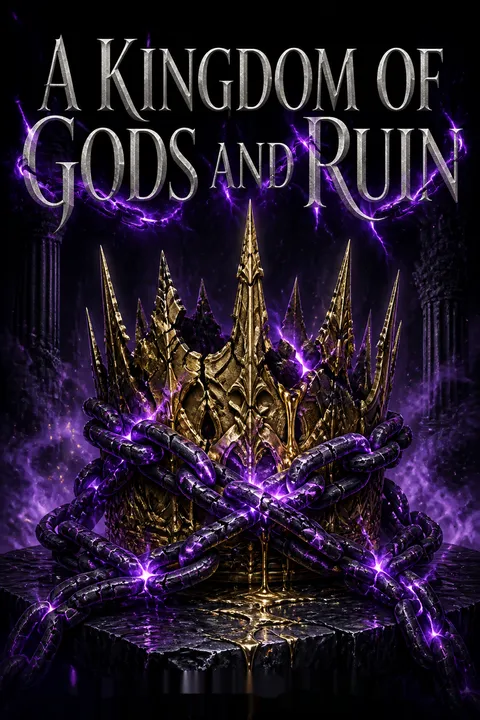
Kyra, a Fae blessed with healing and seduction, is caught in a prophetic nightmare as the temple of Saresh, the sun god, shatters around her. The gods' fury is palpable, their voices condemning the Fae for failing in virtue and truth. As the temple collapses, Kyra is stripped of her magic and immortality, her Affinities torn away in a moment of cosmic punishment. The vision is apocalyptic, not just for her but for all Fae, as the gods withdraw their gifts. Kyra's terror is not only for her own fate but for the world's unraveling, a premonition of ruin that leaves her desperate and powerless, setting the tone for the tragedy and vengeance to come.
Nightmares and Desires
Kyra awakens from her nightmare, shaken and sweating, beside Calvari, a battle-scarred Fated Warrior and her lover. Their relationship is physical and uncomplicated, a mutual escape from the burdens of war and stagnation. Calvari's return from the Banished Lands brings stories of chained dragons and loss, but also a reminder of Kyra's own restlessness and yearning for more than the safe, repetitive life she leads. Their intimacy is both a comfort and a distraction, a way to forget the looming sense of doom. Yet, beneath the surface, Kyra's dissatisfaction and the taste of prophecy linger, hinting at the coming upheaval.
Family Bonds, Courtly Threats
Kyra's world is defined by her close-knit family: her radiant sister Aalia, Aalia's husband Aren, and their miraculous twins. Their home is a haven of laughter and routine, free from their absent parents' expectations. But the peace is fragile. A summons to the emperor's court arrives, reigniting old fears—Farish, the ancient emperor, has shown a dangerous interest in Aalia. The family debates how to avoid his attention, but the power of the throne is absolute. Kyra's protective instincts flare, and she vows to shield her sister, even as the shadow of imperial desire threatens to shatter their sanctuary.
The Emperor's Gaze
At the palace, Kyra and her family navigate the treacherous waters of court. She tries to deflect the emperor's gaze from Aalia by drawing attention to herself, donning a scandalous gown and wielding her seductive Affinity. The ball is a dance of power and peril, with Kyra's every move calculated to protect her sister. Yet, Farish's interest in Aalia is not so easily diverted. The emperor's desires are about domination, not love, and Kyra realizes that his pursuit is a game of cruelty, not passion. The night ends with Farish summoning Aalia, setting in motion a chain of events that will end in tragedy.
Bargains in the Dark
As the family flees the palace, pursued by the emperor's monstrous guardians, Kyra calls upon Carioth, the god of tricksters, offering anything for their escape. The god answers, whisking them away in a chariot of shadows, but at a hidden cost. The escape is exhilarating and terrifying, a brush with the divine that leaves Kyra both grateful and uneasy. The bargain with Carioth is sealed with cryptic terms—kisses, screams, and debts owed—foreshadowing the price that will be exacted. The family's flight is a brief reprieve, but the gods' involvement ensures that fate's web is tightening.
Aalia's Fate Sealed
Kyra awakens with a sense of dread and a gap in her memory. The day unfolds in routine, but an ominous feeling persists. Aalia and the twins go about their lives, unaware of the danger. The gods' trick—erasing the memory of their escape—leaves the family vulnerable. When news arrives that Aalia has been found dead, murdered in the city's shadows, Kyra's world collapses. The loss is devastating, compounded by guilt and the realization that their chance to flee was stolen by divine interference. Kyra's healing magic is powerless against death, and her grief transforms into a burning need for vengeance.
Grief and Vengeance
Kyra is consumed by grief, her soul fractured by the loss of her sister. The funeral rites are hollow, the condolences of others meaningless. She blames herself and the emperor, vowing to avenge Aalia's death. The family flees into exile, but Kyra stays behind, her heart frozen and her purpose singular: to kill Farish. She seeks out Herdat, goddess of death and ruin, offering blood and pain in exchange for the power to infiltrate the palace. Herdat's price is simple—make the emperor suffer—and Kyra accepts, embracing the darkness within her as she prepares for her final act.
The Lie That Broke
Armed with Herdat's gift, Kyra approaches the palace. The goddess's boon allows her to do the impossible: speak a lie. Fae are bound by truth, but Kyra's falsehood—claiming the emperor summoned her—shatters a fundamental law of their kind. The act reverberates through the world, angering the gods and signaling the beginning of the end. Kyra's deception grants her entry, but it also marks her as the harbinger of chaos. The gods' protection is withdrawn, and the world teeters on the brink of ruin, all for the sake of vengeance.
Blood for Blood
Kyra infiltrates the emperor's chambers, her heart cold and her resolve unyielding. She murders Farish in a frenzy of blood and fury, savoring his screams and pleas. The act is both cathartic and hollow—her sister is still gone, and the world is irrevocably changed. Herdat revels in the violence, offering Kyra a vision of power and corruption, but Kyra refuses, choosing death over becoming a monster. The gods intervene, chaos erupts, and Kyra flees, pursued by the emperor's guards and the consequences of her actions.
Betrayal in the Shadows
As Kyra escapes, she is confronted by Calvari, her former lover. He reveals his complicity in Aalia's death—he delivered her to the emperor to prove his loyalty. The betrayal is a final, shattering blow. Kyra, fueled by rage and the power of her Affinities, kills Calvari, sealing her fate. The gods' bargains echo in her mind, and she is captured, her vengeance complete but her soul irreparably scarred. The cost of justice is everything she once held dear.
Chains of Sorcery
Kyra is imprisoned, shackled in iron and left to rot. Kalir, the emperor's sorcerous advisor, claims her as his own, intending to remake her as a vessel for the gods' stolen power. She is tortured, her will assaulted, and her body inscribed with the symbols of every deity. The gods, enraged by the theft and the Fae's corruption, abandon the world. Kyra's immortality is twisted into a curse—she cannot die, cannot escape, and is bound to serve whoever possesses her coin. Her identity is erased, her fate sealed as an eternal slave.
The Golden Prison
Kyra awakens in a golden, doorless prison, her mind fractured and her power raging within her. She tries to end her own life, but death is denied her. The coin that binds her is both her cage and her curse. She is summoned back to the world by Kalir, forced to kneel and obey. The iron collar and golden chain symbolize her total loss of agency. She is now The Blessing—a being of limitless power, but with no will of her own, doomed to serve the desires of her master.
The Blessing's Curse
Kalir exults in his triumph, wielding Kyra as a tool to reshape the world. She is the most powerful creature alive, yet utterly powerless. Her every action is dictated by the one who holds her coin. The gods are gone, the Fae are forsaken, and Kyra's only hope of peace—death and reunion with her sister—is forever out of reach. Her story ends not with freedom or redemption, but with the chilling realization that she is now the instrument of others' malice and greed, her own desires lost to the ages.
Analysis
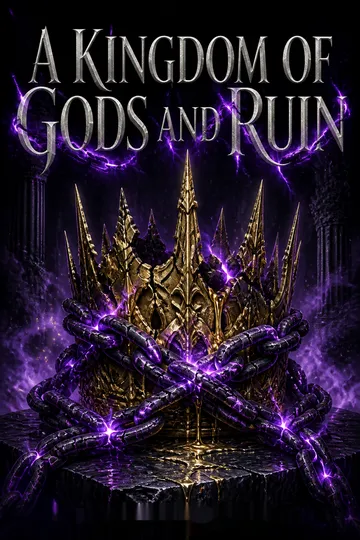
A Kingdom of Gods and Ruin is a dark, emotionally charged exploration of power, agency, and the consequences of transgression. Set in a world where the divine and mortal are intimately entwined, the novella interrogates the costs of vengeance and the dangers of unchecked authority. Kyra's journey—from healer to avenger to enslaved weapon—mirrors the fall of her society, as the Fae's corruption and the gods' withdrawal lead to chaos and ruin. The novel's central act—Kyra's lie—serves as both a personal and cosmic breaking point, symbolizing the shattering of order and the birth of a new, darker age. The story is unflinching in its portrayal of grief, betrayal, and the loss of innocence, yet it also questions the value of power without freedom and the price of justice in a world built on suffering. Ultimately, the novella is a cautionary tale about the perils of seeking salvation through violence and the inescapable consequences of breaking sacred bonds, leaving readers with a haunting meditation on love, loss, and the limits of agency.
Review Summary
Readers praise A Kingdom of Gods and Ruin as an engaging prequel novella that sets up an intriguing new fantasy world. They commend the complex characters, well-crafted plot twists, and mature writing style. Many express excitement for the upcoming full-length novel, A Game of Malice and Greed. Reviewers appreciate the novella's ability to pack substantial world-building, action, and emotional depth into a short format. Some note it surpasses the authors' previous works in quality. Overall, readers are captivated by the magic system, mythology, and protagonist Kyra's journey.
People Also Read

Characters
Kyra
Kyra is the protagonist, a Fae woman blessed with healing and seduction, but cursed by restlessness and a yearning for more. Her relationships are complex—she is fiercely loyal to her family, especially her sister Aalia, and seeks solace in physical intimacy with Calvari. Kyra's psyche is marked by a deep sense of inadequacy and longing for adventure, but also by a capacity for love and sacrifice. The loss of Aalia shatters her, transforming her grief into a relentless drive for vengeance. Her journey is one of descent: from healer to murderer, from agency to enslavement. Her final fate as The Blessing—a being of immense power but no will—reflects the ultimate tragedy of her character: to be used, not to choose.
Aalia
Aalia is Kyra's beloved sister, the embodiment of beauty, kindness, and compassion. She is the heart of the family, adored by her husband Aren and her twins. Aalia's innocence and goodness make her both cherished and vulnerable; her beauty draws the emperor's predatory attention. Despite her strength, she is ultimately powerless against the forces that conspire against her. Her death is the catalyst for Kyra's transformation and the unraveling of their world. In death, Aalia becomes both a symbol of lost innocence and the unattainable peace Kyra seeks.
Calvari
Calvari is a Fated Warrior, marked by scars and a pragmatic approach to life and love. His relationship with Kyra is built on mutual need and physical pleasure, but lacks true intimacy. Calvari's loyalty to the emperor ultimately outweighs his bond with Kyra, leading him to betray Aalia and, by extension, Kyra herself. His actions are driven by fear and self-preservation, revealing the moral compromises demanded by power. Calvari's betrayal and subsequent death at Kyra's hands underscore the novel's themes of trust, loyalty, and the corrosive effects of tyranny.
Aren
Aren is Aalia's devoted husband, a gentle soul with an Affinity for baking. He is a stabilizing force in the family, protective of his wife and children. Aren's grief at Aalia's death is profound, but he prioritizes the safety of his twins, fleeing into exile. His relationship with Kyra is one of mutual respect and shared loss. Aren's acceptance of Kyra's quest for vengeance, and his willingness to let her go, highlight the painful choices forced upon those who survive tragedy.
Emperor Farish
Farish is the immortal emperor, a figure of immense power and insatiable boredom. His interest in Aalia is predatory, rooted in a desire to dominate and destroy what he cannot possess willingly. Farish's cruelty is casual, his authority absolute. He is both a symbol and an agent of the world's decay, his death at Kyra's hands marking the end of an era and the beginning of chaos. Farish's legacy is one of suffering, his actions setting the stage for the gods' abandonment.
Kalir
Kalir is the emperor's advisor, a Royal Prophet who wields stolen divine power. He is cold, calculating, and utterly ruthless, seeing Kyra as a tool to be remade and controlled. Kalir's sorcery is an affront to the gods, and his ambition knows no bounds. By binding Kyra as The Blessing, he becomes the master of a weapon capable of reshaping the world. Kalir's character embodies the dangers of unchecked ambition and the perversion of sacred power.
Herdat
Herdat is the goddess Kyra bargains with for vengeance. She is seductive, cruel, and revels in suffering. Herdat's gift—the ability to lie—comes at a catastrophic price, breaking the natural order and hastening the gods' withdrawal. She tempts Kyra with visions of power and corruption, but ultimately abandons her to her fate. Herdat represents the seductive allure of revenge and the destructive consequences of making deals with darkness.
Carioth
Carioth is the god of cunning and stealth, answering Kyra's desperate plea for escape. His bargains are always double-edged, granting safety at the cost of memory and agency. Carioth's laughter echoes through Kyra's journey, a reminder that the gods' interventions are never without consequence. He embodies the unpredictability of fate and the dangers of seeking divine aid.
The Twins (Lina and Rayan)
Aalia and Aren's children, the twins are symbols of innocence and the future. Their miraculous birth is a blessing, and their safety becomes paramount after Aalia's death. The twins' escape with Aren ensures that some hope endures, even as the world falls into chaos. They represent what is at stake in the struggle against tyranny and the importance of protecting the next generation.
The Gods (Saresh, Luciet, Bentos, etc.)
The gods are omnipresent yet increasingly distant, their gifts shaping the lives of the Fae. Their anger at the Fae's corruption leads to the withdrawal of their blessings and the unraveling of the world's order. Each god embodies a different aspect of existence—life, healing, seduction, trickery, death—and their abandonment marks the ultimate loss. The gods' roles as both benefactors and judges underscore the novel's exploration of power, morality, and the consequences of hubris.
Plot Devices
Prophecy and Divine Retribution
The story opens and closes with prophecy—visions of the gods' wrath and the collapse of the Fae's world. These prophetic nightmares foreshadow the coming tragedy and set Kyra on her path. The gods' retribution is both literal and symbolic, manifesting in the loss of magic, immortality, and ultimately, divine favor. Prophecy serves as both warning and inevitability, shaping characters' choices and the world's fate.
Bargains with Gods
Kyra's bargains with Carioth and Herdat are pivotal plot devices, granting her escape and the power to lie, but at devastating costs. These deals drive the plot forward, entangling mortal and divine fates. The gods' involvement is always transactional, their gifts double-edged and their prices steep. The bargains highlight themes of agency, sacrifice, and the dangers of seeking power beyond one's station.
The Inviolable Lie
Fae cannot lie—a foundational rule of their existence. Kyra's ability to speak a lie, granted by Herdat, is a seismic event that shatters the natural order. This act is both her weapon and her undoing, enabling her to infiltrate the palace but triggering the gods' abandonment. The lie is a plot device that encapsulates the novel's themes of corruption, rebellion, and the catastrophic consequences of breaking sacred laws.
Transformation and Enslavement
Kyra's journey is one of transformation: healer to avenger, free woman to eternal slave. Her enslavement as The Blessing—a being of limitless power but no will—serves as a metaphor for the loss of agency and the perversion of power. The iron collar, golden coin, and magical chains are physical manifestations of her bondage. This device explores themes of autonomy, identity, and the cost of vengeance.
Betrayal and Moral Compromise
Betrayal is a recurring motif—Calvari's treachery, the gods' abandonment, and the Fae's moral decay. Characters are forced to choose between loyalty and self-preservation, love and duty. These choices drive the plot's emotional arc, culminating in acts of violence and sacrifice. Betrayal serves to deepen the tragedy and underscore the corrosive effects of power and fear.
Cyclical Structure and Memory
The narrative is cyclical—prophecy, tragedy, vengeance, and enslavement. Memory is manipulated by the gods, erasing crucial knowledge and ensuring the repetition of suffering. The golden prison and Kyra's inability to die reinforce the sense of inescapable fate. This structure emphasizes the themes of inevitability, loss, and the futility of seeking escape from destiny.
A Game of Malice and Greed Series Series
About the Author
Other books by Caroline Peckham


Download PDF
Download EPUB
.epub digital book format is ideal for reading ebooks on phones, tablets, and e-readers.








































