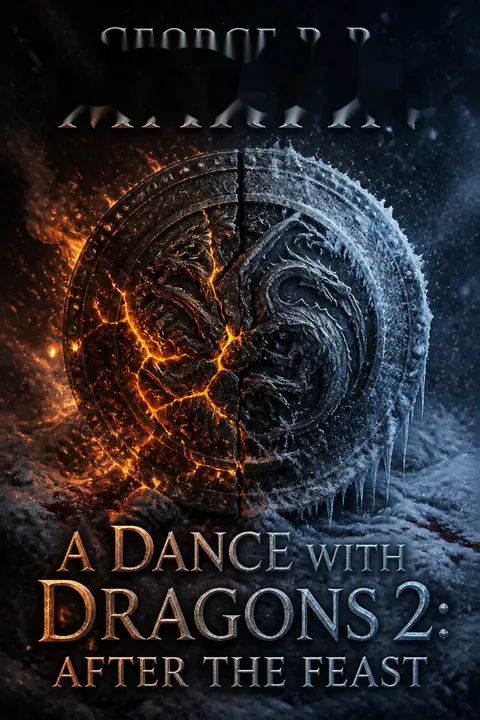

Plot Summary
Winterfell's Haunted Shadows Stir
The ruined halls of Winterfell are filled with tension as Roose Bolton's uneasy coalition of northmen and Freys wait out a relentless snowstorm. Theon Greyjoy, broken and haunted by his past, is trapped in a cycle of self-loathing and fear, forced to serve Ramsay Bolton and witness the suffering of "Arya Stark"—really Jeyne Poole. The castle is a powder keg of suspicion, with murders and disappearances fueling paranoia. The crypts below, filled with the dead Starks, become a symbol of the north's memory and the ghosts that refuse to rest. Theon's guilt and longing for redemption echo the castle's own ruined state, as the old gods seem to watch and judge all within.
Stannis's March Into Despair
Stannis Baratheon's army, burdened by pride and the weight of prophecy, marches from Deepwood Motte toward Winterfell, only to be swallowed by the worst snows in memory. The southern knights falter, the northmen endure, but hunger and cold claim more lives than swords. Asha Greyjoy, Stannis's captive, observes the king's grim resolve and the fracturing of his host. The queen's men demand sacrifices to their red god, while the old gods seem to mock them with endless snow. Stannis's leadership is tested as his army is whittled down, and the hope of victory fades into a desperate struggle for survival.
Daenerys: Love, War, and Dragons
In Meereen, Daenerys Targaryen is torn between her love for Daario Naharis and her political marriage to Hizdahr zo Loraq, hoping to secure peace for her city. The city is besieged by Yunkai and its allies, and the threat of plague and starvation looms. Daenerys's court is a web of intrigue, betrayal, and cultural conflict. The arrival of Quentyn Martell with a secret marriage pact from Dorne complicates her choices. Her dragons, chained and restless, symbolize both her power and the uncontrollable forces she has unleashed. Daenerys's longing for home and identity is set against the harsh realities of rule and war.
Jon's Burdens at the Wall
As Lord Commander, Jon Snow faces the impossible task of saving the wildlings from starvation and the Others, while holding together a fractured Night's Watch and appeasing Stannis's queen and her fanatics. He negotiates with Tormund Giantsbane, takes hostages, and tries to settle the wildlings in abandoned castles. The arrival of Queen Selyse and the Iron Bank's envoy adds political pressure. Jon's compassion and sense of duty isolate him from his brothers, and he is haunted by visions, prophecies, and the threat of betrayal from within.
Arya's Blindness and Becoming
In Braavos, Arya Stark continues her training with the Faceless Men, living as a blind beggar and learning to rely on senses beyond sight. She is tested through pain, deprivation, and the lying game, forced to let go of her past and her name. Yet, Arya's true self persists beneath the surface, her list of names and longing for home never fully forgotten. Her first assignment as an assassin brings her closer to the heart of the House of Black and White, where she must confront the cost of becoming "no one."
Murder and Madness in Winterfell
As the snow deepens, so does the madness within Winterfell. Murders, betrayals, and the threat of starvation push the uneasy alliance of Boltons, Freys, and northmen to the brink. Theon is drawn into a desperate plot to rescue "Arya," orchestrated by Abel the bard and his washerwomen, who are revealed as Mance Rayder's spearwives. The escape attempt is bloody and doomed, exposing the castle's divisions and the futility of hope. Theon's guilt and longing for death are matched by the castle's own haunted, decaying state.
Tyrion: Slave, Schemer, Survivor
Tyrion Lannister, sold into slavery after his capture, becomes a prized curiosity in the grotesque menagerie of Yezzan zo Qaggaz. He survives by wit, humor, and adaptability, performing in the fighting pits and navigating the deadly politics of the Yunkish siege camp. Tyrion's escape leads him to the Second Sons, where he uses his cunning to buy his way into the company and plot a new path to power. His story is one of survival, self-mockery, and the relentless search for agency in a world that would make him a victim.
Jaime's Last Siege
Jaime Lannister's campaign in the riverlands brings him to Raventree Hall, where he negotiates the last surrender of the Tully loyalists. Haunted by memories of Cersei and his own failures, Jaime is forced to confront the futility of endless feuds and the cost of vengeance. His encounter with Brienne, who claims to have found Sansa Stark, offers a glimmer of hope and redemption, but also the threat of new betrayals. Jaime's arc is one of disillusionment, weariness, and the search for meaning beyond war.
The Queen's Price for Peace
Daenerys's marriage to Hizdahr zo Loraq is a spectacle of pageantry and political calculation, meant to end the siege and bring peace to Meereen. The fighting pits are reopened, and the city celebrates, but the peace is fragile and bought with blood. Daenerys's personal desires are sacrificed for the good of her people, yet she remains isolated and uncertain. The arrival of the Dornishmen, the threat of betrayal, and the restlessness of her dragons foreshadow the collapse of the uneasy truce.
The Ironborn's Distant Ambitions
Victarion Greyjoy, sent by his brother Euron, sails the Iron Fleet across the world to seek Daenerys's hand and bring her dragons to the Iron Islands. His journey is marked by storms, omens, and the influence of the red priest Moqorro, who promises victory and power. Victarion's brutality and religious zeal are matched by his cunning and ambition, as he gathers ships and prepares to strike at Slaver's Bay. His story is one of faith, violence, and the pursuit of destiny.
The Sacrifice and the Storm
As Stannis's army is trapped by snow and starvation, the queen's men demand human sacrifices to appease their red god and end the storm. Four men are burned alive, and the threat of further burnings hangs over Asha and the other captives. The old gods and the new are invoked, but the storm does not abate. The arrival of Tycho Nestoris from the Iron Bank brings hope of financial support, but the army's fate remains uncertain. Theon and Jeyne's escape from Winterfell, aided by Mors Umber, signals the unraveling of Bolton's hold.
The Dragons Unleashed
In Meereen, Quentyn Martell's desperate attempt to steal a dragon ends in tragedy, as Rhaegal and Viserion break their chains and set the city ablaze. The peace collapses, the Sons of the Harpy resume their murders, and the Yunkai'i demand the dragons' deaths. Ser Barristan Selmy leads a coup against Hizdahr, seizing power in Daenerys's absence. The city teeters on the brink of destruction, with fire, plague, and war closing in from all sides.
The King's Hand and the Harpy
As Hand of the Queen, Ser Barristan struggles to hold Meereen together, negotiating with the Yunkai'i, managing the freedmen, and preparing for battle. The Green Grace is sent to treat with the enemy, but the Yunkai'i respond with plague-ridden corpses hurled over the walls. The city is beset by enemies within and without, and the hope of Daenerys's return is all that keeps the defenders from despair. The cost of honor, loyalty, and leadership is measured in blood and sacrifice.
The Queen's Walk of Shame
In King's Landing, Cersei Lannister is forced to confess her sins and make a naked walk of atonement through the city. The spectacle is one of cruelty, voyeurism, and the stripping away of power. Cersei's pride is shattered, but her resolve remains. The political landscape is shifting, with the Tyrells and Lannisters vying for control, the Faith ascendant, and the threat of new pretenders rising in the south and east. Cersei's fate is uncertain, but her will to survive endures.
The Griffin's Return
Jon Connington, exiled lord and former Hand, returns to Westeros with the Golden Company and the young man claiming to be Aegon Targaryen. They seize Griffin's Roost and other castles, preparing to march on Storm's End and challenge the Lannisters. The invasion is swift and calculated, exploiting the realm's divisions and the absence of strong leadership. The promise of a true Targaryen king inspires old loyalties and new ambitions, setting the stage for a new war.
The Betrayal at the Wall
Jon Snow, isolated by his choices and haunted by threats from Ramsay Bolton, decides to march on Winterfell, calling for volunteers from the wildlings and the Watch. His decision is seen as betrayal by his brothers, who fear the loss of their vows and the Night's Watch's purpose. In a shocking climax, Jon is stabbed by his own men, betrayed by those he trusted. The Wall is left leaderless, and the threat of the Others looms ever closer.
The Queen's Flight and Return
Lost and alone in the Dothraki sea, Daenerys struggles with hunger, illness, and visions of her past. She confronts her identity, her failures, and her destiny as the blood of the dragon. Drogon becomes her only companion, and together they hunt and survive. As she begins to recover her strength, Daenerys is discovered by a Dothraki khalasar, setting the stage for her return to power and the next phase of her journey.
The Endings and the Dead
In the epilogue, Ser Kevan Lannister is murdered by Varys and his "little birds" to prevent peace and ensure chaos in the realm. The white raven arrives, heralding the true beginning of winter. Across the world, old powers fall and new ones rise, as the dead refuse to rest and the living are left to face the consequences of their choices. The game of thrones continues, bloodier and more uncertain than ever.
Analysis
A Dance with Dragons: After the Feast is a masterful exploration of power, identity, and the human cost of ambition. Through its sprawling cast and interwoven narratives, the novel examines the consequences of choices made in the pursuit of survival, justice, and legacy. The relentless winter, the threat of the Others, and the chaos of war serve as both backdrop and metaphor for the internal struggles of the characters. Martin's refusal to offer easy answers or clear heroes deepens the emotional impact, as even the most noble intentions lead to tragedy and betrayal. The novel's central lesson is the ambiguity of good and evil, the fragility of peace, and the necessity of change. In a world where the dead refuse to rest and the living are haunted by their pasts, the only certainty is that the game of thrones will continue, ever bloodier and more uncertain. The reader is left with a sense of foreboding and anticipation, as the long winter finally arrives and the fate of Westeros hangs in the balance.
Review Summary
People Also Read
Characters
Theon Greyjoy
Once proud heir to the Iron Islands, Theon is now a shattered man, tormented by guilt, mutilation, and the psychological torture inflicted by Ramsay Bolton. His identity crisis—Reek or Theon—mirrors the larger theme of lost honor and the search for self. Theon's relationship with Jeyne Poole ("Arya") is both protective and desperate, as he tries to atone for his past by saving her. His journey is one of suffering, self-loathing, and the faint hope of forgiveness, culminating in a leap into the unknown.
Jon Snow
As Lord Commander, Jon is caught between compassion and the rigid traditions of the Night's Watch. His efforts to save the wildlings and prepare for the coming darkness isolate him from his brothers and make him a target for betrayal. Jon's relationships—with Melisandre, Stannis, and the wildlings—are fraught with mistrust and conflicting loyalties. His assassination by his own men is the tragic result of his inability to reconcile duty and empathy, and his arc is a meditation on leadership, sacrifice, and the cost of doing what is right.
Daenerys Targaryen
Daenerys's journey is defined by her struggle to balance her ideals with the brutal realities of rule. Her love for Daario, her marriage to Hizdahr, and her longing for home are set against the demands of war, politics, and her dragons. Daenerys's identity as the Mother of Dragons is both her greatest strength and her deepest burden. Her exile in the Dothraki sea forces her to confront her failures and rediscover her purpose, setting the stage for her rebirth as a true dragon.
Stannis Baratheon
Stannis is driven by a sense of justice, prophecy, and personal grievance. His march through the snow is a test of will and faith, as he sacrifices men and morals in pursuit of the throne. Stannis's relationships—with Melisandre, his queen, and his followers—are marked by suspicion and fanaticism. His refusal to yield, even in the face of certain defeat, is both his strength and his doom.
Arya Stark
Arya's journey in Braavos is a study in transformation, as she is stripped of her identity and trained to become "no one." Her experiences as a blind beggar, assassin-in-training, and acolyte of the Faceless Men force her to confront the meaning of self, vengeance, and mercy. Yet, Arya's true self—her list, her memories, her longing for home—remains indelible, suggesting that identity cannot be wholly erased.
Tyrion Lannister
Tyrion's arc is one of adaptation and wit, as he navigates slavery, humiliation, and the deadly politics of Slaver's Bay. His humor and intelligence are both shield and weapon, allowing him to survive and scheme even in the most dire circumstances. Tyrion's relationships—with Penny, Jorah, and the Second Sons—reveal his capacity for empathy and ruthlessness. His story is a meditation on agency, self-worth, and the power of the mind over circumstance.
Ser Barristan Selmy
Ser Barristan is the embodiment of chivalry and duty, struggling to maintain his principles in the moral quagmire of Meereen. As Hand of the Queen, he is forced to make hard choices, balancing loyalty, justice, and pragmatism. His memories of past failures haunt him, and his efforts to protect Daenerys's legacy are fraught with doubt and regret. Barristan's arc is a poignant reflection on the burdens of age, the meaning of honor, and the cost of leadership.
Asha Greyjoy
Asha is a fierce, pragmatic survivor, caught between her heritage and the realities of defeat. Her captivity by Stannis, her interactions with Justin Massey and the queen's men, and her observations of the northmen reveal her adaptability and wit. Asha's relationship with Theon is complex, marked by pity, frustration, and a shared longing for home. Her arc is one of endurance, negotiation, and the search for a place in a world that has little use for women warriors.
Cersei Lannister
Cersei's story is a tragedy of hubris, as her manipulations and paranoia lead to her imprisonment, public humiliation, and loss of power. Her walk of shame is both a literal and symbolic stripping away of her defenses, exposing her vulnerability and resilience. Cersei's relationships—with her children, her brother Jaime, and her enemies—are marked by possessiveness, jealousy, and a desperate need for control. Her arc is a meditation on pride, punishment, and the will to survive.
Jon Connington (Griff)
Jon Connington's return to Westeros with the Golden Company and the supposed Aegon Targaryen is driven by guilt, ambition, and the hope of restoring the Targaryen dynasty. Haunted by past failures and a secret illness, Connington's leadership is marked by calculation and ruthlessness. His relationship with Aegon is paternal and political, and his willingness to use deception and force reflects the moral ambiguity of the quest for power.
Plot Devices
Multiperspective Narrative Structure
The novel employs a vast array of point-of-view characters, each with their own voice, perspective, and agenda. This structure allows the reader to experience the same events from multiple angles, highlighting the subjectivity of truth and the ambiguity of morality. The shifting perspectives create dramatic irony, foreshadowing, and a sense of interconnectedness, as the actions of one character ripple across the world.
Foreshadowing and Prophecy
Dreams, prophecies, and visions—whether from Melisandre's fires, Bran's greenseeing, or Quaithe's riddles—permeate the narrative, creating a sense of destiny and inevitability. Yet, these prophecies are often ambiguous, misinterpreted, or self-fulfilling, leading characters to ruin as often as to triumph. The tension between fate and free will is a central theme, as characters struggle to interpret and resist the forces that seem to shape their lives.
Political Intrigue and Betrayal
The world of Westeros and Essos is one of constant political maneuvering, where trust is rare and betrayal is common. Characters use marriage, murder, and manipulation to gain advantage, and the line between friend and foe is ever shifting. The collapse of alliances, the rise of new claimants, and the ever-present threat of treachery create a sense of instability and suspense.
The Supernatural and the Mundane
Dragons, wights, and sorcery are real and powerful, but so are hunger, cold, and steel. The novel balances the fantastical with the brutally mundane, showing that even the most magical of creatures are subject to the laws of nature and the consequences of human folly. The interplay between the supernatural and the everyday grounds the story and heightens its stakes.
The Cost of Power and Leadership
Characters in positions of power are forced to make impossible choices, sacrificing personal happiness, morality, or even their lives for the greater good—or for their own ambitions. The cost of leadership is measured in blood, guilt, and loneliness, and the novel repeatedly asks whether the ends justify the means.
A Song of Ice and Fire Series Series
About the Author
Other books by George R.R. Martin


Download PDF
Download EPUB
.epub digital book format is ideal for reading ebooks on phones, tablets, and e-readers.








































