


Plot Summary
Blood in the Village Square
At the Gifting ceremony in Prisca1's village, the king3's assessor tests young adults to confirm their magic was taken at birth. Lina steps forward eagerly. The assessor smiles and announces she still possesses the magic of luck.
Guards behead her grandparents instantly; Lina screams as they drag her away in irons toward the city and the pyre. Prisca1 watches, bile rising, because she carries the same forbidden power. Among the crowd, she collides with a green-eyed stranger2 she has dreamed of for years.
He snarls and vanishes. Later, at the bakery, the bully Kreilor attacks a young woman named Chista. Prisca1's power erupts unbidden: time freezes, and she shoves him away. Chista sees everything and flees to inform the guards. Within hours, the hunt is on.
The opening entwines public spectacle with private terror. Sabium's regime does not just kill; it forces communities to witness, making everyone complicit. Lina did not even know she had power, revealing the system's monstrous caprice. Prisca's instinct to protect Chista, even at the cost of exposure, establishes her defining trait: she will break rules to save others. The green-eyed stranger appears both in her dreams and in the crowd, suggesting fate is already tightening around her. The assessor's theatrical cruelty and the villagers' fearful compliance paint a society governed by performative piety and structural violence.
The Cliff's Edge Sacrifice
Prisca1's mother Vuena18 intercepts her before the guards arrive. With fierce urgency, she drags Prisca1 toward the forest and admits a lifelong lie: Prisca1 is not her birth daughter. She kidnapped her as a toddler, she says, to save her life. Before Prisca1 can absorb this betrayal, guards corner them on a cliff above the Dytur River.
Vuena18 whispers that Prisca1 must find the prince,2 then shoves her off the edge. Prisca1 plummets into the freezing water, hits submerged rocks, tangles in her dress. She kicks free, gulps air, and is swept downstream until darkness takes her. When consciousness returns, a man named Galon11 has pulled her to the bank. A group of armed men approaches; their leader, Lorian,2 orders them to leave her. They ride away.
Vuena's final act is paradox: she destroys Prisca's world to save her life. The revelation reframes Prisca's entire childhood as a structure of protective lies, and her mother's death as both sacrifice and expiation for a decades-old crime. Her journey down the river is a baptism by violence. When Lorian abandons her, he becomes the second person in a single day to treat her life as disposable. Her vow of vengeance is born here, a cold flame that will sustain her through the trials ahead. The cliff and the river form a threshold between her old life and whatever comes next.
The Hunter and the Knife
Prisca1 wakes alone on the riverbank, freezing and barefoot. She follows the water east toward Mistrun, but a hunter intercepts her. He recognizes her from the wanted posters and advances with his knife, savoring the coming kill. She distracts him by spooking his horse with a thrown rock, then swings a heavy branch until he collapses.
She hesitates, trembling, then buries his own knife in his throat. She vomits, cleans the blade, and strips his body of coins, bread, and a precious valeo fruit. His horse bolts. Desperate, she pushes a young guard off a bridge into the river to cross. Days later, starving and half-frozen, she spots a campfire. Creeping closer, she discovers it belongs to the very men who left her to die.
The hunter's murder marks Prisca's loss of innocence. She kills not from rage but necessity, and the physical revulsion afterward proves she is not yet numb to violence. The valeo fruit, a treat her adoptive father once brought home, becomes a talisman of memory and lost love. Each survival choice (stealing, pushing the guard, killing) strips away a layer of her former identity as a village girl. Her decision to steal from Lorian's camp, while audacious, is tactically naive. She is still learning what it means to live as prey.
The Bargain with Mercenaries
Lorian2 pins Prisca1 and demands to know how she froze time during her escape attempt. She admits her power: she can stop the world, briefly, when terrified. Intrigued, he proposes a bargain. She will use her magic to get his group through the city gates undetected.
In return, she receives three meals a day, a horse, clothing, and lessons in wielding her power. She accepts with no viable alternative. Training proves brutal. Lorian2 throws stones at her, goads her fear, and once brandishes the rope from a man who attacked her, triggering her terror to force out her magic.
At an inn, that same attacker breaks into her room at night. She freezes time, stabs him, and flees. Lorian2 kills the man, cuts off his hands, and hangs the body as a warning.
The bargain formalizes their uneasy symbiosis. Lorian's teaching method, while cruel, is psychologically precise: he understands that Prisca's power responds to extreme emotion. His murder of her attacker is excessive, almost ritualistic. He claims it was necessary, but the violence feels personal, protective. Prisca begins to glimpse the man beneath the mercenary's mask. Their dynamic shifts from pure antagonism to a complicated dance of dependency and reluctant attraction. The rope becomes a symbol of both trauma and breakthrough, a tool Lorian wields knowing exactly the wounds it will reopen.
The Town Gate Escape
The group reaches a town where wanted posters bearing Prisca1's likeness have been distributed. A Taking ceremony forces everyone into the square; the innkeeper has recorded their presence, making flight impossible.
During the ceremony, a baby screams as its magic is ripped away into an oceartus stone while the crowd chants prayers. Afterward, guards at the gate check every departing face. Lorian2 pushes Prisca:1 she must freeze time for everyone except their group. She digs deep, channeling rage rather than fear, and holds time long enough for them to gallop past the frozen guards.
Blood drips from her nose; her vision temporarily fails from the strain. Among the wanted posters, she sees Asinia6's name listed as captured 'corrupt.' Her best friend is in the king3's dungeon. She vomits at the realization.
This is Prisca's first large-scale use of her power, proving she can affect dozens at once. The emotional shift from fear-based to rage-based magic is crucial: anger is sustainable and renewable, while fear burns out. The Taking ceremony's horror is rendered banal by the townspeople's pious acceptance, a chilling portrait of how atrocity becomes liturgy. Asinia's name on the list redirects the entire plot. Prisca's mission changes from escape to rescue, and her moral compass, always oriented toward fierce loyalty, now points irrevocably toward the dungeon under the king's castle.
The City and the Parting Kiss
At Lesdryn's gates, Prisca1 freezes hundreds of people, allowing the mercenaries to pass through undetected. But one blond man remains unfrozen. He turns, winks at her, and lets them go. Rythos9 suggests time magic runs in bloodlines: the man may be a relative.
Inside the city, Lorian2 kisses Prisca1 fiercely before they part. She joins Tibris,4 who tracked her using rebel contacts. They go to Vicer7's headquarters, where a woman named Margie tells them the true history: King Regner started the war with the fae centuries ago, and his descendant Sabium3 continues stealing magic from his own subjects to extend his own life.
The gods are a lie manufactured to justify mass theft. Prisca1 visits Ivene, a narminoi who can see the past. Ivene tells her she must choose: be a torch for one soul or burn like the sun for all.
The unfrozen stranger plants the first seed of Prisca's true heritage. Lorian's kiss is both promise and farewell; both know they may not meet again. Margie's history lesson reframes the entire theology of the kingdom as a centuries-long scam. Ivene's prophecy articulates the story's central moral choice: save Asinia alone, or risk everything to free every hybrid in the dungeon. The language of light (torch, sun) suggests Prisca's power is not merely defensive but potentially transformative. The choice between the personal and the collective will define everything that follows.
Finding Asinia in Hell
Using forged papers from Vicer,7 Prisca1 and Tibris4 enter the castle as Setella the maid and Loukas the wine cellar worker. Tibris4 learns the dungeon's location, and Prisca1 freezes time to steal the keys from drunk guards. She descends into cells reeking of human waste and rust.
She finds Asinia6 curled on bare stone, feverish and barely conscious. In the next cell, a prisoner named Demos5 has been here nearly two years. He dug out his own fae-iron wound to resist the poison and is dying of infection. Prisca1 promises to return.
Each night after that, Tibris4 heals them, removing iron shards from their shoulders, fighting the sepsis. They smuggle bread and meat, instructing prisoners to stop eating the guards' poisoned slop. Dozens of hybrids begin to stir, their minds clearing.
The dungeon sequences make the regime's cruelty visceral. Fae-iron poisoning is diabolical: it keeps prisoners docile without killing them before the scheduled burnings. Demos's self-surgery is an act of desperate defiance that nearly killed him. The nightly visits become Prisca's first sustained rebellion, a secret routine of care in a place designed for suffering. Tibris pouring his limited healing power into strangers echoes his futile attempt to save their father, creating a through-line of grief transmuted into service. The prisoners' slow return to consciousness mirrors their return to hope, a dangerous commodity they had learned to suppress.
The Queen's Lady and Wila's Pyre
Prisca1 orchestrates a plan with Wila,16 a rebel maid who lost her twin brother to the king3's executions. Wila16 drops a lamp filled with fae fire onto the queen19's dress during a public exit. Prisca1 freezes time, extinguishes the flames with treated water, and unfreezes everyone.
The queen,19 believing her guards and ladies stood frozen in fear while a servant acted, promotes Prisca1 to the position of lady-in-waiting. But the king3 sentences Wila16 to death for the 'accident.' Lorian2 attempts to intervene but only hastens the execution.
Wila16 burns at dawn. In their final conversation in the dungeon, she makes Prisca1 promise to free all the prisoners and burn the castle to the ground. Prisca,1 shattered by guilt, swears to liberate every hybrid in the cells, not just Asinia.6
Wila's death is the story's emotional nadir. The plan succeeded but at an unacceptable human cost, forcing Prisca to confront the reality that rebellion consumes its own participants. Wila's final request transforms Prisca's private rescue mission into a public revolution. The promotion to lady-in-waiting grants strategic access to the entire castle, but the victory tastes like ash. Grief and guilt become fuel. The fae-fire lamp, a tool of destruction and salvation both, recurs as a symbol of how the same flame can burn or illuminate, depending on who wields it and when.
The Prince Impostor's Secrets
Lorian2 appears at a royal dinner as Prince Rekja2 of Gromalia, wearing red hair and pale skin through some kind of glamour. Prisca1 is stunned but maintains her cover as Setella. He corners her afterward; they clash over her reckless rescue plan.
He reveals a devastating secret: King Sabium3 is centuries old, having used stolen magic to extend his life and fake his own death multiple times, each time killing the young man he raised as his 'son.' This cycle has persisted since Regner. Lorian2 admits the king3 took everything from his family, and he has come for revenge.
Meanwhile, Asinia6 worsens despite Tibris4's healing; she needs a specific medicine to survive. Prisca1 turns to Lorian,2 who sends his own personal healer to the dungeon. Asinia6 recovers. Prisca1 goes to thank him; their argument shifts into something more charged.
The immortality revelation reframes Sabium from cruel king to ancient predator who has consumed generations of his own supposed lineage. Lorian's personal vendetta humanizes him even as his secrets multiply. His decision to help Asinia without extracting a new bargain shows his growing emotional investment in Prisca, a development that clearly unsettles him. Their dynamic has shifted: she no longer loathes him uncomplicatedly, and he no longer views her as merely a useful tool. The tension between them is now romantic as well as strategic, a development neither trusts and both resist acknowledging.
Poison and Buried Memories
Caraceli,17 the queen's lady who suspects Prisca1 engineered her friend Katina's removal from court, slips viperbane into a cup at a ball. Prisca1 collapses on the dance floor. Lorian2 carries her from the room before anyone understands what happened, his face terrifying the courtiers into silence.
The poison has no antidote; she will die within minutes. Lorian2 summons a fae healer who works through the night while Lorian2 stays at her bedside, threatening anyone who approaches. Tibris,4 Madinia,8 and Rythos9 keep vigil.
During her fever, Prisca1 recovers a buried memory: as a toddler named Nelayra,1 she was snatched from her bed by Vuena18 while her brother Demos5 was bound by dark threads of magic. She heard her birth mother's screams as she was carried away in a satchel. When she wakes, the pieces click into place.
The poisoning crystallizes court politics as lethal. Lorian's vigil, witnessed by others, makes feelings he refuses to name public knowledge. The recovered memory is simultaneously gift and wound. It explains Prisca's lifelong claustrophobia (she was carried away in a dark satchel) and reveals Demos as her blood brother. Vuena's actions remain morally ambiguous: kidnapper and savior, thief and protector. The memory also explains why Prisca has dreamed of Lorian for years, though that connection remains mysterious. Telean, the seamstress who recognized her eyes, now represents the possibility of reclaimed family history.
Brother Found, Patriarch Broken
Prisca1 goes to Demos5's cell and removes her charm necklace, showing him her true amber eyes. She tells him she is Nelayra,1 his long-lost sister. He breaks down, then tells her how their mother died searching for her in the burning ruins of Crawyth.
Their father was separated from him in the chaos and is presumed dead. He has been alone for twenty years. Later, Prisca1 accidentally witnesses a confrontation between Patriarch Farrow13 and his daughter Madinia.8 Madinia8's hand erupts in flame: she is a hybrid.
She tries to burn herself alive rather than face execution. Prisca1 freezes time, extinguishes the fire, and reveals the truth about the king3's stolen magic. Farrow,13 shattered, agrees to help the escape plan. He will order the city gates opened when the prisoners flee.
The Demos reunion is cathartic but haunted by irreparable loss. Their mother's death, driven by the frantic search for a stolen child, makes Vuena's rescue devastatingly consequential. Madinia's suicide attempt demonstrates how thoroughly the regime's propaganda has colonized even its victims' self-perception. Farrow's instant hypocrisy (his daughter is the exception) exposes the rotten logic at the core of all supremacist ideologies. Prisca now holds leverage over one of the king's most powerful men, but the victory came at the cost of watching a father realize he has been slaughtering people like his own child for decades.
The Blood Vow
The dungeon tunnel to the market, intended as the escape route, has been filled in by the king3's order. Prisca1 must create an entirely new plan. She and Madinia8 manipulate Davis Boria, whose father created the horseless carriages, to gain access to the magical map that controls them.
Prisca1 and Lorian2 forge a blood vow: she will retrieve the amulet that restores his full power, and he will help the prisoners escape to the city walls. If either fails, the vow kills them both. That night, they consummate their relationship.
He admits he has wanted her since the river, seeing a survivor's fire in her eyes. She demands to know why he abandoned her then; he says he recognized her strength and chose to let it forge itself. She does not know whether to believe him.
The blood vow formalizes trust between two people conditioned to trust no one. It is simultaneously pragmatic (binding them to mutual goals under penalty of death) and intimate (their lives are now literally linked by fae magic). The physical consummation is not tender but charged with their ongoing power struggle. His river confession reframes his earlier cruelty as a kind of recognition: he saw her potential and forced her to claim it. Whether this is truth or convenient revision remains deliberately ambiguous. Prisca's uncertainty is earned. She gives her body but guards her full faith.
The Gods Day Ball Escape
On the night of the Gods Day ball, Prisca1 freezes the entire ballroom. Telean14 the seamstress and Daselis the maid strip jewels and coins from the paralyzed nobles, stuffing them into cloaks for the prisoners. Tibris4 unlocks the dungeon; Vicer7 distributes magically copied keys.
Three hundred and nine prisoners pour up the stairs, don the laden cloaks, and pile into horseless carriages that Madinia8 has commanded toward the city walls using Davis Boria's map.
Prisca,1 blood streaming from her nose, releases the king's assessor from her time-freeze just long enough to stab him three times. She names his victims aloud: Ardaric, Thayer, and all the rest. He gurgles and dies. She drops her magic, nearly spent, and runs for the queen19's chambers where the amulet waits.
The escape is the story's action climax, a symphony of coordinated rebellion. Prisca's murder of the assessor is her most personal kill: she names the dead as she strikes, transforming execution into ritual justice. The image of nobles frozen mid-gavotte while prisoners stream beneath their feet is thematically perfect. The stolen wealth is symbolic reclamation of value extracted from hybrid communities over centuries. Telean, who lost everything at Crawyth, now helps steal back a future. Madinia, once Prisca's tormentor, has become her indispensable ally. Prisca's fraying power creates ticking-clock urgency for what comes next.
The Amulet and the Spy
In the queen19's chambers, Prisca1 pries the blue amulet from the silver mirror where it has been hidden as decoration. Auria,15 the friendly laundry maid who befriended Prisca1 on her first day, steps from the shadows. She is a null, inherently immune to magic, and she has been reporting to the king3 from the start.
She mocks Prisca1 for trusting her and reveals she knows exactly who Prisca1 is. As Auria15 prepares to capture her, Madinia8 appears behind her and smashes a vase over her head. Madinia8 should have fled with the carriages but returned, owing Prisca1 a life debt.
Together they race on stolen horses through streets where the rebels' headquarters burns. The king3 has retaliated with fire. At the city walls, Sabium3 waits with archers, stone hags, and Patriarch Farrow13 kneeling at his feet.
Auria's betrayal completes the theme that the regime can turn anyone into an informant, even someone who seemed genuinely kind. Her null power, which cancels all magic, represents the banality of complicity. Madinia's return completes her redemption arc: the woman who once sneered at Prisca now risks everything for her. The burning rebel headquarters is a gut-punch reminder that victory is never clean, never complete. Farrow kneeling at Sabium's feet demonstrates that even the most powerful collaborators are disposable to the king. The converging forces at the city walls set the stage for the final confrontation.
Lightning, Arrows, and a Brother's Sacrifice
At the city walls, Sabium3 orders Farrow13's execution. Despite Madinia8's screams, a guard swings his sword, and Farrow13's head rolls across the stone. Sabium3 commands his archers to fire on the prisoners. Prisca,1 her magic completely exhausted, gallops toward Lorian2 and hurls the amulet to him.
He catches it, and transformation consumes him. He grows taller; his ears sharpen to points; his eyes blaze emerald with silver irises. Lightning erupts from his hands, destroying every arrow mid-flight and blasting the closest guards to ash.
The stone hags shatter into shrapnel. Sabium3 flees on horseback. But a hidden guard looses an arrow at Tibris.4 Demos5 shoves him aside and takes the shot in his chest. Tibris,4 drained of healing power from treating the prisoners, cannot save him. Demos5 whispers that Prisca1 needs Tibris4 more.
Lorian's transformation is the story's great reversal. The man Prisca loved was never human at all, and his true form is terrifying in its power. Farrow's execution (the king destroying his own loyalist) proves Sabium's nihilism and the worthlessness of collaboration. Demos's sacrifice echoes the story's theme of chosen versus blood family: he has known Prisca for mere weeks as an adult, yet he instinctively protects the brother she grew up with. The visual of Lorian wreathed in lightning is mythic, godlike, and horrifying. Prisca's horror at his true nature collides with her desperate need for his power to save the people she loves.
The Bloodthirsty Prince's Bargain
As Demos5 bleeds out on the cold stone, Lorian2 offers a familiar transaction: his healer will save Demos,5 but Prisca1 must come with him to the fae kingdom. Tibris4 and the barely conscious Demos5 both protest, but she accepts.
While the healer works, Tibris4 delivers the final revelation: Prisca1 is the heir to the hybrid kingdom, as only those with time magic can rule under their laws of succession. Lorian2 then marks every prisoner's forehead with a blue mark identical to the priestess's, granting them legal freedom. Three hundred people are suddenly no longer fugitives.
Prisca1 confronts him about Crawyth: he is the Bloodthirsty Prince2 who leveled the city where her birth parents died. Lorian2 does not deny it. She puts her hand in his, vowing silently to make him pay for every lie. She goes with him as both prisoner of debt and future avenger.
The final bargain mirrors their first: Prisca trades her freedom for another's life. But now the stakes are cosmic. She is no longer a village girl hiding from assessors but a displaced monarch whose hereditary power marks her as politically significant. Lorian's dual nature (lover and destroyer of her family) creates an unresolvable tension that will define the sequel. The blue marks are brilliant narrative economy: a single gesture that grants life to hundreds and proves Lorian's power is not inherently evil, even if his past actions were catastrophic. Prisca's silent vow of vengeance against the man she has come to love sets up the central romantic and moral conflict going forward.
Analysis
This novel operates as a methodical excavation of lies: personal, political, and theological. Prisca1 believes she is cursed. She is actually an heir. She believes her mother18 loved her without reservation. She was stolen. She believes the gods demand sacrifice. A mortal king3 has been siphoning magic for four centuries to buy himself immortality. Each revelation peels back another layer of manufactured reality, exposing a world where power is extracted from the vulnerable through engineered consent and where the oppressed are taught to police themselves.
The romance between Prisca1 and Lorian2 mirrors this architecture of deception. Their relationship is built on bargains and half-truths, on power exchanged and withheld. He teaches her to survive by weaponizing her fear and rage. She teaches him that his cold strategic calculus has human costs he can no longer ignore. Their physical intimacy is neither gentle nor purely tender. It is the collision of two people forged by violence who recognize that violence in each other. When Lorian2's true identity is revealed, the betrayal is not merely personal but existential. The man she has come to love is the monster who orphaned her. He is both her salvation and the architect of her deepest loss.
The novel interrogates complicity at every level. The villagers who attend executions and then feast. The nobles who wear stolen magic as jewelry. The maids who spy for coin or conviction. The priestesses who chant the prayers that justify atrocity. Even Prisca1's adoptive mother,18 who saved her life, did so by destroying another family. There are no clean hands in this world, only degrees of stain and the question of what one does after the stain is acknowledged.
The hybrid prisoners' mass escape represents collective liberation over individual survival, a theme crystallized in Ivene's prophecy: be a torch for one soul in the dark, or burn like the sun for all of them. Prisca1 chooses the sun, and it costs her everything. The novel ends not with triumph but with a new and more terrible bargain, one that forces her to stand beside the enemy she loves and loathes in equal measure. Her silent vow of vengeance against Lorian2 sets up the series' central conflict: can love survive the truth, and can the truth ever be forgiven?
Review Summary
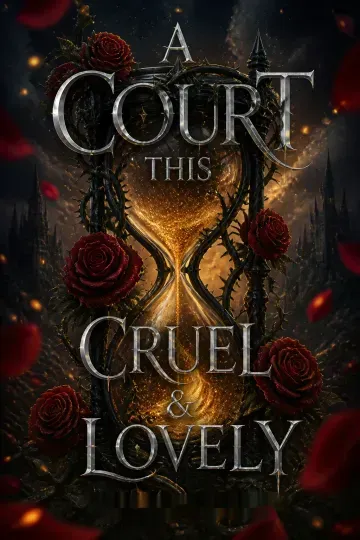
A Court This Cruel & Lovely received mixed reviews, with ratings ranging from 1 to 5 stars. Many readers enjoyed the enemies-to-lovers romance, found family trope, and fast-paced plot. Some praised the character development and world-building, while others criticized the predictable storyline and lack of originality. The book was often compared to popular fantasy romance series. Readers who enjoyed it found it addictive and fun, while those who disliked it felt it lacked depth and relied too heavily on tropes. The cliffhanger ending left many readers eager for the next installment.
People Also Read
Characters
Prisca
Hidden hybrid heir with time magicA young woman raised in a poor northern village, believing she is cursed because the gods rejected her infant magic offering. In truth, she is a hybrid (part fae, part human) whose power to stop time marks her as the legitimate heir to a fallen hybrid kingdom. She has distinctive amber-gold eyes that she must hide with charms. Fiercely stubborn, loyal to a fault, and driven by a deep protective instinct toward those she loves. She transforms across the story from a terrified girl suppressing her nature into a determined revolutionary willing to sacrifice her own freedom for others. Her adoptive mother Vuena18 stole her as a toddler; her adoptive brother Tibris4 is her anchor. She has dreamed of a green-eyed man2 for years without understanding why.
Lorian
Mercenary leader with hidden powerA towering, dark-haired warrior with green eyes flecked with silver and a body covered in thin white scars. He leads a tight-knit band of fighters on a secret mission of revenge against King Sabium3. Cold, calculating, and seemingly ruthless, he makes decisions prioritizing the mission over individual lives, yet displays fierce protectiveness toward his men and, increasingly, toward Prisca1. He becomes her brutal teacher in magic and survival, using psychological pressure and controlled fear to unlock her abilities. Beneath the mercenary exterior, he harbors devastating secrets about his true identity and his connection to the destruction of Prisca1's birth city. His relationship with Prisca1 evolves from transactional antagonism to genuine, conflicted attachment.
King Sabium
Immortal tyrant who steals magicThe seemingly middle-aged ruler of Eprotha who has actually lived for centuries by siphoning the stolen magic of his subjects. He presents as a pious defender of the realm against the fae threat, but the entire theology of the Gifting and Taking ceremonies is a fabrication to justify mass magical theft. He extends his own life, rewards loyal courtiers with extra power, and executes anyone whose magic cannot be fully taken (the hybrids). He periodically fakes his own death and kills the young man he raised as his 'son' to assume a new identity. Cold-eyed, charming when necessary, and utterly without conscience, he represents the banality of institutionalized evil.
Tibris
Prisca's adoptive brother and healerPrisca1's older brother by five winters, a gentle healer whose limited magic (most was stolen at the Taking) can treat small wounds and sicknesses. He has been secretly working with rebels for years, planning Prisca1's eventual escape. After their mother18's death, he tracks Prisca1 down using a network of contacts and joins her mission. Despite his mild nature, he possesses a core of steel when protecting his sister. His healing abilities prove crucial in treating the dungeon prisoners' infected fae-iron wounds. He struggles with revelations about their parents' deceptions but never wavers in his love for Prisca1, even after learning they are not blood relatives.
Demos
Long-suffering prisoner of the kingA prisoner who has survived nearly two years in the king3's dungeon, an extraordinary feat given the fae-iron poisoning meant to keep captives docile. He dug out his own iron-infected wound to resist the poison, nearly dying of sepsis. Bitter, sardonic, and deeply resilient, he has built up a tolerance to the guards' drugs that allows him to remain clear-headed when other prisoners are barely conscious. He was once a rebel organizer in the city before his capture. His connection to Prisca1, when revealed, reshapes both their understandings of family, loss, and survival. His protectiveness extends beyond blood, as he ultimately proves.
Asinia
Prisca's imprisoned best friendPrisca1's closest friend from the village, a talented seamstress with a gift for precision work. Like Prisca1, she carried hidden hybrid magic without knowing it. She was arrested and thrown into the king3's dungeon after Prisca1's exposure triggered assessments of everyone close to her. Her mother was killed during the arrest. In the dungeon, fae-iron poisoning left her feverish and near death until Tibris4's healing and Lorian2's medicine saved her. Her friendship with Prisca1 is the emotional anchor of the rescue mission. Even weakened, she maintains her sharp humor. Her precision power, once suppressed, may prove more useful than anyone expected.
Vicer
Rebel spymaster in the cityA childhood friend of Tibris4 who was recruited to the capital for his useful magic. After the woman he loved, a hybrid named Rosin, was burned on Gods Day, he channeled his grief into building a rebel network. He runs a safe house in the slums, coordinates spies inside the castle, and operates the underground hybrid market. Pragmatic to the point of ruthlessness, he initially resists Prisca1's plan to free all the prisoners, deeming it impossibly dangerous. But his own losses drive him, and he ultimately commits the rebellion's full resources. His relationship with Margie, Rosin's mother, gives him a surrogate family.
Madinia
Queen's lady with a hidden natureOne of the queen19's ladies-in-waiting, the red-haired daughter of Patriarch Farrow13, the king3's closest advisor. She is haughty, sharp-tongued, and initially cruel to Prisca1, whom she views as a peasant usurper. But her hostility masks a desperate secret, one that makes her an unlikely and invaluable ally as the story progresses. Her father's fanatical anti-hybrid crusade places her in an impossible position. Her character arc moves from antagonist to co-conspirator, and her loyalty, once earned, proves absolute.
Rythos
Lorian's charming warrior companionOne of Lorian2's inner circle, a warrior with dark skin and an easy, infectious grin. He has the power to make people like him, though his abilities are currently diminished for reasons tied to the group's larger mission. He is the warmest and most openly kind toward Prisca1 among Lorian2's men, cooking for her, offering comfort, and occasionally acting as a buffer against Lorian2's intensity. He carries fae fire in a lantern that never extinguishes. Beneath his charm lies deep pain connected to his reduced power and a fierce loyalty to Lorian2 that has survived years of shared hardship.
Marth
Lorian's irreverent warrior companionA blond warrior in Lorian2's band with the ability to glimpse into people's pasts. He used this power to learn details about Prisca1's journey, including the men she killed. Loud, lewd, and unapologetically flirtatious, he serves as both comic relief and emotional barometer for the group. Despite his irreverence, his loyalty to Lorian2 is absolute. He is the one who reports to Lorian's brother20 about Prisca1, making him a conduit between the mission and the larger political stakes Lorian2 is navigating.
Galon
Lorian's grim water-wielding warriorThe oldest of Lorian2's men, with deep brown skin, a perpetually grim expression, and a nose broken many times. He has an affinity for water magic; he pulled every drop from Prisca1's soaked clothes after rescuing her from the river. Despite his cold demeanor and discomfort with emotional displays, he becomes protective of Prisca1 in his gruff way, giving her his cloak and never asking for it back. He takes charge of her physical combat training with relentless drills. His loyalty to Lorian2 is absolute, but he is not afraid to question decisions when they put the group at risk.
Cavis
Lorian's quiet family-man warriorA quiet warrior in Lorian2's band who can understand every language spoken in any kingdom. He has a wife and newborn daughter at home, and his constant longing for them humanizes the otherwise hardened group. He was the most vocal in objecting to abandoning Prisca1 at the river, his protective instincts extending to all innocents. Dreamy-eyed and often lost in thought, he comes alive only when speaking of his family. His presence reminds the group what they are fighting to return to.
Patriarch Farrow
King's fanatical advisor and Madinia's fatherOne of the king3's closest patriarchs, in charge of the guards at the city walls. His wife was killed years ago by escaped hybrids, or so he was told, and he has dedicated his life to eradicating them with religious fervor. A fit, muscular man with hard blue eyes and the same red hair as his daughter Madinia8. His fanaticism is the product of manufactured grief weaponized by the king3. When his own daughter is revealed as hybrid, his entire moral framework collapses, forcing him into an impossible choice between his life's crusade and his child's survival.
Telean
The queen's observant seamstressAn older woman with a slightly hunched back and deep frown lines who serves as the queen19's personal seamstress. She was spared from execution decades ago because the queen19 valued her extraordinary skill with fabric. She recognizes Prisca1's amber eyes immediately, having once known eyes that exact color on a woman who was her closest friend. She carries secrets from a destroyed city and a lost family. Her quiet presence in the castle becomes unexpectedly significant.
Auria
Friendly laundry maid in the castleA cheerful laundry maid who befriends Prisca1 on her first day as a servant in the castle. She seems guileless and endlessly helpful, always ready with gossip about the court, the queen19's ladies, and the guards. Her mother and grandmother also worked in the castle. She knows everyone and everything, or so it appears. Her chipped-tooth smile and warm demeanor make her one of the most likable people in the servants' quarters.
Wila
Rebel maid seeking vengeanceA pale blond maid in the castle who lost her twin brother to the king3's executions. She has been passing information to Vicer7 for over a year with no tangible results. Cold-eyed and radiating banked rage, she volunteers for a dangerous mission knowing it may cost her life. For her, any action that strikes at the regime is worth the price.
Caraceli
Queen's lady obsessed with revengeOne of the queen19's ladies who was once in charge of tending the queen19's fire each night before being elevated. Her closest friend Katina was removed from court under suspicious circumstances. She correctly suspects Prisca1's involvement and becomes increasingly unstable, drinking heavily and hissing accusations. Her grief and loyalty to her absent friend curdle into something dangerous.
Vuena
Prisca's adoptive mother and seerThe woman who raised Prisca1, a seer whose visions struck at random. She and her husband moved the family from village to village throughout Prisca1's childhood to keep her hidden. She made a devastating choice decades ago that shaped Prisca1's entire existence. When the guards finally came, she sacrificed herself to give Prisca1 a chance at escape, revealing fragments of truth in her final moments.
The Queen
Sabium's bored and shallow wifeA beautiful woman with freckles and gray eyes who fills her days with six ladies-in-waiting, trips to the market, and new gowns. She collects people as projects, elevating a peasant to lady on a whim. Her moral vacancy enables her husband3's atrocities; she seems not to notice or care what happens in the dungeon beneath her feet. Her loneliness and boredom make her both pitiable and contemptible.
Conreth
Lorian's brother, referenced in lettersLorian2's older brother who communicates through coded letters carried by a trained falcon. He is married to a woman named Emara and orchestrates strategy from a distance. His letters reveal him as sardonic, politically astute, and deeply invested in Lorian2's mission. He never appears in person but his influence shapes many of Lorian2's decisions.
Plot Devices
Time Magic
Hereditary power to freeze the worldPrisca1's ability to stop time for everyone except herself (and those she chooses to exempt). She perceives it as pulling a 'thread' of magic, and holding it requires intense concentration and emotional fuel. Initially, it manifests only under extreme fear or threat, but through Lorian2's brutal training, she learns to channel rage and willpower to wield it deliberately. The power is hereditary, running in hybrid bloodlines, and marks Prisca1 as the legitimate heir to the hybrid kingdom under their succession laws. Repeated use causes nosebleeds, vision loss, and eventually total collapse, but her capacity grows with practice. She uses it for increasingly large-scale feats: freezing individuals, then entire crowds, and finally an entire ballroom full of nobles.
Oceartus Stones
Magical batteries for stolen powerBlue stones used in the Gifting and Taking ceremonies to strip magic from human subjects. During a Taking, a priestess holds the stone to an infant's head and chants; the stone glows as it absorbs the child's magic. At age twenty-five, a small portion of power is returned during the Gifting, but most remains with the crown. The stones are stored in a hidden cavern beneath the castle, where the king3 siphons their accumulated power to extend his own life and reward loyalists. Hybrid magic resists being fully taken because it is fundamentally different in nature; a 'seed' remains that regrows as the hybrid ages. Empty stones are inert and dark; those holding power glow brightly.
The Amulet
Restorative artifact for diminished faeA blue stone set in silver with ancient writing etched into the back, hidden for years as a decorative jewel in the frame of the queen19's enormous silver mirror. The amulet has the power to restore the full magical abilities of fae who have been deliberately diminished. Lorian2 has been searching for it throughout the entire story; it is the primary objective of his mission in the human kingdom. During the climax, Prisca1 retrieves it from the queen19's chambers and hurls it to Lorian2 at the city walls. The moment he catches it, his suppressed fae nature erupts back into full form, restoring his true appearance and unleashing devastating powers including lightning generation.
Fae Blood Glamour
Disguise magic requiring personal bloodA type of fae magic that allows the user to alter their appearance, including hiding pointed ears and changing facial features, hair color, and build. To impersonate a specific person, blood from that individual is required as a component. Lorian2 obtained a vial of the real Gromalian prince's blood from fae contacts at the border, enabling him to pass as Prince Rekja2 at King Sabium3's court. Without the glamour, his true form is taller, with pointed ears and blazing emerald eyes with silver irises. Powerful fae can also wear a more basic glamour simply to tamp down their otherworldly features and pass as human.
Horseless Carriages
Spelled vehicles for the mass escapeMagical carriages that move without horses, powered by magic renewed monthly by the king3. They are status symbols loaned to favored nobles. All carriages are controlled from a single enormous city map in the carriage house, keyed to the power of the inventor Rothnic Boria and his son Davis. Tiny replicas of each carriage are fastened to the map and can be nudged to change destinations. The carriages possess a basic sentience that prevents collisions. Madinia8 gains access to the map by manipulating Davis, and during the Gods Day ball escape, she redirects dozens of carriages to the city walls, providing transportation for over three hundred fleeing prisoners.
FAQ
Synopsis & Basic Details
What is A Court This Cruel & Lovely about?
- Hidden magic, cruel kingdom: The story follows Prisca, a young woman living in a kingdom where magic is sacrificed to the gods, but she secretly possesses a unique power.
- Forced to flee, new truths: After a public execution reveals her hidden abilities, Prisca is forced to flee her village and discovers the king's deception, with the king hoarding power.
- Dangerous alliances, personal growth: Prisca joins forces with a group of mercenaries, navigating dangerous alliances and learning to control her power while seeking to free her captured friend.
Why should I read A Court This Cruel & Lovely?
- Intriguing magic system: The book presents a unique magic system where power is both a gift and a curse, with the king manipulating it for his own gain.
- Complex characters and relationships: The story features morally gray characters with hidden motives, and the relationships between them are filled with tension and betrayal.
- Fast-paced plot with high stakes: The plot is filled with action, suspense, and political intrigue, keeping readers engaged as Prisca fights for her freedom and the lives of others.
What is the background of A Court This Cruel & Lovely?
- Kingdom of Eprotha: The story is set in the kingdom of Eprotha, where humans sacrifice their magic to the gods in exchange for protection from the fae.
- Fae-human conflict: The kingdom's history is marked by a long-standing conflict with the fae, who are seen as dangerous and untrustworthy.
- Social hierarchy and oppression: The kingdom is ruled by a king who hoards power and oppresses those with magic, creating a system of social inequality and fear.
What are the most memorable quotes in A Court This Cruel & Lovely?
- "Those with nothing left to lose make the most dangerous enemies of all.": This quote highlights the theme of desperation and the power of those who have been pushed to their limits.
- "You have your father's stubborn nature. It will help you in this life—when it's not making that life so much harder than it needs to be.": This quote reveals a key aspect of Prisca's character and foreshadows the challenges she will face.
- "Swim, my darling. Swim.": These are Prisca's mother's last words, a pivotal moment that sets Prisca on her journey and underscores the theme of sacrifice.
What writing style, narrative choices, and literary techniques does Stacia Stark use?
- First-person perspective: The story is told from Prisca's point of view, allowing readers to experience her thoughts, emotions, and struggles firsthand.
- Fast-paced and action-oriented: The narrative is driven by a fast-paced plot with frequent action sequences, keeping readers engaged and invested in Prisca's journey.
- Foreshadowing and symbolism: Stark uses subtle foreshadowing and recurring symbols to hint at future events and deepen the story's themes, adding layers of meaning for attentive readers.
Hidden Details & Subtle Connections
What are some minor details that add significant meaning?
- The blue mark: The blue circle on the temples of those who have completed the Gifting ceremony symbolizes both freedom and conformity, highlighting the kingdom's control over its citizens.
- The valeo fruit: The rare valeo fruit, associated with Prisca's father, represents a connection to her past and a reminder of the life she has lost.
- The color maroon: The color maroon, used in the uniforms of the king's guards and in the dresses of the maids, symbolizes the oppressive power of the kingdom and the lack of individuality.
What are some subtle foreshadowing and callbacks?
- Prisca's dreams: Prisca's recurring dreams of a man with green eyes foreshadow her connection to Lorian and the fae, hinting at her true heritage.
- The mention of Crawyth: The mention of Crawyth, a ruined city, foreshadows the hybrid kingdom and Prisca's connection to it, hinting at her true identity.
- The game of King's Web: The game of King's Web, played by Tibris and his friends, foreshadows the king's manipulative nature and the hidden spies within the kingdom.
What are some unexpected character connections?
- Telean and Prisca's mother: The seamstress, Telean, is revealed to be a close friend of Prisca's birth mother, adding a layer of complexity to Prisca's past and her connection to the hybrid kingdom.
- Vicer and Margie: Vicer's connection to Margie, whose daughter was killed by the king, reveals the personal stakes of the rebellion and the shared grief that unites them.
- Madinia and Davis: Madinia's relationship with Davis, a courtier who is also a predator, highlights the hypocrisy and corruption within the royal court.
Who are the most significant supporting characters?
- Vicer: As the leader of the rebellion, Vicer provides Prisca with resources and information, guiding her on her path to challenge the king.
- Galon: As a loyal fae ally, Galon's protective nature and combat skills are crucial to Prisca's survival and the success of their mission.
- Marth: As a charming fae with a hidden past, Marth provides emotional support and a sense of camaraderie to Prisca, while also challenging her perceptions of the fae.
Psychological, Emotional, & Relational Analysis
What are some unspoken motivations of the characters?
- Lorian's need for control: Lorian's need for control stems from his past as the Bloodthirsty Prince and his desire to protect those he cares about, even if it means pushing them away.
- Tibris's guilt and protectiveness: Tibris's protectiveness of Prisca is driven by his guilt over his inability to protect their parents and his desire to keep her safe from the kingdom's dangers.
- Madinia's desire for recognition: Madinia's haughty behavior stems from her desire to be recognized for her own worth, rather than just her father's influence, and her hidden hybrid nature.
What psychological complexities do the characters exhibit?
- Prisca's internal conflict: Prisca struggles with her desire for a normal life and her responsibility to use her power to fight for justice, leading to internal conflict and self-doubt.
- Lorian's emotional repression: Lorian's emotional repression stems from his past as the Bloodthirsty Prince and his fear of losing control, making him appear cold and distant.
- Tibris's survivor's guilt: Tibris's survivor's guilt over his parents' death and his inability to protect Prisca drives his actions and makes him overly protective of her.
What are the major emotional turning points?
- Prisca's mother's death: Prisca's mother's death is a major emotional turning point, forcing her to confront her past and accept her destiny.
- The discovery of Lorian's true identity: The revelation of Lorian's fae heritage is a major emotional turning point, forcing Prisca to question her feelings for him and her trust in others.
- The poisoning and near-death experience: Prisca's poisoning and near-death experience forces her to confront her own mortality and the high stakes of her mission.
How do relationship dynamics evolve?
- Prisca and Lorian's complex relationship: Prisca and Lorian's relationship evolves from mistrust and animosity to a complex mix of attraction, betrayal, and a shared goal, blurring the lines between enemies and allies.
- Prisca and Tibris's sibling bond: Prisca and Tibris's sibling bond is tested by their shared trauma and their differing views on how to fight the king, but their love for each other remains a constant.
- Prisca and Asinia's friendship: Prisca and Asinia's friendship is a source of strength and support for both of them, highlighting the importance of loyalty and shared experiences in the face of oppression.
Interpretation & Debate
Which parts of the story remain ambiguous or open-ended?
- The nature of the gods: The true nature of the gods and their role in the kingdom's history remains ambiguous, leaving readers to question the validity of the kingdom's religious beliefs.
- The hybrid kingdom's fate: The fate of the hybrid kingdom and its people remains open-ended, leaving readers to wonder if they will ever find a safe haven.
- Lorian's true intentions: Lorian's true intentions and his ultimate goals remain ambiguous, leaving readers to question his motives and his loyalty to Prisca.
What are some debatable, controversial scenes or moments in A Court This Cruel & Lovely?
- Lorian's treatment of Prisca: Lorian's treatment of Prisca, particularly his initial decision to leave her for dead and his later manipulation of her emotions, is a source of debate among readers.
- Prisca's use of violence: Prisca's use of violence, particularly her killing of the hunter and the bearded giant, raises questions about the morality of her actions and the extent to which she is willing to go to survive.
- The fae-human alliance: The alliance between the mercenaries and the fae is a controversial element, challenging the kingdom's long-held beliefs about the fae and raising questions about the nature of good and evil.
A Court This Cruel & Lovely Ending Explained: How It Ends & What It Means
- The escape and the reveal: The ending sees the prisoners escaping the dungeon, but the reveal of Lorian's true identity as the Bloodthirsty Prince complicates everything.
- The blood vow and the amulet: The blood vow between Prisca and Lorian and the amulet's power create a new dynamic, leaving readers to question their future and the nature of their alliance.
- The open-ended conclusion: The ending is open-ended, leaving readers with many unanswered questions and setting the stage for future conflicts and challenges, particularly with the reveal of Prisca's hybrid heir status.
Kingdom of Lies Series
About the Author
Other books by Stacia Stark


Download PDF
Download EPUB
.epub digital book format is ideal for reading ebooks on phones, tablets, and e-readers.








































