
Plot Summary
A Botanist Among Scholars
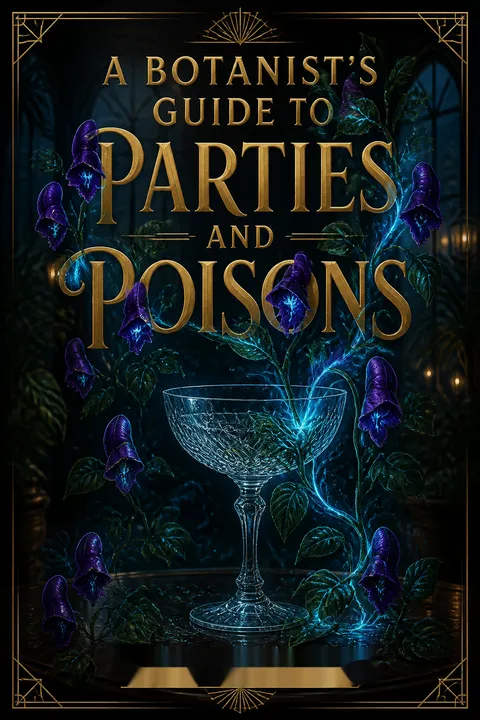
Saffron Everleigh, a young botanist and research assistant at University College London, attends a lavish dinner party celebrating an upcoming Amazonian expedition. Navigating the social minefield of academia, Saffron feels both out of place and scrutinized, especially as the only woman in her department. She meets Alexander Ashton, a reserved and brilliant biologist, and endures the lecherous attention of Dr. Berking, the department head. The evening is filled with subtle rivalries, academic gossip, and hints of personal tensions—particularly surrounding the expedition's leader, Dr. Henry, his wife Cynthia, and the enigmatic heiress Eris Ermine. Saffron's outsider status and her determination to prove herself set the stage for the intrigue to come.
Poison in the Parlor
The party's convivial atmosphere shatters when Cynthia Henry, Dr. Henry's wife, suddenly collapses after drinking champagne. Panic ensues as guests scramble to help, but she quickly slips into a coma. The initial assumption is an allergic reaction, but whispers of poison ripple through the crowd. Saffron, shaken and unsettled, realizes she may have witnessed a crime. The incident exposes the underlying tensions among the university's elite—jealousies, affairs, and professional rivalries—while Saffron's scientific curiosity and empathy for the victim draw her deeper into the mystery. The event marks the beginning of a dangerous investigation that will test her intellect and courage.
Suspicions and Science
As the university reels from the poisoning, police begin questioning all party attendees. Saffron learns from Alexander that Cynthia's condition is due to poison, not an allergy. The investigation quickly focuses on Dr. Maxwell, Saffron's mentor, due to his expertise with toxic plants and a recent argument with Dr. Henry. Saffron is horrified by the possibility and determined to clear his name. She begins her own inquiry, using her botanical knowledge to consider what poisons could have been used. The academic environment, usually a haven for discovery, becomes a place of suspicion and fear, with Saffron caught between loyalty, ambition, and the pursuit of truth.
The Xolotl Experiment
Desperate to exonerate Dr. Maxwell, Saffron devises a risky experiment: she ingests a controlled dose of the xolotl vine, the plant suspected in the poisoning, to document its effects. Alexander discovers her mid-experiment and is both furious and terrified for her safety. Saffron's symptoms—pain, paralysis, and blue streaks on her skin—mirror some but not all of Cynthia's, suggesting xolotl is not the culprit. The ordeal brings Saffron and Alexander closer, exposing their vulnerabilities and mutual respect. Saffron's willingness to endanger herself for justice highlights her determination, but also the perilous intersection of science and personal risk.
Tangled Motives
Saffron and Alexander, now reluctant partners, probe deeper into the university's tangled relationships. They uncover evidence of affairs (Dr. Henry and Eris Ermine), professional jealousy, and financial irregularities in the expedition's funding. Saffron's interviews with colleagues reveal that many had motive and opportunity, including Richard Blake, the expedition's administrator, and Dr. Berking, whose predatory behavior and secretive research raise alarms. Saffron's own ambitions are tested when Berking offers her a coveted research opportunity—at a price. The investigation becomes a labyrinth of academic politics, personal vendettas, and hidden desires, with Saffron's reputation and safety increasingly at risk.
A Web of Lies
The pressure mounts as Saffron is blackmailed by Berking, who threatens her career and safety unless she implicates Dr. Maxwell. Meanwhile, she and Alexander discover that the poisoning may be linked to embezzlement within the expedition's finances, orchestrated by Blake and Berking. The two men plan to frame others and escape with the stolen funds. Saffron's scientific acumen and Alexander's methodical approach reveal that the poison used was a hybrid aconite, bred by Berking using research stolen from Saffron's late father. The web of lies tightens, ensnaring Saffron in a deadly game where truth and survival are at odds.
Dangerous Discoveries
Saffron and Alexander's investigation leads them to Berking's home, where they risk their lives to obtain a sample of the mysterious hybrid poison. Their partnership deepens, blending scientific inquiry with growing emotional intimacy. However, their discoveries make them targets. Berking and Blake, realizing the threat, kidnap and attempt to murder them using the very poison Saffron had previously tested. Bound and helpless, Saffron and Alexander must rely on their wits, resilience, and the hope that someone will find them before it's too late. The chapter is a crucible, forging their bond and resolve.
The Trap Tightens
As Saffron and Alexander struggle to survive the effects of the poison, the full extent of Berking and Blake's scheme comes to light. Blake, revealed as a professional conman, and Berking, driven by ambition and resentment, orchestrated both the embezzlement and the attempted murder to cover their tracks. Saffron learns that her father's research was twisted to create the deadly hybrid, adding a personal dimension to the betrayal. The villains' cold pragmatism and willingness to kill underscore the stakes. Saffron's scientific notes and Alexander's quick thinking provide the only hope for rescue.
Confessions and Confrontations
Elizabeth, Saffron's loyal friend, alerts the police when Saffron fails to return home. Inspector Green and Sergeant Simpson arrive just in time to save Saffron and Alexander, who are paralyzed but alive. Berking is arrested, and Blake flees, but the evidence Saffron and Alexander have gathered ensures the truth comes out. Saffron's courage and scientific rigor are recognized, and Dr. Maxwell is exonerated. The academic community is shaken, but justice prevails. The ordeal leaves Saffron and Alexander physically and emotionally scarred, but their bond is stronger for having faced death together.
The Poisoners Unmasked
With Berking and Blake's crimes exposed, the university and police piece together the full story: embezzlement, attempted murder, and the misuse of scientific research. Mrs. Henry recovers, and her testimony helps clarify the motives and methods of the conspirators. Saffron grapples with the revelation that her father's work was used for evil, but Alexander reassures her that knowledge itself is neutral—only its application matters. The academic world must reckon with its own vulnerabilities: ambition, sexism, and the dangers of unchecked power. Saffron's reputation is restored, and she is offered new opportunities.
Healing and Reckoning
Saffron and Alexander recuperate in hospital, supported by Elizabeth and Inspector Green. They reflect on the trauma they endured, the ethical dilemmas of science, and the importance of friendship and integrity. Saffron's experiment, once reckless, is now seen as a turning point in the investigation. Alexander's struggles with his war trauma and need for order are acknowledged and accepted by Saffron. Both must decide how to move forward—Saffron with her career, Alexander with the upcoming expedition. Their relationship, forged in crisis, offers hope for healing and new beginnings.
New Beginnings, Old Shadows
As the dust settles, Saffron is offered a research position and the chance to pursue her own scientific ambitions. Alexander prepares to depart for the Amazon, their farewell tinged with both sadness and promise. The university, though scarred by scandal, begins to rebuild. Saffron's journey from outsider to respected scientist is complete, but she remains vigilant against the shadows of the past—both personal and institutional. The story closes with hope: for justice, for love, and for the pursuit of knowledge unmarred by corruption. Saffron's resilience and intellect have not only solved a crime but carved a place for herself in a world slow to accept her.
Analysis
A Botanist's Guide to Parties and Poisons is both a classic whodunit and a nuanced exploration of gender, power, and the ethics of science in the early twentieth century. Through Saffron Everleigh's journey, the novel interrogates the barriers faced by women in academia, the dangers of unchecked ambition, and the moral ambiguities of discovery. The use of poison as both plot device and metaphor underscores the novel's central concern: that knowledge, like power, can be used for good or ill depending on who wields it. Saffron's courage, intellect, and refusal to be silenced offer a model of resilience and integrity, while her partnership with Alexander Ashton demonstrates the necessity of empathy and collaboration in both science and life. The story's resolution—justice for the guilty, recognition for the overlooked, and hope for the future—suggests that progress is possible, but only when institutions and individuals confront their own shadows. In a modern context, the novel resonates as a call for inclusivity, ethical responsibility, and the enduring value of curiosity and courage.
People Also Read




Characters
Saffron Everleigh
Saffron is a young botanist and research assistant at University College London, navigating the male-dominated world of post-WWI academia. The daughter of a respected botanist, she is driven by both legacy and personal ambition, but also haunted by the loss of her father and the precariousness of her position. Saffron's intelligence and curiosity are matched by her empathy and moral courage—she risks her career and life to clear her mentor's name and uncover the truth behind the poisoning. Her psychological journey is one of self-assertion: from outsider and target of gossip to a scientist who claims her own authority. Her relationship with Alexander Ashton is both a source of strength and a mirror for her vulnerabilities, as she learns to trust and accept support without sacrificing her independence.
Alexander Ashton
Alexander is a brilliant biologist, respected for his intellect and field experience, but marked by trauma from his service in the Great War. He is methodical, introverted, and struggles with anxiety and a need for order—a legacy of his wartime experiences. Initially intimidating to Saffron, Alexander becomes her closest confidant and partner in the investigation. His emotional arc is one of gradual openness: learning to trust Saffron, confront his own vulnerabilities, and accept the unpredictability of life and love. His scientific rigor and calm under pressure are crucial to solving the mystery, and his loyalty to Saffron is unwavering, even as he faces mortal danger.
Dr. Alan Maxwell
Dr. Maxwell is Saffron's mentor and a father figure, embodying the best of academic curiosity and kindness. His expertise with poisonous plants makes him the prime suspect in the poisoning, and his arrest is a catalyst for Saffron's investigation. Maxwell's own regrets—over missed opportunities and the burdens of age—mirror Saffron's fears about her future. His faith in Saffron's abilities and his willingness to sacrifice his reputation for her protection highlight the generational tensions and the importance of mentorship in hostile environments.
Dr. Berking
Berking is the head of the botany department, wielding power through intimidation, manipulation, and sexual harassment. His scientific expertise is matched only by his moral bankruptcy; he breeds a deadly hybrid poison using stolen research and orchestrates both the embezzlement and attempted murders. Berking's psychological profile is that of a narcissist: he exploits others for personal gain, rationalizes his actions, and is ultimately undone by his hubris. His predation on Saffron is both literal and symbolic—a manifestation of the dangers women face in patriarchal institutions.
Richard Blake (James Harper)
Blake, later revealed as James Harper, is the expedition's administrator and a professional fraudster. His bland exterior masks a ruthless intelligence and capacity for violence. He manipulates both the university's finances and its people, orchestrating the embezzlement and collaborating with Berking in the poisoning plot. Blake's psychological detachment and adaptability make him a formidable antagonist; he is motivated by greed and self-preservation, with no loyalty to anyone but himself.
Dr. Lawrence Henry
Dr. Henry is the expedition's leader, admired for his academic achievements and charm but notorious for his affairs and egotism. His marriage to Cynthia is fraught with betrayal and resentment, and his ambition to found a new department drives much of the academic intrigue. Henry's psychological complexity lies in his simultaneous vulnerability (guilt over his wife's condition) and self-absorption. He is both a suspect and a victim of the university's toxic culture.
Cynthia Henry
Cynthia is Dr. Henry's wife and the victim of the poisoning. Her collapse sets the plot in motion, and her eventual recovery provides crucial testimony. Cynthia's role is both passive (as a comatose patient) and active (as a whistleblower who uncovers the embezzlement). Her psychological arc is one of endurance and agency, challenging the assumption that she is merely collateral damage in the ambitions of men.
Eris Ermine
Eris is the glamorous, enigmatic daughter of a major donor, entangled in the university's social and financial web. Her flirtation with Dr. Henry and rivalry with Cynthia add layers of motive and misdirection to the mystery. Eris is both a product and manipulator of her environment—her actions are driven by loneliness, desire for attention, and a need to assert control in a world that objectifies her.
Elizabeth Hale
Elizabeth is Saffron's flatmate and oldest friend, providing comic relief, practical support, and a sounding board for Saffron's anxieties. Her own struggles with loss and societal expectations mirror Saffron's, and her intervention is crucial in alerting the police when Saffron disappears. Elizabeth's psychological role is that of the confidante—grounding Saffron and reminding her of her worth outside the academic sphere.
Inspector Green
Inspector Green is the lead investigator, embodying the impartiality and skepticism of the law. His reserved demeanor masks a sharp intellect and a commitment to justice. He is both an obstacle and an ally to Saffron, challenging her assumptions and ultimately recognizing her contributions. Green's psychological distance allows him to see through the university's facades, but he also learns to value the insights of outsiders like Saffron.
Plot Devices
Academic Intrigue and Gender Barriers
The novel uses the insular world of postwar academia as both setting and engine for the plot. Rivalries, ambition, and sexism create a fertile ground for both scientific discovery and criminal conspiracy. Saffron's outsider status as a woman in science is both a source of vulnerability and her greatest strength—she sees what others overlook and is underestimated by those in power. The academic hierarchy, with its gatekeepers and glass ceilings, is both a literal and metaphorical obstacle course.
Poison as Metaphor and Mechanism
Poison operates on multiple levels: as the murder weapon, as a symbol of corrupted knowledge, and as a metaphor for the dangers lurking beneath respectable facades. The xolotl vine and hybrid aconite are both scientific marvels and instruments of death, reflecting the dual-edged nature of progress. Saffron's self-experimentation literalizes the risks scientists take in pursuit of truth, while the misuse of her father's research underscores the ethical dilemmas of discovery.
Red Herrings and Misdirection
The narrative structure employs classic mystery devices: multiple suspects, hidden relationships, and false leads. Affairs, financial irregularities, and personal grudges muddy the waters, keeping both Saffron and the reader guessing. The shifting focus of suspicion—from Dr. Maxwell to Dr. Henry to Berking and Blake—mirrors the uncertainty and paranoia of the academic environment.
Parallel Investigations
Saffron's scientific method parallels the detective's process: observation, hypothesis, experimentation, and revision. Her partnership with Alexander blends rational inquiry with emotional intuition, highlighting the interplay between logic and empathy. The novel foregrounds the importance of collaboration, interdisciplinary thinking, and the courage to challenge authority.
Foreshadowing and Symbolism
Recurring motifs—such as the xolotl vine, blue streaks of paralysis, and Alexander's war scars—foreshadow both danger and transformation. Storms and gardens serve as backdrops for key revelations and emotional turning points, symbolizing both chaos and renewal. The use of scientific language and botanical detail grounds the narrative in realism while enriching its symbolic resonance.
Saffron Everleigh Mystery Series
Download PDF
Download EPUB
.epub digital book format is ideal for reading ebooks on phones, tablets, and e-readers.








































