
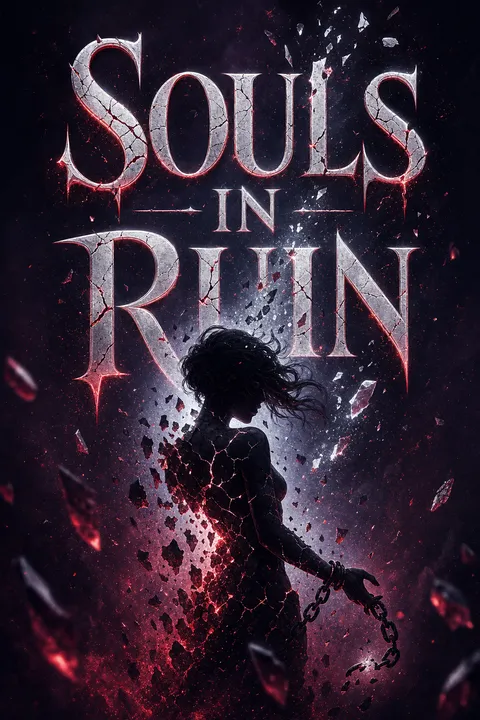


Plot Summary
Prologue
Mireille1 narrates the curse of her own existence: the unwanted child of King Aeldrin of Vareth7 and a mysterious, possibly inhuman woman who captivated him, then vanished the moment Mireille1 drew her first breath.
Raised behind closed doors as the king's7 living shame, tolerated but never cherished, she is marked from birth by strange silver-flecked eyes that make the court whisper of witchcraft. She has spent her life measuring her worth by how little notice she draws, a girl turned ghost and back again, believing she was never meant to live at all.
The prologue frames the entire novel as the confession of a woman who has internalized her own worthlessness. By opening with the paradox of being born to die, White establishes trauma as inheritance rather than event: Mireille's wound predates memory. The absent mother functions as both mystery and metaphor, an origin she cannot access and therefore cannot integrate. The silver eyes, beautiful yet stigmatized, externalize her otherness, the visible mark of not belonging. Crucially, the voice is retrospective and self-aware, hinting that survival has already reshaped her. This is not a fairy tale of a hidden princess awaiting rescue, but a study of a self built entirely from others' rejection.
Sold to the Butcher
Mireille1 survives court by staying invisible, mocked for her silver eyes and the vanished sorceress who bore her. When King Aeldrin7 summons her, he unrolls a map bleeding with the Blood King's2 conquests and delivers his verdict: she will wed Valen of Nocthar, the tyrant called the Butcher,2 to buy Vareth time.
She refuses until her father names the true cost, the lives of little Lysa4 and her friend Isolde,5 the only two people she loves. She yields, not for the crown but for them. Refusing to go meekly, she takes Darius, the guard captain6 who once begged for her hand, one last time in the rain-soaked garden, claiming a final act of will before duty consumes her.
The inciting bargain exposes the oldest patriarchal transaction: a woman's body as currency for male political survival. Aeldrin cloaks abandonment in the language of duty, and his weaponizing of Lysa reveals how love becomes leverage in the powerless. Mireille's consent is coerced yet framed as choice, the first of many blurred lines the novel will interrogate. Her garden encounter with Darius is not romance but reclamation, sex as the last territory she governs. She refuses tenderness and demands control, revealing a woman who conflates intimacy with power because vulnerability has only ever cost her. The scene establishes her core defense: if she must be given away, she will first give herself.
The Blood King Arrives
Draped defiantly in funeral black, Mireille1 watches the Butcher2 enter her father's7 hall, moving like something half-divine and wholly lethal. Valen2 ignores the assembled court and demands a private audience, unsettling her by calling her storm-colored eyes beautiful rather than monstrous. At the betrothal feast, a Nocthari servant warns her their weddings bind souls through shared blood, meant to endure beyond death.
Queen Ira,8 her venomous stepmother, twists the knife: Valen2 first asked for the legitimate Cordelia,9 and Aeldrin7 bartered the bastard in her place. During their dance, Valen2 leans close and admits he can smell Darius6 on her, vowing to string her a necklace of the captain's veins if she ever goes to him again.
Valen's arrival inverts a lifetime of scorn: the feature that made Mireille an outcast becomes, in the conqueror's mouth, an object of fascination. This destabilizes her more than cruelty could, because being seen is a hunger she has never had fed. The revelation that she is a substitute for Cordelia reactivates her deepest wound, confirming she is always second, always the discarded option. The dance choreographs their dynamic in miniature: he leads, she resists within the form, and beneath the courtly veneer lies genuine threat. His possessive jealousy toward Darius signals that his interest is proprietary rather than romantic, foreshadowing a love conceived entirely as ownership.
A Mother's Crown, A Blood Vow
On the wedding morning, Aeldrin7 brings Mireille1 a carved box holding a silver, moonstone circlet, her mother's crown. He confesses the truth beneath the rumors: he had loved the strange woman and wanted her as his queen, but she fled, later leaving the infant Mireille1 on the palace steps with a note begging that she be protected.
At the altar, a trembling priest speaks vows not of love but of blood and binding. Valen2 and Mireille1 each slice a palm and press the wounds together, and a jolt of power and unwanted desire surges between them, crimson flickering in his eyes. At the feast after, dancing with her new husband,2 Mireille1 feels her hatred tangling dangerously with want.
The crown scene reframes Mireille's origin from careless indiscretion to thwarted love, granting her a fragile new lineage even as she is given away. It is a poisoned gift: recognition offered only at the moment of loss, deepening her grief rather than healing it. The blood rite literalizes the novel's obsession with binding, converting marriage from contract into metaphysical fusion. That Mireille feels desire at the exchange horrifies her, introducing the recurring torment of a body that responds against the will's command. White uses the ceremony to collapse the boundary between violation and consent, hatred and attraction, establishing the ambivalence that will define every subsequent encounter with her husband.
Slaughter on the Wedding Night
Their consummation is fevered and, to Mireille's1 shame, willingly passionate, a tenderness she never expected from the Butcher.2 Then screams tear through the palace. Valen's2 soldiers, concealed throughout the celebration, are butchering servants, guards, and nobles.
Valen2 lounges naked and unbothered, admitting the peace treaty was always a lie and savoring her dawning horror. Half-dressed and barefoot, Mireille1 flees through blood-slick corridors to the nursery, where she finds the nurse murdered and Lysa's4 small bed empty and stained crimson.
Panic drives her to the secret hiding cubby she once showed her sister,4 and there the three-year-old waits, alive, having remembered their game. One thought consumes Mireille1 now: get Lysa4 out before the conquerors find her.
The juxtaposition of ecstasy and atrocity is the novel's cruelest structural stroke, forcing Mireille to carry the guilt of pleasure taken while her people died. It weaponizes her body's betrayal into moral wound, a recurring engine of her self-loathing. The wedding, symbol of union, is revealed as the perfect ambush, dramatizing how intimacy can be a Trojan horse for violence. Her flight toward Lysa rather than her own safety confirms the hierarchy of her loves: the child is the axis of her selfhood. The bloodstained empty bed, then the living child, stages terror and reprieve in quick succession, sharpening the reader's investment in the one relationship that humanizes her.
A Pinky Promise She Cannot Keep
Racing toward the stables with Lysa4 clutched to her chest, Mireille1 intercepts Isolde,5 who has horses waiting with her stablehand lover. She makes the impossible choice: she will not flee with them. As the Blood King's2 wife, she reasons, she can draw his hunt away from a fleeing child who might otherwise be caught.
She presses Lysa4 into Isolde's5 arms, swears through tears that she will come for her, and seals it with a pinky promise she knows is a lie. Isolde5 begs her to run; Mireille1 refuses and watches them vanish into the dark. Then, rather than seizing her own escape, she turns back toward the palace and the god she married,2 determined to face whatever waits.
This is Mireille's first act of genuine heroism, and it is defined by renunciation rather than triumph. Her logic, that her presence draws danger, transmutes her lifelong status as burden into shield, giving her worthlessness a redemptive use. The pinky promise, a child's sacred bond, becomes almost unbearable precisely because she understands its impossibility, layering grief over sacrifice. Her decision to walk back into captivity rather than flee inverts the escape narrative: freedom would endanger those she loves, so she chooses the cage. This establishes her moral center and her tragic pattern of self-erasure in service of others, the very tendency the novel will later force her to confront.
The God Behind the Crown
Dragged before the throne, Mireille1 finds her surviving family, Aeldrin,7 Ira,8 Cordelia,9 and her half-brothers, bound and kneeling. Valen2 sets her mother's circlet upon her head, then lets his human disguise dissolve into his true form: Vharok, the God of Blood and Conquest.2 The revelation lands like a verdict, Aeldrin7 had summoned and chained this god in Vareth's dungeons decades ago, torturing him for stolen power.
Now the god vows to inflict upon the king's daughter1 every cruelty he endured, and ensures Aeldrin7 will witness it by trapping the souls of the slain beyond the void. He beheads her father7 with a single stroke and slaughters the rest. Numb with cold resolve, Mireille1 is struck down and thrown into a cell.
The mid-story reveal recasts the entire conflict as divine vengeance visited across generations, the sins of the father made flesh in the daughter's suffering. Vharok's transformation externalizes what Mireille has sensed all along: her husband is not merely cruel but elemental, beyond mortal reckoning. The trapping of souls is a masterstroke of psychological horror, denying even death its mercy and making Mireille an instrument of torment aimed at a corpse. Her refusal to break, the cold clarity that replaces despair, marks the birth of her vengeful resolve. White transforms a revenge plot into something metaphysical, where the stakes are not life but soul, and where Mireille inherits punishment for crimes she never committed.
The Prisoner Beyond the Wall
Mireille1 wakes in the very dungeon her father7 built to cage gods. Valen2 visits to explain his imprisonment before departing to subdue the conquered kingdom, leaving her alone but for a voice in the neighboring cell, an ancient prisoner she comes to call Death, her harbinger.3 Weeks of isolation, fever, and festering wounds follow until she is truly dying and welcomes it.
When Valen2 returns and panics at the thought of losing his instrument of revenge, he strikes a bargain with the chained prisoner,3 removing two of his shackles in exchange for healing her. The prisoner3 mends her ruined body through touch alone, but claims a sliver of her soul as payment, and murmurs a strange, tender word over her: yshera.
The dungeon becomes a crucible where Mireille is stripped to bare survival, and White renders isolation with unflinching intimacy, suicidal ideation, dissociation, the erosion of memory. The disembodied voice next door introduces connection as a lifeline before it is ever a romance. The soul-price healing is the novel's central moral machine: rescue and violation fused, salvation that leaves a permanent hollow. That Mireille is saved against her expressed wish to die complicates consent yet again, and the untranslated endearment plants a seed of destined intimacy. The scene reframes the neighboring prisoner as both savior and predator, ambiguous in ways that will haunt every subsequent kindness.
Revenge Carved Into Flesh
Restored, Mireille1 learns the full architecture of Valen's2 vengeance: he has caged her family's souls so Aeldrin7 must watch, and he intends to visit upon her everything the king7 inflicted on him. Night after night the guards chain her from the ceiling while Valen2 scores intricate patterns into her skin, healing her just enough to continue.
She meets his cruelty with silence and biting wit, refusing to grant him her screams. In the dark afterward, she reaches through the bars to the prisoner beside her,3 and their clasped hands become her only comfort. Death3 insists her soul remains unbroken even as her body becomes a map of scars, and a fragile, forbidden bond grows between captive and chained god.3
Torture here is characterized less by gore than by ritual and psychology, Valen craves not her pain but her surrender, her voice, her recognition. Mireille's silence is her fortress, a refusal to participate in her own breaking that constitutes genuine resistance. The tenderness of the held hand through stone stages the paradox of trauma bonding: comfort found in proximity to the very system that harms her. Death's distinction between damaged body and intact soul offers Mireille a framework for survival, a way to locate an untouchable self. White dramatizes how the captive constructs an interior sanctuary, and how connection, even mediated by iron bars, becomes the difference between enduring and dissolving.
The Collar and the Bite
Kassimir, the golden God of Chaos10 now uneasily serving Valen,2 hauls Mireille1 up to bathe and dress for a court feast, secretly confessing he found Lysa4 and Isolde5 in a village and lied to Valen2 to keep them hidden. At the banquet, Valen2 fastens a leather collar and leash on her and forces her to kneel and eat from his fingers before his conquered court.
When a Nocthari noblewoman drapes herself over him and whispers in his ear, jealousy detonates in Mireille1 and she sinks her teeth into his hand, drawing and swallowing his blood. The court freezes; the bleeding god2 calls it proof she still bites and promises retribution. The divine blood, she does not yet realize, is a slow poison.
The collar transforms private torture into public spectacle, and the banquet becomes a theater of domination where Mireille's degradation entertains a complicit court. Kassimir's hidden mercy introduces moral complexity into the divine hierarchy, suggesting even chaos observes limits. The bite is the pivot: Mireille's jealousy, which she can only half-admit, drives her to mark her tormentor, an act of possession that reverses the power flow. She draws blood from a god, claiming agency through transgression. White stages the moment as ambiguous triumph, victory purchased with future suffering, and the swallowed blood functions as literalized addiction, the body ingesting the very thing that will enslave it further.
Poisoned by Divine Blood
Valen2 bites her throat and forces her to drink from his wrist, and the shared blood ignites a madness of consuming desire. He abandons her chained and burning, knowing she can find release only by craving him. Desperate, Mireille1 calls through the wall for Death,3 who first mocks her, then, unable to bear her torment, offers his own blood and his voice, guiding her through the madness while claiming her release as his own.
When she wakes clear-headed and ashamed, both gods stake competing claims: Valen2 through the poison now singing in her veins, Death3 by declaring her soul will one day belong to him. Humiliated and furious at being fought over like territory, Mireille1 resolves to belong to neither of them.
This sequence renders coerced arousal with disturbing precision, dramatizing addiction, dependency, and the horror of a body hijacked by another's substance. The madness strips Mireille of the self-control that is her only pride, forcing her to beg, the ultimate surrender she has always refused. That Death both relieves and exploits her need underscores that his tenderness is never disinterested. The competing claims reduce her to contested property between rival powers, reactivating her lifelong terror of being owned. Her resolution, to belong to neither, is the novel's thesis crystallizing: in a world where gods dispute her ownership, insisting on self-possession becomes the last and most radical form of defiance.
Belonging Only to Herself
Weaponizing the hunger she has awakened in both gods, Mireille1 changes her strategy entirely. Where she once met torture with silence, she now meets Valen2 with open invitation, watching his perfect control fracture under her boldness.
She seduces him into taking her in her own cell, transforming captor into supplicant for one breathless instant, while Death's3 furious voice intrudes in her mind. It is a deliberate game meant to prove she is no one's plaything, played partly to spite the harbinger3 who once dismissed her as mere entertainment.
Valen,2 visibly shaken, insists it changes nothing even as he retreats from her presence. Mireille1 savors the hollow victory, aware she has stopped being a victim and started becoming something far more dangerous.
Mireille reclaims her body by choosing to deploy it, converting the sexual dynamic from something done to her into something she wields. This is fraught agency, autonomy exercised within a cage, and White refuses to sanitize it. The genuine erosion of Valen's godly composure demonstrates that desire is his vulnerability, and that Mireille has learned to read and exploit power rather than merely endure it. Her spite toward Death reveals the triangle's psychological engine: she uses each god against the other to prove she answers to neither. The chapter marks her metamorphosis from prey into strategist, foreshadowing the escape, and asking whether becoming ruthless is liberation or corruption.
Torn Apart, Healed Again
During another session, Mireille1 pushes Valen2 past his limits, taunting the god until his blood magic surges beyond his control and rips her open from within. As she bleeds out on the stone, Valen2 realizes with horror that he cannot heal wounds his own tainted power has caused.
He refuses to free more of the prisoner's3 chains to save her, choosing instead to let her die, coldly reasoning that his caged souls mean even death cannot free her from him. He leaves her broken on the floor. Bleeding and fading, Mireille1 drags herself across the cell to the neighboring bars, and Death3 heals her once more, demanding no new price, taking her agony into himself and asking only that she survive.
The near-death scene exposes the limits of Valen's mastery: his power, like his love, is ultimately uncontrollable and destructive. His willingness to let her die rather than pay another chain reveals the transactional cruelty beneath his obsession, ownership prized above her life. Death's healing without price, and his admission that he absorbs her pain, deepens the contrast between the gods and complicates Mireille's loyalties. Yet the scene also darkens, since salvation still means dependency on a being who has claimed her soul. White stages survival as increasingly costly, each rescue tightening a different noose, and Mireille's crawl toward the bars becomes an image of will refusing extinction.
Threads and a Ruined Future
Death's3 latest healing awakens something in Mireille:1 she begins to see shimmering silver threads pouring from her chest, strands of possibility and prayer visible only to her. Two are thicker, a crimson-silver rope binding her to Valen,2 a silver-white one leading to Death.3
Discovering she can experience a thread by touching it, she grasps the crimson cord and is hurled into a vision of her own future, a withered, hollow-eyed wraith who has hung in these chains for years, her soul carved away. The broken woman begs her to escape and never become her. Mireille1 wakes vowing she will not. Testing her strange new power further, she even slips into Death's3 mind and dissolves one of the chains binding him there.
The threads externalize a dawning power and reframe Mireille as something more than mortal, seeding the novel's ultimate revelation. The vision of her ruined future weaponizes prophecy as motivation, transforming vague dread into concrete horror she is determined to outrun. Encountering herself as a hollowed wraith literalizes the soul-erosion theme: this is where the accumulating costs lead. The scene converts her survival instinct into active rebellion, replacing endurance with intention. Her ability to unravel a god's chain, even within his mind, foreshadows the mechanism of the climax and hints that her captivity may be less absolute than any of them believe. Agency and destiny begin to converge.
The Blood God's Confession
Summoned to bathe, Mireille1 finds Valen2 waiting, not with cruelty but with unnerving tenderness. He washes the dried blood from her hair and, uncharacteristically unguarded, tells his story: once the God of Flesh, he created beasts and then humankind out of unbearable loneliness, only to be betrayed and chained again and again by mortals greedy for his power.
He warns her that the prisoner beside her, whom he calls brother,3 is far worse than he, a being whose soul-price healing could erase her from existence entirely. He confesses that she reminds him of why he once loved mortals, and that he would give her everything. The monster2 reveals the wounded creator beneath, complicating Mireille's1 hatred even as she plots her escape.
The bath scene humanizes the antagonist without excusing him, granting Valen a tragic interiority rooted in cosmic loneliness. His account, creation as a cure for isolation, betrayal as reward, mirrors Mireille's own experience of being unwanted, forging an unsettling kinship between torturer and victim. His warning about the neighbor introduces genuine dread and foreshadows the climactic betrayal, planting doubt precisely when Mireille has chosen her ally. White uses tenderness as the most destabilizing weapon, harder to resist than violence, and forces Mireille to hold contradictory truths: the man who slaughtered her family is also a lonely god capable of gentleness. The chapter deepens the moral fog surrounding every choice she faces.
The Trap Springs
Mireille1 builds her escape around the single weakness she has cultivated, Valen's2 desire. When he comes offering to end the torture and make her his true queen, freed from the dungeon and courted as an equal, she pretends to accept, weeping at how nearly real the offer feels.
She lets him unhook her manacles for a promised embrace, then snaps a cuff around his own wrist, and the rune-etched chains built to cage gods hold him fast. Trapped and betrayed, Valen2 cycles through disbelief, begging, and vows of eternal vengeance against her and everyone she loves.
Refusing his pleas, Mireille1 turns to the neighboring cell and uses her thread power to dissolve the rune-carved bars, then steps inside to free the harbinger who has become her only ally.3
The reversal is the emotional apex of Mireille's arc: she turns the very intimacy Valen craved into the instrument of his imprisonment, proving desire was always his fatal vulnerability. His offer of queenship tempts genuinely, and her refusal, choosing uncertain freedom over comfortable captivity, rejects the golden cage her whole life primed her to accept. That she must betray his moment of sincerity lends the triumph a bitter edge, since she has learned to weaponize trust just as her captors did. Dissolving the god-cage with her nascent power confirms her transformation from pawn to force. The scene stages liberation as an act requiring ruthlessness, and asks what such tactics cost the soul that wields them.
The First God's Betrayal
Inside the cell, Mireille1 at last sees her harbinger's3 true face, achingly beautiful, bound by chains anchored to a rune over his heart. He warns her that freeing him means unleashing both his vengeance and his claim on her, that he is neither kind nor merciful. She chooses him anyway, plucking the thread that dissolves the rune and every chain.
Freed, he reveals his real name and nature: Zorikhael, the First, God of Gods, Keeper of Souls,3 worse by far than the Blood King she just trapped.2 He slices away Valen's2 collar, kisses her, then presses his hand to her chest and tears out the remainder of her soul as she screams. She has escaped one master only to be seized by another.
The climax delivers the novel's cruelest irony: the ally forged in shared suffering is the deadliest captor of all, and the freedom Mireille engineered becomes the mechanism of her deepest violation. Zorikhael's confession before betrayal grants him a terrible honesty Valen lacked, yet honesty does not equal mercy, and Mireille's choice to trust anyway is both her greatest courage and her undoing. The taking of her full soul completes the erosion motif that has run since her first healing, the accumulated fragments now claimed entire. White refuses the romance genre's promise of a rescuer, insisting instead that in a world of gods, love and predation are indistinguishable. The captive has merely changed cages.
Epilogue
Told from Zorikhael's3 view, the truth unspools. Mireille1 is no mortal but a goddess in the making, daughter of Nyxis, Primordial Goddess of Dusk, who left her infant in Zorikhael's3 keeping to be protected. Aeldrin,7 host to a fragment of Nyxis's lost celestial love, chained Zorikhael3 instead of raising the child, leaving her to suffer for twenty-six years.
Cradling her transforming body, silver threading through her hair, he confesses he tore out her soul to complete her ascension. He rips open a rift to his shadow realm, consumes the souls of cruel Vareth, and collapses the kingdom into dust, leaving Vharok2 trapped and howling behind him. He will wait, without apology, for his little goddess1 to wake and claim her fate.
The epilogue detonates the novel's foundational assumption: Mireille was never the worthless bastard she believed but a hidden goddess, her lifelong suffering a perversion of a mother's protective wish. This retroactively reframes every humiliation as the containment of divinity, and every soul-fragment taken as ascension rather than destruction, though the reader is left to question whether transformation excuses the violation. Zorikhael's unrepentant possessiveness confirms that this is a beginning, not an ending: love as claim, protection as ownership. The shift to his perspective grants the antagonist-savior interiority while withholding Mireille's consent, leaving her a subject acted upon even at the moment of her apotheosis. The origin-story structure primes a sequel while darkly complicating any notion of rescue.
Analysis
Souls in Ruin stages survival as something jagged and unsanctified, insisting that enduring atrocity does not restore the self so much as transform it. Mireille's1 arc is a study in the psychology of the unwanted child: raised as living proof of a king's shame, she learns early that she is valued only in relation to others, and survives by weaponizing invisibility, wit, and the one currency no one can revoke, her own choices. The novel's central provocation is its refusal to let liberation be clean. Every rescue carries a price, every tenderness conceals a claim, and the beings who offer her devotion conceive of love as ownership. White dramatizes coercion honestly, from the coerced arousal of divine blood to the collar at a banquet, while granting her heroine an interior life that resists reduction to victimhood. The dual-god structure, the Blood King who tortures her2 and the chained harbinger who comforts her,3 is less a romance triangle than an anatomy of how captives bond with power, and how affection curdles into possession on both sides. The recurring motif of soul-fragments literalizes trauma's erosion: pieces of the self surrendered, some by force, some in exchange for survival, until the question becomes whether anything essential remains. Mireille's1 mantra, that she will endure, escape, and not break, structures the book like a heartbeat, and the ending's cruel irony, escaping one master only to be claimed by another and unveiled as something inhuman, reframes the entire narrative as an origin story. Beneath its dark eroticism, the novel asks whether autonomy is possible for those shaped entirely by others' desires, and whether becoming a monster is defiance or defeat. Its answer, deliberately, remains unresolved, a wound left open for what comes after ruin.
Review Summary
Souls in Ruin receives an overall rating of 4.12/5, with many praising its poetic, immersive prose, shocking plot twists, and the fierce, compelling FMC Mireille. Readers frequently highlight the atmospheric darkness and the mysterious character Death as standouts. Common criticisms include excessive repetition once the dungeon scenes begin, limited worldbuilding, and pacing issues in the latter half. The villain Valen polarizes readers sharply. Most agree trigger warnings are essential, as torture and abuse are graphically depicted throughout.
People Also Read


Characters
Mireille
Unwanted bastard princessThe illegitimate daughter of Vareth's king7, marked from birth by silver-flecked eyes and the vanished, possibly inhuman mother who bore her. Raised tolerated but unloved, she armors herself in defiance, sharp wit, and calculated invisibility, measuring her worth by how little attention she draws. She loves fiercely but narrowly, pouring devotion into her small half-sister Lysa4 and her friend Isolde5 while believing herself incapable of the soul-deep love others describe. Beneath the barbed tongue lies a woman starved for genuine belonging and terrified of being owned. Her governing drive is survival on her own terms; her defining wound is a lifetime of being discarded. Pain has taught her that control over her own body and choices is the only power worth keeping, and she guards it like a blade.
Valen, the Blood King
Conqueror and husbandThe feared ruler of Nocthar, called the Butcher and the Blood King, who takes Mireille1 as his bride to secure passage into Vareth. Cultured, unnervingly beautiful, and rigidly controlled, he wields cruelty like an artist, calculated rather than impulsive. Something ancient and incomprehensible moves behind his black eyes, and a hunger that runs deeper than conquest. His fixation on Mireille1 curdles between possession and a vulnerability he barely understands, a longing he cannot name. Proud, patient, and monstrous, he believes power must be seized rather than inherited and that ownership is a form of devotion. Beneath his composure lies a loneliness so vast it has shaped every atrocity he commits, and every rare, disarming moment of tenderness.
Death, the prisoner
Chained neighbor and allyThe ancient being caged in the cell beside Mireille's1, whom she names Death and calls her harbinger. His rich, dangerous voice becomes her lifeline through torture and isolation. He can heal with a touch and kill with one, restrained by rune-carved chains that throttle a terrible power. By turns mocking, tender, jealous, and coldly honest, he insists he is neither kind nor good, yet he shoulders her pain and offers comfort no one else will. He admits he has listened to her since she arrived and wants her in ways that unsettle them both. His affection is possessive, ancient, and absolute, and he repeatedly warns her never to mistake his gentleness for mercy, or his presence for safety.
Lysa
Beloved little sisterMireille's1 three-year-old half-sister, the one uncomplicated source of love in the princess's caged life. Golden-curled and trusting, she calls Mireille1 Miri, demands bedtime stories told with the proper voices, and seals promises with her pinky. Her innocence is the tether that keeps Mireille1 fighting, and, cruelly, the leverage others use to bend her to their will.
Isolde
Loyal friend and companionDaughter of a minor noble house, assigned as Mireille's1 companion but grown into her only true friend. Warm, wry, and quietly brave, she keeps secret trysts with a stablehand and treats Mireille1 as a person rather than a scandal. Her steadiness and unquestioning loyalty make her the one person Mireille1 trusts with the thing she loves most in the world.
Darius
Guard captain, former loverCaptain of Vareth's royal guard and Mireille's1 occasional lover, a copper-haired man who once offered her his heart and his name. He wants far more from her than she is willing to give, mistaking her hunger for connection for love. Loyal yet ultimately unwilling to truly fight for her, he embodies the fleeting, hollow intimacies she has learned to settle for.
King Aeldrin
Distant, calculating fatherMireille's1 father, the aging king of Vareth, who kept her alive but always at arm's length. Cold, pragmatic, and secretly haunted, he trades his bastard daughter for his kingdom's survival while insisting the match is a gift. His buried history of ambition and thwarted love proves far more dangerous and consequential than his lifelong indifference ever suggested.
Queen Ira
Cruel stepmotherAeldrin's7 queen and Mireille's1 stepmother, who has spent decades punishing the living proof of her husband's infidelity. Elegant, venomous, and endlessly calculating, she wields humiliation as a precision weapon and makes no secret of her eagerness to be rid of Mireille1 for good.
Cordelia
Legitimate crown princessThe trueborn crown princess and Mireille's1 half-sister, seven months her junior. Beautiful, golden, and secure in her status, she masks her fear of what Mireille1 represents behind practiced disdain and petty, cutting cruelty.
Kassimir
Mercurial God of ChaosThe golden, whistling God of Chaos, uneasily allied with Valen2. Charming and cruel by turns, he treats mortals as diversions yet draws unexpected lines, refusing to hunt children. His sharp humor and hidden mercies make him unpredictable, and he claims a long, complicated history with the prisoner chained beside3 Mireille1.
Eris, Finn, and Tavin
Mireille's dungeon guardsThe three guards charged with chaining Mireille1 for torture and tending her wounds afterward. Over the long weeks their rough duty softens into reluctant gentleness, and she learns their names only near the end.
Plot Devices
The Blood-Binding Marriage
Eternal metaphysical shackleThe Nocthari wedding rite binds two souls through shared blood rather than mere spoken vows, an exchange meant to endure beyond death itself. When Mireille1 and Valen2 press their cut palms together, she feels a jolt of power and unwanted desire, and later learns the binding cannot be broken. The device converts a political marriage into a supernatural bond, ensuring Mireille1 belongs to Valen2 in a way far deeper than any law could enforce. It establishes the story's central tension between ownership and autonomy, and quietly seeds the later revelation that shared divine blood carries consequences no mortal ceremony was ever meant to invoke.
Divine Blood Madness
Coerced desire and addictionA god's blood is no ordinary fluid; consumed by a mortal, it induces a consuming madness of worship and desire rather than nourishment. When Mireille1 bites Valen2 and later drinks from his wrist, the poison floods her with unbearable lust that can only be eased by craving its source. The device strips away the self-control that is her greatest pride, forcing her to confront hungers she has buried, and it becomes a battlefield between the two gods who each want to claim her. It externalizes the book's themes of coerced desire, dependency, and the razor line between surrender and self-possession.
Soul-Price Healing
Salvation that also violatesThe chained prisoner3 can mend flesh, purge infection, and knit bone through touch alone, but every healing demands payment: a sliver of the wounded one's soul, drawn into himself. Each time Mireille1 is brought to the brink of death, this power revives her while leaving a hollow ache where part of her essence once lived. The device raises the stakes of every torture session and blurs the line between rescue and possession, since salvation and violation become inseparable. It accumulates quietly toward the story's darkest turn, making each act of mercy simultaneously an act of claiming, and forcing the reader to question what remains of a self repeatedly bought back.
The Silver Threads
Latent power and the escape keyAfter being healed, Mireille1 begins to perceive shimmering silver threads pouring from her chest, filaments of possibility, prayer, and connection visible only to her. She discovers she can experience futures by touching them and even unravel objects, chains, bars, and runes, by plucking the strands woven through them. Two thicker ropes stand out, one binding her to each god. The device is the physical manifestation of a power awakening within her, foreshadowing a nature far greater than mortal. It becomes the literal instrument of her liberation when she learns to dissolve the ancient enchantments built to cage gods, transforming her from helpless prisoner into an unprecedented force.
The God-Caging Cells
Prisons that hold immortalsVareth's deepest dungeon holds two cells built long before the kingdom, their iron bars and chains etched with ancient runes and buried sacrifices capable of containing gods. These wards suppress divine transformation and power, which is why the imprisoned leave cell doors open, escape being impossible for the caged. The device explains how a mortal king managed to chain immortals, grounds the story's otherwise lopsided power dynamics, and pays off in the climax when the same runes trap even the Blood King2, and when Mireille's1 uncanny gift proves able to undo what no god's raw strength could ever break.
Download PDF
Download EPUB
.epub digital book format is ideal for reading ebooks on phones, tablets, and e-readers.








































