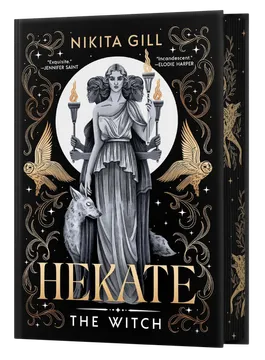

Résumé de l'intrigue
War's Daughter, Born in Fire
Born as the universe burns from the gods' civil war, Hekate emerges into a family torn in two. Her mother, Asteria—the oracle and star-wisher, brings her into a world of embers as the Titans war with their Olympian offspring. Her father, Perses the God of Destruction, is already missing in battle, his legend so dangerous the victor gods erase his story. Even as an infant, Hekate's difference is marked by celestial omens, but in the comfort of her mother's arms, surrounded by falling stars and whispered prophecies, her existence is defined by trauma, grief, and the absence of safety. She is told from the start she must find her own destiny—a child promised to become her own kind of goddess amid collapse.
Running From Ruins
With their home under attack, Hekate and her mother flee through a landscape stripped bare by god-blood and betrayal. Mother teaches her child resilience and magic in their hidden garden, giving her mysterious strength through the legendary moly flower. The chase is relentless; two Olympian gods are on their heels. Hekate's first lesson is survival—she witnesses her mother's silent tears and learns that strength sometimes means nothing more than refusing to break, even as all havens are consumed by fire and ash.
The Underworld's Unwelcome Sanctuary
Driven to the world's edge, mother and daughter seek entry into the Underworld—a domain where gods must be invited. Charon, the ferryman, and river goddess Styx guard the threshold, wary of immortal fugitives. Only desperate pleading from Asteria gains Hekate sanctuary, contingent on Hades' reluctant agreement. In these sunless depths, hunger, exhaustion, and unfamiliar rules become new companions. Hekate, still a child, faces a realm of bones and silence, watched over by family bound by old griefs and complicated loyalty.
Losing a Mother, Finding a Purpose
In the Underworld, Hekate's mother leaves her in Styx's cold care to save her. Hekate's grief is primal—her keening loss met not by comfort but by practical promises of protection. Surrounded by indifference and warnings, she battles loneliness and meaninglessness, desperate for contact—even with the river's murmuring ghosts that lure her to fatal curiosity. Through Charon's guidance, she learns: a god-child without purpose is nothing, but forging her own purpose is its own trial and blessing.
Spirits, Lies, and Nectar
Hekate's longing for her mother leads her to the water's edge, seduced by whispers promising knowledge and reunion. Her encounter with Charon saves her from self-destructive longing. He offers her a lesson: in the Underworld, not every purpose is good; lies and truth entwine. Nourished by nectar and ambrosia, Hekate grows—her magical inheritance stirring, but so does the ache of emptiness. She must learn to trust herself before she can understand her power.
Family Betrayal and Divine Exile
Hekate learns of the betrayals that shaped her life: how her aunt and uncle, once loyal to her father, allied with Zeus to save their own children. Her mother's transformation—becoming an uninhabited island rather than submitting to gods—leaves Hekate untethered, doubly orphaned by divine politics. The knowledge curdles into rage, breaking her fragile new home and fracturing her sense of belonging. She realizes that even among immortals, love and loyalty can be traded for survival.
Lessons of the Dead
In place of family, Hekate finds her first comfort among the shades in the Asphodel Meadows—mortals whose tales of love and loss teach her more than any god's decree. Through Charon's stewardship, she gathers stories, learns of the pain and beauty of endings, and observes the limitations of immortality. Her childhood is haunted by the truths told by the dead: every life, mortal or divine, craves purpose, comfort, and remembrance.
Gifts of Witchcraft Awaken
Through experimentation, accidents, and rebel curiosity, Hekate's gifts for portals, healing, and necromancy begin to surface. She finds joy in potions and secret spells—the legacies of her mother and the seeds of her divergence from all other gods. Styx and Pallas warn her: should Zeus learn of her necromancy, she risks worse than exile. But secrecy cannot quell the relentless desire to understand herself, and her otherness deepens.
Womanhood in the Shadows
Time passes unmarked for gods, but Hekate's body changes—she moves from child to woman, recognized only in her own reflection. The ache of Severance and longing persists, but with it comes self-reliance. Building her own palace, experimenting with her magic, and forging her identity in the margins between life and death, she steps into adulthood—a witch goddess formed by loss, resilience, and the bitter lessons of concealment.
The Forest's Unexpected Friendships
Hekate forms bonds with spirits, Charon, Thanatos (the gentle death), and even Cerberus the hound—beings other gods disregard. The Asphodel women offer solace, stories, and songs, shaping her sense of community in exile. A chance encounter with the ancient Fate (Moirai) leads Hekate to profound questions about destiny, will, and the nature of being threefold. She becomes the keeper of crossroads, like the boundary-dwellers and storytellers she admires.
Secrets, Fates, and the Threefold Self
Dogged by nightmares and existential despair, Hekate sets off on a perilous quest to find her fated purpose. She braves Lethe's oblivion, bargains with Hermes the trickster, learns from gods and monsters, and faces Kronos, the defeated Titan king whose betrayal wounds her anew. In the labyrinth, she survives danger by splitting into three selves—the origin of her triadic nature. Through the realm of Night and the audience with Nyx and her son Thanatos, Hekate learns that her powers are unique, that her destiny must be forged, not given.
March to the Living World
Following Thanatos, Hekate witnesses the tender, impartial tasks of Death—relieving suffering, shouldering grief, and recognizing the tragic beauty of every ending. When her touch brings a dead dog back to life, she realizes her magical gift is rare, dangerous, and taboo among the gods. Her power to restore the dead will make her both reviled and indispensable. The living world, with its transient joys and sorrows, teaches her the cost—and dignity—of mortality.
Necromancy and War's New Army
When war against the giants threatens Olympus, Hekate is called upon by her enemies for salvation. Harnessing her necromancy, she raises an army of the undead—star-hearted mortals loyal to her. Unlike the gods, she leads with compassion and purpose, giving the lost a cause. As the battle rages, her knowledge of fire and darkness—learned in the labyrinths of fear—turns the tide. She grapples with the morality of war, unwilling to become what she once hated.
Battle Amidst Ichor and Gold
Olympus burns, blood flows, and the old hierarchy crumbles under Hekate's threefold assault and inventive tactics. The giants fall, the gods are saved, and she stands in negotiation with Zeus. Though given boons, she demands justice for mortals and her own family: freedom for her father and his brothers, comfort for the dead who fought. The gods, now indebted, fear her transformative potential and independence.
Boons for the Living and Dead
Hekate's demands grant life to her undead army, mercy for her father, and release for lost daughters. She secures seasons for Kore (Persephone), restoring spring to earth and hope to Demeter. Through her stubborn advocacy, she wrests space for love, choice, and otherness—defying both the gods and the cruel logic of divine politics.
The Goddess Who Walks Between
Forbidden to marry by Zeus—especially Thanatos, son of Nyx—Hekate nonetheless rejects the Olympian order. She forges her life between worlds: living among the dead, healing and raising, tending to exiles and monsters. Her power is not domination but boundary-keeping, remembrance, and gentleness for what others fear. She is the witch, necromancer, guardian, and guide at every crossroad.
The Price of Freedom
Hekate mends ties with Styx, Pallas, Charon, and Thanatos—learning that betrayals may shape but need not bind the future. She cannot save all she loves, but builds her own home, crafts new magic, and chooses her companions. Through forgiveness and boundaries, she defines herself as neither orphan nor slave to fate. Her ability to split in three, her healing, and her empathy become both shield and strength.
Building Home, Choosing Love
In her own palace beside the river of memory—Mnemosyne—Hekate finally finds belonging. She is accompanied by companions who value her for herself, not her utility or obedience. She claims Thanatos as her beloved, rejecting the Olympians' restrictions. Her gifts—witchcraft, necromancy, and boundary-walking—are reconciled with joy and sorrow. Hekate emerges as her own legend: the goddess who guides, remembers, and defies the tyrannies of both old and new gods.
Analysis
Modern reclamation and empowerment through mythNikita Gill's retelling of Hekate reframes a marginal goddess as a hero forged from absence and otherness. Through poetic, accessible language and vivid emotional arcs, the book interrogates power, gender, grief, and autonomy in ways that resonate beyond myth. Hekate's journey—as a child orphaned by war, as a necromancer forbidden her gifts, as a woman who forges family through chosen bonds—touches on themes of inherited trauma, femininity as threat and resource, and the ethics of intervention. The structure—woven with repetition, triadic forms, and journey-quest—gives readers a felt sense of becoming through adversity, showing that suffering can birth transformation but never justifies subjugation. In centering servants, ghosts, and wounded gods alongside the mighty, Gill celebrates found family, consent, and the power of liminality: in darkness, at thresholds, even in pain, new stories and new selves are made possible. Hekate's endurance, magic, and self-knowledge model liberation for all outsiders—calling us to claim our gifts, defy unjust rulers, and build sanctuaries for the disinherited within and without.
Résumé des avis
Characters
Hekate
Hekate is the daughter of Asteria, the prophetic star-goddess, and Perses, the titan of destruction. Her birth during the cataclysmic Titanomachy marks her as liminal—raised amid ruin, schooled in loss. Gifted with magic, necromancy, and the rare ability to split into three, she is defined by her search for belonging and purpose after her family's betrayal and exile. Hekate's emotional core is a blend of loneliness, curiosity, and empathy—she turns to spirits, outcasts, and monsters, creating community where gods sow division. Her journey is one from passivity to power: she learns to claim agency, define her own gifts, build her home, and choose love (particularly with Thanatos) in defiance of those who would use or suppress her. Ultimately, she is the goddess of boundaries, choice, and the in-between—a champion for those who live on the margins of myth.
Asteria
Hekate's mother, Asteria, is the goddess of falling stars and oracles. Her love for her daughter is protective and fierce, shaping Hekate's early sense of magic and destiny. Forced to choose between dangerous gods, Asteria transforms—surrendering her divine form to become an island sanctuary, a bittersweet act of both self-erasure and empowerment. Her choices are rooted in motherly devotion and a refusal to submit to power. Even in absence, she remains a shaping presence: her wisdom, courage, and creative spirit serve as guides for Hekate's own journey.
Perses
Perses embodies both might and tragedy. A god of destruction manipulated by fate and war, he is a legend erased by victors and a lingering wound for his daughter. His defeat—bound and bled beneath Tartarus—epitomizes the violence and cruelty of divine politics. Despite his absence, Perses' love and prophetic boon for Hekate ("you will guide the dead, you will be free as I never was") fuel her deep need for purpose, vengeance, and eventual forgiveness.
Styx
Sister to Pallas, guardian of the Underworld's threshold, and bound by painful choices. Styx shelters Hekate after Asteria's flight, but her love is fraught with guilt and explicit boundaries. Her pragmatism hides a deep (if cautious) affection for her foster-daughter, shaped by trauma, complicity, and the drive for survival. Styx's rules and betrayals are both self-preservation and misguided care—a cycle Hekate must break to find true autonomy.
Pallas
Pallas shifts from war-god to craftsman, the architect of palaces and betrayals alike. His deep bond with Hekate's father is shattered by fear and duty to his own children, leading him to betray his kin to the Olympians. He demonstrates the psychological cost of survival: guilt, suppressed tenderness, and the desire for atonement. Pallas' role in Hekate's life is complex—both a betrayer and a builder of her new life, embodying the ethical ambiguities of divine family.
Charon
Son of Night and Darkness, Charon is more than a gatekeeper: he is a patient teacher, storyteller, and fragile friend. His guidance helps Hekate resist self-destruction, make sense of pain, and value the dignity of stories and endings. Charon's outsider status and humility make him a model for Hekate's own otherness. Their bond becomes a foundation for her education and growth.
Thanatos
Born of Night, Thanatos is defined by tender, weary compassion—contrasting with the violence of his role. He becomes Hekate's rescuer, confidante, and eventual lover. Thanatos embodies service, protection, and the traumatized wisdom of those who do necessary, thankless work. His willingness to champion Hekate, risk confrontation with his kin, and choose love over fear invites her into self-acceptance and mutual healing.
Hades
Once a boyish god who offers refuge to the desperate, Hades grows bitter and controlling, the immortal burden slowly poisoning his kindness. His coldness to Hekate marks the limits of power and the corrosive effects of isolation. Nonetheless, his grudging respect for boundaries and ultimate concessions reveal a core of integrity overshadowed by the fear of divine chaos.
Hermes
Hermes is at once mischievous, helpful, and self-interested—a psychopomp who both aids and betrays Hekate. His allure is charisma and knowledge of liminality, reflecting Hekate's own crossroads nature. Yet his loyalty ultimately rests with Olympus, making him emblematic of the instability of alliances and the necessity of self-trust.
Demeter and Kore (Persephone)
Demeter, devastated by Kore's abduction, unleashes suffering on mortals, illuminating the brutal price of divine machinations. Kore's journey from innocence to agency—negotiating her marriage and ownership of the Underworld—mirrors Hekate's own evolution from victimhood to self-assertion. Their story weaves together themes of negotiation, grief, and the rebirth that comes from reclaiming autonomy.
Plot Devices
Liminality, Memory, and Multiplicity
The story's structure hinges on liminality—Hekate's role at the crossroads, her triune splitting under trauma, and her journeying between life, death, and divine orders. The motif of memory—embodied by rivers like Mnemosyne, by stories, and by intergenerational trauma—provides continuity. Multiplicity and boundary-crossing recur through magical transformations, necromancy as both literal and figurative resurrection, and the navigation of paradoxical existence: goddess/witch, orphan/family, exile/home.
Narrative as Healing
Hekate collects tales, gives voice to the dead, and finds meaning through others' stories—making narrative not just a theme but a plot engine driving her self-discovery and healing.
Cycles of Betrayal and Forgiveness
Core relationships evolve through cycles of hurt, separation, confrontation, and measured return. Hekate's journey with those who betray or fail her—Styx, Pallas, Hades, Olympians—is not linear but circular, reflecting the mythic structure of injury and renewal.
Agency and Bargain
Hekate and other goddesses (Asteria, Kore) transform their fates by working bargains—choosing autonomy over subjugation even at great cost. The structure of boons (negotiation with Zeus), pacts (with gatekeepers), and daring self-advocacy at critical moments reflects the philosophy that power must often be claimed rather than granted.
Foreshadowing and Prophecy
Asteria's opening prophecy, early omens, and the recurring presence of old stories underline how destiny can be both burden and tool: the characters must rewrite inherited scripts if they wish to flourish.
Télécharger le PDF
Télécharger l'EPUB
.epub digital book format is ideal for reading ebooks on phones, tablets, and e-readers.








































