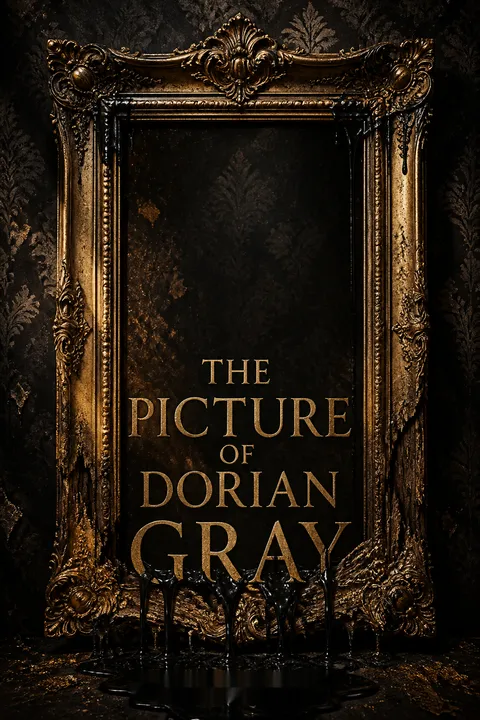

Resumen de la trama
Revelación y secretos de un retrato
En el opulento estudio del artista Basil Hallward, se crea un retrato de Dorian Gray que captura la extraordinaria belleza del joven. Basil, cautivado por el encanto de Dorian, considera que esta es su mejor obra, pero teme que revele demasiado de su propia alma. Lord Henry Wotton, amigo de Basil, se siente intrigado tanto por Dorian como por la pintura. Sugiere que la belleza de Dorian es efímera, lo que despierta en el joven el deseo de conservar su juventud para siempre.
La influencia de Lord Henry
Lord Henry, con su cautivadora y hedonista visión del mundo, comienza a influir en Dorian. Exalta las virtudes de la belleza y la juventud, afirmando que son las únicas cosas que vale la pena poseer. Dorian, impresionable y ansioso por explorar la vida, se siente atraído por las ideas de Lord Henry. Esto marca el inicio de la transformación de Dorian, quien empieza a ver la vida a través del prisma de Lord Henry, priorizando el placer por encima de todo.
El deseo de Dorian y su transformación
Al enfrentarse a la naturaleza efímera de su belleza, Dorian desea que el retrato envejezca en su lugar. Este deseo, formulado en un momento de vanidad, prepara el escenario para un giro sobrenatural. A medida que Dorian se entrega a una vida de excesos y decadencia moral, el retrato comienza a cambiar, reflejando la corrupción de su alma mientras él permanece externamente joven e impecable.
Sibyl Vane: amor y tragedia
Dorian se enamora de Sibyl Vane, una talentosa actriz cuyas interpretaciones lo cautivan. La ve como la personificación de todas las heroínas que representa. Sin embargo, cuando el amor de Sibyl por Dorian hace que su actuación decaiga, él la rechaza con crueldad, lo que la lleva a un trágico suicidio. Este acontecimiento marca un punto de inflexión para Dorian, quien comienza a ver las consecuencias de sus actos reflejadas en el retrato.
Las consecuencias del pacto de la belleza
El retrato se convierte en un recordatorio constante de la decadencia moral de Dorian. Mientras él permanece físicamente inalterado, la pintura muestra las marcas de sus pecados. Dorian se siente a la vez fascinado y horrorizado por los cambios en el retrato, que ahora funciona como un espejo de su alma corrompida. Esta dualidad entre su apariencia externa y su realidad interna se convierte en un conflicto central, mientras Dorian lidia con el precio de la juventud eterna.
La revelación de Basil y el temor de Dorian
Basil Hallward visita a Dorian, preocupado por los rumores sobre su estilo de vida decadente. Dorian, a la defensiva y reservado, se niega a dejar que Basil vea el retrato que guarda su oscuro secreto. Basil le confiesa su profunda admiración, revelando que el retrato contiene demasiado de su propia alma. Sintiéndose acorralado, Dorian le muestra la pintura a Basil, lo que conduce a la impactante revelación de la grotesca transformación del retrato, reflejo del alma corrompida de Dorian.
El secreto del retrato se oculta
Tras la horrorizada reacción de Basil ante el retrato, Dorian lo asesina en un arrebato de pánico y rabia. Consigue la ayuda de Alan Campbell, un antiguo amigo, para deshacerse del cuerpo, recurriendo al chantaje para asegurar su complicidad. Las acciones de Dorian ponen de manifiesto su decadencia moral y los extremos a los que está dispuesto a llegar para proteger su secreto. El retrato, oculto, sigue cargando con el peso de sus pecados, mientras Dorian permanece externamente inalterado.
El descenso de Dorian al hedonismo
Influenciado por un libro que le regaló Lord Henry, Dorian se sumerge en una vida de hedonismo y corrupción moral. Se distancia cada vez más de la realidad, buscando el placer y nuevas experiencias para escapar de la culpa y el horror de sus actos. Su belleza permanece intacta, pero su alma se vuelve más oscura, a medida que el retrato se transforma en un reflejo grotesco de su ser interior. El estilo de vida de Dorian arruina a quienes lo rodean, incluyendo la trágica caída de su amigo, Alan Campbell.
Un asesinato y sus secuelas
Atormentado por el recuerdo de Sibyl Vane y perseguido por su vengativo hermano, James Vane, la paranoia de Dorian aumenta. Un encuentro fortuito con James casi le cuesta la vida a Dorian, pero su apariencia juvenil lo salva. Sin embargo, la muerte accidental de James durante un accidente de caza en la propiedad de Dorian le reporta un alivio temporal. La sensación de invencibilidad de Dorian se tambalea, pero sigue lidiando con las consecuencias de sus actos y el temor al castigo.
El enfrentamiento final y las consecuencias
Decidido a enmendar su camino, Dorian intenta realizar una buena acción con la esperanza de que esto altere la apariencia del retrato. Al no ver cambio alguno, comprende que sus motivaciones eran egoístas. En un momento de desesperación, decide destruir el retrato, creyendo que así se liberará de su culpa. Al apuñalar la pintura, ocurre un suceso sobrenatural que le provoca la muerte. Los sirvientes encuentran el cuerpo de Dorian, envejecido y marchito, mientras que el retrato ha recuperado su belleza original, simbolizando el precio definitivo de su vanidad y corrupción.
Analysis
Exploración de la vanidad y la influenciaEl retrato de Dorian Gray es una profunda exploración de los temas de la vanidad, la influencia y la dualidad de la naturaleza humana. Oscar Wilde ahonda en las consecuencias de llevar una vida consagrada a la belleza y al placer, destacando la decadencia moral que puede resultar de un hedonismo desenfrenado. La novela funciona como una advertencia sobre los peligros de los valores superficiales y el impacto de las influencias externas en la identidad. A través del trágico viaje de Dorian, Wilde critica la obsesión de la sociedad por la juventud y la belleza, ilustrando en última instancia la inevitable caída que acompaña a una vida desprovista de integridad moral.
Resumen de reseñas
El retrato de Dorian Gray es ampliamente elogiado como una obra maestra que explora temas como la belleza, la moralidad y el alma humana. Los lectores aprecian la prosa ingeniosa de Wilde, la complejidad de sus personajes y su profunda filosofía. El análisis que hace la novela sobre la vanidad, el hedonismo y las consecuencias de nuestros actos resuena en muchos de nosotros. Algunos consideran significativos los tintes homoeróticos, especialmente a la luz de la vida personal de Wilde. Aunque unos pocos lectores opinan que el ritmo es lento, la mayoría queda cautivada por esta trágica historia y su eterna relevancia en la sociedad moderna.
También leyeron

Characters
Dorian Gray
Dorian Gray es un apuesto joven cuya vida se transforma tras el deseo de permanecer eternamente joven. Influenciado por la filosofía hedonista de Lord Henry, Dorian emprende un camino de decadencia moral. Su retrato, que envejece y refleja sus pecados, se convierte en el símbolo de su corrupción interna. El viaje de Dorian explora temas como la vanidad, la influencia y la dualidad de la naturaleza humana.
Basil Hallward
Basil Hallward es el artista que pinta el retrato de Dorian. Está profundamente fascinado por la belleza de Dorian, la cual inspira su obra cumbre. Basil representa la conciencia moral en la historia, valorando el arte y la belleza por sí mismos. Su relación con Dorian es compleja, marcada por la admiración y la preocupación por el alma del joven.
Lord Henry Wotton
Lord Henry es una figura carismática e influyente que introduce a Dorian en una vida de excesos y hedonismo. Sus ideas sobre la belleza, la juventud y la moralidad cautivan a Dorian, llevándolo por el camino de la autodestrucción. El papel de Lord Henry es fundamental, ya que encarna el poder seductor de las ideas y el impacto de la influencia.
Sibyl Vane
Sibyl Vane es una talentosa actriz que conquista el corazón de Dorian con sus interpretaciones. Su amor por Dorian la conduce finalmente a la perdición, al perder su talento artístico y ser rechazada por él. El trágico destino de Sibyl pone de relieve el poder destructor de la influencia de Dorian y las consecuencias de sus valores superficiales.
Alan Campbell
Alan Campbell es un antiguo amigo de Dorian, chantajeado para deshacerse del cuerpo de Basil. Científico por naturaleza, la implicación de Alan en el crimen de Dorian lo conduce a su propia ruina y a su posterior suicidio. Su personaje subraya el alcance destructivo de la influencia de Dorian y las concesiones morales a las que se ven obligados quienes lo rodean.
James Vane
James Vane es el hermano de Sibyl Vane, quien busca vengarse de Dorian por la muerte de ella. Su persecución de Dorian añade tensión y temor a la narrativa, culminando en su muerte accidental. El personaje de James representa las consecuencias ineludibles de las acciones pasadas de Dorian y el tema del castigo.
Plot Devices
El retrato
El retrato de Dorian Gray es un recurso argumental central que funciona como un elemento sobrenatural que refleja los cambios en el alma de Dorian. Mientras Dorian se entrega a una vida de excesos, el retrato muestra las marcas de sus pecados, mientras él permanece externamente inalterado. Esta dualidad entre apariencia y realidad explora temas como la vanidad, la moralidad y las consecuencias de las propias acciones.
El libro amarillo
El libro amarillo que Lord Henry le regala a Dorian funciona como catalizador de su descenso hacia una vida de hedonismo. Su influencia en la visión del mundo y en las acciones de Dorian destaca el poder de la literatura y de las ideas para moldear la identidad y el sentido moral. El libro simboliza el atractivo seductor de una vida consagrada al placer y los peligros de una influencia sin límites.
Preguntas frecuentes
Synopsis & Basic Details
What is The Picture of Dorian Gray about?
- A portrait's dark secret: A strikingly beautiful young man, Dorian Gray, has his portrait painted, and through a wish, the portrait ages and bears the marks of his sins while he remains eternally youthful.
- Hedonistic descent: Influenced by Lord Henry Wotton, Dorian embraces a life of pleasure and moral corruption, leading to tragic consequences for himself and those around him.
- Duality of appearance: The story explores the conflict between Dorian's outward beauty and the inner decay of his soul, symbolized by the changing portrait.
Why should I read The Picture of Dorian Gray?
- Wilde's wit and prose: Experience Oscar Wilde's brilliant wit, sharp social commentary, and lush, evocative prose style.
- Exploration of morality: Delve into complex themes of beauty, morality, influence, and the consequences of unchecked desire.
- Timeless relevance: The novel's exploration of vanity, the pursuit of pleasure, and the duality of human nature remains relevant and thought-provoking today.
What is the background of The Picture of Dorian Gray?
- Aestheticism movement: The novel is deeply rooted in the Aestheticism movement of the late 19th century, which emphasized art for art's sake and the pursuit of beauty above all else.
- Victorian society: It critiques the hypocrisy and moral rigidity of Victorian society, particularly its obsession with appearances and social status.
- Influence of decadence: The novel reflects the decadent literary movement, exploring themes of excess, moral corruption, and the darker aspects of human nature.
What are the most memorable quotes in The Picture of Dorian Gray?
- "The only way to get rid of a temptation is to yield to it.": This quote encapsulates Lord Henry's hedonistic philosophy and the novel's exploration of temptation and desire.
- "There is only one thing in the world worse than being talked about, and that is not being talked about.": This quote highlights the Victorian obsession with reputation and social standing, a theme central to the novel.
- "The aim of life is self-development. To realize one's nature perfectly--that is what each of us is here for.": This quote reveals the core of Lord Henry's philosophy, emphasizing individualism and the pursuit of personal fulfillment, regardless of moral constraints.
What writing style, narrative choices, and literary techniques does Oscar Wilde use?
- Epigrammatic wit: Wilde employs a highly stylized and epigrammatic writing style, filled with witty remarks, paradoxes, and aphorisms that challenge conventional morality.
- Third-person narration: The story is told from a third-person perspective, allowing Wilde to explore the thoughts and motivations of multiple characters while maintaining a degree of narrative distance.
- Symbolism and imagery: Wilde uses rich symbolism and vivid imagery, particularly in his descriptions of art, beauty, and the natural world, to enhance the novel's themes and create a sense of atmosphere.
Hidden Details & Subtle Connections
What are some minor details that add significant meaning?
- The yellow book: The specific details of the book's content, with its focus on decadent lifestyles and historical figures, foreshadow Dorian's own moral decline and his fascination with the past.
- The scent of roses: The recurring motif of roses, particularly in the opening scene, symbolizes beauty and passion, but also hints at the fleeting nature of these qualities and their potential for corruption.
- The use of mirrors: Mirrors appear throughout the novel, not just the portrait, emphasizing the theme of self-reflection and the characters' obsession with their own image.
What are some subtle foreshadowing and callbacks?
- Basil's fear of influence: Basil's initial reluctance to show the portrait, fearing he has put too much of himself into it, foreshadows the destructive influence Dorian will have on him and others.
- Dorian's wish: Dorian's impulsive wish for the portrait to age instead of him is a clear foreshadowing of the supernatural events that will unfold and the consequences he will face.
- The recurring phrase "Prince Charming": Sibyl's use of this phrase to describe Dorian, initially innocent, becomes ironic as his true nature is revealed, and it is later used by the woman in the opium den, highlighting his descent.
What are some unexpected character connections?
- Lord Henry and Lady Agatha: The connection between Lord Henry and his aunt, Lady Agatha, reveals a shared interest in Dorian, though their motivations differ significantly.
- James Vane and the woman in the opium den: The woman's revelation that she knew Dorian from years ago connects James's quest for revenge to Dorian's past, highlighting the long reach of his actions.
- Basil and the portrait: Basil's intense emotional investment in the portrait, revealed in his confession to Dorian, foreshadows his tragic fate and the portrait's power over him.
Who are the most significant supporting characters?
- Alan Campbell: His role in disposing of Basil's body highlights the corrupting influence of Dorian and the lengths to which people will go to protect him.
- Sibyl Vane's mother: Her theatrical nature and focus on social status reveal the superficiality of the world that Dorian inhabits and the tragic consequences for those who are caught in it.
- The Duchess of Monmouth: Her witty banter with Lord Henry and her fascination with Dorian provide a glimpse into the social circles that enable Dorian's hedonistic lifestyle.
Psychological, Emotional, & Relational Analysis
What are some unspoken motivations of the characters?
- Basil's idolatry: Basil's unspoken desire for Dorian goes beyond mere artistic admiration, revealing a deep-seated emotional dependence and a fear of losing his muse.
- Lord Henry's experimentation: Lord Henry's fascination with Dorian stems from a desire to experiment with human nature and to see how far he can push the boundaries of morality.
- Dorian's fear of aging: Dorian's underlying fear of aging and losing his beauty drives his actions, revealing a deep-seated insecurity and a desperate need for external validation.
What psychological complexities do the characters exhibit?
- Dorian's duality: Dorian's struggle with his dual nature, the beautiful exterior and the corrupt interior, reveals a deep psychological conflict and a growing sense of self-loathing.
- Basil's obsession: Basil's obsessive devotion to Dorian and his art reveals a complex psychological need for external validation and a fear of losing his creative inspiration.
- Lord Henry's cynicism: Lord Henry's cynical worldview masks a deeper emotional detachment and a fear of genuine connection, revealing a complex psychological defense mechanism.
What are the major emotional turning points?
- Dorian's rejection of Sibyl: This moment marks a shift in Dorian's character, revealing his capacity for cruelty and his willingness to sacrifice love for personal pleasure.
- Basil's confrontation: Basil's confrontation with Dorian and the portrait forces Dorian to confront the reality of his moral decay, leading to a moment of intense fear and self-loathing.
- The death of James Vane: This event, while seemingly a relief for Dorian, intensifies his paranoia and his awareness of the consequences of his actions.
How do relationship dynamics evolve?
- Basil and Dorian: Their relationship evolves from one of artistic admiration and friendship to one of fear and resentment, ultimately ending in tragedy.
- Lord Henry and Dorian: Their relationship shifts from one of mentor and protégé to a more complex dynamic of influence and manipulation, with Dorian becoming increasingly aware of Lord Henry's cynical nature.
- Dorian and Sibyl: Their relationship begins with idealized love and ends in cruel rejection, highlighting the destructive nature of Dorian's superficial values and his inability to form genuine connections.
Interpretation & Debate
Which parts of the story remain ambiguous or open-ended?
- The nature of the wish: The exact nature of Dorian's wish and the supernatural forces that grant it remain ambiguous, leaving room for interpretation about the source of the portrait's power.
- The extent of Dorian's corruption: The novel leaves it open to debate whether Dorian is inherently evil or if he is a victim of circumstance and Lord Henry's influence.
- The possibility of redemption: The ending leaves it unclear whether Dorian's attempt at a good deed was genuine or merely another form of self-deception, raising questions about the possibility of redemption.
What are some debatable, controversial scenes or moments in The Picture of Dorian Gray?
- Dorian's treatment of Sibyl: Dorian's cruel rejection of Sibyl and his subsequent lack of remorse are often debated, raising questions about his capacity for empathy and the nature of love.
- The murder of Basil: The graphic depiction of Basil's murder and Dorian's subsequent attempt to cover it up are controversial, highlighting the novel's exploration of violence and moral depravity.
- Lord Henry's influence: Lord Henry's cynical philosophy and his role in corrupting Dorian are often debated, raising questions about the responsibility of influence and the nature of morality.
The Picture of Dorian Gray Ending Explained: How It Ends & What It Means
- Dorian's attempt at goodness: Dorian's attempt to be good by sparing Hetty is ultimately revealed to be motivated by vanity and a desire for a new sensation, not genuine remorse.
- The destruction of the portrait: Dorian's decision to destroy the portrait is an attempt to escape the consequences of his actions and to regain control over his life, but it ultimately leads to his own demise.
- The restoration of the portrait: The portrait's return to its original beauty while Dorian's body is found withered and corrupt symbolizes the ultimate triumph of art over life and the inescapable consequences of sin.
Sobre el autor
Otros libros de Oscar Wilde
Descargar PDF
Descargar EPUB
.epub digital book format is ideal for reading ebooks on phones, tablets, and e-readers.








































