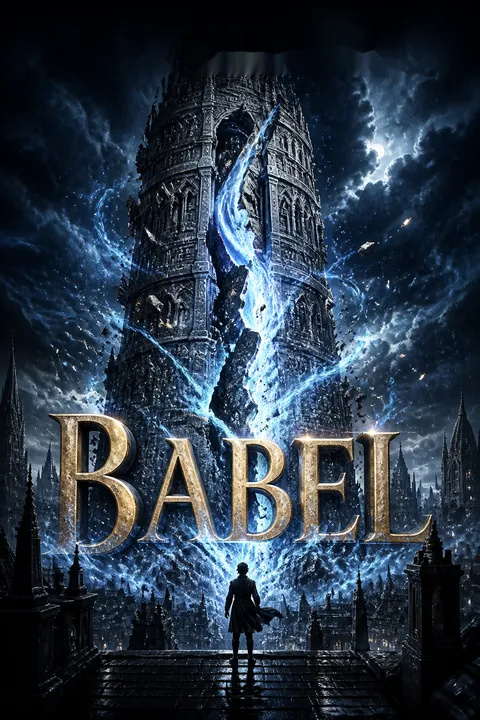

Resumen de la trama
Un huérfano rescatado por un académico
En las calles de Cantón, asoladas por las enfermedades, un joven llamado Robin Swift es salvado de la muerte por el profesor Richard Lovell, un enigmático académico inglés. Lovell utiliza una barra de plata mágica para rescatar a Robin, ofreciéndole una nueva vida en Inglaterra. Robin, ahora huérfano, acepta la oferta, dejando atrás su tierra natal para embarcarse en un futuro lleno de educación y oportunidades. Este momento crucial coloca a Robin en un camino que entrelazará su destino con las poderosas fuerzas del imperio y la magia.
Llegada a la ciudad de plata de Inglaterra
Al llegar a Londres, Robin queda cautivado por la grandeza de la ciudad, impulsada por las propiedades mágicas de la plata. Es llevado a Oxford para estudiar en Babel, el Instituto Real de Traducción, donde aprende sobre las maravillas y complejidades de la magia de la traducción. Sin embargo, bajo la superficie de este mundo resplandeciente, Robin percibe las desigualdades y la explotación que sostienen el poder del imperio, lo que lo lleva a cuestionar su lugar en él.
Revelados los secretos de la torre de Babel
En Babel, Robin se adentra en el arte de la traducción y descubre el inmenso poder de la platería. Esta magia, que manipula el lenguaje para crear efectos extraordinarios, es la piedra angular del dominio del Imperio británico. A medida que avanza la educación de Robin, este se vuelve cada vez más consciente del lado más oscuro de este poder, reconociendo las injusticias que perpetúa y los dilemas éticos que plantea.
Amistades forjadas entre prejuicios
En Oxford, Robin entabla estrechos lazos con sus compañeros de estudios Ramy, Victoire y Letty. A pesar de sus diversos orígenes, se unen como marginados en una institución predominantemente blanca y masculina. Su amistad le proporciona a Robin un sentido de pertenencia y apoyo, incluso mientras lidia con las complejidades morales de sus estudios y del mundo que lo rodea. Juntos, navegan por los desafíos de la vida académica y los prejuicios a los que se enfrentan.
El poder y el peligro de la traducción
Los estudios de Robin revelan el inmenso poder de la traducción, donde las palabras se manipulan para crear efectos mágicos. Este poder, sin embargo, está plagado de desafíos e implicaciones éticas. La traducción no es un mero empeño académico, sino una herramienta del imperio, utilizada para controlar y explotar otras culturas. Robin se ve obligado a confrontar las complejidades morales de su trabajo y su papel dentro de este sistema de poder.
La peligrosa misión de una sociedad secreta
Robin descubre la Sociedad Hermes, un grupo secreto liderado por su hermanastro Griffin, dedicado a redistribuir la plata de Babel a los más necesitados. Dividido entre su lealtad a Babel y su creciente conciencia de sus injusticias, Robin se involucra con Hermes, recorriendo un peligroso camino de rebelión y resistencia contra el monopolio del poder del imperio.
Secretos y sombras en Oxford
Tras una misión fallida con la Sociedad Hermes, Robin se enfrenta solo a las consecuencias, mientras sus amigos logran evitar ser detectados. Se ve atrapado en una red de secretos y mentiras, dándose cuenta de que es un peón en un juego más grande. El peso de su traición a la Sociedad Hermes y la amenaza de expulsión de Babel se ciernen sobre él, obligándolo a confrontar la realidad de su situación y el peligro en el que se ha puesto a sí mismo y a sus amigos.
Un viaje peligroso a Cantón
Robin y sus amigos son enviados a Cantón bajo el pretexto de negociaciones comerciales, una estratagema para alejarlos del escenario de sus transgresiones. El viaje es tenso y pone de manifiesto las dinámicas de poder en juego al ser testigos de la explotación de los chinos por parte de los comerciantes británicos. Esta experiencia profundiza su conflicto moral y cuestiona sus papeles en las maquinaciones del imperio.
Se desatan enfrentamientos y consecuencias
En Cantón, Robin se ve empujado a una negociación de alto riesgo con el comisario Lin, lo que conduce a un enfrentamiento catastrófico con su padre, el profesor Lovell. En un momento de desesperación, Robin mata a Lovell con una barra de plata mágica, desencadenando una serie de acontecimientos que lo obligan a él y a sus amigos a confrontar la realidad de su situación y los límites a los que están dispuestos a llegar para protegerse mutuamente.
Una resistencia desesperada en Babel
Ante la inminencia de la guerra, Robin y sus compañeros académicos de Babel inician una huelga, negándose a apoyar al imperio. Oxford, que depende de la magia de Babel, comienza a desmoronarse. Los académicos, junto con huelguistas locales, fortifican la torre contra el ejército británico. La tensión aumenta a medida que deciden hasta dónde están dispuestos a llegar para detener la guerra y desmantelar el poder del imperio.
El juicio final de la torre
Con el ejército británico preparado para asaltar Babel, Robin traza un plan para destruir la torre, con el objetivo de paralizar la capacidad bélica del imperio. Mientras los académicos se preparan para su última resistencia, lidian con las implicaciones morales y los sacrificios personales de sus acciones, enfrentándose a la realidad de su muerte inminente.
La traición y el coste de la lealtad
Letty, que alguna vez fue una amiga de confianza, traiciona a Robin y a los demás, instándolos a rendirse. Sus acciones revelan profundas fracturas dentro del grupo, obligando a Robin y a Victoire a confrontar la dolorosa verdad de su situación y los límites de su lealtad. A medida que el tiempo se agota, deben decidir si luchar o huir, sabiendo que sus elecciones tendrán consecuencias de gran alcance.
El colapso del corazón del imperio
Robin y los académicos restantes activan las barras de plata, desencadenando una reacción en cadena que destruye Babel. El colapso de la torre simboliza el fin del dominio lingüístico del imperio y su control a través de la magia de la traducción. Este acto de desafío es tanto una victoria como una tragedia, ya que los académicos sacrifican sus vidas para asegurar la caída del imperio.
Un nuevo amanecer entre las ruinas
Victoire, una de las pocas supervivientes, huye de Oxford mientras la ciudad lidia con la destrucción de Babel. Lleva consigo la esperanza de un nuevo comienzo y el conocimiento de que la lucha por la justicia está lejos de terminar. Reflexionando sobre los sacrificios realizados, emprende un viaje hacia lo desconocido, decidida a continuar la lucha por el cambio.
Los supervivientes y el camino a seguir
Tras la caída de Babel, los supervivientes navegan por un mundo transformado. El control del imperio se ha debilitado, pero la lucha por la libertad y la igualdad continúa. Inspirados por el valor y el sacrificio de quienes los precedieron, forjan nuevas alianzas y mantienen su compromiso de construir un futuro donde todas las voces sean escuchadas y valoradas.
Analysis
Una crítica al imperio y al poderBabel, de R.F. Kuang, es una profunda exploración de las intersecciones entre el lenguaje, el poder y el colonialismo. A través del prisma de la magia de la traducción, la novela critica las formas en que los imperios explotan y manipulan las culturas para su propio beneficio. La historia destaca las complejidades morales a las que se enfrentan los individuos atrapados en estos sistemas, mientras lidian con cuestiones de identidad, lealtad y justicia. Los viajes de los personajes subrayan la importancia de la resistencia y el potencial de cambio, incluso ante dificultades abrumadoras. En última instancia, Babel sirve como un poderoso recordatorio de la lucha constante por la libertad y la igualdad, y de la necesidad de desafiar los sistemas opresivos en pos de un mundo más justo.
Resumen de reseñas
Babel ha recibido críticas mixtas por parte de los lectores. Muchos elogian su ambicioso alcance, sus complejos temas y su crítica al colonialismo y a la academia. Se destaca especialmente el fascinante análisis que hace la novela sobre el lenguaje y la traducción. Sin embargo, algunos lectores consideraron que el ritmo es lento y que los personajes no están lo suficientemente desarrollados. Los críticos también señalaron el enfoque un tanto obvio de sus temas y el uso excesivo de notas al pie de página. A pesar de estas objeciones, muchos reseñistas la consideran una obra estimulante e impactante que consolida la reputación de Kuang como una escritora de gran talento.
También leyeron


Characters
Robin Swift
Robin Swift, un académico nacido en China, se convierte en el líder reacio de la huelga de Babel. Dividido entre el amor por sus amigos y su deseo de desmantelar el imperio, Robin elige finalmente sacrificarse para asegurar la destrucción de Babel. Su viaje está marcado por el conflicto interno y un profundo sentimiento de culpa, pero sus acciones dejan una huella duradera en el mundo.
Professor Richard Lovell
El profesor Lovell es un académico de las lenguas y una figura clave en Babel. Es el tutor de Robin y el motor de la explotación de la magia de la traducción por parte del imperio. Lovell es enigmático y distante, y mantiene una relación compleja con Robin. Su muerte a manos de Robin es un punto de inflexión en la historia, que obliga a este último a confrontar las consecuencias de sus actos.
Griffin Lovell
Griffin es el hermanastro de Robin y el líder de la Sociedad Hermes. Carismático y decidido, Griffin se dedica a desafiar el monopolio de la plata y el poder del imperio. Recluta a Robin para la sociedad, ofreciéndole la oportunidad de luchar por la justicia. Griffin es un personaje complejo, tanto inspirador como intimidante, con un profundo compromiso con su causa.
Ramy Mirza
Ramy es uno de los amigos más cercanos de Robin, originario de Calcuta. Es sumamente inteligente y franco, con un fuerte sentido de la justicia. Ramy está profundamente comprometido con la causa de la Sociedad Hermes y está dispuesto a arriesgarlo todo para luchar contra el imperio. Su amistad con Robin se pone a prueba por los acontecimientos de Cantón, pero sigue siendo un aliado inquebrantable.
Victoire Desgraves
Victoire, una académica haitiana, es una de las pocas que escapa de la caída de Babel. Su resiliencia y determinación la impulsan a continuar la lucha por la justicia. Mientras navega por un mundo en agitación, Victoire lleva consigo el recuerdo de sus amigos caídos y la esperanza de un futuro mejor. Su viaje es uno de supervivencia y de búsqueda de nuevos aliados en la lucha constante contra la opresión.
Letitia Price
Letty, que alguna vez fue una amiga cercana de Robin y Victoire, los traiciona en un intento de proteger su propio futuro. Sus acciones están impulsadas por una creencia profundamente arraigada en el poder del imperio y en su lugar dentro de él. La traición de Letty la obliga a confrontar el coste de su lealtad y el impacto de sus decisiones en aquellos a quienes una vez llamó amigos.
Professor Craft
La profesora Craft, una académica de alto rango en Babel, se une a Robin en la decisión de destruir la torre. Sus conocimientos y experiencia son inestimables para orquestar el colapso de la torre. A pesar de las complejidades morales de sus acciones, se mantiene firme en su creencia de que su sacrificio es necesario para provocar el cambio.
Abel Goodfellow
Abel, un líder entre los huelguistas locales, se convierte en un aliado inesperado para los académicos de Babel. Su compromiso con la causa y su mente estratégica ayudan a fortificar la torre contra el ejército británico. La presencia de Abel subraya la lucha compartida entre los académicos y la clase trabajadora, unidos en su combate contra el imperio.
Plot Devices
Silver-Working
La platería, la manipulación mágica del lenguaje, es fundamental para el control del imperio. Al capturar la esencia intraducible de las palabras, los académicos de Babel crean efectos poderosos que alimentan el dominio imperial. La destrucción de Babel y de sus barras de plata representa un golpe significativo a la capacidad del imperio para ejercer este poder.
The Hermes Society
La Sociedad Hermes es un grupo clandestino dedicado a redistribuir la plata de Babel a los necesitados. Dirigida por Griffin Lovell, la sociedad opera en las sombras, desafiando el monopolio del poder del imperio. Este recurso argumental introduce temas de resistencia y rebelión, a medida que Robin se ve arrastrado a la peligrosa misión de la sociedad y debe navegar por los riesgos de desafiar el statu quo.
War Plans
El descubrimiento de documentos que detallan los planes para una invasión militar de China revela el alcance de la corrupción y la explotación del imperio. Este recurso argumental obliga a Robin y a sus amigos a confrontar la realidad de su situación y las complejidades morales de sus acciones. Los planes de guerra sirven como catalizador para su decisión de unirse a la Sociedad Hermes y luchar contra el imperio.
The Strike
La huelga en Babel es un audaz acto de resistencia que desafía la explotación de la magia de la traducción por parte del imperio. Al negarse a trabajar, los académicos pretenden paralizar los esfuerzos bélicos del imperio y forzar una reevaluación de sus prioridades. La huelga destaca el poder de la acción colectiva y el potencial de cambio a través del desafío.
The Chain Reaction
La reacción en cadena desencadenada por la destrucción de las barras de plata de Babel simboliza el colapso del control lingüístico del imperio. Este acto de sabotaje es una ruptura de cadenas tanto literal como metafórica, que libera al mundo del yugo imperial. La reacción en cadena sirve como catalizador para la revolución y la posibilidad de un nuevo orden mundial.
Preguntas frecuentes
Synopsis & Basic Details
What is Babel about?
- A dark academia fantasy: Babel explores a world where the power of the British Empire is fueled by translation magic, focusing on a young, orphaned Chinese boy named Robin Swift who is brought to England to study at the prestigious Royal Institute of Translation, also known as Babel.
- A critique of colonialism: The story delves into the complexities of language, power, and colonialism, revealing how translation can be used as a tool for both understanding and exploitation. It examines the ethical dilemmas faced by those who benefit from and perpetuate systems of oppression.
- A journey of self-discovery: Robin's journey is one of self-discovery, as he grapples with his identity, his loyalties, and the moral implications of his work. He forms close bonds with other marginalized students, and together they navigate the treacherous landscape of empire and rebellion.
Why should I read Babel?
- Unique magic system: The novel features a fascinating and original magic system based on the nuances of language and translation, offering a fresh take on fantasy tropes. The concept of silver-working and its connection to linguistic distortion is both intriguing and thought-provoking.
- Complex characters: The characters are richly developed, with their own motivations, flaws, and internal conflicts. Readers will find themselves invested in their journeys as they grapple with difficult choices and moral dilemmas. The relationships between the characters are nuanced and compelling.
- Thought-provoking themes: Babel tackles complex themes of colonialism, power, identity, and resistance, prompting readers to question the systems that shape our world. It explores the ethical implications of knowledge and the responsibility that comes with wielding power.
What is the background of Babel?
- Historical setting: The novel is set in a fantastical version of 1830s Oxford, England, where the British Empire's power is amplified by silver-work, a form of magic derived from the manipulation of language. This setting is a blend of historical accuracy and speculative fiction, creating a unique and immersive world.
- Cultural context: The story draws heavily on the historical context of British colonialism, exploring the exploitation of colonized peoples and the complex power dynamics between colonizer and colonized. It also examines the role of language in shaping cultural identity and perpetuating systems of oppression.
- Technological element: The presence of silver-work introduces a technological element to the story, as the characters use magical silver bars to enhance their abilities and manipulate the world around them. This technology is both a source of power and a tool of control, highlighting the complex relationship between technology and empire.
What are the most memorable quotes in Babel?
- "Language was always the companion of empire, and as such, together they begin, grow, and flourish. And later, together, they fall.": This quote, from Antonio de Nebrija, sets the stage for the novel's exploration of the relationship between language and power, foreshadowing the rise and fall of empires. It highlights the central theme of the book.
- "You're wrong there. Every language is complex in its own way. Latin just happens to work its complexity into the shape of the word. Its morphological richness is an asset, not an obstacle.": This quote from Professor Lovell encapsulates the novel's exploration of the beauty and complexity of language, highlighting the unique qualities of each linguistic system. It also foreshadows the importance of language in the novel's magic system.
- "When I brought you from Canton, I made clear my expectations. I won't tolerate laziness under this roof. Translation is no easy occupation, Robin. It demands focus. Discipline.": This quote reveals Professor Lovell's cold and demanding nature, highlighting the pressure and expectations placed on Robin. It also foreshadows the violence and abuse that Robin will endure under Lovell's guardianship.
What writing style, narrative choices, and literary techniques does R.F. Kuang use?
- Multilingualism and etymology: Kuang incorporates multiple languages into the narrative, showcasing the beauty and complexity of linguistic diversity. She also delves into the etymology of words, revealing their historical and cultural significance. This technique enhances the novel's themes of language, power, and translation.
- Shifting perspectives: The narrative shifts between different characters' perspectives, allowing readers to see the story from multiple viewpoints. This technique adds depth and complexity to the characters and their relationships, highlighting the different ways they experience the world.
- Foreshadowing and symbolism: Kuang uses subtle foreshadowing and recurring symbols to create a sense of unease and impending doom. The recurring motif of silver, for example, symbolizes both power and corruption, while the image of the tower represents both knowledge and control.
Hidden Details & Subtle Connections
What are some minor details that add significant meaning?
- The recurring image of birds: Birds are often used to symbolize freedom, but also the limitations of that freedom. Robin's initial vision of Professor Lovell as a raptor foreshadows his controlling nature, while the caged birds in the English Factory represent the constraints placed on Robin's life.
- The use of specific colors: The color red is often associated with violence and revolution, while the color silver represents both power and corruption. The use of these colors throughout the novel adds layers of meaning to the narrative and enhances its thematic depth.
- The names of characters: The name "Swift" is a reference to Jonathan Swift, author of "Gulliver's Travels," a book that explores themes of colonialism and cultural difference. The name "Lovell" is a reference to the word "love," which is ironic given the professor's cold and distant nature.
What are some subtle foreshadowing and callbacks?
- The silver bar's effect on Robin: The silver bar's initial effect on Robin, causing him to taste dates, foreshadows his later connection to the power of silver-working and his ability to manipulate language. It also hints at his complex relationship with his heritage.
- The mention of the Old Library: The Old Library, initially mentioned as a place where the characters might find old books, later becomes a crucial location for the Hermes Society, foreshadowing the group's connection to the past and their desire to challenge the present.
- The description of the painting in Professor Lovell's dining room: The painting of Oxford, with the Royal Institute of Translation prominently featured, foreshadows Robin's future at Babel and the central role the tower will play in his life. It also hints at the idealized vision of Oxford that will be shattered by the events of the novel.
What are some unexpected character connections?
- Professor Lovell and Robin's mother: The revelation that Professor Lovell knew Robin's mother adds a layer of complexity to their relationship, suggesting a shared history and a possible reason for Lovell's interest in Robin. This connection also highlights the personal cost of colonialism.
- Robin and Griffin's shared heritage: The discovery that Robin and Griffin are half-brothers creates a complex dynamic between them, as they are both products of the same system of power but have chosen different paths. This connection also highlights the ways in which colonialism can divide families and communities.
- Letty and the Sharp brothers: The Sharp brothers' casual racism and Letty's initial acceptance of it highlight the insidious nature of prejudice and the ways in which it can be internalized by those who benefit from it. This connection also foreshadows Letty's later betrayal of Robin and her friends.
Who are the most significant supporting characters?
- Mrs. Piper: Professor Lovell's housekeeper, she provides Robin with a sense of warmth and comfort in his new life in England. She is a maternal figure who cares for Robin and offers him a glimpse into a world beyond the confines of academia. Her kindness contrasts with the coldness of Professor Lovell.
- Anthony Ribben: A postgraduate student at Babel, Anthony serves as a mentor to Robin and his friends, offering them guidance and support. He is a complex character, torn between his loyalty to Babel and his growing awareness of its injustices. His death serves as a catalyst for the characters' decision to take action.
- Professor Chakravarti: Robin's instructor in Mandarin, he is a complex character who is both a product of and a critic of the colonial system. He is a source of knowledge and guidance for Robin, but also a reminder of the limitations of his own position within the empire.
Psychological, Emotional, & Relational Analysis
What are some unspoken motivations of the characters?
- Professor Lovell's desire for control: Professor Lovell's actions are driven by a desire to control and manipulate those around him, including Robin. He sees Robin as a tool to further his own ambitions and to perpetuate the power of the British Empire. His cold and distant demeanor masks a deep-seated need for validation and control.
- Griffin's need for validation: Griffin's actions are driven by a need to prove himself and to challenge the system that has marginalized him. He seeks validation through his revolutionary activities and his attempts to dismantle the empire's power. His relationship with Robin is marked by a complex mix of affection and resentment.
- Letty's desire for belonging: Letty's actions are driven by a desire to belong and to be accepted by the dominant culture. She is torn between her loyalty to her friends and her desire to maintain her position within the British social hierarchy. Her betrayal of Robin and the others is a desperate attempt to secure her own place in the world.
What psychological complexities do the characters exhibit?
- Robin's internal conflict: Robin is torn between his loyalty to Professor Lovell and his growing awareness of the injustices of the British Empire. He struggles with his identity as both a Chinese and an English person, and he grapples with the moral implications of his work at Babel. His internal conflict is a central theme of the novel.
- Ramy's performative identity: Ramy uses humor and wit to mask his deep-seated anger and resentment towards the British Empire. He adopts a performative identity as a means of navigating a world that is hostile to his heritage. His sharp tongue and quick wit are both a defense mechanism and a form of resistance.
- Victoire's emotional repression: Victoire is a survivor who has learned to suppress her emotions as a means of coping with trauma. She is fiercely independent and determined, but she struggles to express her vulnerability and her pain. Her emotional repression is a response to the injustices she has faced and the need to protect herself from further harm.
What are the major emotional turning points?
- Robin's betrayal of the laborer: Robin's decision to lie to the Chinese laborer at the docks is a major turning point, marking his first act of complicity with the empire. This moment highlights the moral compromises he is forced to make in order to survive.
- Robin's beating by Professor Lovell: The beating Robin receives from Professor Lovell is a pivotal moment, revealing the professor's capacity for violence and the power dynamics at play in their relationship. This event also marks a turning point in Robin's understanding of his place within the empire.
- The death of Ramy: Ramy's death is a devastating emotional turning point, shattering the fragile bonds of friendship and forcing Robin and Victoire to confront the reality of their situation. This event also marks a shift in the tone of the novel, as the characters are forced to grapple with the consequences of their actions.
How do relationship dynamics evolve?
- Robin and Professor Lovell: Their relationship evolves from one of dependence and gratitude to one of resentment and betrayal. Robin's growing awareness of Lovell's manipulative nature and his complicity in the empire's injustices leads to a final, violent confrontation.
- Robin and Ramy: Their friendship is tested by their differing views on resistance and their conflicting loyalties. Despite their disagreements, they share a deep bond of understanding and mutual respect. Ramy's death is a devastating loss for Robin, highlighting the fragility of their connection.
- Robin and Victoire: Their relationship evolves from one of shared experience to one of mutual support and understanding. They are both survivors who have learned to navigate a world that is hostile to their identities. Their bond is strengthened by their shared commitment to justice and their willingness to challenge the status quo.
Interpretation & Debate
Which parts of the story remain ambiguous or open-ended?
- The true nature of silver-working: The novel leaves the precise mechanics of silver-working somewhat ambiguous, focusing more on its effects and implications than on its scientific basis. This ambiguity allows readers to interpret the magic system in different ways, highlighting the subjective nature of knowledge and power.
- The future of the Hermes Society: The novel does not reveal the ultimate fate of the Hermes Society, leaving readers to wonder whether their efforts will ultimately succeed in dismantling the empire's power. This open-endedness suggests that the struggle for justice is ongoing and that there are no easy answers.
- The meaning of Robin's final act: Robin's decision to destroy Babel is both an act of defiance and a form of self-destruction. The novel leaves it open to interpretation whether his actions are ultimately a victory or a tragedy, highlighting the complex and ambiguous nature of revolution.
What are some debatable, controversial scenes or moments in Babel?
- Robin's complicity in the empire: Robin's initial acceptance of his role at Babel and his willingness to benefit from the empire's resources is a source of debate. Some readers may see him as a victim of circumstance, while others may criticize his complicity in a system of oppression.
- Letty's betrayal: Letty's decision to betray Robin and the others is a controversial moment, prompting readers to question her motivations and her loyalties. Some may see her as a victim of her own privilege, while others may view her as a villain who has chosen self-preservation over friendship.
- The use of violence as a means of resistance: The novel's exploration of violence as a means of resistance is a complex and controversial topic. Some readers may see it as a necessary evil, while others may question its effectiveness and its ethical implications.
Babel Ending Explained: How It Ends & What It Means
- The destruction of Babel: The novel ends with the destruction of Babel, a symbolic act of defiance against the empire's linguistic control. This act is both a victory and a tragedy, as it represents the end of a system of oppression but also the loss of a place of knowledge and power.
- The uncertain future: The ending is open-ended, leaving the future of the characters and the world uncertain. This ambiguity highlights the ongoing nature of the struggle for justice and the fact that there are no easy answers to the complex problems of colonialism and power.
- A call to action: The ending serves as a call to action, urging readers to question the systems that shape our world and to consider the ways in which we can challenge oppression and work towards a more just future. It emphasizes the importance of resistance and the need to fight for what is right, even in the face of overwhelming odds.
Sobre el autor

Descargar PDF
Descargar EPUB
.epub digital book format is ideal for reading ebooks on phones, tablets, and e-readers.








































