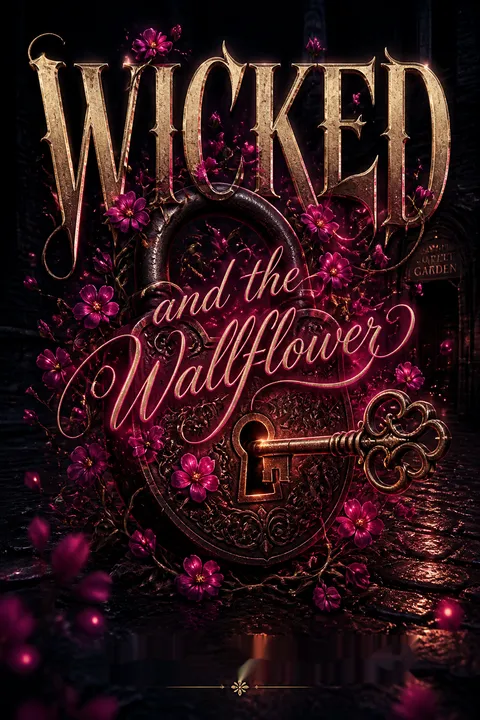

Plot Summary
Four Bastards, One Heir
The story opens with a prologue of four children born on the same day to the same powerful, cruel duke—three boys, all bastards, and one girl, the only legitimate child but not the heir he craved. The duke's obsession with legacy and legitimacy sets the stage for a lifetime of rivalry, betrayal, and pain. The three boys—Devil, Whit, and Ewan—are raised in a brutal contest to become the heir, while Grace, the girl, is hidden away. Their father's machinations fracture the siblings, forging a bond of survival and a vow: the Marwick line will end with them. This legacy of violence and manipulation haunts them into adulthood, shaping their destinies and the world they build in the shadows of London.
A Wallflower's Desperation
Felicity Faircloth, once a darling of the ton, is now a wallflower—plain, aging, and overlooked. At a glittering ball, she's mocked by former friends and, in a moment of wounded pride, claims to be engaged to the reclusive Duke of Marwick. The lie is wild, but it's born of desperation: her family is secretly ruined, and her only value is as a marriage prospect. Felicity's loneliness and yearning for acceptance are palpable, but so is her stubborn hope. Her impulsive claim sets off a chain of events that will entangle her with the city's most dangerous men and force her to confront what she truly wants.
Bargain in the Dark
After her lie, Felicity is visited in her bedchamber by a mysterious, scarred man—Devil, one of the infamous Bareknuckle Bastards. He offers her a bargain: he will make her lie true, ensuring the duke does not deny the engagement, in exchange for a future favor. Their conversation crackles with wit and unspoken longing. Devil sees through Felicity's insecurities, recognizing her intelligence and fire. She, in turn, is drawn to his darkness and the promise of something more than the empty glitter of Mayfair. Their pact is the first step in a dangerous dance of temptation, power, and vulnerability.
The Devil's Temptation
Devil draws Felicity into his world, showing her the underbelly of Covent Garden—a kingdom he and his brother Whit rule with ruthless efficiency. He promises to teach her how to become the flame that will lure the duke, but his lessons are laced with genuine attraction. Felicity, fascinated by the freedom and rawness of the Garden, begins to shed her old fears. Their encounters grow increasingly charged, each testing the boundaries between teacher and student, predator and prey. The city's darkness becomes a crucible for Felicity's transformation, and for Devil's own buried longing.
Covent Garden's Kingdom
The Bastards' empire is revealed: a network of smuggling, protection, and community in the heart of London's poorest neighborhoods. Devil and Whit are kings here, respected and feared, but their rule is built on the loyalty of those they protect. Felicity witnesses the strength and vulnerability of this world, and the fierce devotion Devil inspires. She also meets Grace, the hidden sister, and glimpses the deep wounds left by their shared past. The contrast between Covent Garden and Mayfair sharpens, as does Felicity's sense of where she truly belongs.
Locks, Lies, and Longing
Felicity's talent for lockpicking becomes a metaphor for her journey—she is drawn to closed doors, to mysteries, to the possibility of more. As she navigates the Bastards' world, she learns the truth about Devil's origins, the brutal contest for the Marwick title, and the pact that binds the brothers: Ewan, now the duke, must never have an heir. The stakes are raised as Ewan returns to London, intent on finding Grace and securing his legacy. Felicity and Devil's connection deepens, but so does the danger surrounding them.
The Duke's Deadly Game
Ewan, the Duke of Marwick, is revealed as both victim and villain—a man shaped by his father's cruelty, obsessed with finding Grace, and willing to use Felicity as a pawn. The brothers' rivalry is a powder keg, with Felicity at its center. Ewan's pursuit of an heir is not just about legacy, but about erasing the past and controlling the future. Devil is determined to thwart him, even if it means sacrificing his own happiness. The web of lies tightens, and Felicity must decide whom to trust.
Lessons in Ruin
Devil's lessons in seduction become real as he and Felicity give in to their desire. Their intimacy is electric, but it is also fraught with fear—of ruin, of loss, of not being enough. Felicity's awakening is both physical and emotional; she learns to claim her own pleasure, her own power. But the threat of scandal and the weight of Devil's secrets loom large. When Ewan's machinations come to a head, Felicity is forced to confront the cost of love in a world built on betrayal.
Passion on the Rooftops
On the rooftops of Covent Garden, beneath the stars, Felicity and Devil find a fleeting sanctuary. Here, they are free from the expectations of society, from the burdens of the past. Their love is raw and real, a rebellion against the world that would keep them apart. But dawn brings reality crashing back—Devil cannot believe he is worthy of Felicity, and she cannot convince him otherwise. Their night together is both a consummation and a farewell, as old wounds and new fears threaten to tear them apart.
Truths Unlocked
The truth about the brothers' past, the duke's identity, and the nature of the bargain is finally revealed. Felicity learns she was a pawn in a game of revenge, her engagement engineered to draw Devil and Ewan into confrontation. The betrayal cuts deep, but so does the realization that love cannot be built on lies. Felicity claims her own agency, ending her engagement to the duke in a public act of defiance. She chooses her own future, even as it seems Devil has chosen darkness over her.
Betrayal and Bargains
Devil, wracked with guilt and self-loathing, tries to set Felicity free by pushing her away and buying her independence. But Felicity refuses to be a victim—she confronts him, demanding honesty and love. Meanwhile, Ewan's obsession with Grace leads to violence, and Devil is betrayed and left for dead in the ice hold beneath his warehouse. Felicity, armed with the lockpicks Devil gave her, rescues him, proving that love is not weakness but strength. Their reunion is a testament to resilience and the power of choice.
The Darkness Within
As Devil recovers, he and Felicity face the consequences of their choices. The Bastards' world is threatened by Ewan's rage, but the siblings stand together, united by loyalty and love. Felicity's courage inspires those around her, and she claims her place as Queen of Covent Garden. The final confrontation with Ewan is not just about survival, but about breaking the cycle of violence and forging a new legacy. Devil learns that redemption is possible, but only if he accepts love and lets go of the past.
A Queen's Choice
Felicity, no longer a wallflower, proposes to Devil in the heart of his kingdom, surrounded by those who have become her family. Their marriage is a celebration of defiance, joy, and the power of found family. Felicity's journey from desperation to self-acceptance is complete—she is no longer defined by society's expectations, but by her own desires and choices. Together, she and Devil build a life that is both wild and tender, rooted in the darkness but reaching for the light.
The Devil's Redemption
In the aftermath, Devil and Felicity find peace in each other. The wounds of the past are not erased, but they are healed by love, trust, and the promise of a future together. The Bastards' world is transformed, no longer just a kingdom of survival, but a home for all who seek belonging. Felicity's lockpicks become a symbol of freedom and possibility, a reminder that every door can be opened. The story ends with a vision of hope—a love that endures, a legacy rewritten, and a world remade by courage and compassion.
Love Beyond the Light
Months later, Felicity and Devil are partners in every sense—ruling Covent Garden, dancing in the streets, and loving each other fiercely. Their marriage is not perfect, but it is real, built on honesty, laughter, and shared dreams. The darkness is no longer something to fear, but a place where they have found each other. As they look to the future, they know that love is not about escaping the shadows, but about lighting them from within. Their story is a testament to the power of choosing happiness, again and again.
Analysis
A romance of agency, healing, and chosen familyWicked and the Wallflower is more than a historical romance; it is a story about reclaiming agency in a world that seeks to define and confine. Through Felicity's journey from wallflower to queen, the novel explores the pain of exclusion, the hunger for belonging, and the courage it takes to choose one's own happiness. Devil's arc is one of redemption—not through erasing the past, but by accepting love and building a new future. The contrast between Mayfair and Covent Garden serves as a critique of class and the emptiness of privilege, while the recurring motifs of locks and bargains underscore the importance of choice and self-determination. Ultimately, the novel argues that true power lies not in legacy or status, but in the willingness to love fiercely, forgive deeply, and build a family—by blood or by choice—on one's own terms. The lessons are timeless: happiness is not given, but claimed; love is not weakness, but strength; and every locked door can be opened, if one dares to try.
Review Summary
Wicked and the Wallflower by Sarah MacLean receives mixed reviews with a 3.97 average rating. Many readers praise the chemistry between Devil and Felicity, the lockpicking wallflower heroine, and the Covent Garden underworld setting. Positive reviews highlight the witty banter, sensual scenes, and compelling secondary characters. However, common criticisms include a slow first half with too much telling versus showing, repetitive phrasing ("moth and flame," "Felicity Faircloth"), and an underdeveloped villain. Some found Devil's "I'm not worthy" routine tiresome and the romance one-sided. Despite flaws, most agree the series shows promise.
People Also Read

Characters
Felicity Faircloth
Felicity is the daughter of a marquess, once popular but now a social outcast—plain, aging, and overlooked. Her family's financial ruin makes her desperate for a match, but her impulsive lie about being engaged to the Duke of Marwick sets her on a path of self-discovery. Felicity is intelligent, stubborn, and deeply lonely, yearning for acceptance but ultimately craving something more: passion, agency, and love on her own terms. Her talent for lockpicking symbolizes her desire to unlock new possibilities. Through her relationship with Devil, she transforms from a passive wallflower into a woman who claims her own happiness, defies societal expectations, and becomes Queen of Covent Garden.
Devil (Devon Culm)
Devil is one of the infamous Bareknuckle Bastards, a self-made ruler of London's underworld. Born a bastard and raised in brutality, he is shaped by his father's cruelty and the violent contest for the Marwick title. Devil is fiercely loyal, protective, and driven by a code of honor, but he is also tormented by guilt, self-loathing, and the belief that he is unworthy of love. His attraction to Felicity is both a temptation and a threat—she represents everything he thinks he cannot have. Through her, he learns to confront his darkness, accept vulnerability, and believe in redemption. His journey is one of healing, sacrifice, and ultimately, love.
Ewan (Duke of Marwick)
Ewan is the legitimate heir to the Marwick title, but his legitimacy is a lie—he is as much a bastard as his brothers. Raised in the same brutal contest, he is both traumatized and twisted by his father's manipulations. Ewan's obsession with finding Grace and securing an heir drives the central conflict. He is a master manipulator, using Felicity as a pawn in his rivalry with Devil. Ewan is both pitiable and dangerous, a man who cannot escape the past and is willing to destroy others to secure his future. His actions force the other characters to confront their own wounds and choices.
Whit (Beast)
Whit is Devil's brother and partner, known as Beast in Covent Garden. He is physically imposing, taciturn, and fiercely protective of his family and their kingdom. Whit's loyalty is unwavering, but he is also haunted by the past and the violence that shaped him. He serves as Devil's conscience and anchor, challenging him to do what is right and supporting him through every trial. Whit's own story is one of survival, resilience, and the search for peace in a world that has given him little.
Grace (Dahlia)
Grace is the only legitimate child of the Marwick line, but her existence is a secret. Raised alongside her brothers, she is as tough and resourceful as any of them. As an adult, she runs her own business and commands respect in Covent Garden. Grace is both a symbol of what was lost and a beacon of hope—a woman who has carved out her own destiny despite the odds. Her relationship with her brothers is complex, marked by love, betrayal, and the shared trauma of their childhood. Grace's presence is a reminder that family is chosen as much as it is given.
Arthur Faircloth
Arthur is Felicity's twin, an earl struggling to save his family from financial ruin. He is well-meaning but flawed, often making decisions for Felicity without considering her desires. Arthur's desperation leads him to use Felicity as a pawn, but he ultimately learns to respect her choices and support her happiness. His relationship with Felicity is a mix of love, guilt, and the struggle to let go.
The Marchioness of Bumble
Felicity's mother is a product of her world—concerned with appearances, desperate to secure her daughter's future, and blind to Felicity's true needs. Her well-intentioned meddling is both a source of comedy and pain, highlighting the pressures placed on women in society. Over time, she comes to accept Felicity's choices, if not fully understand them.
John
John is one of Devil's most trusted men, a protector and enforcer in Covent Garden. He represents the loyalty and community that the Bastards have built—a family forged in adversity. John's respect for Felicity and his willingness to support her mark the acceptance she finds in her new world.
Nik
Nik is a key figure in the Bastards' operations, overseeing logistics and commanding respect. She is practical, intelligent, and unflappable, providing a model of female empowerment in a male-dominated world. Nik's presence underscores the theme of found family and the importance of competence over birth.
Natasha Corkwood & Lord Faulk
Natasha and Faulk are Felicity's old circle—beautiful, privileged, and merciless. Their rejection of Felicity is a catalyst for her transformation, and their eventual attempts to reclaim her highlight the emptiness of their world. They serve as a foil to the genuine connections Felicity finds in Covent Garden.
Plot Devices
Dual Worlds: Mayfair and Covent Garden
The novel's central device is the stark contrast between the glittering, superficial world of Mayfair and the raw, vibrant community of Covent Garden. This duality allows for a critique of class, privilege, and the meaning of belonging. Felicity's journey between these worlds is both literal and symbolic, as she learns to value authenticity over acceptance.
The Bargain and the Lock
The bargain between Felicity and Devil is the engine of the plot, driving their interactions and raising the stakes. The motif of locks and lockpicking recurs throughout, symbolizing secrets, barriers, and the power to choose one's own destiny. Felicity's skill with locks becomes a metaphor for her ability to unlock her own future.
The Past as Prison
The siblings' brutal upbringing is revealed through flashbacks and confessions, providing context for their actions and fears. The past is both a literal and figurative prison, one that must be confronted and overcome for healing to occur. The cycle of violence and revenge is a central theme, with love as the only possible escape.
Foreshadowing and Reversal
The narrative is rich with foreshadowing—Devil's warnings about passion, the repeated references to ruin, the symbolism of the ice hold and the darkness. These elements build tension and prepare the reader for the novel's reversals: Felicity's transformation, Devil's vulnerability, and the ultimate triumph of love over legacy.
Found Family and Redemption
The Bastards' world is one of chosen family, loyalty, and mutual support. Redemption is not found in titles or wealth, but in the willingness to love and be loved. The novel's structure reinforces this, with secondary characters playing crucial roles in the protagonists' journeys and the resolution of the central conflict.
The Bareknuckle Bastards Series
About the Author

Download PDF
Download EPUB
.epub digital book format is ideal for reading ebooks on phones, tablets, and e-readers.








































