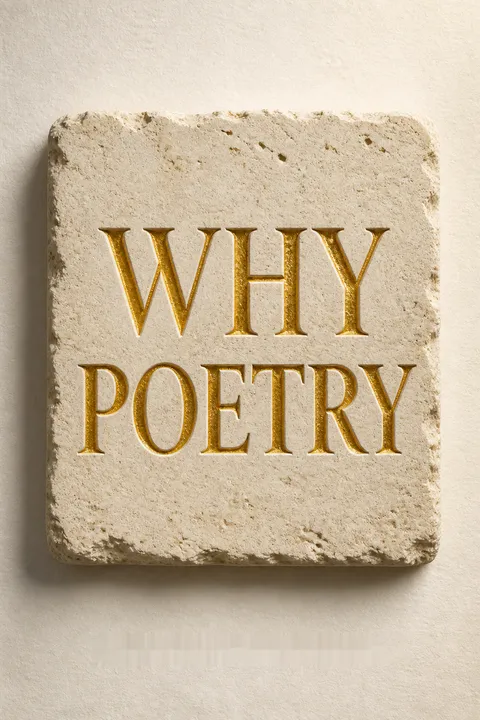

Key Takeaways
1. Poetry Creates a Unique "Poetic State of Mind"
A poem is really a kind of machine for producing the poetic state of mind by means of words.
Beyond information. Poetry isn't primarily about conveying information or beautiful ideas; it's about creating a distinct mental space. Unlike other forms of writing, poetry uses language to evoke a "poetic state of mind"—a heightened, more aware, and open condition of consciousness, akin to dreaming while awake. This state allows readers to experience discoveries, connections, and glimmers of expression accumulated by the poet.
Functional and empirical. The essence of poetry lies in its effect on the reader. As Emily Dickinson famously put it, "If I feel physically as if the top of my head were taken off, I know that is poetry." This functional definition emphasizes that poetry is recognized by what it does to us, not merely by its formal qualities like rhyme or line breaks. It's an experience that moves us closer to what is vital and elusive, something that can never be fully explained.
Language as material. Poetry distinguishes itself by treating language as a material, exploring its inherent provisionality, uncertainty, and physical qualities (sound, look, feel). It deliberately brings forth and celebrates the contradictions and possibilities within our meaning-making system, reminding us of language's miraculous yet tenuous ability to connect us to each other and the world. This unique engagement with language is essential to how poetry makes meaning.
2. Read Poetry Literally to Uncover True Mystery
To be a literalist (as a poet but also as a reader) with the words in a poem, not to treat them as symbols or codes but to take them for what they are, is what draws us into true strangeness.
Beyond hidden codes. Many readers, often due to schooling, approach poetry as if its words hide secret meanings or are a code to be deciphered. This misapprehension is a major barrier. Instead, the path to understanding poetry begins with reading literally—more literally than any other form of writing—and accepting what is directly on the page. A good dictionary is often the only necessary companion.
Clarity precedes mystery. True poetic mystery doesn't come from deliberate obscurity. As Mahmoud Darwish noted, "Extreme clarity is a mystery." The real challenge and reward of poetry lie in carefully reading what is present and allowing one's imagination to adjust to its inherent strangeness. This literal engagement reveals deeper truths, as seen in Whitman's "Song of Myself," where "grass" is first just grass, then transforms into a flag, a handkerchief, or a child.
Unlearning assumptions. To truly read poetry, one must often unlearn incorrect assumptions about hidden meanings. The difficulty of poetry isn't in decoding; it's in accepting the direct, often unsettling, strangeness of the words themselves. This approach empowers readers to forge a direct, powerful relationship with poetry, independent of external interpretations.
3. "Make It Strange": Defamiliarization Awakens Perception
Art exists that one may recover the sensation of life; it exists to make one feel things, to make the stone stony.
Breaking habituation. In daily life, our perceptions become habitual and automatic, dulling our sense of reality. Viktor Shklovsky's concept of "defamiliarization" (ostraneniye) describes how art, especially poetry, makes objects "unfamiliar" and forms "difficult" to prolong perception, thereby restoring the sensation of life. This technique jars us awake, allowing us to experience things anew.
Reanimating language. Poetry applies defamiliarization to language itself. Words, often used thoughtlessly in social function, regain their true significance. By describing a bird as "the thing with feathers" (Dickinson) or water as having a face that "asked me for a kiss" (Hughes), poetry forces us to rethink familiar concepts and see them with fresh eyes, revealing deeper, often unsettling, truths.
Ethical dimension. This reawakening to language has an ethical imperative. As George Orwell argued, habitualized language can lead to "foolish thoughts" and a debased political culture. Poetry, by insisting on precision and reanimating words, combats euphemism and cliché, helping us confront reality more honestly. This is why Adrienne Rich's "Rape" reclaims the terrible actuality of its subject, forcing a re-engagement with its meaning.
4. Form and Association Are the Engine of Poetic Meaning
The poem makes poetry happen in the mind of the reader or listener. It happens first to the poet, and in the course of writing, the poet eventually makes something, a little machine, one that for the reader produces discoveries, connections, glimmers of expression.
Movement of the mind. The form of a poem—its line breaks, rhythm, rhyme, or even lack thereof—is not mere decoration but an integral part of its meaning-making "machine." It guides the reader's mind through a constructed space of ideas and thinking, creating an experience akin to watching someone think aloud. This movement, whether subtle or aggressive, allows the reader to make connections and feel experiences that would otherwise be inaccessible.
Associative leaps. Poetry thrives on associative movement, juxtaposing and connecting ideas, images, and sounds that don't ordinarily belong together. This "conceptual rhyme" (connecting "rose" and "fire truck" through redness) is a core mechanism, revealing latent connections and expanding consciousness. From Bashō's haiku to Robert Hass's "Meditation at Lagunitas," the "arc of association" is the poem's true narrative, reflecting the inner life of objects and ideas.
Beyond traditional structures. While traditional forms like rhyme and meter offer order and consolation, poetry can also achieve its effects through free verse or prose poems. William Carlos Williams's "red wheel barrow" uses line breaks to slow perception and highlight the significance of the ordinary. Baudelaire's prose poems demonstrate that even without conventional poetic devices, the contrast between mundane prose and unexpected poetic feeling can create a powerful atmosphere, enacting the soul's elusive nature.
5. Embrace Uncertainty: The Power of Negative Capability
I mean Negative Capability, that is, when a man is capable of being in uncertainties, mysteries, doubts, without any irritable reaching after fact and reason.
The value of "half knowledge." John Keats's concept of Negative Capability is central to understanding poetry. It describes the ability to dwell in uncertainty and contradiction without feeling compelled to resolve them. Poetry is a space for "half knowledge"—an intermediate, contradictory state between not knowing and full knowledge—where passionate, shifting, even contradictory thoughts can coexist, each feeling true in its moment.
Beyond consistent logic. A great poem doesn't aim for a single, coherent message or a consistent worldview. Instead, it presents a series of "verisimilitudes," where each moment feels completely real or true, regardless of what came before or after. This allows the reader to become immersed in diverse perspectives, much like experiencing the vivid, often conflicting, characters in Shakespeare's plays.
Celebrating contradiction. Poetry uniquely celebrates the inherent contradictions and possibilities of language and being. What might be considered a failure in other forms of writing—jumping around, making unjustified connections, prioritizing beauty over strict necessity—becomes the very essence of poetry. This embrace of paradox, as seen in Keats's "Ode on a Grecian Urn," allows for a deeper truth to emerge, one that transcends simple logic or definitive answers.
6. True Symbols Offer a "Surplus of Resonance"
In poetry, a symbol offers a surplus of resonance.
Beyond allegorical codes. The common understanding of "symbolism" in literature, where objects "stand in for" specific abstract meanings, often hinders a true appreciation of poetry. As Ernest Hemingway asserted, "All the symbolism that people say is shit." True symbolism in poetry is not about hidden codes but about a magical transformation where objects remain themselves yet become charged with a feeling of greater, unspecified meaning.
Uncompleted comparisons. Unlike a metaphor, which completes a comparison (e.g., "my love is a rose"), a poetic symbol introduces the possibility of comparison without completing it. William Carlos Williams's "The rose is obsolete" presents a rose that isn't compared to anything, but resonates with significance. This "surplus of resonance" creates a vacuum in the reader's mind, inviting personal intuitions, memories, and associations to rush in.
Activating language. Poets are inherently symbolists, interested in language's capacity to mean more than usual. By placing words into the "machine of a poem," language becomes activated, shining forth with a significance that is both literal and something greater. This symbolic reactivation, as explored by French Symbolists like Baudelaire, allows poetry to suggest higher truths and transport the mind and senses beyond the mundane, connecting readers across time and culture.
7. Poetry Confronts Nothingness to Renovate the World
"Nothing" is the force That renovates the World—
The silence that speaks. Poetry, more than any other use of language, speaks while simultaneously pointing to and reminding us of nothingness. The white space around a title, the silence at a line break, the gaps between stanzas, and the leaps of association all serve as constant reminders of absence and the void. This palpable silence is crucial to poetry's power, drawing us to the "edge of things" (Lorca) and our own mortality.
Negation as creation. What cannot be spoken directly can be conjured through negation—saying "no" to what is not true, what is not there. This existential negation creates a vacuum into which other possibilities can rush, allowing for the "uncanny" emergence of strange and unsaid presences behind the familiar. Allen Ginsberg's "America I've given you all and now I'm nothing" exemplifies how negation opens up a space for profound exploration.
Productive idleness. Poets are "alchemists of nothingness," aspiring to turn silence and absence into something palpable. This often requires a refusal to conform to societal expectations of "usefulness" or "productivity." As Emily Dickinson, who famously withdrew from conventional life, understood, it is through "homely gifts and hindered Words" that the human heart is told "Of Nothing," the very force needed to renovate a world tired by too much.
8. Poetry Resists "Pressure of Reality" to Preserve Imagination
It is a violence from within that protects us from a violence without. It is the imagination pressing back against the pressure of reality.
Shielding the mind. In times of overwhelming news and information, what Wallace Stevens called "the pressure of reality" can crush contemplation and imagination. Poetry offers a vital resistance, creating an "environmentalism of the imagination"—a protected space within ourselves where everything we see and know can be recombined. This isn't an escape from reality, but a different, deeper engagement with it.
Unmonetized attention. In a world increasingly colonized by devices and monetized information, poetry provides a rare experience of "unmonetized attention." It allows us to slow down, think freely, and engage with language in a way that is not driven by utility, profit, or distraction. This preservation of imaginative space is crucial for our humanity and for cultivating a "vigilant, clear-eyed readiness" for an uncertain future.
Path to mutual understanding. The greatest crisis we face is our inability to understand each other. Poetry, by activating individual imaginations and creating shared imaginative structures, demonstrates the possibility of mutual understanding. It doesn't argue for connection but enacts it, allowing diverse minds to be "together in the evening air," finding companionship in shared recognition of life's complexities and ultimate unsayability.
Review Summary
Why Poetry receives largely positive reviews (4.16/5) from readers who appreciate Zapruder's accessible approach to understanding poetry. Many praise his argument that poetry isn't cryptic or inaccessible, but rather creates connections and dreamlike states through language. Readers value the poem analyses, though some note the book appeals more to existing poetry lovers than skeptics. Common criticisms include occasional memoir sections feeling unnecessary, and the concern that despite claiming accessibility, the book still expects significant reader effort and may not convert poetry skeptics.
People Also Read

Download PDF
Download EPUB
.epub digital book format is ideal for reading ebooks on phones, tablets, and e-readers.








































