
Key Takeaways
1. Rejection Sensitive Dysphoria: The Invisible Core of ADHD
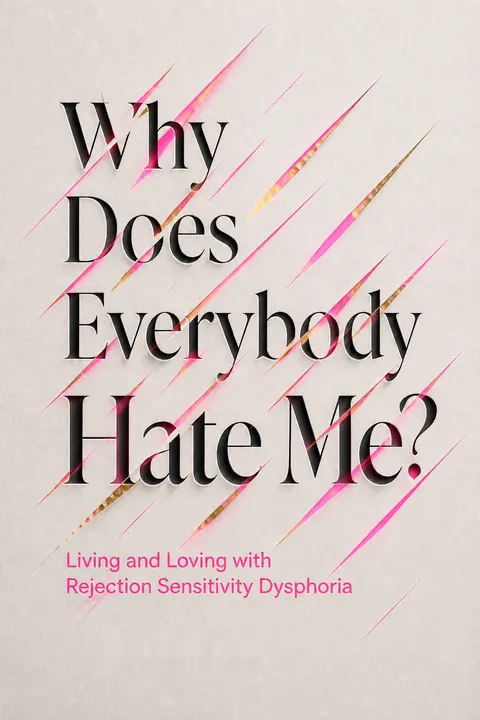
RSD stands for rejection sensitive dysphoria, and it explained my entire life.
Unbearable emotional pain. Rejection Sensitive Dysphoria (RSD) is an intense, physically painful reaction to real or perceived rejection, criticism, or even teasing, often linked to ADHD. Unlike typical sensitivity, RSD is all-consuming, disproportionate to the trigger, and accompanied by profound shame. It's a symptom of emotional dysregulation, a core feature of ADHD that is still widely misunderstood and under-researched, particularly in the United States.
The 20,000 cuts. The author highlights a staggering statistic: children with ADHD receive an estimated 20,000 more negative comments during childhood than their neurotypical peers. These constant criticisms—"Stop being so sensitive!", "You're too much!", "Why are you so lazy?"—compound over time, creating a cumulative trauma. This trauma wires the ADHD brain to be hyper-vigilant, constantly anticipating rejection and reacting with overwhelming intensity to even minor slights, as if reliving those 20,000 cuts.
Neurological differences. The ADHD brain processes neurotransmitters like dopamine and norepinephrine differently, causing "glitches" in the prefrontal cortex (decision-making) and amygdala (emotion processing). This makes it difficult to regulate emotional responses, turning a small comment into a "monumental personal attack." RSD is not a character flaw or insecurity; it's a neurological difference, and understanding this is the first step to shedding the immense shame associated with it.
2. The Pervasive Grip of People-Pleasing and Perfectionism
RSD feels horrible in the moment, but it’s the actions we take in our lives in an effort to protect ourselves from that horrible feeling that do the most damage.
Survival strategy. People-pleasing is a deeply ingrained survival strategy for those with RSD, driven by an overwhelming fear of criticism and rejection. This goes beyond normal agreeableness; it involves constantly putting others' needs before one's own, even to one's detriment, to avoid offending anyone. This can manifest as:
- Inability to set boundaries, betraying personal values for acceptance.
- Always deferring to others' opinions, even strangers, to avoid disagreement.
- Becoming an emotional outlet, acting as an unpaid therapist to avoid saying "no."
- Quickly accepting blame, even when undeserved, to prevent confrontation.
Avoiding confrontation. The "all or nothing" thinking of RSD means uncomfortable conversations are perceived as confrontations, which are equated with rejection. This leads to avoiding difficult discussions, denying one's inner child the validation it desperately needs, and ultimately damaging relationships. The author recounts signing a detrimental business contract simply to avoid upsetting two men, leading to a five-year legal battle and alcoholism.
Perfectionism as defense. To further shield against criticism, many with RSD become extreme perfectionists. They commit "all in" to tasks, fearing that anything less than perfect will expose their perceived flaws and lead to rejection. This leads to burnout, procrastination (due to impossibly high standards), and neglecting self-care. The author describes needing "perfect weather, perfect running location, perfect trainers" just to start running, or deep-cleaning the house instead of starting a work assignment.
3. Navigating Relationships: From Hyper-Focus to Misinterpretation
This person becomes their entire world, their new hyper-focus; they’re an antidote to self-loathing.
Intense attachment. For someone with RSD, finding a romantic partner who offers approval is incredibly addictive and euphoric, acting as an "antidote to self-loathing." This leads to falling in love extremely fast and hyper-focusing on the partner, obsessively researching their past and analyzing every word and expression for signs of abandonment. This constant vigilance makes it difficult to enjoy the relationship, as the RSD mind has a bias towards negativity, catastrophizing ambiguous signals.
The unmasking challenge. Dating as a neurodivergent person often involves masking—presenting a diluted or exaggerated version of oneself to fit in. As a relationship progresses and unmasking naturally occurs, it becomes a scary time for the RSD individual. They fear their "true self" won't be loved, leading to anxiety over subtle cues like a shorter kiss or a heavy footstep. Open communication about masking, its purpose as a survival strategy, and the exhaustion it causes is crucial for a safe transition.
Overcoming spirals. RSD-fueled spirals of jealousy and suspicion are common, turning minor events into imagined infidelities or impending breakups. The "all or nothing" mentality means there's no middle ground between love and hate. To combat this, partners need to:
- Communicate openly: Share what RSD means and how it manifests.
- Disarm RSD: Use phrases like "Nothing to worry about at all, can we speak later about [specific thing]?"
- Signal, compliment, distract: Use a code word to signal a trigger, followed by praise and a distracting conversation.
- Clarify meaning: Ask "What did you mean by that?" to remove ambiguity.
- State change: Physically remove oneself from a triggering situation to decompress.
4. Immediate Strategies to Disarm RSD Triggers
It’s impossible to manage something without defining it first.
Name it to tame it. The first crucial step in managing an RSD flare-up is to acknowledge and name the intense feelings. Calling them "ADHD nasties" or simply "RSD" helps externalize the experience, reminding oneself that it's a neurological response, not a personal failing. This initial recognition can often reduce the immediate intensity of the emotional surge, providing a moment of clarity amidst the chaos.
Remove and regulate. When triggered, the emotional response is rarely proportionate to the event. It's vital to physically remove oneself from the triggering situation—whether it's putting down a phone after a perceived slight in an email, or excusing oneself to the restroom during a social event. This creates a necessary time and physical gap, preventing impulsive, regrettable reactions. Once removed, basic regulation tools like deep breathing (5-10 times) or cold exposure (cold shower, crushed ice) can help regain control and soothe the misfiring nervous system.
Fact vs. fiction. RSD often creates elaborate, false narratives to justify perceived rejections. It's essential to separate these fictional stories from reality. Ask critical questions:
- "Has this person shown any signs of hating me before this moment?"
- "Have I done anything to cause this person to hate me?"
- "Is there any objective evidence for my suspicion?"
If the answer is no, the feelings are likely RSD-induced fiction. Additionally, establishing communication rules with trusted friends—like avoiding "thumbs-up" emojis or vague "Sure" replies—can significantly reduce perceived rejections.
5. RSD in the Workplace: Beyond Professional Challenges
No job is worth your mental health.
Personalized emails, professional paralysis. RSD makes navigating the workplace uniquely challenging, turning routine interactions into potential minefields. An email lacking a "kind regards" or a colleague's brief "Morning" can trigger intense feelings of being hated or deemed "too much." This leads to:
- Over-apologizing for minor infractions or even just existing.
- Inability to focus, replaying social encounters and assuming awkwardness.
- Extreme mood swings in response to minor changes or perceived slights.
- Perfectionism that prevents taking on new challenges or delivering work.
The "them" problem. Many workplace triggers stem from misinterpretations. A boss's "quick chat" becomes an impending firing, or a colleague's bad mood is assumed to be personal. It's crucial to reframe these as "them" problems—situations influenced by others' personal lives or fears, not a reflection of one's own worth. If direct hostile communication isn't present, assume it's not about you. This mindset shift reduces the emotional burden of constantly second-guessing others' intentions.
Advocacy and boundaries. RSD can lead to burnout from overcompensating, people-pleasing, and an inability to say "no." It also fuels a strong sense of social justice, leading to impulsive call-outs of unfairness, which can be misinterpreted as rudeness. To thrive, individuals with RSD must:
- Communicate needs: Ask managers for balanced feedback (positive and constructive).
- Set boundaries: Practice saying "I'll need to check my calendar" or "I don't have capacity."
- Challenge perfectionism: Remind oneself that "done is better than perfect" and one's "50% is better than most people's 100%."
- Know when to quit: If an employer consistently fails to accommodate or appreciate, mental health takes precedence.
6. Supporting Loved Ones: Empathy, Clarity, and Praise
The most important thing you can do when your child experiences an RSD episode is not to match their energy.
Transparent communication. Supporting someone with RSD begins with open and honest communication about what it is, its neurological basis, and how it manifests. For children, this means explaining that their brain works differently, leading to intense emotional responses, but also to heightened creativity and intuition. This conversation should happen in a calm moment, not during a triggered event, to foster understanding rather than shame.
Praise effort, not just outcome. Children with RSD often work ten times harder but may not always achieve proportionally better results. Praising only the final outcome can instill a fear of failure and reinforce perfectionism. Instead, parents should consistently praise effort, persistence, and problem-solving throughout a task. Examples include:
- "It's really great how you're trying so hard."
- "I'm so impressed with how much effort you're putting into this."
- "Your persistence is incredible!"
This builds a growth mindset and validates their intrinsic worth, independent of perfect results.
Holding a heart. When a loved one is experiencing an RSD episode, the key is to remain calm and grounded, not matching their intense energy. Shower them with praise and reassurance, reminding them of their strengths and that their big emotions are temporary and valid, but not a true reflection of their worth. For example, a parent might give a child a teddy bear with "Never Too Much" embroidered on it, or frame lists of their positive qualities. For partners, asking clarifying questions like "Can you clarify what you meant by that?" can diffuse perceived hostility and reveal an underlying offer of help.
7. The Darkest Corners: RSD, Jealousy, and Suicidal Thoughts
Adults with ADHD are five times more likely to take their own life, and this is one of the reasons why: the compounding effect of RSD and jealousy.
Amplified emotions. RSD has the potential to intensify emotions like jealousy to a dangerous degree, sometimes leading to suicidal ideation. The ADHD hyper-focus, combined with the RSD brain's tendency to see threats everywhere and jump to worst-case scenarios, creates a torturous thought loop. A minor event, like a partner being flirted with, can spiral into vivid, relentless illusions of infidelity, feeling as real as if witnessed firsthand.
The trap of silence. The individual with RSD often feels trapped: confronting their partner about irrational suspicions risks pushing them away, while burying the intense feelings consumes immense energy, leading to emotional vacancy and further perceived rejection from the partner. This internal battle, fueled by the "not enough" narrative, can lead to profound despair. The author's friend, Leo, described this as "a hundred swords stabbing me in the heart," leading him to understand the gravity of suicidal thoughts for the first time.
Breaking the silence. The immense shame associated with these intense feelings, particularly for men, often prevents open communication. The author emphasizes the critical importance of "never worrying alone." Reaching out to someone who understands RSD, whether a friend, family member, or mental health professional, can be life-saving. Even a brief, honest conversation can validate the experience, reduce the pressure, and remind the individual they are not crazy or alone.
8. Rebuilding Self-Respect: The Ultimate Path to Freedom from RSD
RSD dies when self-respect grows.
The cost of masking. Years of masking and pretending to be someone else to gain social approval leads to a profound lack of self-respect. This constant "betrayal of the true self" creates a deep-seated contempt for oneself, leaving individuals vulnerable to RSD. A person with genuine self-respect is resilient to criticism because they know their worth, unswayed by others' opinions. Rebuilding this self-respect is the ultimate antidote to RSD's grip.
Five-step plan: The author outlines a transformative five-step process to cultivate self-respect and diminish RSD's power:
- Reconnect with your true self: Engage in self-awareness exercises to identify authentic desires and behaviors (e.g., journaling what truly makes you happy or drained).
- Celebrate your achievements: Intentionally acknowledge and journal accomplishments, no matter how small, to build a tangible "pile of evidence" of your worth.
- "This is not who I am": Accept both positive and negative traits, understanding that no one is perfect. Differentiate between your authentic self and the "irrational side" of RSD.
- Set boundaries: Learn to say "no" and protect your energy, understanding that asserting your needs earns respect, rather than disapproval.
- Find your tribe: Surround yourself with people who understand and validate your experiences with ADHD and RSD, fostering a sense of belonging and reducing isolation.
Empowerment through awareness. RSD thrives in the shadows of misunderstanding and shame. By becoming aware of its existence, its origins, and its manifestations, one can hold it "at arm's length," recognizing it as a part, but not the whole, of oneself. This awareness, coupled with intentional self-respect building, allows individuals to reclaim control over their emotional responses, live authentically, and ultimately thrive, knowing they were "never 'too sensitive', 'too much' or 'not enough'."
People Also Read










Download PDF
Download EPUB
.epub digital book format is ideal for reading ebooks on phones, tablets, and e-readers.








































